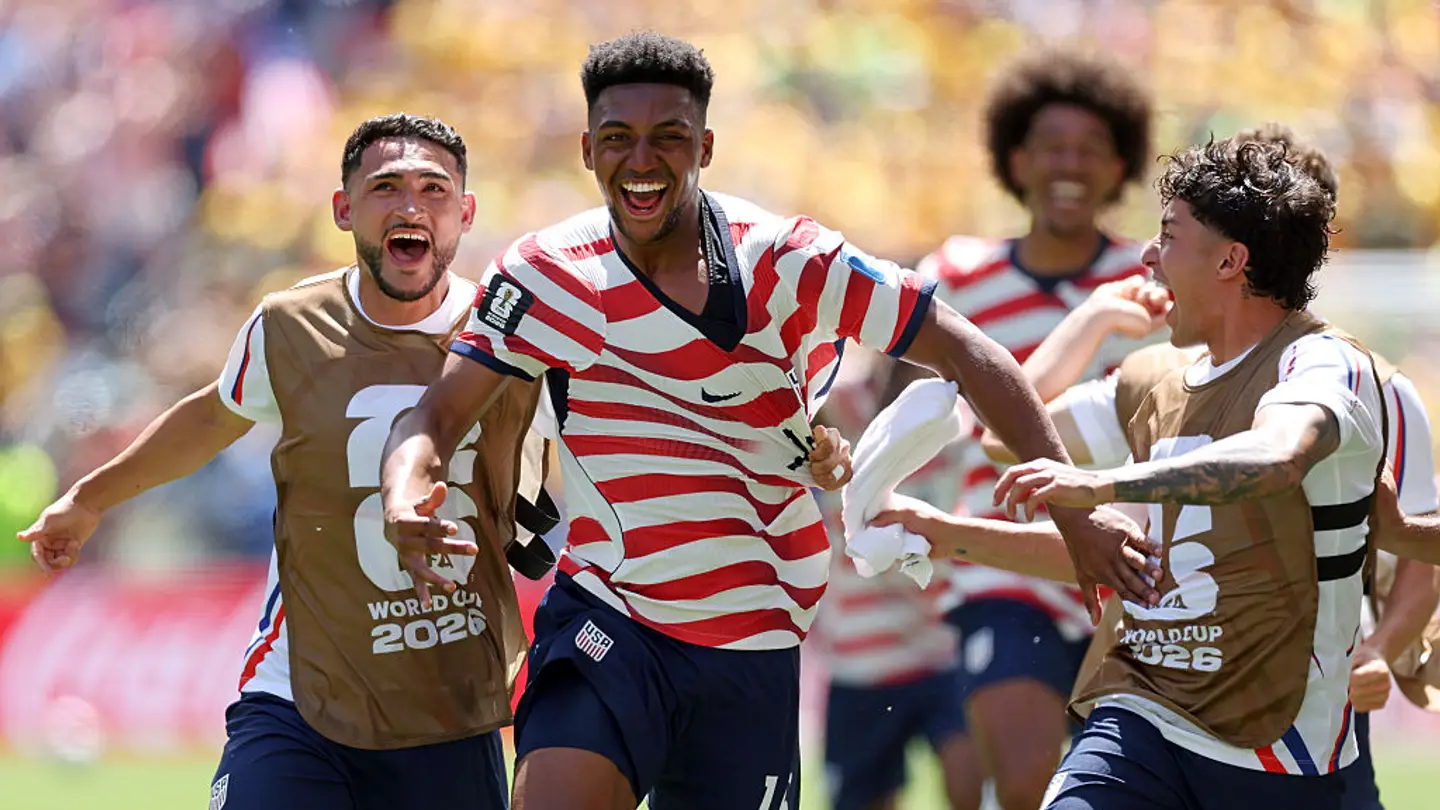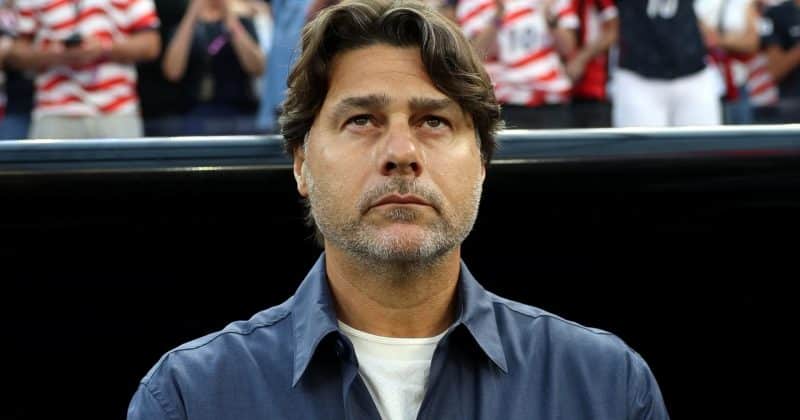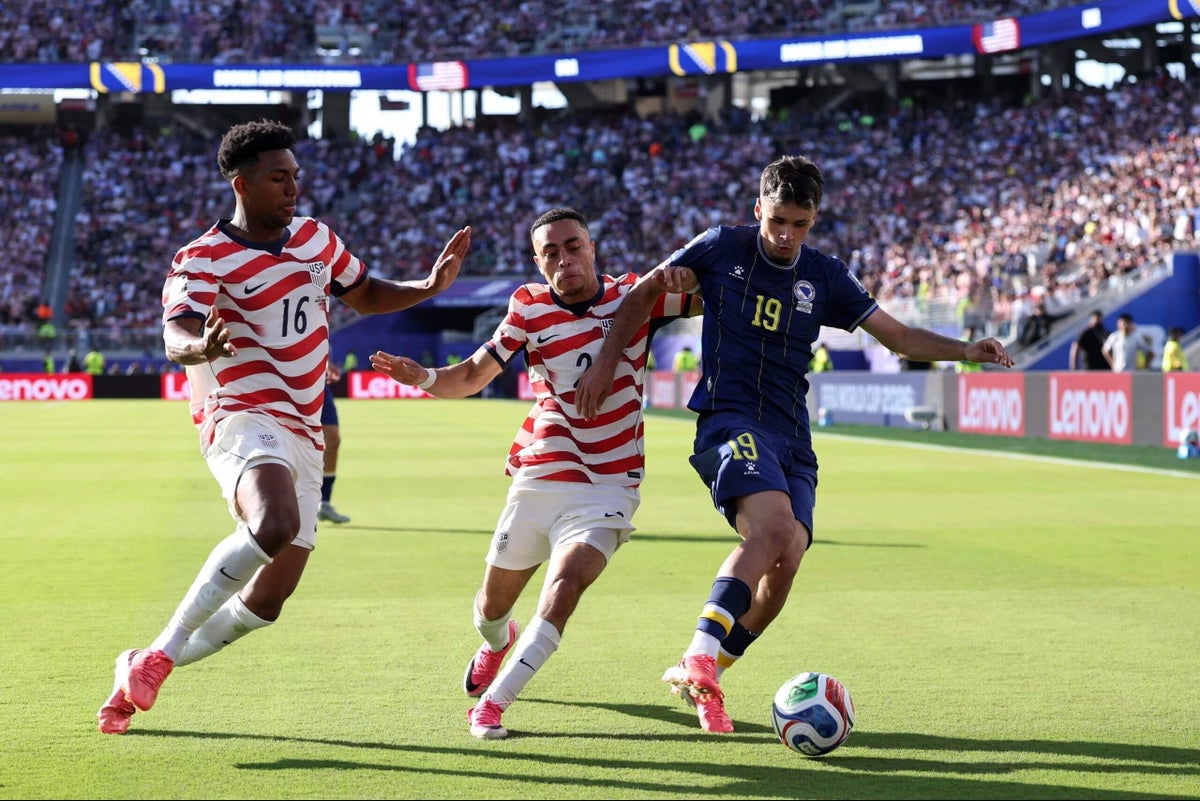
Get free access to the most comprehensive World Cup coverage in The Athletic app.Mauricio Pochettino is not in the market for playing underdog football this summer. Momentum is growing after a 2-0 victory for the United States men’s national team over Bosnia and Herzegovina. It was just the second knockout stage win in the nation’s history and booked a last-16 clash with Belgium next week.The “why not us?” slogan has provided a sense of togetherness among the squad and wider fanbase, but Wednesday’s performance showed just how keen the USMNT is to be the protagonist of its fate, showing how well-rounded they can be both on and off the ball.The opening two games saw Pochettino’s side boast a 65 per cent and 61 per cent share of possession against Paraguay and Australia respectively — just edging dominance of the ball with a 53 per cent share in its final group game against Turkey.That share fell to 49 per cent against Bosnia and Herzegovina, largely owing to the unfortunate red card picked up by Folarin Balogun in the second half, but much of the game saw the USMNT looking to take the game to an admittedly weak opponent.Breaking down deeper, stubborn low blocks has been a theme of the World Cup this summer. Pochettino’s side sustained attacks excellently and pushed the opposition back into its own third across the group stage.The USMNT’s attacking principles are well-established, with a clear desire to use the wide channels with bursting runs from Christian Pulisic and Weston McKennie beyond the ball, spearheaded by the powerful Balogun through the centre.However, Pochettino should be credited for just how robust, intense and purposeful he has made the USMNT out of possession. This is hardly surprising given the Argentinian’s CV, with a high defensive work-rate being a hallmark of his Espanyol, Southampton, and Tottenham Hotspur sides as he built his managerial career.The energy from the home support is clearly emanating onto the pitch, with a controlled aggression to press the opposition into submission — and the numbers support what the eyes see. Per FIFA’s data, no nation has spent a higher share of its time out of possession in a “counterpress” phase. In simple terms, this outlines how often a team looks to regain the ball immediately after losing it.As the graphic outlines below, Pochettino’s side is benefitting from a coordinated press on home turf.An example of this can be seen in the first half. After McKennie cedes possession on the near side, his first thought is to sprint towards the ball to win it back — supported by three team-mates to outnumber Bosnia and force them into a mistake during a moment of transition.Typically pressing out of a 4-4-2 formation, the USMNT were quick to adapt when they locked on man-for-man against Bosnia during the opposition’s attempt to build out from the back.The example below shows right-sided Sergino Dest staying central in his press after previously making an attacking run, meaning Balogun shifts across to cover Bosnia’s left-back as his team-mates back him up.Every USMNT player has an opponent man-marked in the Bosnia half, forcing the opposition to go longer with its passing as Tyler Adams eventually intercepts to win a throw-in. Note the role of McKennie below, acting as a spare man to pick up any second balls that might arrive if the U.S. do turn the ball over.Such was the intent from the U.S. in the first half that Bosnia goalkeeper Nikola Vasilj was forced to go long with the majority of his goal kicks for fear of getting caught out in possession.Such high pressing off the ball has been a theme of Pochettino’s summer, with the USMNT among the most intense sides in the tournament. This is shown by its “passes per defensive action (PPDA)”, which counts how many passes a team allows the opposition to make before attempting to win the ball back with a defensive action.A lower PPDA number indicates higher intensity when trying to win the ball back, and a higher figure indicates a team that is more passive without the ball. When plotted alongside its volume of counter-attacks per game, it highlights how much Pochettino’s side is embracing the transition.Not only does this style allow the U.S. to regain control of the game to impose its own style back on proceedings, but such intensity can provide lucrative opportunities in attack when the opposition is at its most vulnerable.Take the example of Balogun’s offside finish in the first half. The U.S. lock onto every Bosnia player again as they look to play the ball out, but indecision on the ball allows Malik Tillman to pounce before McKennie plays Balogun in on goal.They have gone from defence to attack in seconds.It was a similar pattern that eventually led to the opening goal for the U.S.Another man-for-man press gives Vasilj no option but to play the ball long. As he does, Tim Ream gets first contact for the U.S. to spring forward quickly while Bosnia is not in its defensive shape.As the ball falls to Tillman, a simple forward pass sees Balogun finish sharply.The U.S. has shown that they can break down a low block with its wide rotations during the group stage but Wednesday’s performance might be more instructive when considering its next opponents.Belgium might not be the swashbuckling force they once were, but they do still have the technical quality to look after possession for long periods. Rudi Garcia’s side is likely to have more of the ball in their last-16 tie, but that should not be of concern to Pochettino’s side. If they execute the coherent pressing approach that served them well against Bosnia, the USMNT has shown that it can also be at its most dangerous when it does not have the ball.
Why the USMNT’s off-the-ball excellence is a positive ahead of Belgium
Mauricio Pochettino should be credited for just how robust, intense, and purposeful he has made the USMNT out of possession
982 words~4 min read