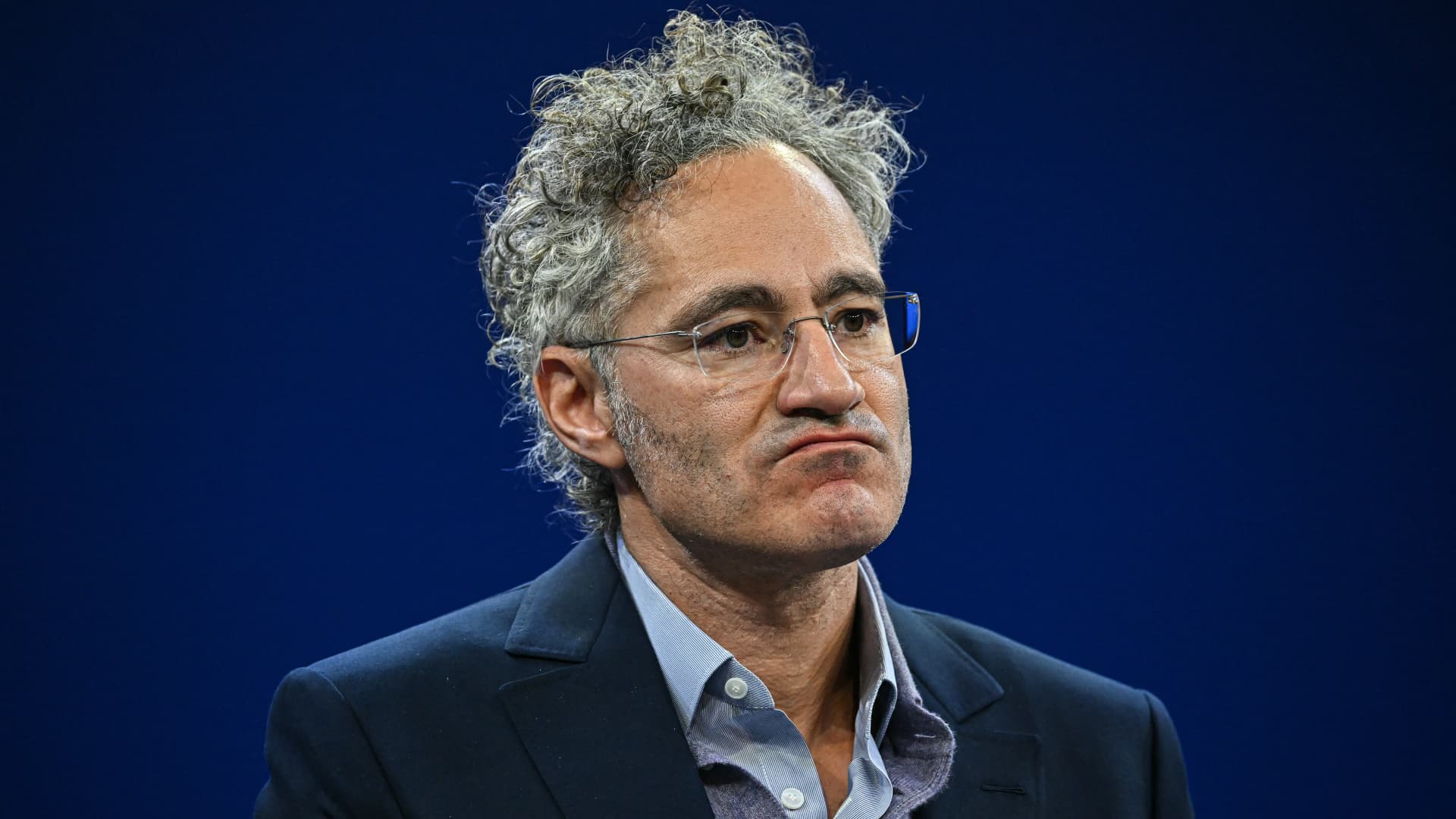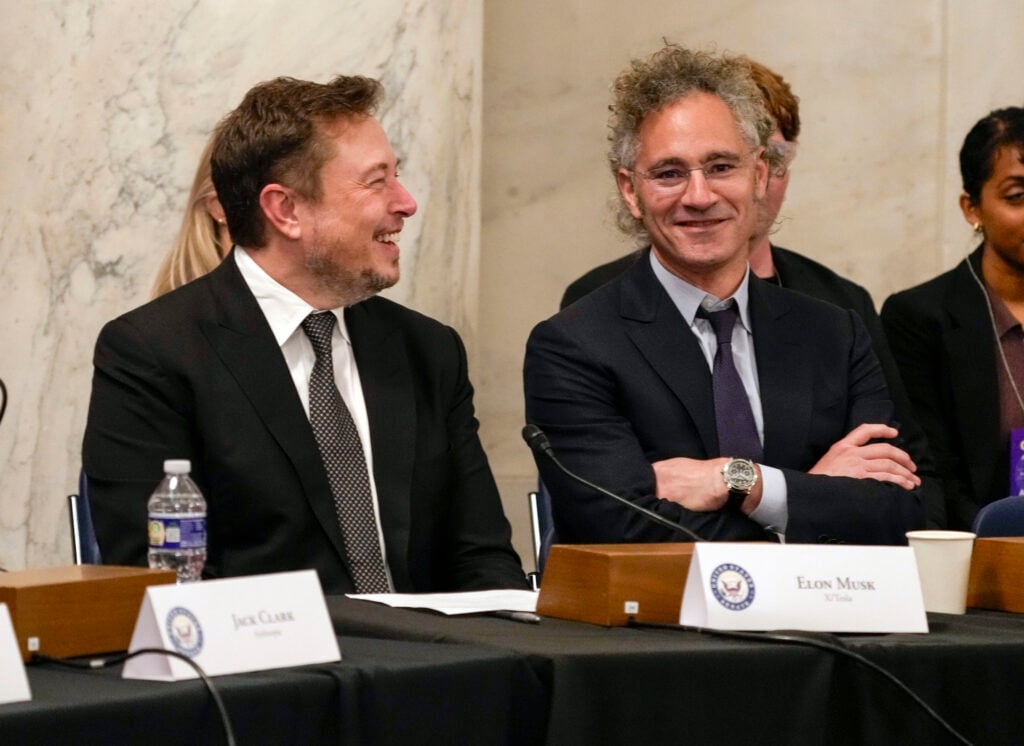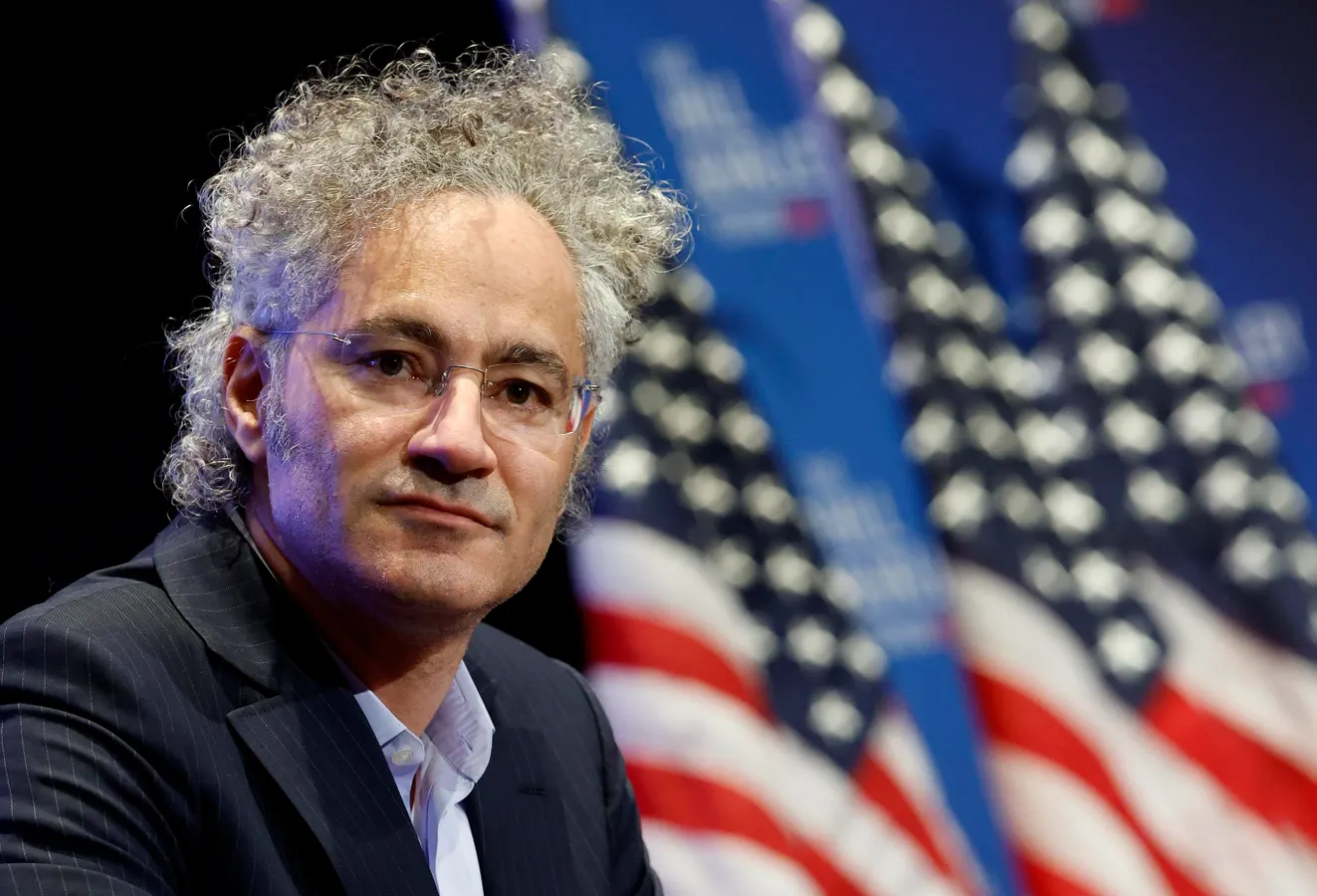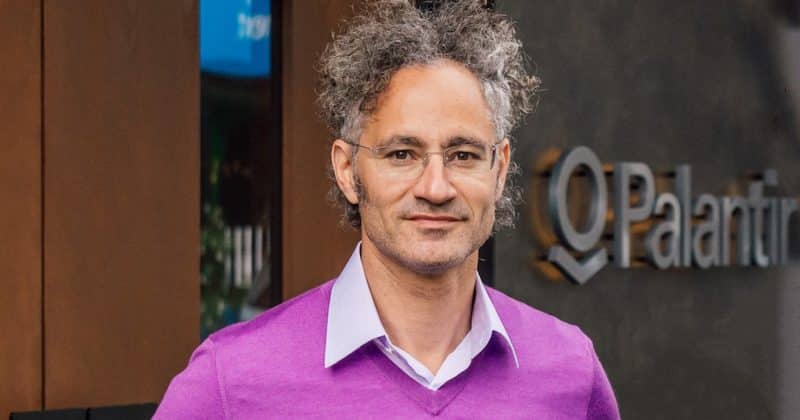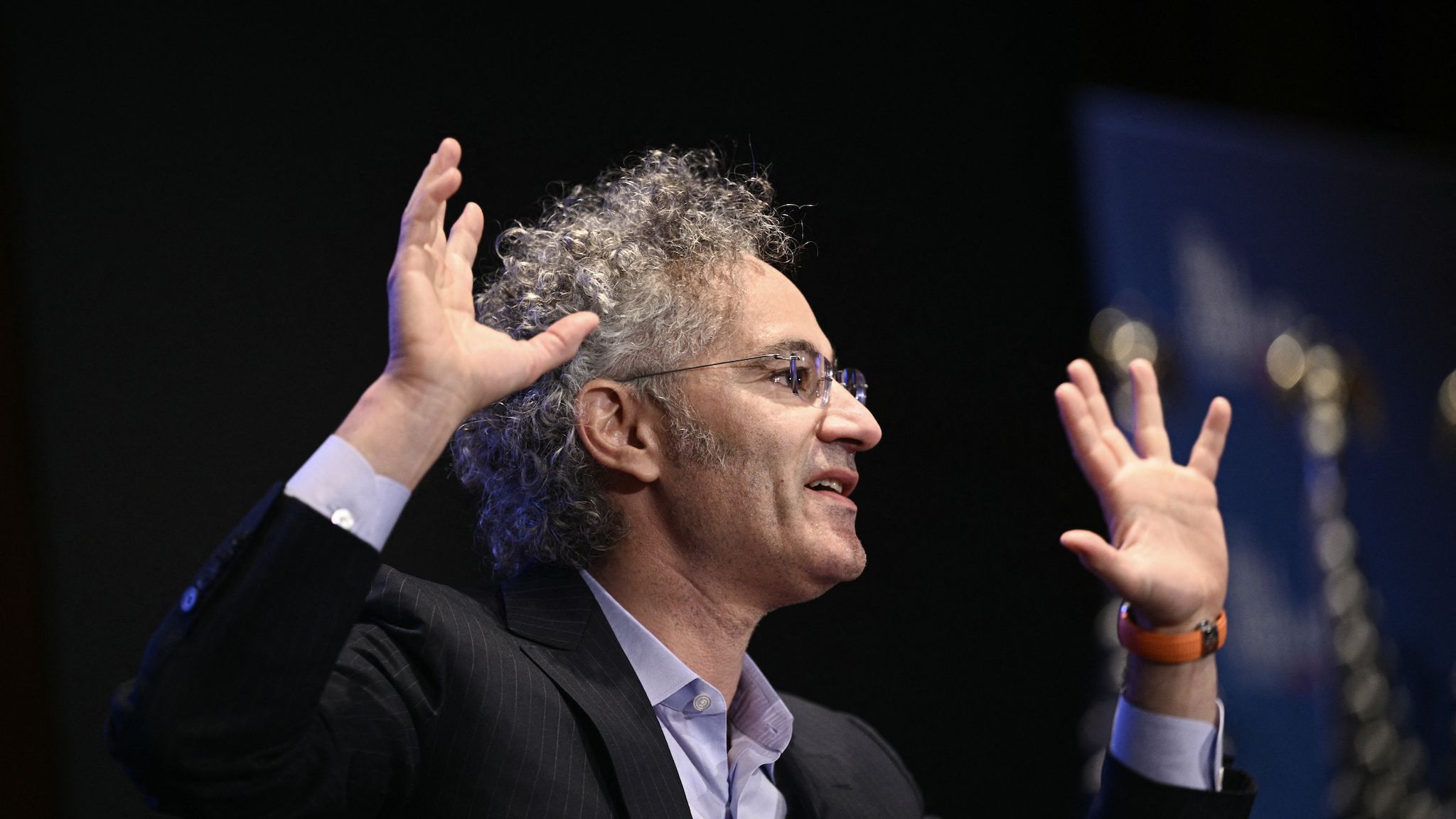
Red STOP AI protest flyer with meeting details taped to a light pole on a sunny city street, San Francisco, California, May 20, 2025. (Photo by Smith Collection/Gado/Getty Images)Gado via Getty ImagesPalantir CEO Alex Karp walked onto CNBC’s Squawk Box on July 1 and said what enterprise CIOs have been saying in private: frontier AI labs have "completely, irresponsibly oversold" their models while quietly absorbing the proprietary data and competitive advantage of the companies paying for them. Within hours, Palantir’s stock had jumped 9%. The market agrees.For VC investors, Karp’s remarks are a signal about where enterprise AI value is actually accumulating. The frontier model business, which attracted billions in capital on the premise that raw intelligence would be the moat, is facing a structural credibility problem. The application and sovereignty layer, which Palantir has quietly been building for years, is where the durable returns are forming.The core grievance Karp articulated is that enterprise leaders are paying for tokens that generate no measurable business value while simultaneously surrendering their most sensitive operational data to third-party model providers. "The basic view among enterprises in this country," Karp said, is: "I'm going to chillax and waste my time with tokens, I'm going to get no value, and they're going to get my IP." The complaint resonates because it is structural. Standard closed-model deployments route prompts through external infrastructure, meaning proprietary workflows, customer data, and strategic processes leave the building every time an employee runs a query. Karp calls this transferring a company's "alpha," the proprietary edge that makes a business defensible, directly to a third-party lab. Microsoft CEO Satya Nadella raised a similar concern earlier this month, warning that entire industries might find their knowledge commoditized underneath them.The sentiment has moved from private frustration to measurable behavior. Enterprises that were previously "tokenmaxxing," spending aggressively on AI inference, have recently begun auditing usage and cutting spend that cannot be tied to revenue. The token backlash is Karp’s market is now starting to gain momentum.Karp’s thesis is that real enterprise AI value requires three aligned components: the model, an application layer, and compute. Companies selling raw model access are missing two of the three. Palantir's Ontology functions as the application layer, a secure semantic boundary that prevents an LLM from caching classified or proprietary data, replicating business logic, or migrating IP into model weights. In highly regulated, defense, manufacturing, or clinical environments, this layer is the product.MORE FOR YOUThe June 29 Palantir-NVIDIA partnership formalizes this architecture at national scale. The two companies announced a Sovereign AI Operating System Reference Architecture combining NVIDIA's open Nemotron models with Palantir's AIP, Ontology, Foundry, and Apollo platforms. The design lets government agencies and critical infrastructure operators deploy AI entirely on their own hardware, air-gapped from external networks, with full ownership of model weights and data. NVIDIA CEO Jensen Huang said open-source AI is now foundational to national security and U.S. technology leadership. Karp's framing was sharper: the alternative is "effing insane." Outsourcing battlefield AI to the consensus view of Silicon Valley, he said on CNBC, is a security failure waiting to happen. He pointedly noted that certain labs are willing to make their technologies available to international adversaries while refusing to provide weight-controlled, secure deployments to U.S. defense agencies without risk to client IP.The financial case for Karp's architecture is now difficult to dismiss. Palantir's Q1 2026 results showed revenue of $1.63 billion, up 85% year over year, with U.S. commercial revenue growing 133% to $595 million. The company closed 206 deals above $1 million in the quarter. Management raised full-year 2026 revenue guidance to $7.65 billion, implying 71% growth, and U.S. commercial guidance to over $3.2 billion, a 120% growth rate. Adjusted operating margin reached 60%. Wolfe Research, initiating coverage in June, flagged net revenue retention of 150% and modeled a base-case revenue CAGR of 39% through 2029 against a total addressable market exceeding $385 billion. The sovereign AI market alone, per McKinsey, could reach $600 billion by 2030.For investors and founders, Karp's CNBC appearance crystallizes a thesis that has been building for two years. The frontier model business is not failing because the technology is bad. It is underperforming commercially because it was sold without the components required to deliver enterprise value: a governance layer, compute sovereignty, and a clear answer to who owns what when the session ends. The companies that built those components quietly, while model makers competed on benchmark scores, now have structural pricing power in the markets that matter most: defense, critical infrastructure, and heavily regulated enterprise.Marc Andreessen flagged the Karp interview as self-recommending. He’s right, though perhaps not for the reasons he intended. The interview is also a vey good product pitch disguised as an industry critique. But the underlying argument, that enterprise AI value accrues to whoever owns the application and sovereignty layer, not the model itself, is supported by Palantir's financials. Investors betting on raw model access as the durable enterprise moat should find that uncomfortable.
Karp Says Frontier AI Labs Are Stealing Enterprise Value And VCs Are Listening
Palantir CEO Alex Karp says frontier AI labs are overselling models while extracting enterprise IP. Here's what his CNBC interview signals for investors betting on the application and sovereignty layer.
827 words~4 min read