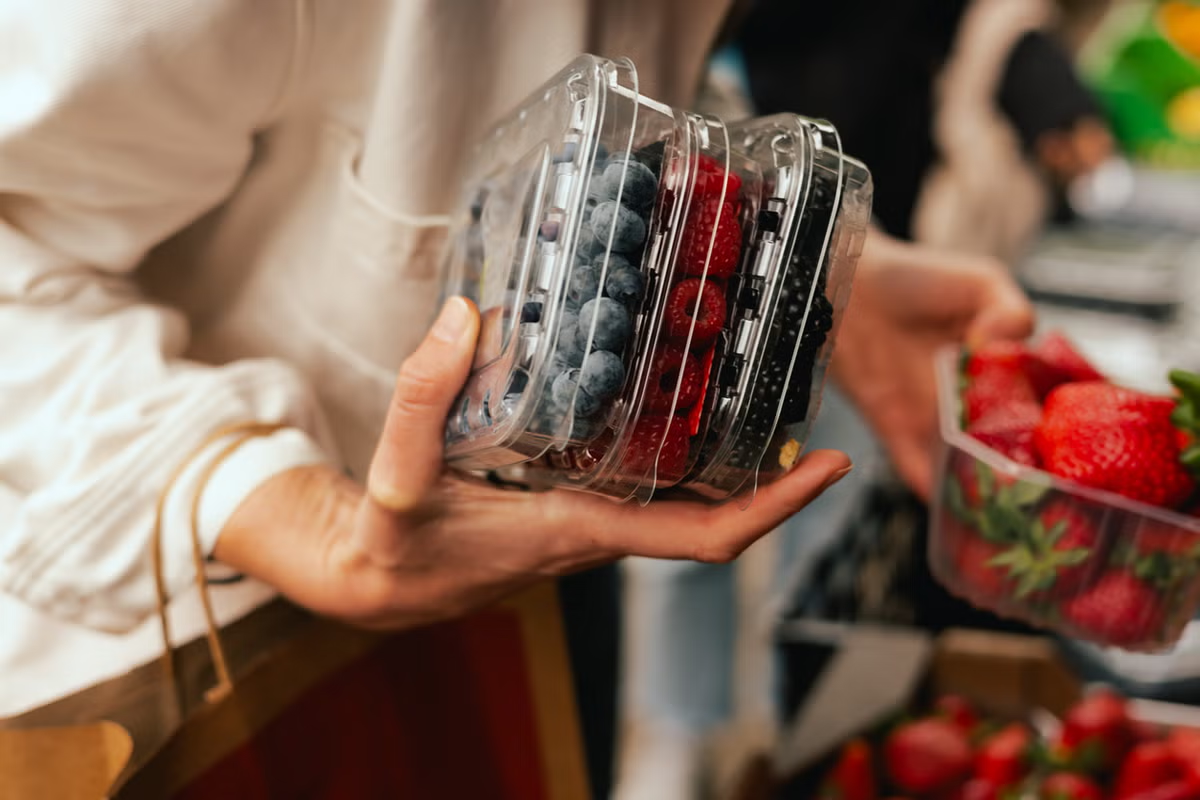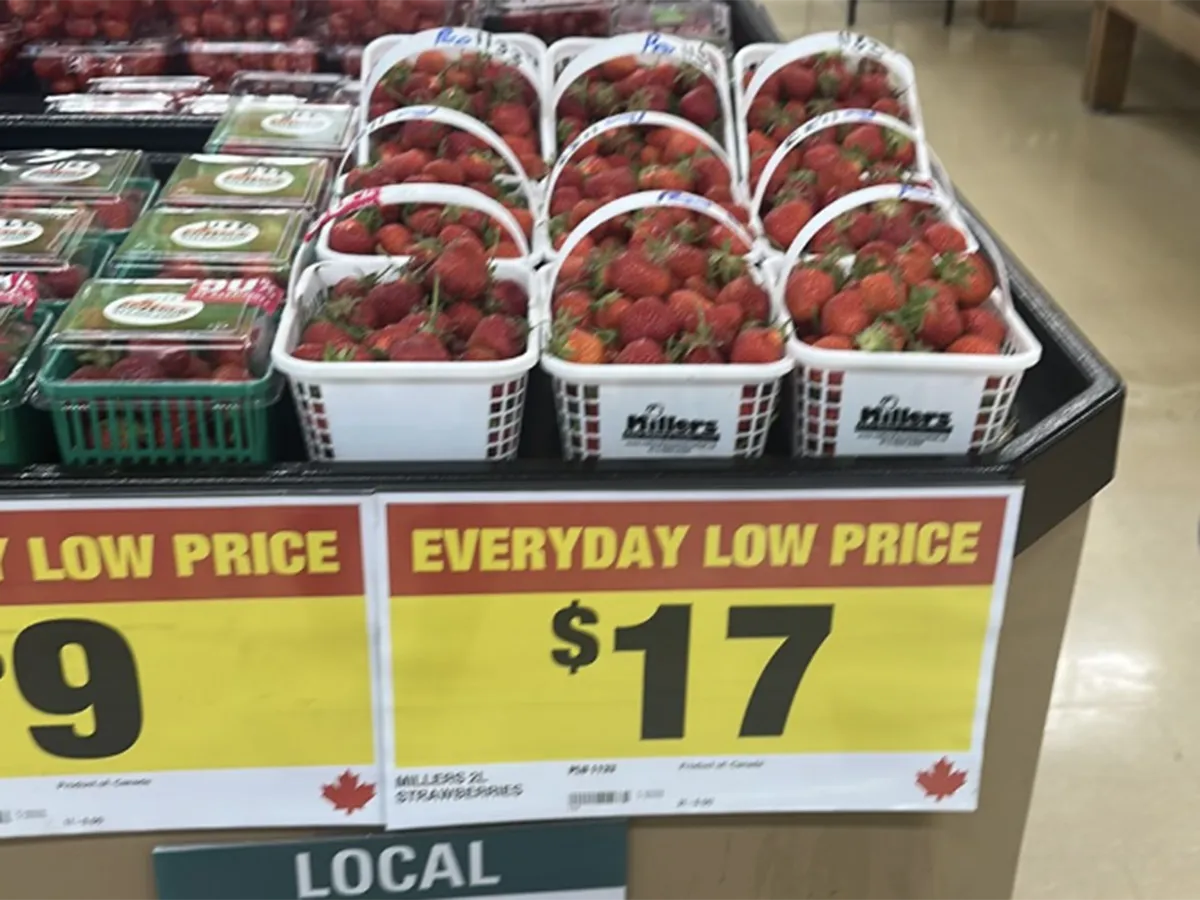
Skip to Content Subscribe Our Offers My Account Manage My Subscriptions FAQ Newsletters Canada Canadian True Crime Canadian Politics Health World Israel & Middle East Financial Post NP Comment Longreads Puzzmo Diversions Comics NP News Quiz New York Times Crossword Horoscopes Life Eating & Drinking Style Sponsored Play for Ontario Travel Travel Canada Travel USA Travel International Cruises Travel Essentials Culture Books Celebrity Movies Music Theatre Television Business Essentials Advice Lives Told Tails Told Shopping Buy Canadian Home Living Outdoor Living Kitchen & Dining Tech Style & Beauty Personal Care Entertainment & Hobbies Gift Guide Travel Guide Amazon Prime Day Deals Savings National Post Store More Sports Hockey Baseball Basketball Football Soccer Golf Tennis Driving Vehicle Research Reviews News Gear Guide Obituaries Place an Obituary Place an In Memoriam Classifieds Place an Ad Celebrations Working Business Ads Archives Healthing Epaper Manage Print Subscription Profile Settings My Subscriptions Saved Articles My Offers Newsletters Customer Service FAQ Newsletters Canada World Financial Post NP Comment Longreads Puzzmo Diversions Life Shopping Epaper Manage Print Subscription HomeLifeEating & DrinkingCanadians shocked to see strawberries selling for more than $10 a basket. Why the high price?According to new data, you could be paying even more for strawberries, with double-digit monthly percentage increases in some citiesLast updated 16 minutes ago You can save this article by registering for free here. Or sign-in if you have an account.Homegrown strawberries are selling at high prices in Canada. Photo by Julia Wilson /X.comSeeing $17 or even $9 price tags for homegrown strawberries has some Canadians stopping in their tracks. Even the imported ones from the United States and Mexico have gone up in price.Enjoy the latest local, national and international news.Exclusive articles by Conrad Black, Barbara Kay and others. Plus, special edition NP Platformed and First Reading newsletters and virtual events.Unlimited online access to National Post.National Post ePaper, an electronic replica of the print edition to view on any device, share and comment on.Daily puzzles including the New York Times Crossword.Support local journalism.Enjoy the latest local, national and international news.Exclusive articles by Conrad Black, Barbara Kay and others. Plus, special edition NP Platformed and First Reading newsletters and virtual events.Unlimited online access to National Post.National Post ePaper, an electronic replica of the print edition to view on any device, share and comment on.Daily puzzles including the New York Times Crossword.Support local journalism.Create an account or sign in to continue with your reading experience.Access articles from across Canada with one account.Share your thoughts and join the conversation in the comments.Enjoy additional articles per month.Get email updates from your favourite authors.Create an account or sign in to continue with your reading experience.Access articles from across Canada with one accountShare your thoughts and join the conversation in the commentsEnjoy additional articles per monthGet email updates from your favourite authorsSign In or Create an AccountorIn recent inflation numbers for May, the price of berries (including cherries) increased 2.1 per cent year-over-year. According to new data, you could be paying even more for strawberries, with double-digit monthly percentage increases in some cities.Dalhousie University’s Agri-Food Analytics Lab found that overall strawberries have become more expensive over the past month, with the average retail price for a 454-gram package sitting at $5.73 in June — a 4.9 per cent increase from May. In its analysis of grocerypulse.ca data, the lab looked at averages of regular retail prices across the country.Join Laura Brehaut on a weekly food adventure with mouth-watering reads delivered Fridays.By signing up you consent to receive the above newsletter from Postmedia Network Inc.A welcome email is on its way. If you don't see it, please check your junk folder.The next issue of Cook This will soon be in your inbox.We encountered an issue signing you up. Please try againIt noted several reasons for higher strawberry prices, including softer-than-usual California production due to weather and supply issues, local crops still ramping up and strong demand. Toronto was the city that showed the biggest percentage increase, at 12.6 per cent ($6.18), followed by Charlottetown at 10.4 per cent ($6.24), and Winnipeg at 5.8 per cent ($5.90).The Canadian dollar is weaker than last year, which is impacting importers’ buying power, says Sylvain Charlebois, director of the Agri-Food Analytics Lab. And when it comes to strawberries, particularly in the summer, demand is strong.“We’re hardwired to look for strawberries in June, and grocers know that. So, there’s a bit of a premium that actually comes along with strawberry demand when consuming strawberries in June and early July. So basically, it has nothing to do with costs. It has more to do with consumer pressures,” says Charlebois. “Grocers will actually set prices based on what they think the market can bear.”With strawberry season at its peak in parts of the country, price has snapped into focus. Paying nearly $20 for the pleasure of local, field-grown berries amid rising food inflation and insecurity may seem extreme. Yet, while they might look comparable on the surface, the experience of eating domestically grown and imported strawberries is often a world apart.“I would say price comparisons are likely unfair because the quality is very different. You’re not getting the same product. It may look nice, but it may not taste the same, and the only way to taste it is to actually buy the thing,” says Charlebois. “But I would give any local strawberries a second look, even though it may be a little bit more expensive.”Scale, seasonality, labour and production costs all play into the price of local berries, but so do taste, quality and freshness. Imported strawberries are typically picked early to withstand transport. Local ones are more likely to be harvested when they’re ripe and juicy, and ready to pop in your mouth.Growing up in the Eastern Townships of Quebec, Charlebois bought his first bike with earnings from strawberry-picking. “It’s hard work,” he says. “Now you’re seeing farmers trying to go through two harvest cycles to basically increase domestic production, and there are actually some greenhouses that are producing strawberries all year round in Quebec.”Quebec is the country’s top strawberry-producing province and the third-largest growing region in the United States and Canada, after California and Florida, says Jasmine Sauvé, the executive director of the Association des producteurs de fraises et framboises du Québec. Some 330 producers cultivate strawberries and raspberries on roughly 1,900 hectares of farmland. As demand for strawberries has increased, so has the amount of acreage and number of greenhouses and soilless cultivation systems.In Quebec, the strawberry market is mainly local. Though there are imports, most growers sell exclusively in the province, with some exporting small amounts to Ontario, New York and Vermont. Now at its peak, in May, grocery stores were stocked with greenhouse-grown strawberries from Quebec and Ontario, and imports from California, Florida and Mexico, which are generally sold at lower prices than the first local field strawberries, which arrived in the first two weeks of June.“Those are really premium prices because it (takes) premium production techniques to be able to produce strawberries very early in the season. And now, the prices have gone down,” says Sauvé.The producers’ association tracks berry prices in the province. There, prices have stayed stable, adds Sauvé. “What we’re seeing is the profit margins are decreasing because the prices are staying about the same, but the production cost has risen a lot. And every year, the production cost increases, so the margins are not as good for the strawberry growers, but the prices are similar to last year.”She highlights that supermarket prices aren’t necessarily representative of what growers are paid, and that agricultural producers don’t directly benefit from rising food prices. Retailers “will decide the margin they want to have, and the price they sell.”Strawberries are a special product — especially in Quebec, says Sauvé. “People want strawberries that come from Quebec, and usually are willing to pay a premium price. I’m not saying, like, if they were sold for $15 a basket, but people are expecting, and they agree to pay a little bit more for strawberries from Quebec than strawberries from California or Mexico.”Charlebois highlights that there’s typically no contest between imported and domestically grown berries when it comes to taste. “People tend to appreciate local strawberries, which tend to be a bit juicier, especially at the tail end of (the season), depending on the weather. If you basically have had a lot of sun at the end, you’ll see smaller strawberries, but they’re so tasty.”Growers understand that the cost of food is rising, says Sauvé, adding that the association is advocating for reciprocity in standards. “What we ask is that the government refuses to import fruits that are produced with chemicals or labour norms that are not the same as ours. But we’re not asking the consumer to pay a certain price,” she says. “(Growers) want to continue to excel and produce strawberries that are available at the best price that they can, but what they would like is fair competition.”Sauvé and Charlebois expect stable strawberry prices for the rest of the summer, and the Agri-Food Analytics Lab suggests shoppers look for $3.99-$4.99 promotions in July.With blueberry season around the corner, Charlebois’s biggest concern is the El Niño summer, which tends to be dry and could impact harvest and productivity, resulting in fewer and smaller berries. “That’s really one of the challenges that I think the blueberry sector will face, including the one here in Nova Scotia.”Our website is the place for the latest breaking news, exclusive scoops, longreads and provocative commentary. Please bookmark nationalpost.com and sign up for our cookbook and recipe newsletter, Cook This, here. Join the Conversation This website uses cookies to personalize your content (including ads), and allows us to analyze our traffic. Read more about cookies here. By continuing to use our site, you agree to our Terms of Use and Privacy Policy.
Canadians shocked to see strawberries selling for more than $10 a basket. Why the high price?
According to new data, you could be paying even more for strawberries, with double-digit monthly percentage increases in some cities.
1,637 words~7 min read