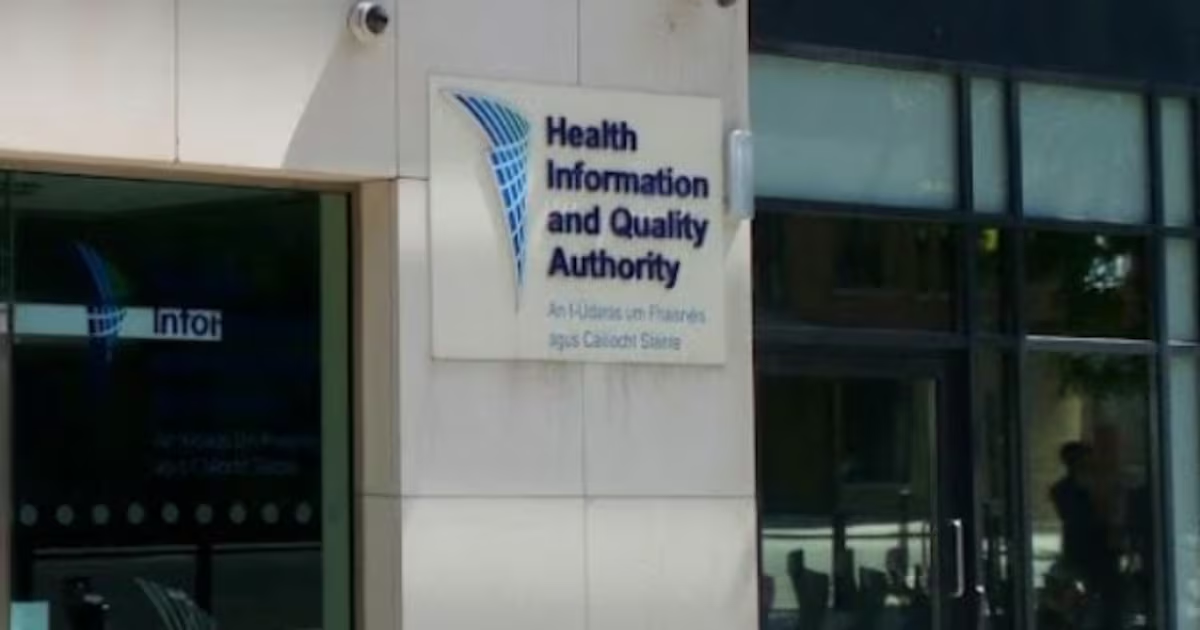
The increasing corporate ownership of nursing homes in Ireland makes it “legally challenging” for the regulator to hold owners accountable for failings in standards and care, an independent report has found.Last year, an RTÉ Investigates programme made allegations of elder abuse and neglect at two nursing homes – The Residence in Portlaoise and Beneavin Manor in Dublin, both run by Emeis Ireland.The programme included footage of frail people, some of whom had dementia, allegedly being manhandled, “forced” down into chairs, left in incontinence pads for so long their clothes were soaked, being ignored when they pleaded for help to go to the toilet and having requests for simple activities like going for walks being fobbed off.In a statement following the programme, Emeis Ireland apologised “unequivocally” to all residents and their families.Following this, Minister of State for Older People Kieran O’Donnell requested that Forvis Mazars conduct a review of processes by the Health Information and Quality Authority (Hiqa) to assess the adequacy, consistency and quality of its regulation.The report, published on Thursday, found overall, Hiqa’s chief inspector’s regulatory and inspection processes are effective, and in line with its powers under the appropriate legislation.However, the report highlighted the changing ownership landscape of nursing homes in Ireland, with increasing numbers of large corporate entities owning these facilities and a reduction in small, family-run and HSE-run centres.Beneavin Manor nursing home in Dublin. Photograph: Niall Carson/PA Wire “These structural changes came with new accountability challenges,” the report said.“Where ownership lies with parent or holding companies, often located outside Ireland, it becomes legally challenging to hold these parent entities accountable for regulatory failing at individual nursing home level.”According to the report, Hiqa’s remit applies to the registered provider, rather than the ultimate owner.“This legal separation creates potential gaps in responsibility, accountability and financial transparency,” the report said. “The evolving ownership landscape presents one of the most complex challenges facing the regulatory system – how to ensure that the legal framework can be better aligned to the business reality of ownership so as to properly safeguard residents’ rights, care and support needs.”The review also identified a number of areas where improvement is required, including strengthening the inspection approach to culture and staff behaviour, as well as an increased focus on patient voice, involvement and independence.The review also recommended regulatory reform in key areas, including ensuring that parent companies or nursing home groups can be held to account by the chief inspector.In addition the report, Hiqa also published 54 inspection reports of nursing homes owned by Emeis Ireland. The watchdog found evidence that a number of the centres were operating to a good standard and providing safe and effective care; however seven centres had “significant challenges in delivering safe and effective care”.“This required additional regulatory action which included undertaking additional inspections, placing restrictive conditions on those nursing homes, including a requirement to restrict the admission of new residents until further notice and requiring the provider to increase staffing,” the regulator said.“The chief inspector also made referrals to An Garda Síochána as appropriate.”Speaking about the Mazars report, Angela Fitzgerald, chief executive of Hiqa, welcomed the recommendations and said work is under way to make further improvements.“We fully accept the findings and are committed to fully implementing the recommendations,” she said.“In particular, we are committed to reviewing how best we continue to hold providers to account. In this context, we are redoubling our efforts to evaluate how providers support and enable positive staff culture and behaviour in their services to ensure positive outcomes for people using services.”
Holding nursing-home owners accountable ‘legally challenging’ due to corporate ownership
Report commissioned into Hiqa processes finds its remit applies to registered providers rather than ultimate owners
587 words~3 min read