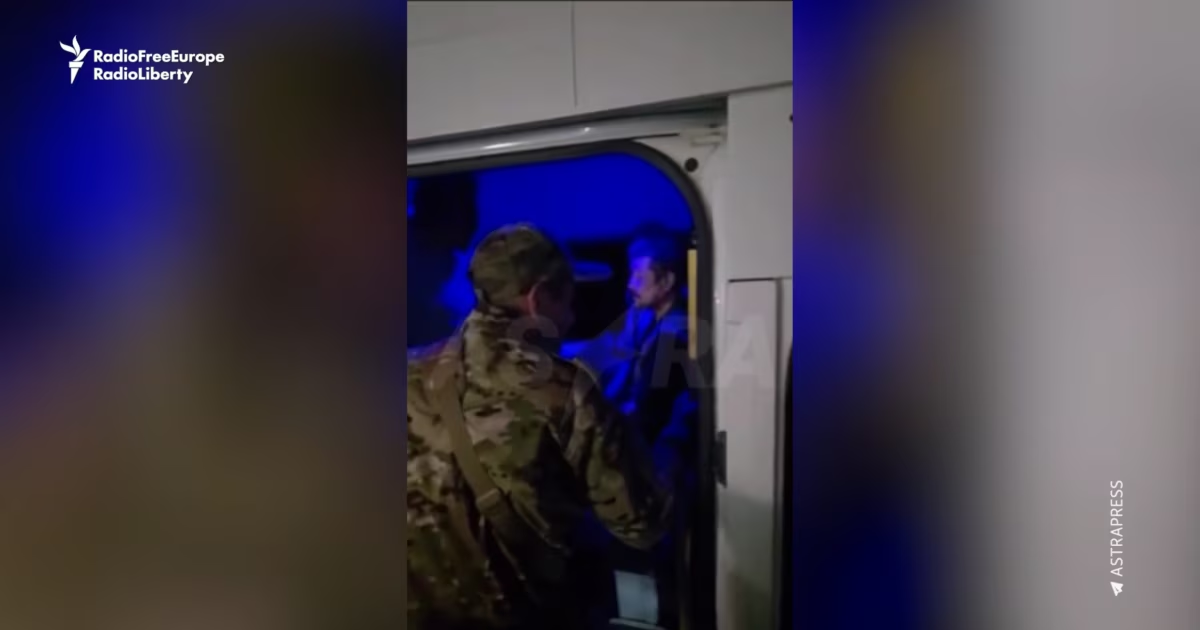
One Russian woman sobbed hysterically as the group of men sat calmly in the darkness of a white minivan; another yelled at a soldier in camouflage fatigues as he slammed the van’s door. Another wept and made the sign of a cross at one of the men: “Lyosha! I love you!”“Guys, tell me, did everyone sign the contract? Was it voluntary?” a woman who filmed the June 17 incident in Penza, a regional capital of a half million southeast of Moscow, asked the men. “Were you forced to do it?"As the minivan moved to drive away, another woman stood in front of it, trying to stop it.According to witnesses and relatives with whom RFE/RL spoke, the men had been detained a day earlier, taken off the streets, forcibly moved to a military recruitment office, and forced to sign contracts that would result in them being sent to fight in Ukraine.“Of course, all of this looks like illegal coercion. My father had no intention of going to war; we discussed this with him,” one woman said. “I see no explanation for this, other than threats, violence, or pressure.”Like all the people RFE/RL spoke to, she asked not to be named, or to use a pseudonym, to avoid prosecution by authorities.
In Russia’s all-out war, now in its fifth year, Ukrainian forces have fought Russian troops to a virtual stalemate, with Moscow struggling to eke out substantive battlefield gains.The cost to both sides is eye-watering; Russia has suffered nearly 500,000 war dead, according to British intelligence and other Western estimates, and the tally of wounded is at least twice that.While both sides have struggled to replace casualties, Russia has had more success, using generous financial incentives, as well as coercion and threats.This year, however, has seen an inflection point, experts say.There are growing rumors that the Kremlin may seek to call a second mass mobilization possibly as early as this fall, something that was a tectonic shock for Russian society the first time it happened, in September 2022.In the meantime, recruiters appear to be increasingly relying on forcible methods of getting men to agree -- or submit -- to fighting in Ukraine. In Penza, residents said police have moved from detaining men on city streets, and started going door-to-door.Lyudmila, a resident of the town of Kamenka, west of Penza, said she spent several days outside the main Penza recruiting office trying unsuccessfully to locate her son who, she said, had been abducted off the street.“This is outrageous. People are basically being kidnapped. Something needs to be done, but I don't know what,” she said.Two days after the video was published on the social network VK, law enforcement authorities called the reports of men being forced to sign contracts “untrue.” The video was later taken down by VK.