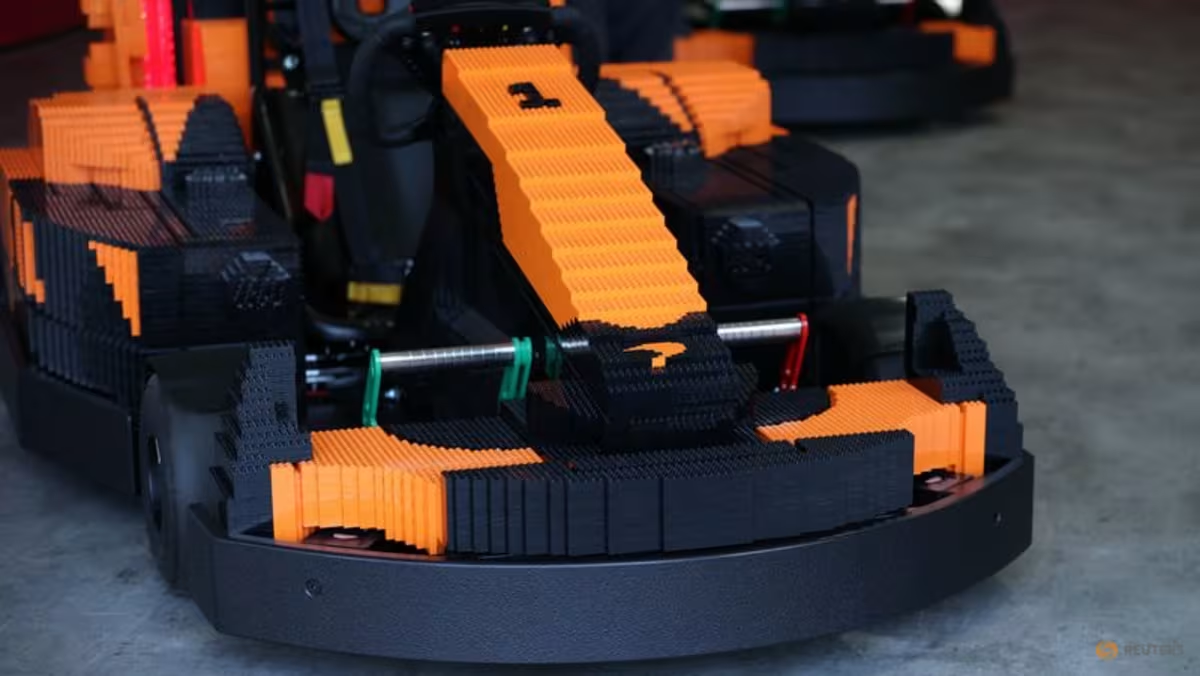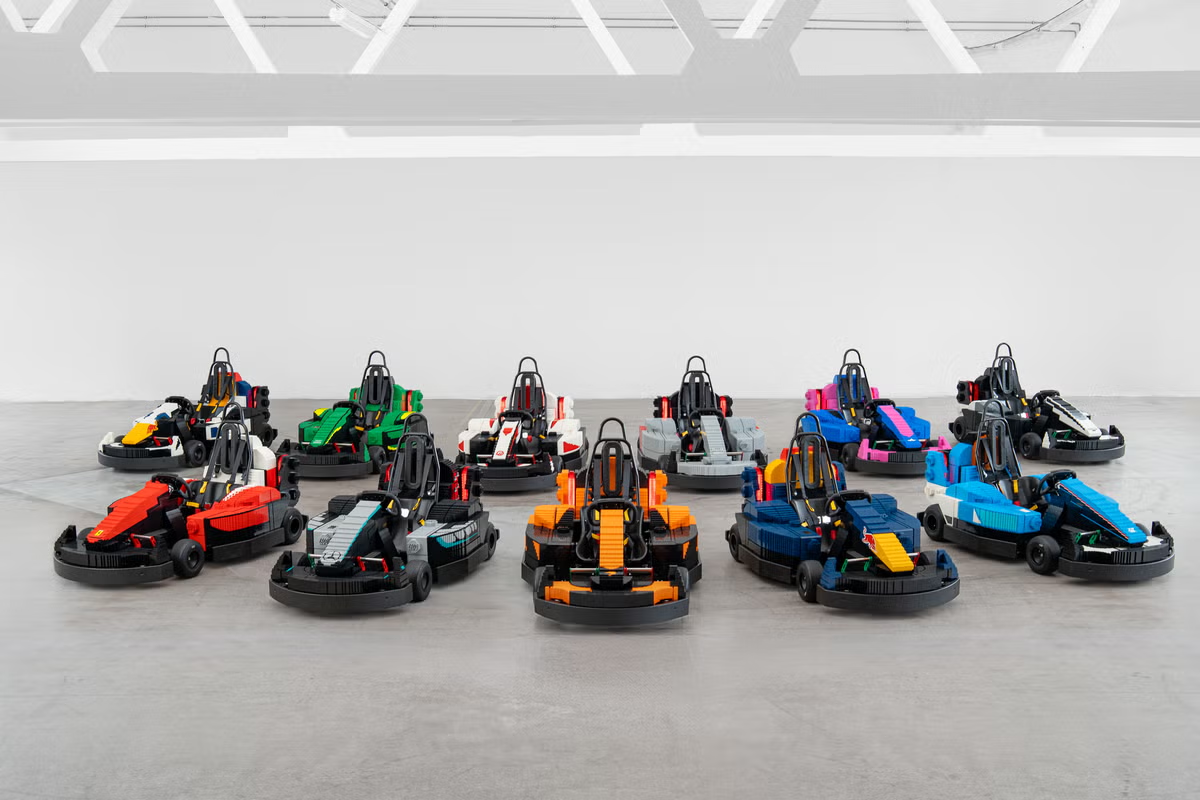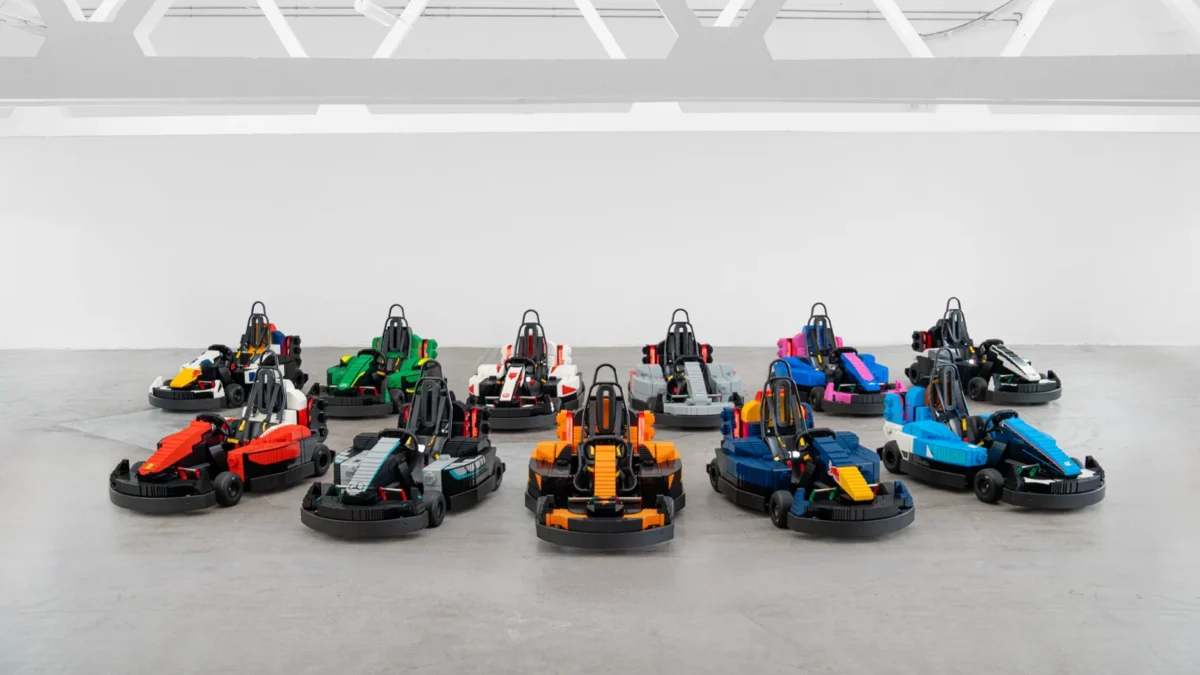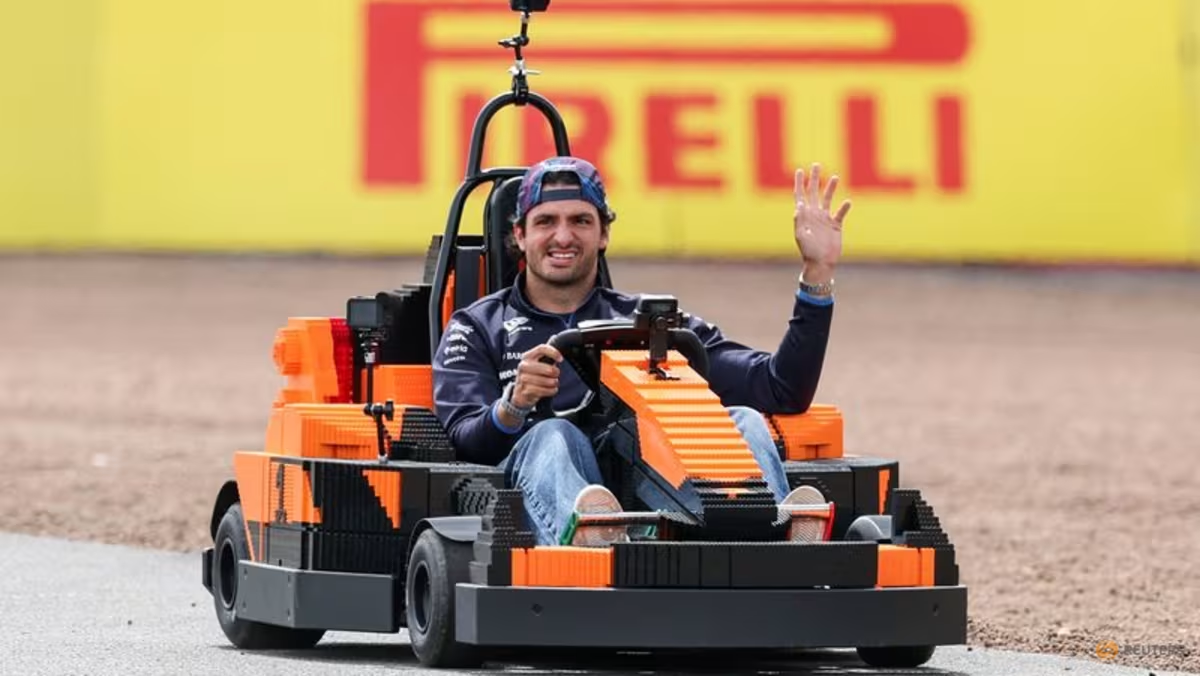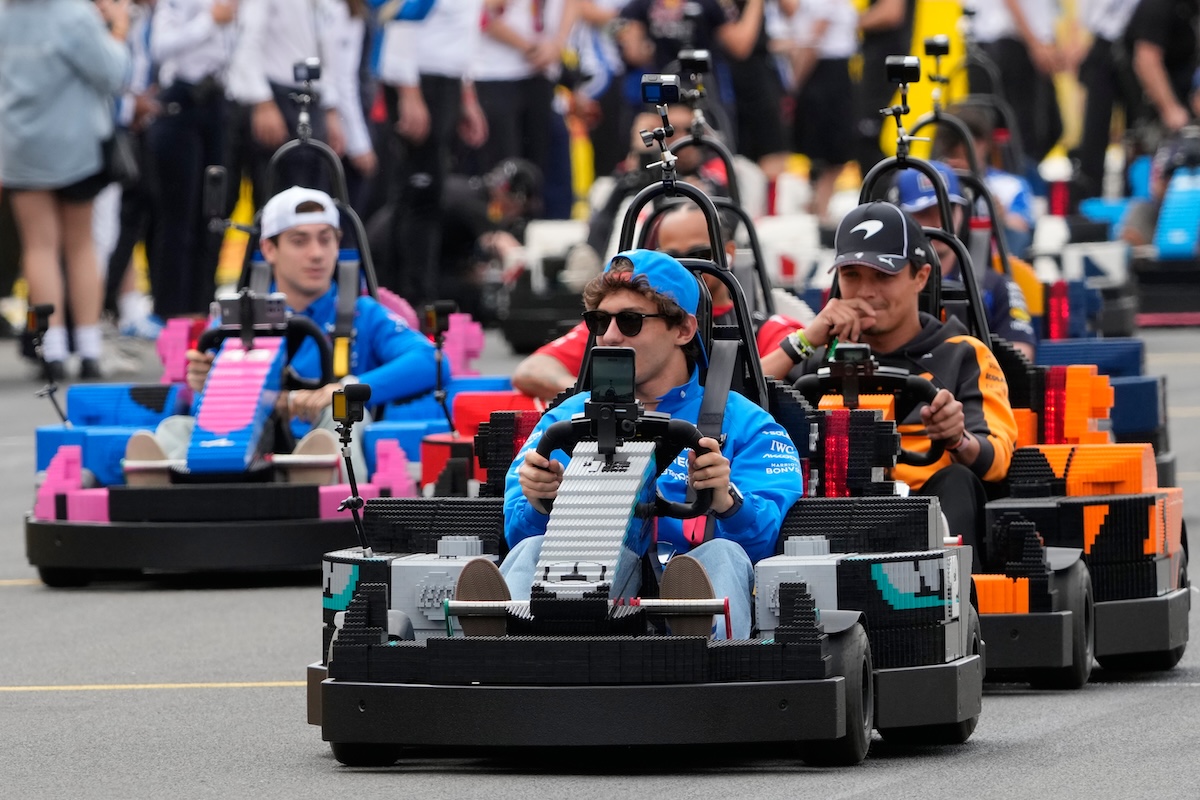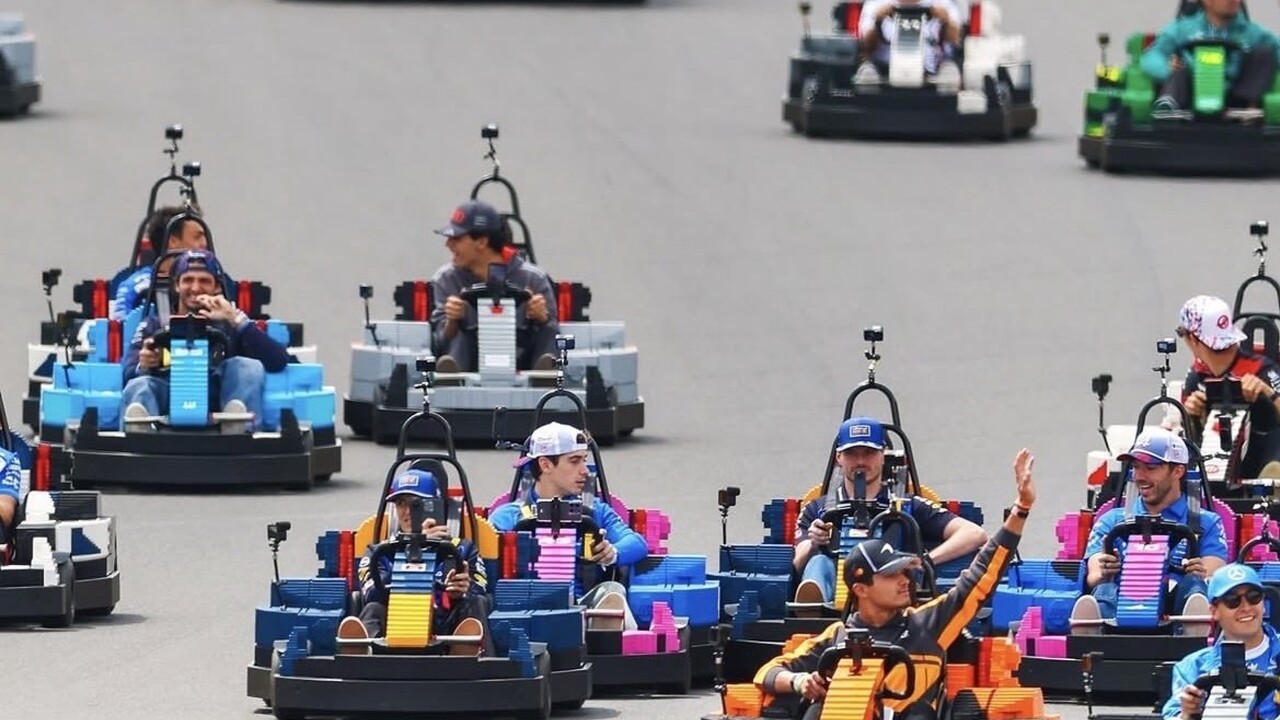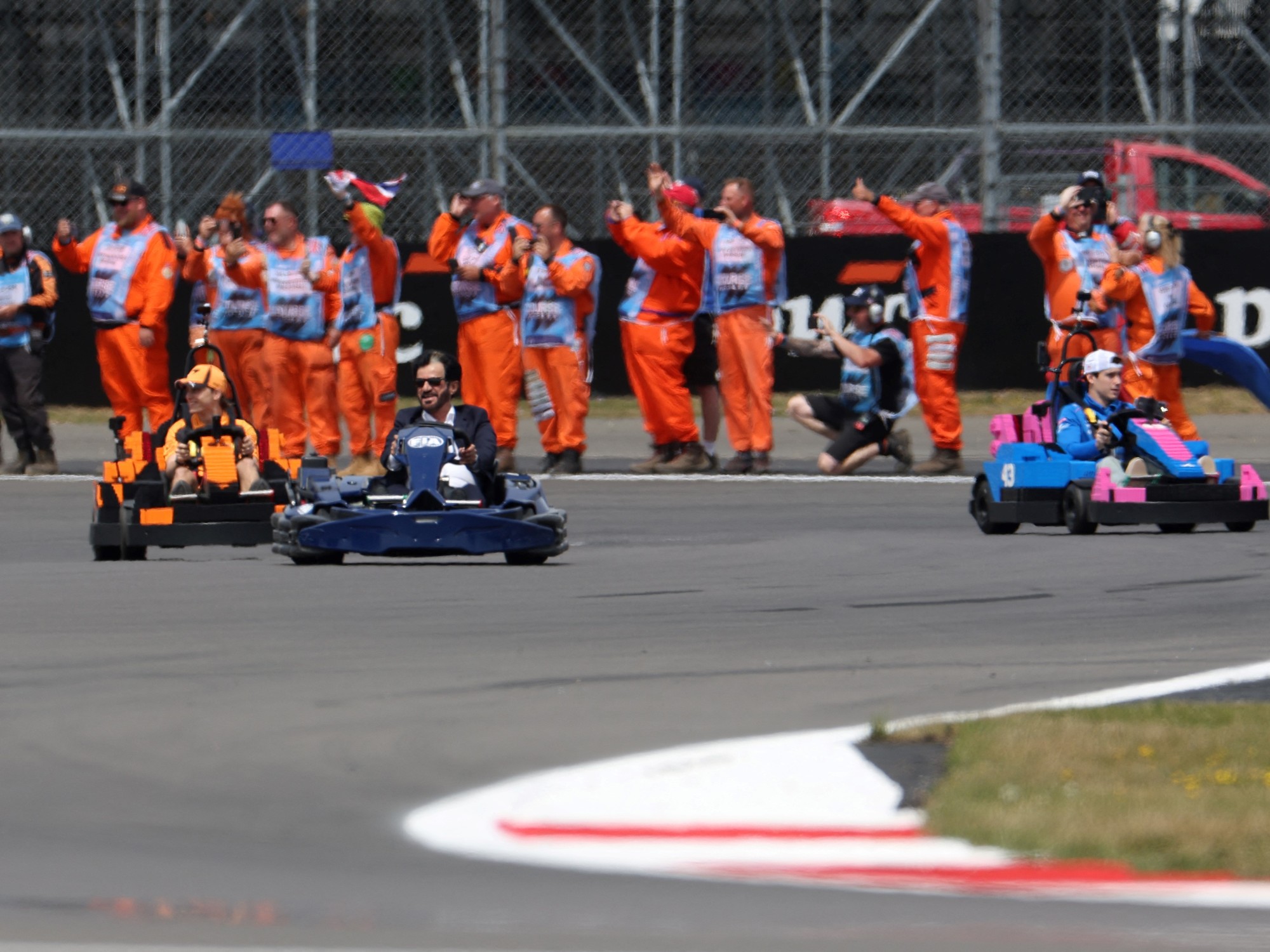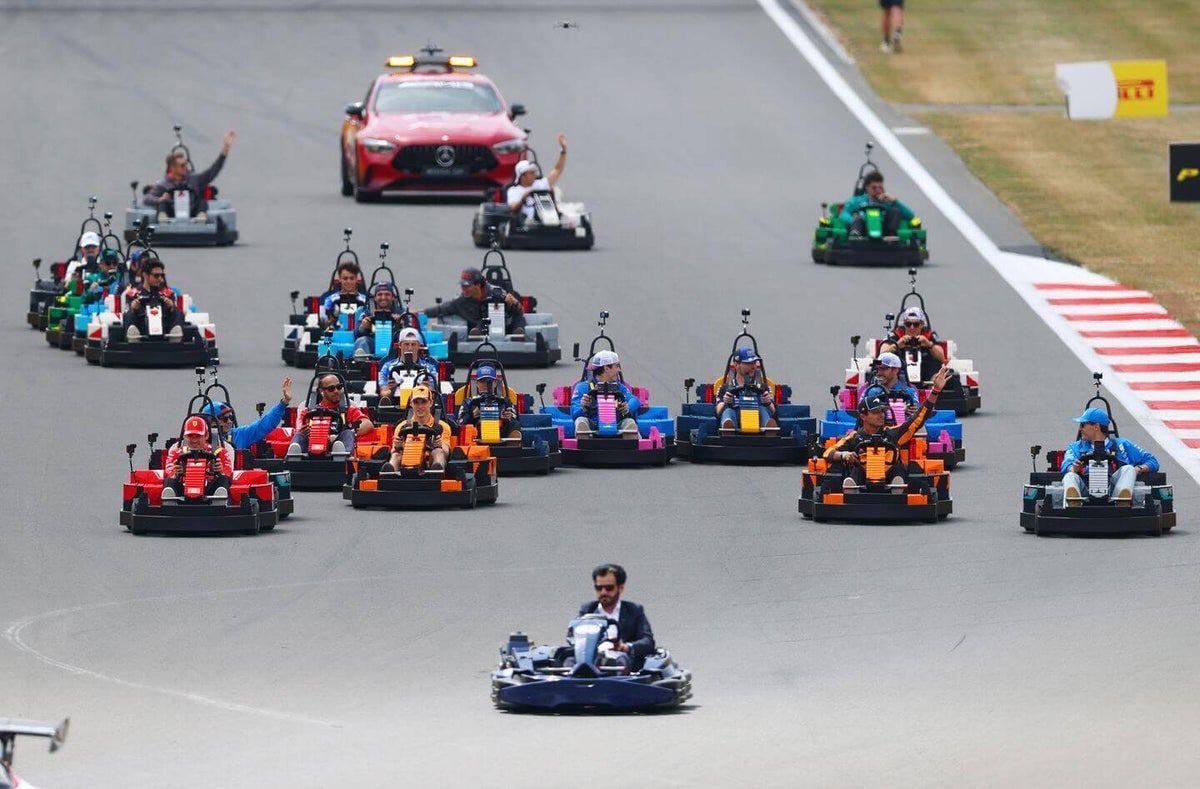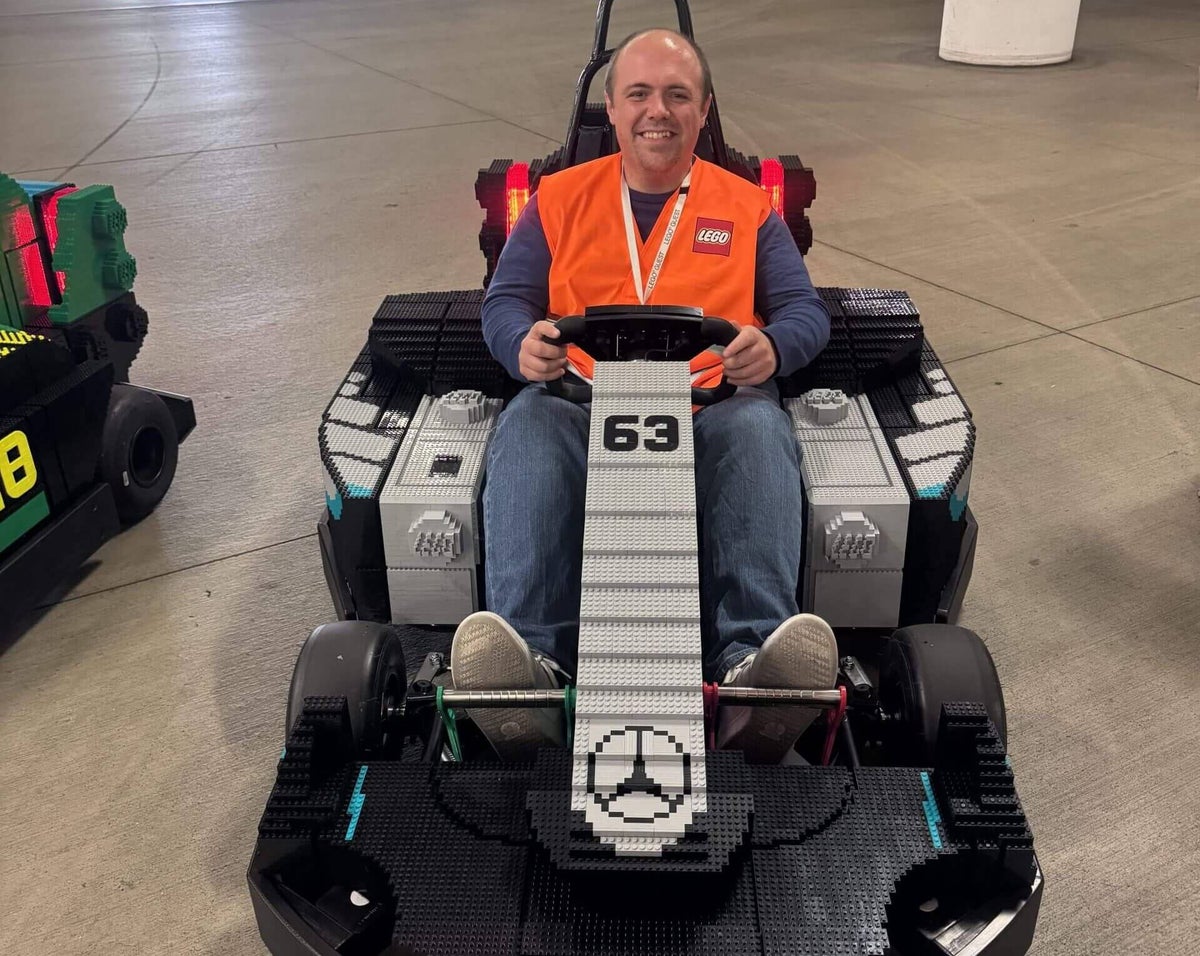
KLADNO, Czechia — George Russell’s silver Mercedes, complete with its #63 on each side and the three-pointed star of the German marque on the tip of the nose, was in front of me.“Would you like to get in?”I did not need to be asked twice.I carefully lifted my leg over the sidepod and placed a foot on the seat, before bringing the other leg into the cockpit, sliding down into the seat and resting my feet against the pedals. After a quick run-through of the controls — basically right foot go, left foot brake — it was time to go.Pushing my right foot down on the pedal, I felt the rear wheels spin, and zipped forward, a smile breaking across my face as I neared top speed.A whopping 20 miles per hour.So no, this wasn’t Russell’s Mercedes W17 Formula 1 car. But I was privileged to become the first written journalist to drive a go-kart version of the Briton’s car built with Lego. On Sunday, Russell — along with every other driver on the grid — will be in them for the drivers’ parade before the British Grand Prix at Silverstone.“Parade” is too serene a word. At last year’s Miami Grand Prix, teams were each provided with a Lego recreation of their cars for the drivers’ parade, which descended into a chaotic crash-fest, leaving bricks all over the track before the race. The drivers, who had to share each cockpit with their teammate, loved it.Charles Leclerc and Lewis Hamilton in their Lego ‘Ferrari’ during the drivers’ parade before the Miami Grand Prix. (Mark Thompson / Getty Images)It was a viral hit for Lego and F1, which, according to Lego, generated more than 24 billion views across social media channels. Nobody could have foreseen its popularity.“It was extremely surprising for us,” Martin Smida, an engineering manager specialist at Lego who oversaw the builds of the Miami parade cars and the go-karts for Silverstone, told The Athletic.“It was the best experience in my life. There were a lot of people and a lot of fans, a lot of cameras, the drivers enjoying it and smiling. Wow, it was perfect.”But after the success of Miami, the question then became: what’s next?What is it like to drive a go-kart made of LEGO?Luke Smith and Madison Eades“We heard the fans were really keen on seeing the drivers race, each driver in his own car,” said Jonatan Jurion, a senior designer at Lego and lifelong F1 fan, in an interview. “Doing 22 really big builds is a real challenge in that time frame again.“So going a little bit smaller, but giving the ability to each driver to drive his own vehicle was the way to go.”Last October, Jurion and his team settled on a plan: developing individual go-karts built up with Lego bricks, meaning the drivers could all race one another.Unlike the full-size cars used in Miami, which could be scaled up from the existing range of Lego F1 models available in shops, the go-kart concept had to start from scratch.“We had to figure out what a mini F1 car would look like on a go-kart chassis,” said Jurion. “We were playing with that and transposing it into the computer and upscaling it. Now we’re upscaling the bricks 16 times, as opposed to 30 times that we were doing in Miami.”The reduced size of the karts made the build more challenging in some ways, according to Jurion, who worked with a team of 20 designers on the project. Once they had a prototype model, Smida and his team on Lego’s big build factory floor made it a reality and built the Lego elements around the basic steel go-kart frames.“With the previous F1 cars, we modified the steel structure and chassis to the design,” Smida said. “Now it’s the opposite. The design must to be modified according to the space, because now we have a standard platform.”The reduced space did not stop the designers from making them as close to F1 models as they could, with each team’s liveries being recreated out of different colored bricks. The kart base is fitted with a Lego nose, sidepods and rear wing, as well as functioning flashing lights on the rear of the kart that can be used in the rain.The designers worked closely with the 11 teams to ensure the karts ran in the appropriate colors, as well as carrying the team logos and driver numbers, even if there wasn’t space to fit on all the sponsors as with the Miami full-size cars. The dashboard of the steering wheel is also made out of Lego, and includes a reverse button if required.All 22 drivers will have their own go-kart at Silverstone. (Lego)In total, each kart requires approximately 28,000 Lego bricks — it was about 400,000 per car in Miami — that are put together by Lego’s team of builders using hammers and glue; a little more complex than a build-at-home kit. Overall, each kart weighs 280kg, 65kg coming from the Lego bricks.The battery inside the kart has more than enough power for the karts to complete a full lap of Silverstone, which is 3.6 miles long and should be completed in around 11 minutes if drivers can keep up an average speed of 20 mph.But what will they find when they actually get into the go-karts?Lance Stroll’s No18 go-kart, which the Aston Martin driver is set to use during the drivers’ parade at Silverstone. (Luke Smith / The Athletic )My test ‘outing’ took place in an underground parking lot beneath Lego’s factory in Kladno, on the outskirts of Prague. From the moment I hit the accelerator, my instant reaction was ‘wow, these things can go!’Compared to F1 speeds, 20mph may not seem like much, yet it was enough to shock me as the initial speed hit. One of the kart operators then surprised me by hitting a button which lifted the top speed of the kart as I was midway through one of my ‘laps’ around the parking lot, jolting me forward.The steering of the kart was responsive, similar to the ones you would find at a public kart track, as were the brakes when it came to slow down and bring my joyride to an end before handing the ‘Mercedes’ over to the next journalist to try out.After our test runs, Smida and one of the other workers on the project circulated the car park together in separate karts, with some side-by-side inducing a few fears from the onlooking staff of what might happen if there was a crash given the intense time and effort that went into putting them together.But when the drivers get their hands on them, it’s inevitable what is going to happen. There will be chaos.“We never know what they’re going to do with them, right?” Jurion said with a laugh. “But we expect them to, you know, be race drivers. We don’t know what’s going to happen, but it might happen.”Karting is where all 22 drivers started their racing careers, and is a pastime many still conduct in their spare time away from race weekends. It will be a rare opportunity to see the entire grid race in equal machinery, away from the differing performances between teams’ cars.Maybe it will give us an answer once and for all about who is the best driver.More likely, it’ll descend into another round of memorable — and memeable — crashes and madness like we saw in Miami last year.
British Grand Prix: F1 drivers will race Lego go-karts. This is what it’s like to drive one
At Silverstone this weekend, drivers will ride go-karts made with approximately 28,000 Lego bricks during the drivers' parade.
1,243 words~6 min read