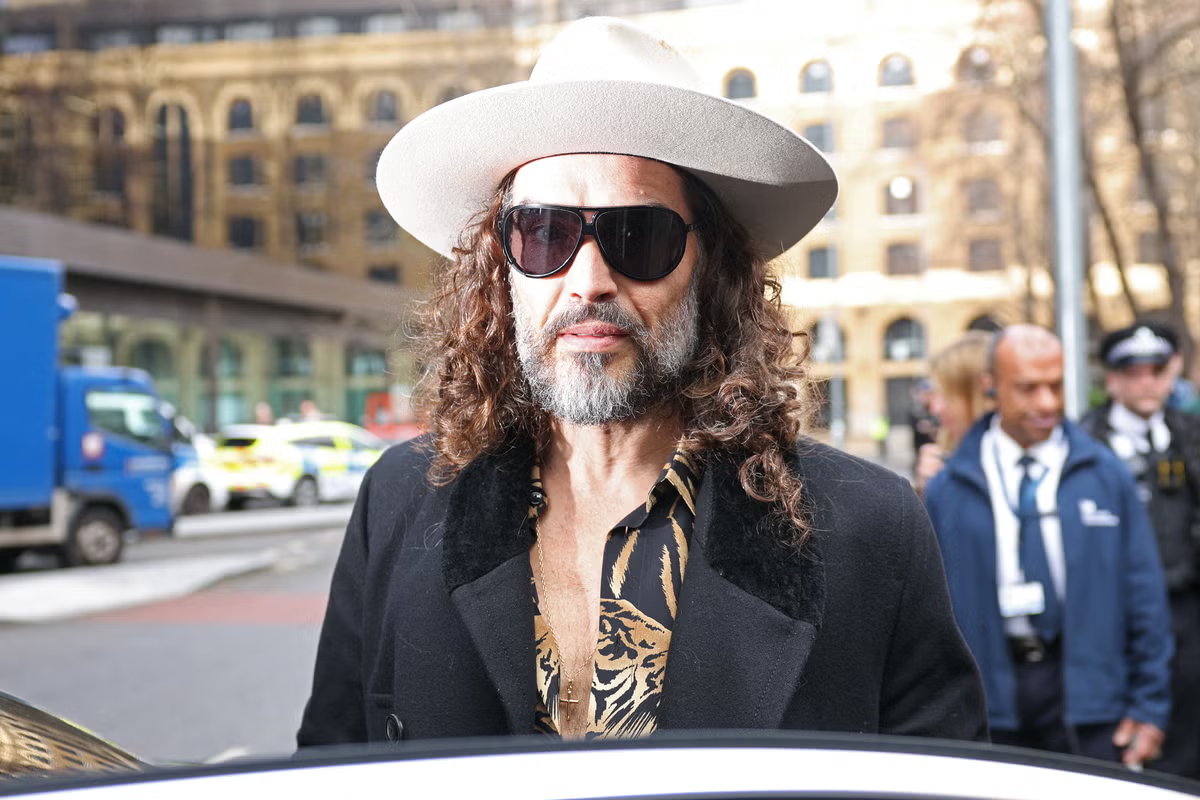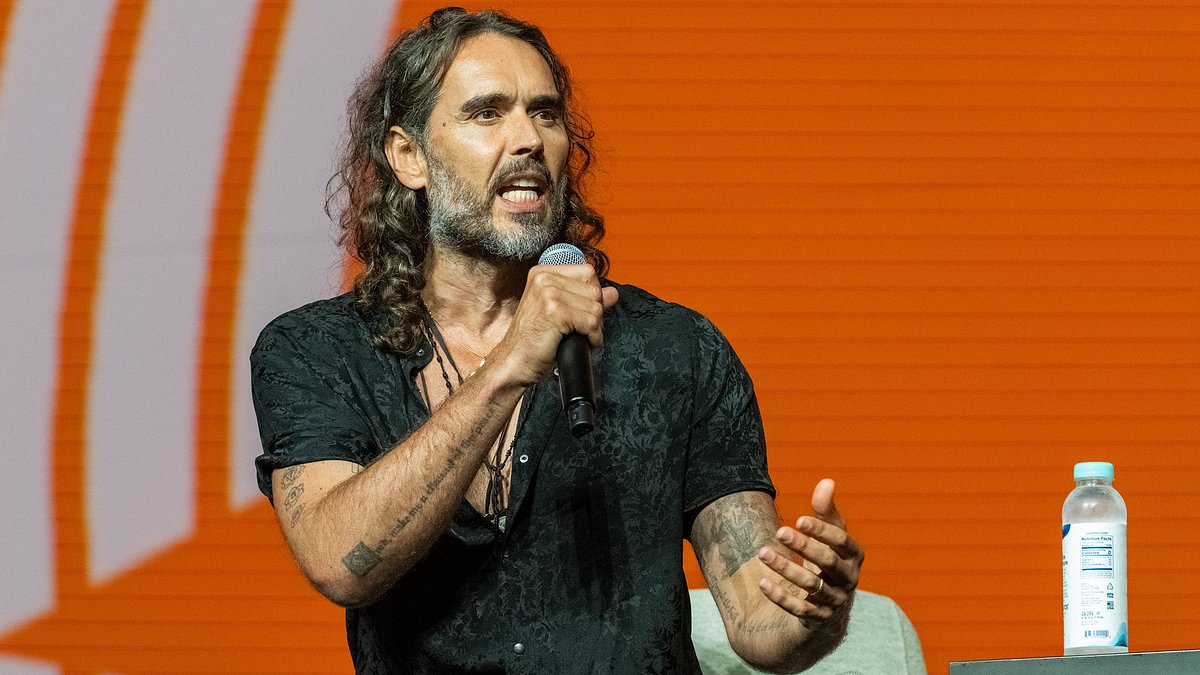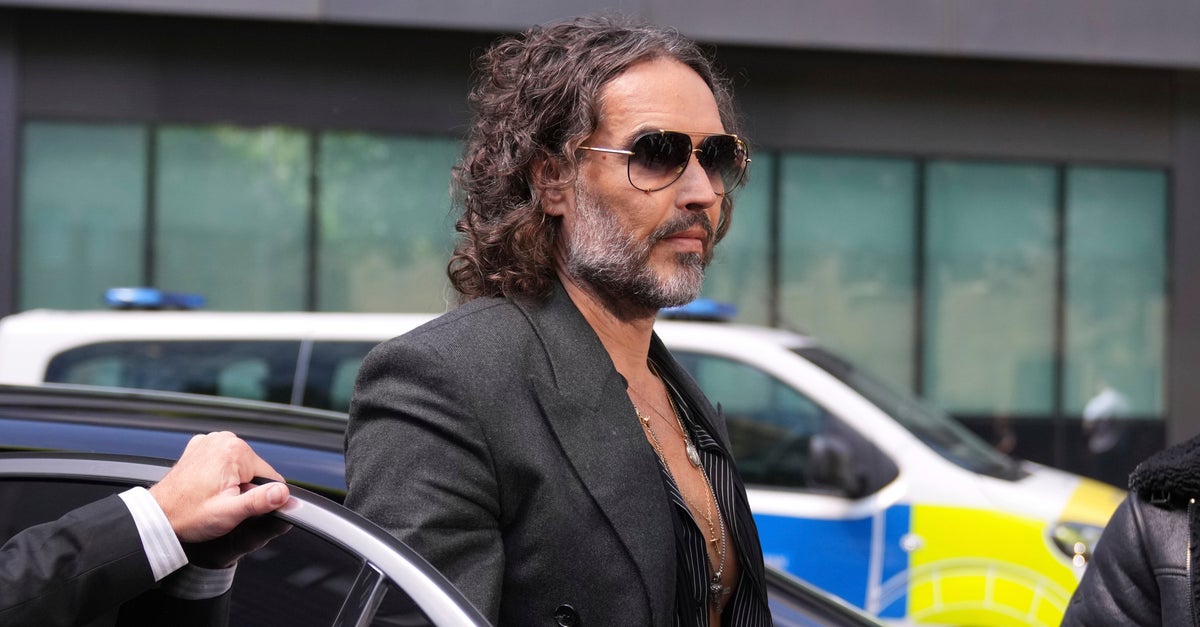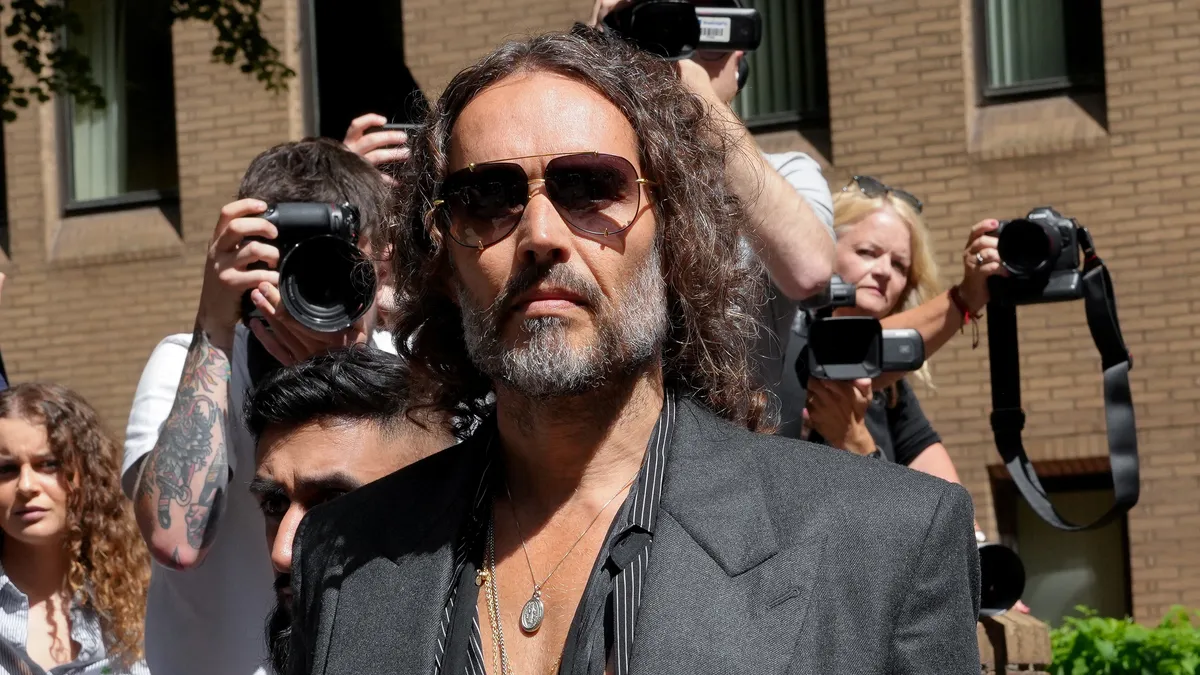
Russell Brand has settled a £220,000 legal claim over his failure to write two self-help books, in a deal that was signed before he was accused of sexual assault by multiple women. The comedian, 51, had signed a contract with publishers Pan Macmillan in 2021, offering him a total of £575,000 for 'two original literary works of non-fiction'.But the deal was terminated in 2023 shortly following the publication of an investigation into his alleged mistreatment of multiple women, which he denies. Pan Macmillan had filed to reclaim £220,000 of 'wasted expenditure' from Brand and his company, Pablo Diablo's Legitimate Business Firm. Brand, who now lives in Florida, is closing the firm, which is also owned by his wife, Laura Brand, 39, following the settlement of the disputed book deal, The Times has reported. He is currently winding up his business interests in the UK and this year sold the historic Crown Inn near Henley-On-Thames, Oxfordshire, which he had planned to partially turn into a recording studio for his social media broadcasts. Brand is due to stand trial in the UK in October for rape and sexual assault, which he also denies. Russell Brand has reportedly settled a £220,000 legal claim over his failure to write two self-help books Brand is seen walking with his wife Laura, who is also an owner of Pablo Diablo's Legitimate Business FirmBrand is said to have received £75,000 upfront for his first book and £142,000 for his second - with the remaining £179,500 due after he had finished the manuscripts and completed the surrounding promotional work.His first book was due to have been submitted in May 2021, with the second set to be delivered that October. Pan Macmillan said that he had 'failed to produce the typescripts for the books at all'.However, Brand's defence filing with the High Court showed that he denied owing the money. He said the publisher was concerned about the allegations against him and 'did not give any proper basis to terminate the contract'.It is understood that an order was signed in January by Mr Justice Morris saying both sides had agreed to a 'confidential settlement agreement'.The settlement of the case comes as Brand is facing the possible payout of millions in damages as he is sued in the US civil courts for an alleged sex assault during the filming of the comedy Arthur.During his first appearance in person in the case last month, born-again Christian Brand swore on the bible before giving evidence. He then said that at the time the Arthur attack is alleged to have happened - 2011 - he had been 'overwhelmed' with love for Katy Perry and that this meant he would never have cheated on her. The US case has been brought by an unnamed woman who claims that Mr Brand assaulted her in a bathroom while filming the movie, a remake of the 1981 Dudley Moore hit comedy by the same name. In the case, filed at the New York Supreme Court, the woman claims that Mr Brand exposed himself to her in full view of the cast and crew.Later that day, Mr Brand allegedly followed the woman - identified only as 'Jane Doe' - to a bathroom and assaulted her as a crew member guarded the door from the outside.In the deposition - where a defendant is questioned under oath by lawyers - Mr Brand was asked about his marriage to Ms Perry, 41.He said: 'I was really in love and consumed by love with a person that I really felt was - I felt changed and overwhelmed'.Asked if he and Ms Perry had been in a monogamous relationship at the time, Mr Brand said: 'Yes'.The alleged victim's lawyer Nathan Werksman asked: 'Is it your testimony that you were faithful to Katy Perry during your marriage to her?'Mr Brand said: 'Yes'.Ms Perry has never revealed the full truth about her marriage to Mr Brand, which infamously ended when he broke things off by text.She has said she keeps the 'real truth locked away' and has 'moved on' from their union.In her lawsuit, filed at a court in New York, the unnamed woman claimed that Brand 'appeared intoxicated' and 'smelled of alcohol' and was carrying a bottle of vodka on the set of Arthur.His lawyers have previously argued that although he had been playing a drunk character, in reality at that point he had not taken drugs for eight years - and suggested the claimant appeared to be 'unable to distinguish acting from reality'.
Russell Brand settles £220,000 legal claim
The comedian, 51, had signed a contract with publishers Pan Macmillan in 2021, offering him a total of £575,000 for 'two original literary works of non-fiction'.
750 words~3 min read