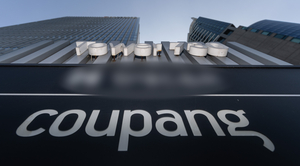
Coupang Corp.’s headquarters in Seoul. (Jung Yong-il/Hankyoreh)
Republican members of the US House Judiciary Committee have published an interim report alleging that the Korean government has carried out “discriminatory attacks” on US-owned companies.Notably, the report claims that Korea’s National Intelligence Service (NIS) basically forced Coupang employees to recover a laptop from China in the aftermath of a major data leak and then denied its involvement in the operation. It also claims that the Korean government sought to criminally prosecute an American citizen who was the temporary CEO of Coupang.The US House Judiciary Committee published a 35-page interim report titled “Closed for Competition: South Korea’s Discriminatory Attacks on American-Owned Businesses” on Wednesday.While the report was published under the name of the House Judiciary Committee, it is not a bipartisan report with an official congressional report number. Rather, it is an “interim staff report” drafted by the staff of Reps. Jim Jordan, the chairman of the House Judiciary Committee, and Scott Fitzgerald, the chairman of the Subcommittee on the Administrative State, Regulatory Reform, and Antitrust, both Republicans.The committee and subcommittee launched an investigation into the Korean government’s regulation of US-based companies on Feb. 5. As part of that investigation, they solicited documents from Coupang, Korea’s leading e-commerce firm, and testimony from Harold Rogers, the general counsel and chief administrative officer at Coupang.“South Korea has a long history of engaging in economic discrimination against foreign companies,” the report said, before citing claims by American businesses that the Korea Fair Trade Commission’s (KFTC) enforcement is marked by a “[l]ack of due process and procedural fairness.”“Even worse, the KFTC regularly uses aggressive enforcement practices in order to coerce compliance, including early morning raids, multi-day interrogations, and even the threat of criminal charges,” the report said. The report concluded that “such practices likely violate the Trump Administration’s recent trade agreement with South Korea, which specifically provides that South Korea must ‘ensure that US companies are not discriminated against and do not face unnecessary barriers in terms of laws and policies concerning digital services, including [. . .] online platform regulations.’”The report said that the Coupang online retailer has been a “consistent target” of the Korean government for years now.“Coupang was subjected to over 400 inspections by the Ministry of Employment and Labor alone in 2025,” the report said. “Between 2022 and the first half of 2025, the [KFTC] fined Coupang a total of 162.8 billion won.”“On June 11, 2026, South Korea fined Coupang over US$410 million for the [data leak], the largest fine ever imposed on a single company,” the report also asserted.But the House Judiciary Committee reserved its most trenchant criticism for the Korean spy agency’s involvement in the Coupang data leak incident and its profession of innocence after the fact.The report said that after the former Coupang employee had given testimony and digital devices to a law firm in Shanghai on Dec. 15, the NIS “told Coupang that as a foreign intelligence agency, it could not operate in China, and that Coupang would need to send one of its own employees to retrieve the devices.”When Coupang raised concerns about the legal risk of sending staff to China, the “NIS sent Coupang ‘an official letter [that] explicitly cited Article 5 of the National Intelligence Service Korea Act’ and confirmed that Coupang ‘had a legal obligation to comply with the NIS’s request,’” the report said, quoting Rogers’ deposition.Article 5 of the National Intelligence Service Act states that organizations “shall comply” with requests made by the NIS “unless there is a good reason for not doing so.”After the Coupang employee retrieved the testimony and devices from the law firm, he delivered them to the NIS in a secure location inside China without security cameras. The report claimed that the “NIS transported the evidence back to South Korea in a diplomatic pouch.”In addition, the report said that the “NIS also asked that Coupang hire divers to search for the former employee’s laptop in the river where he disposed of it.” But later, the NIS “issued a press release stating that the agency ‘ha[d] issued no instructions’ to Coupang regarding the operation.”When Rogers testified in a National Assembly hearing that Coupang had carried out the recovery operation “according to government instructions,” the NIS issued a statement describing Rogers’ claims as “entirely untrue” and asked “that the National Assembly charge Coupang interim CEO Harold Rogers with perjury,” the report said. The US House Judiciary report, which was composed by Republican Party staff, is based on testimony provided by Coupang executives and documents submitted by Coupang. It does not contain any comments by Democratic Party lawmakers and has not been endorsed by them. In addition, the report did not give the Korean government or its regulators a chance to contest the claims contained therein.By Kim Won-chul, Washington correspondentPlease direct questions or comments to [english@hani.co.kr]