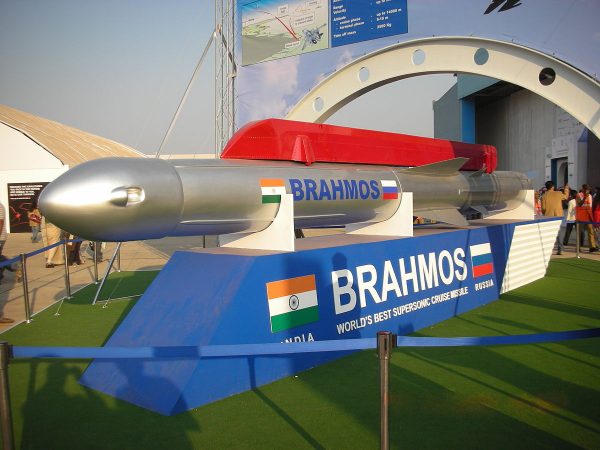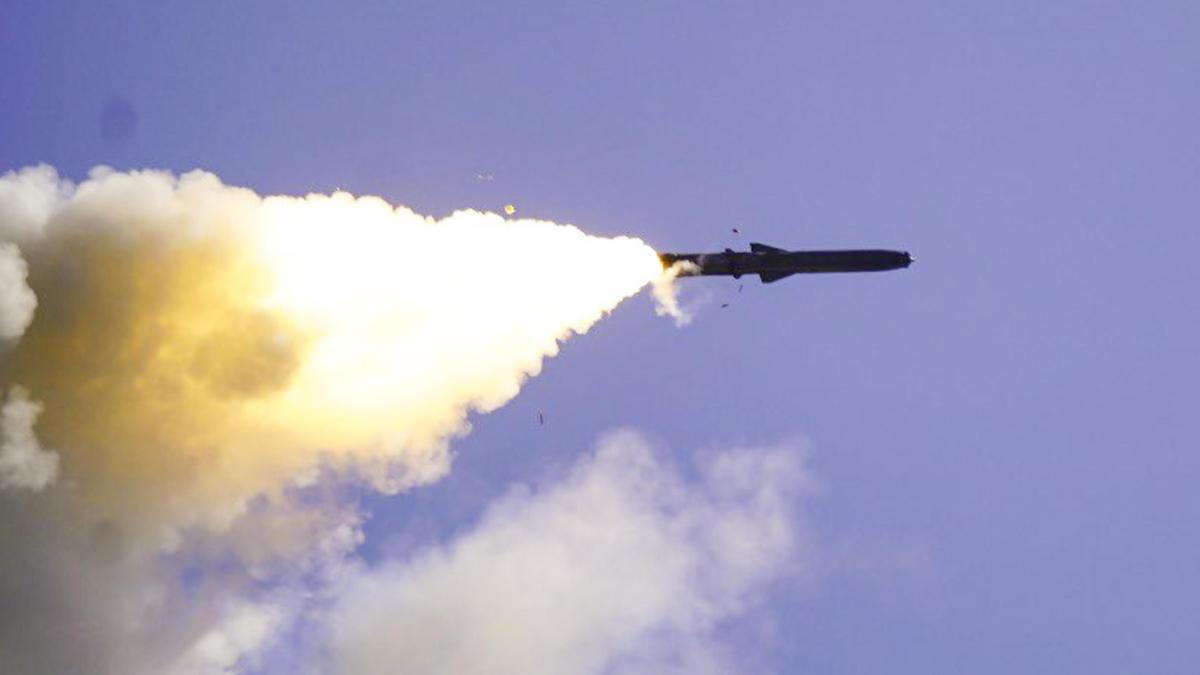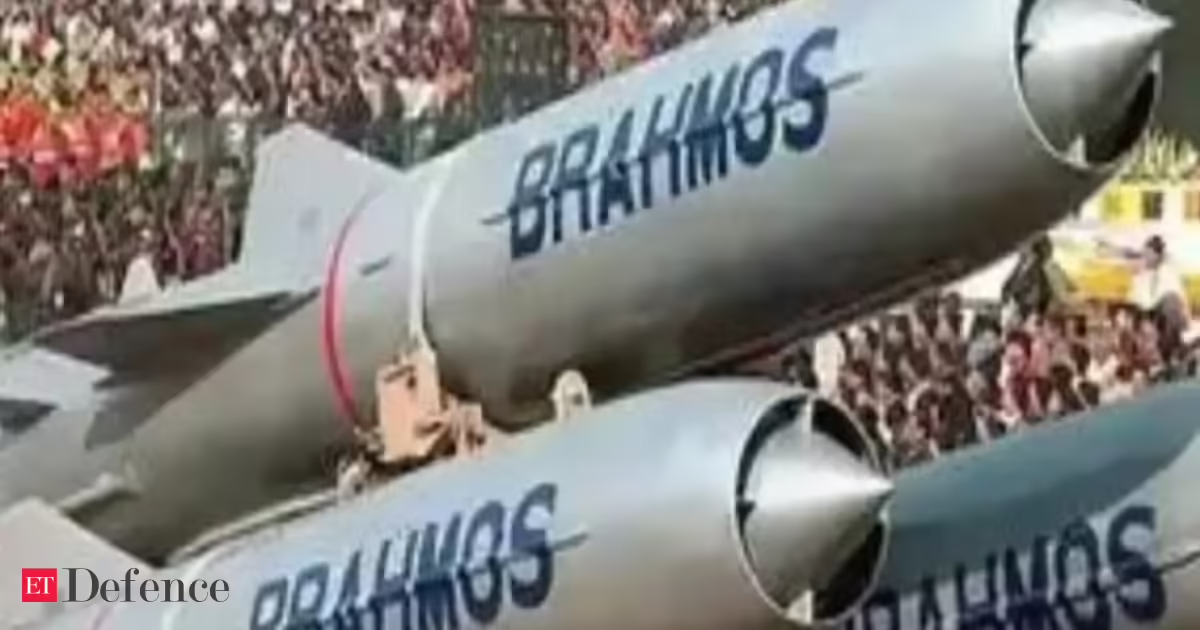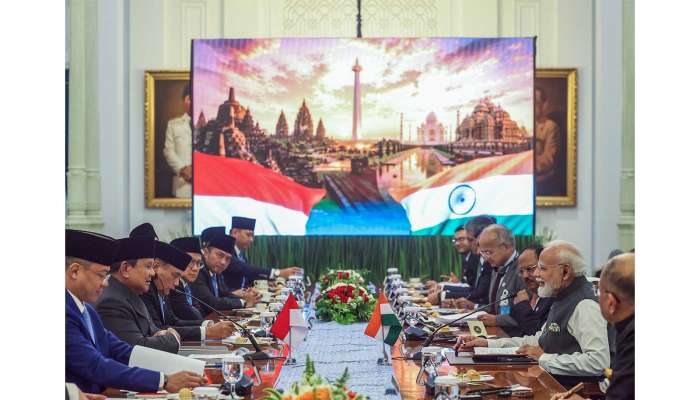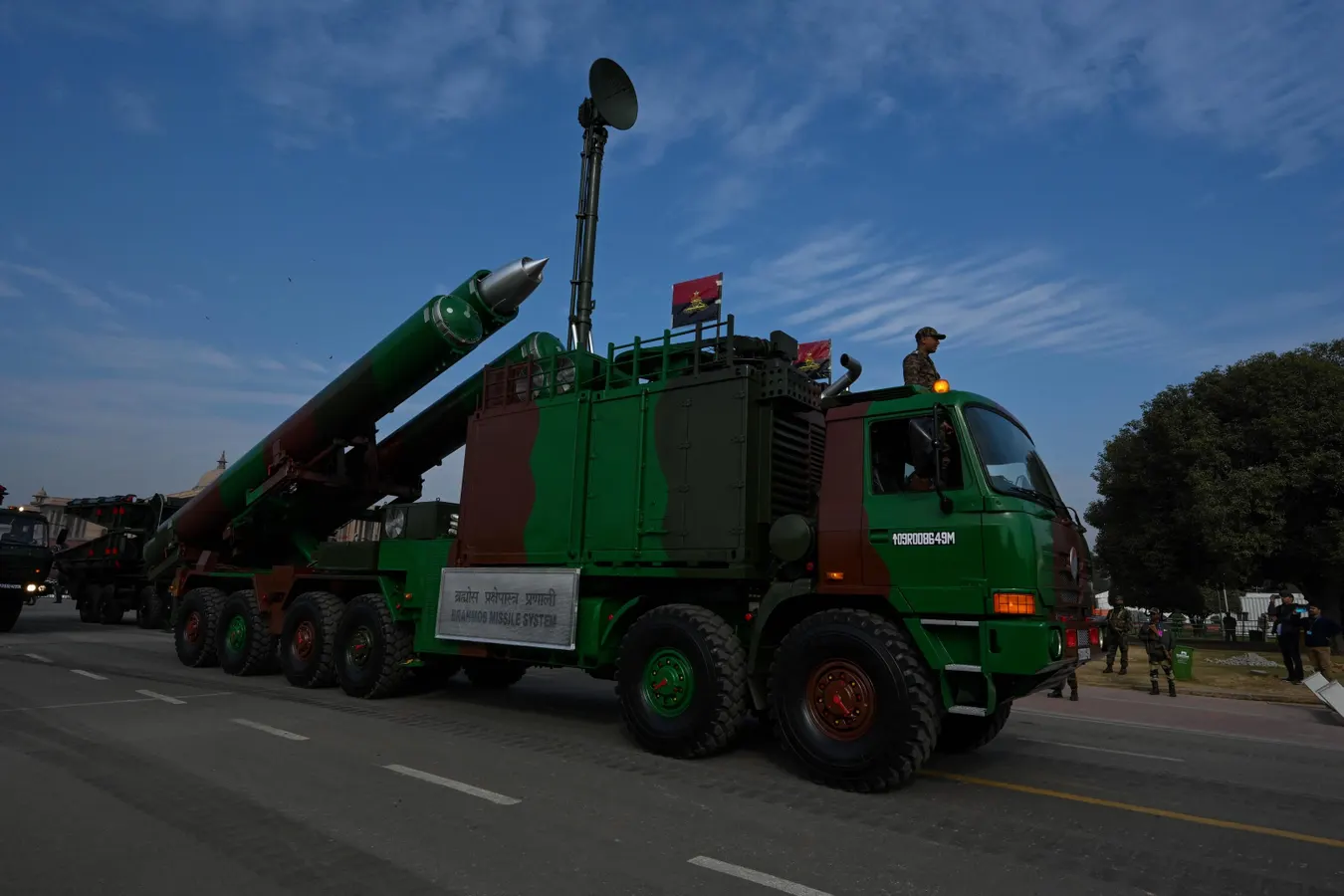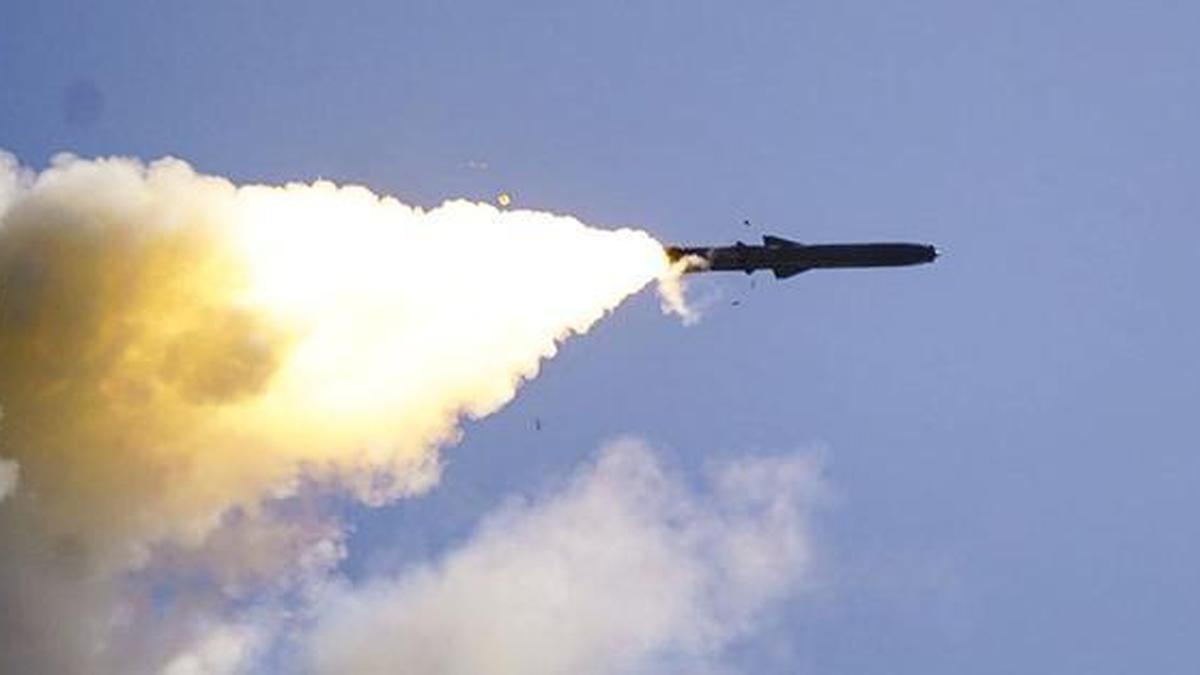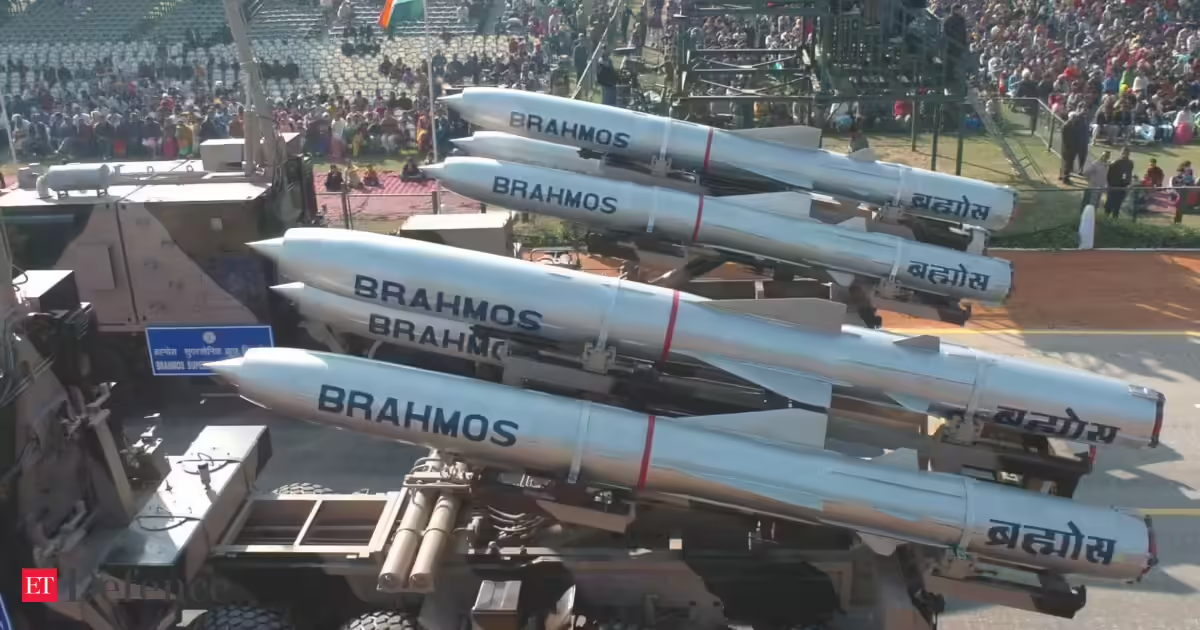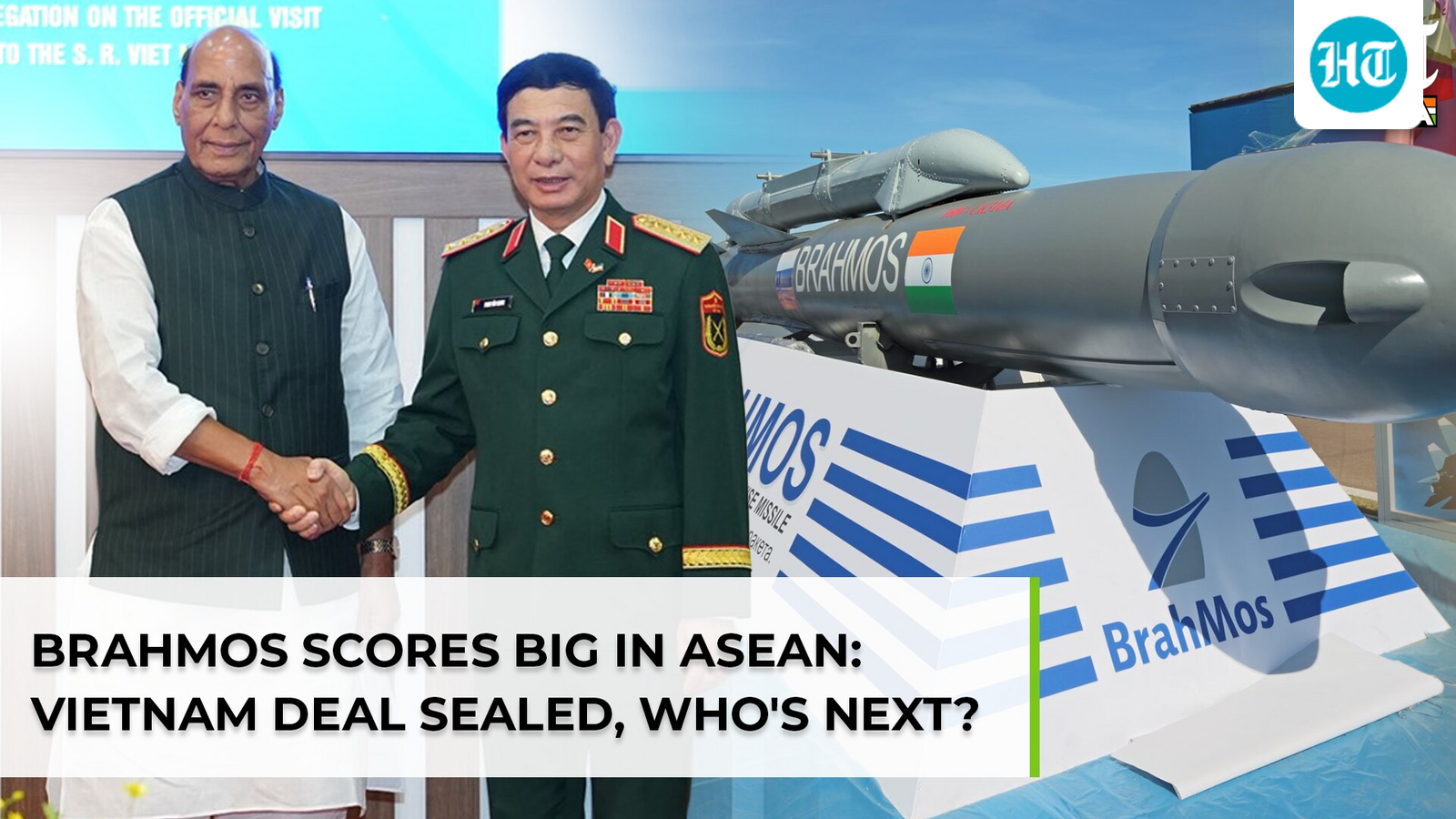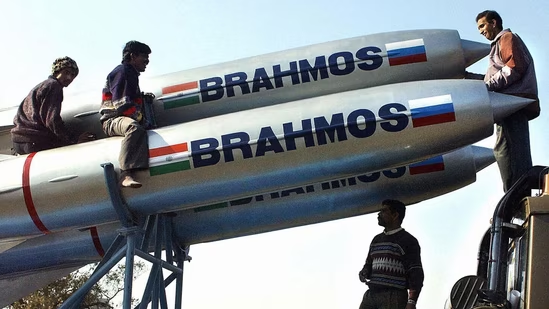
The BrahMos supersonic cruise missile, jointly developed by India’s DRDO and Russia’s NPO Mashinostroyenia (NPOM), has emerged as a cornerstone of India’s defence diplomacy and centrepiece of defence exports, which reached a historic high of ₹38,424 crore in FY 2025-26. India’s BrahMos diplomacy is strengthening its strategic partnership across Southeast Asia and the wider Indo-Pacific region. While exporting one of the world’s fastest operational supersonic cruise missiles that travels at speed of Mach 2.8-3.0, nearly three times the speed of sound, India is transitioning from a largest arms importer to a global defence exporter and a vital security provider. In this picture taken on January 22, 2003, workers clean BrahMos missiles after a rehearsal ahead of India's Republic Day celebrations (AFP/File)The BrahMos’ combat success during Operation Sindoor significantly increased global interest in the weapon systems. The missile was used to strike on nine terrorist bases located in Pakistan and Pakistan-occupied-Kashmir, and eleven military air bases and assets including Nur Khan, Rafiqui, Sialkot, Bholari, and Murid, among others. New high-resolution satellite images revealed extensive destruction to these terrorist sites and air bases. The strikes also showed BrahMos’ capability to penetrate active air defence (AD) systems. Following the military operation, the missile has emerged as the centrepiece of India’s defence exports with growing interest from countries across the Southeast Asia, West Asia, Africa, and Latin America. As of now, more than 15 countries have expressed interest to procure the missile as they seek beyond Western-made weapon systems.The Philippines: In January 2022, the BrahMos Aerospace Private Limited (BAPL) and the Philippine Department of National Defence had signed a deal worth approximately $375 million for exporting the multi-battery Shore-Based Anti-Ship Missile System, which is now fully operational within the Philippine Marine Corps. The deal marked a historic milestone as India’s first-ever strategic missile export to a friendly foreign country (FFC) and an important step forward for its policy of promoting responsible defence exports. The deployment of these missiles significantly strengthens the Philippines’ coastal defence and anti-access/area-denial (A2/AD) capabilities amid increasing geopolitical tensions in the South China Sea (SCS) over China’s increasing military assertiveness. The Philippines sees the BrahMos missile as a game changer, which provides credible defence and deterrent capabilities, and a major source for the modernisation of its armed forces.Indonesia: The BAPL and Indonesian ministry of defence have signed a defence deal for the procurement of land and naval variants of the BrahMos missile, which is in its final stages. After the Philippines, Indonesia has become the second Southeast Asian nation to acquire the missile. The deal, which is valued between $200 million and $450 million, include the sale of one battery comprising launchers, radars, and missiles. As part of the modernisation of defence capabilities, Indonesia seeks to procure BrahMos to enhance its costal defence and maritime security across its extensive archipelagic geography. Indonesia possesses several critical choke points such as the Malacca, Sunda, Lombok, and Makassar straits. The BrahMos procurement could fill a range gap in Indonesia’s current anti-ship missiles at these choke points, while supporting its commitment to maintain the security of the world’s sea routes. This is set to reshape regional deterrence from the SCS to the Indian Ocean.Vietnam: India has signed a defence deal with Vietnam for exporting the naval variant of the BrahMos missile. The deal is reportedly valued at around $629 million, which includes the supply of missiles along with shore-based coastal defence batteries, the provision of essential training and logistical support. This deal strengthens India’s strategic partnership with Vietnam and marks another major milestone in its defence export ambitions. While the acquisition of the missile system will help Vietnam to strengthen its maritime and coastal defence amid rising maritime tensions in the SCS. United Arab Emirates (UAE): India and the UAE are engaged in active discussions for possible export of BrahMos missile. They are also negotiating the sale of indigenous Akashteer automated air defence system, which integrates radars and sensors to respond to aerial threats. The potential deal underscores the UAE’s efforts to strengthen its air and missile defence capabilities. In the wake of Iran war, Abu Dhabi seeks to diversify its defence procurement and secure its strategic assets. The deal also aligns with India’s goal of deepening ties with the Gulf countries and signifies its growing role as a defence exporter. Other potential buyers: Currently, advanced defence deals and active procurement talks are progressing with other Southeast Asian nations, including Malaysia, Thailand and Singapore. Given that the Southeast Asian nations are facing threats from China’s growing military assertiveness and have active ongoing disputes with it, acquiring the BrahMos would help them employ A2AD strategies against China. While India supports ASEAN centrality and sees the nations as ‘friendly foreign countries’ with whom it “can share advanced defence technologies”. Therefore, the BrahMos exports to the regional countries represent growing security cooperation between them. This is also solidifying India’s strategic footprint in the region, which occupies a key position in its Act East Policy. This development signals a strategic shift in India’s BrahMos diplomacy, particularly in the region where China has a dominant presence.Meanwhile, India’s BrahMos diplomacy has drawn serious interest from other regional players such as Saudi Arabia, Qatar, Oman, Brunei, South Africa, Argentina, Brazil and Chile. It is strengthening its maritime security partnerships and geopolitical influence by providing a credible and non-western option for maritime deterrence. The missile has thus opened a new era of cooperation and defence diplomacy between India and its close strategic partners. This highlights the potential for India to play a larger role in global arms market.Furthermore, the lessons from contemporary and ongoing geopolitical conflicts indicate that defence preparedness cannot depend upon fragile or overly concentrated supply chains. Notably, nations today require resilient, trusted, diversified, and technologically adaptive defence industrial ecosystems. India is ready to work with friendly strategic partners across the region and beyond to build such a resilient supply chains and trusted defence partnerships besides securing maritime commons. Hence, India’s BrahMos diplomacy has emerged as a key instrument for deepening its strategic ties, expanding defence exports, and positioning itself a reliable defence partner in the evolving Asian security environment.(The views expressed are personal)This article is authored by Saroj Bishoyi, senior fellow, Centre for Technology and Scientific Studies, Vivekananda International Foundation, New Delhi.
India’s BrahMos diplomacy in Southeast Asia
This article is authored by Saroj Bishoyi, senior fellow, Centre for Technology and Scientific Studies, Vivekananda International Foundation, New Delhi.
1,042 words~5 min read