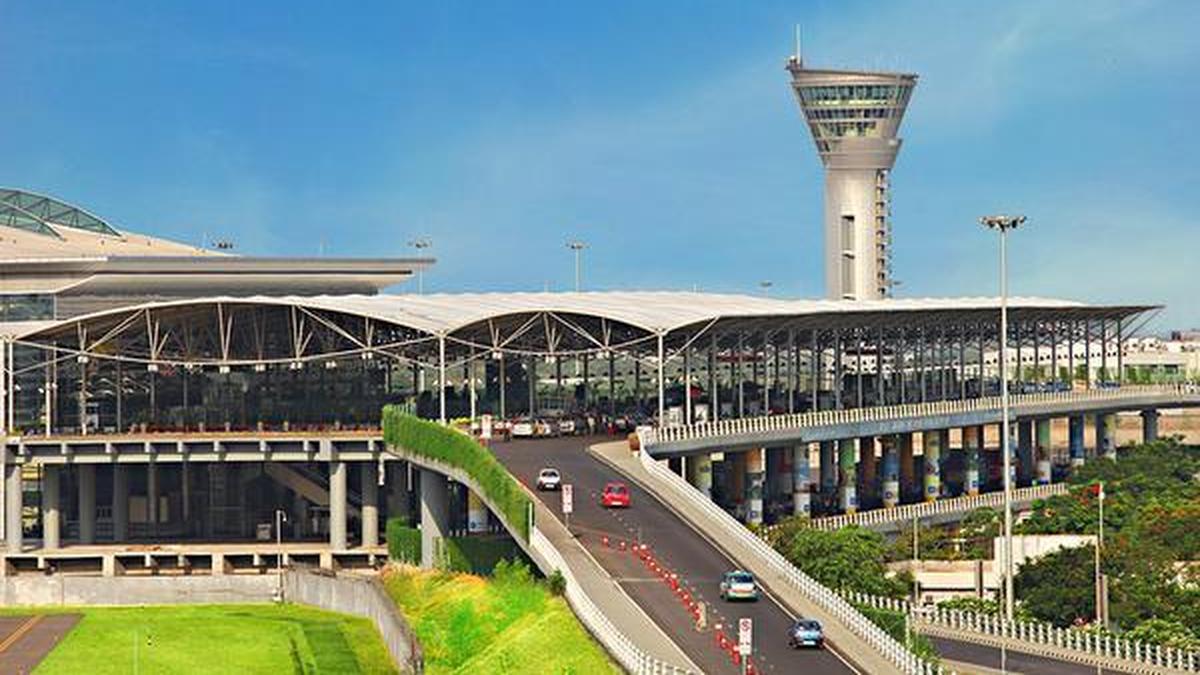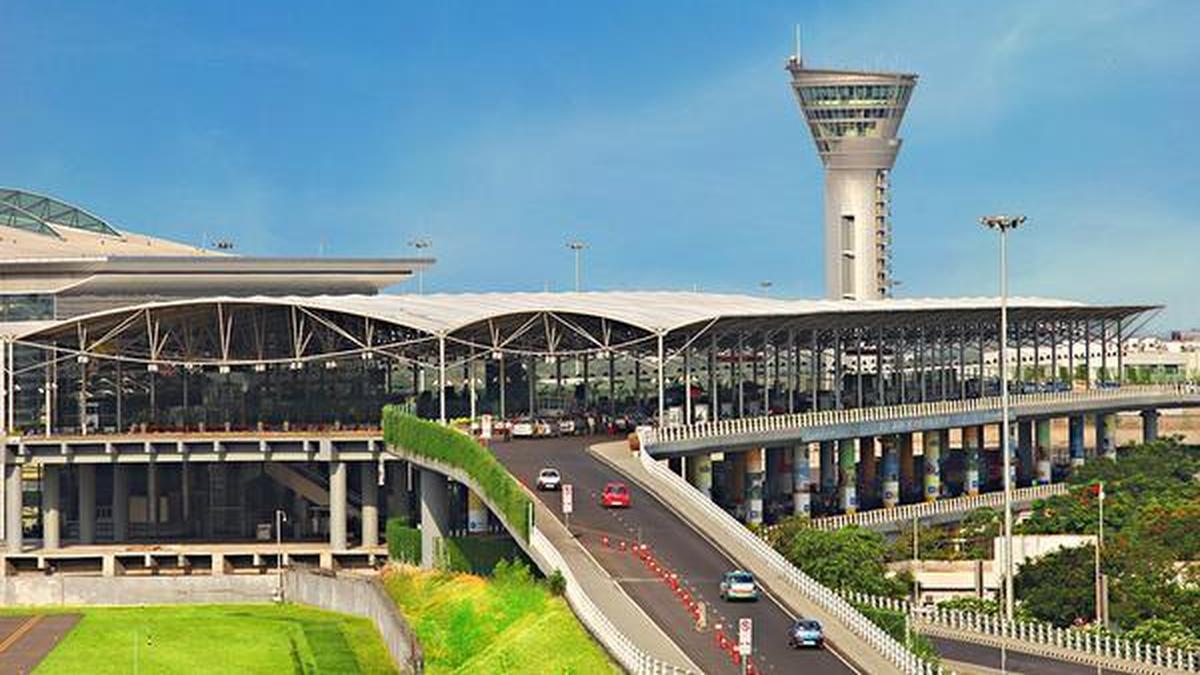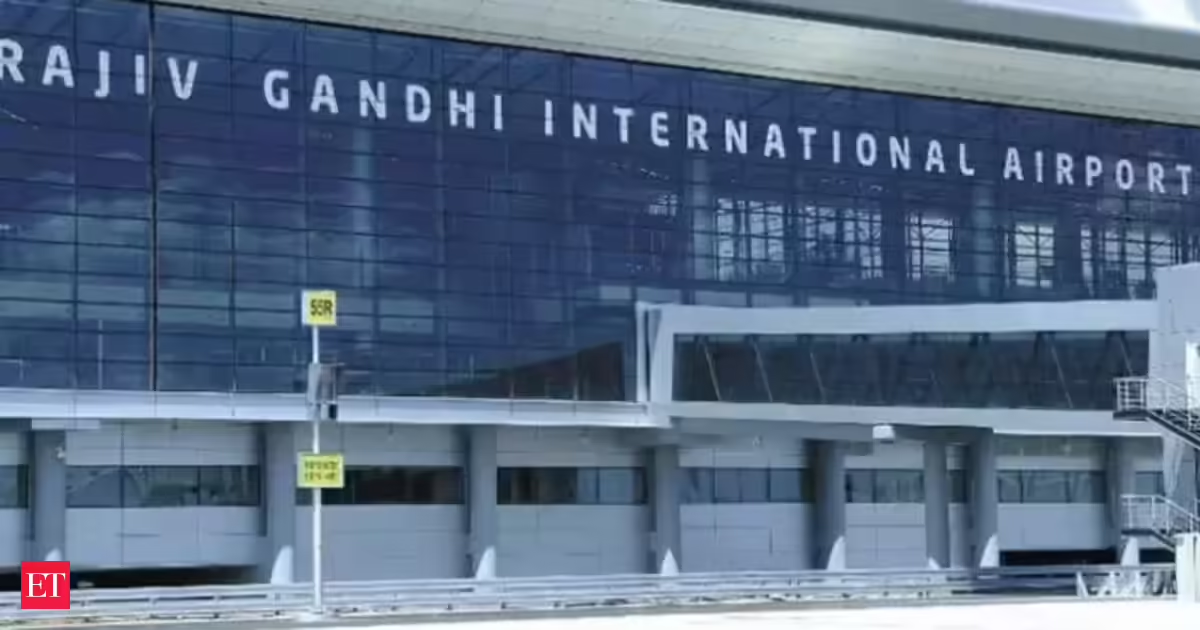
SynopsisHyderabad airport is proposing a shift in passenger charges, reducing fees for departing flyers and introducing a new charge for arrivals. This aims to ease the burden on departing passengers and align with other major airports. The airport operator plans significant investments in expansion, including a new terminal and runway, to accommodate projected traffic growth.File photo: Rajiv Gandhi International Airport, Hyderabad Air travellers using Hyderabad's Rajiv Gandhi International Airport (RGIA) could soon pay airport user charges differently, with the airport operator proposing to reduce the fee paid by departing passengers while introducing a separate charge for arriving travellers as part of its tariff proposal for the next five-year control period.GMR Hyderabad International Airport Ltd (GHIAL) has submitted its Annual Tariff Proposal (ATP) to the Airports Economic Regulatory Authority (AERA) for the fourth control period beginning September 1, 2026. The proposal seeks approval for revised airport charges until March 31, 2031.As of March 31, 2026, domestic passengers pay a UDF of ₹750 only at departure, while international passengers pay ₹1,500. Under the proposal, domestic passengers would pay ₹580 when departing and ₹170 on arrival, while international passengers would pay ₹1,150 on departure and ₹350 on arrival. This keeps the total UDF unchanged at ₹750 for domestic and ₹1,500 for international passengers, but reduces the amount paid at departure by about 23%, with the balance collected from arriving passengers.The proposed charges would remain unchanged until March 2030 before falling in the final year of the control period. GHIAL said this segregation is intended to ease the burden on departing travellers while aligning Hyderabad's fee structure with several other major airports. In the final year of the proposed tariff period (April 2030-March 2031), however, the airport has proposed an actual reduction in the total UDF to ₹520 for domestic passengers (₹400 departure and ₹120 arrival) and ₹1,140 for international passengers (₹880 departure and ₹260 arrival), representing an overall cut of about 31% and 24%, respectively, from the current rates."Such a segregation leads to a reduction for departing passengers UDF by 23% as the balance is charged to arriving passengers. Charging of arrival passengers has been approved by Authority for many of the major airports, and even GHIAL would like to propose the same," the company said in its filing.The airport operator said it plans to invest around ₹13,975 crore over the next three to four years to build a new passenger terminal and runway as Hyderabad airport prepares for higher traffic."GHIAL is embarking on a major expansion project over the 4th Control Period to meet the growing traffic at RGIA, Hyderabad which is expected to reach 51 MPPA by FY31. We are planning to spend about Rs 13,975 Cr over a period of 3-4 years to develop a new terminal and a new runway," it said.According to the proposal, the airport expects passenger traffic to reach 51 million passengers per annum (MPPA) by FY31.Besides passenger charges, GHIAL has proposed revised landing, parking and other aeronautical charges payable by airlines, along with incentive schemes to encourage airlines to launch new domestic, international and cargo routes from Hyderabad.To attract more airlines, the airport has proposed a Variable Tariff Plan (VTP) that would waive or sharply reduce landing charges for airlines opening new routes. For some new international long-haul routes, airlines could pay zero landing charges and zero UDF in the initial years under the incentive programme.GHIAL said Hyderabad is emerging as an aviation hub and needs stronger international connectivity."RGIA is continuously growing into a major hub in South India, with further growth potential. In order to attract both long-haul international connections as well as further expand domestic routes, GHIAL intends to introduce Variable Tariff Plan primarily to support airlines for new route development, growth of air travel and faster bounce back of air traffic," the company said.The airport operator has also asked AERA to consider the Telecom Disputes Settlement and Appellate Tribunal (TDSAT) judgment while issuing the tariff order, arguing that there is no stay on the ruling despite the matter being challenged before the Supreme Court.The proposed tariff revision will come into effect only after AERA completes its consultation process and issues a final order. Until then, existing airport charges will continue to apply.Read More News on...moreless
Hyderabad flyers may soon have to pay airport fees for arrivals too
Hyderabad airport is proposing a shift in passenger charges, reducing fees for departing flyers and introducing a new charge for arrivals. This aims to ease the burden on departing passengers and align with other major airports. The airport operator plans significant investments in expansion, including a new terminal and runway, to accommodate projected traffic growth.
703 words~3 min read