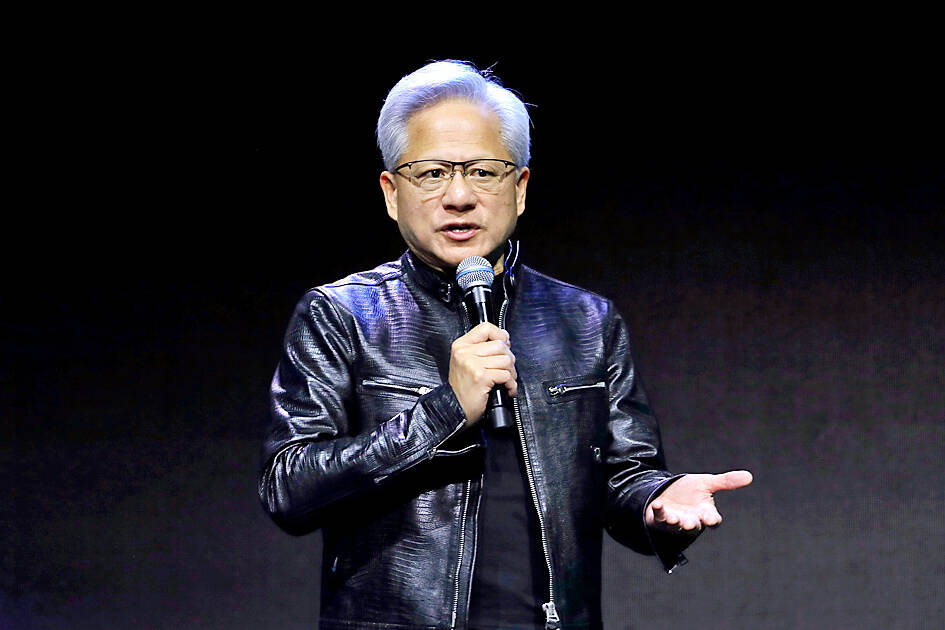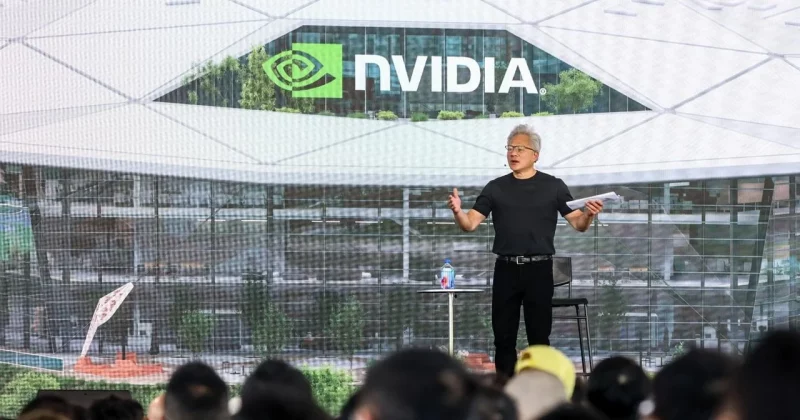
In late May, during Nvidia’s CEO Jensen Huang’s visit to Taiwan, local activists from the environmental group Greenpeace intercepted him to deliver a five-layer model cake reading: “AI Needs Renewable Energy.” The unexpected stunt was a reference to Huang’s own recent industry remarks, which stated that energy is the foundational layer of AI development.
The activists urged the world’s biggest chip designer to fix the massive environmental damage it is causing in Taiwan, a critical manufacturing base for Nvidia that hosts more than 90 percent of global leading-edge chip manufacturing.
Riding the wave of the global AI frenzy led by generative AI breakthroughs, Nvidia’s AI GPU microchips have made it the world’s most valuable company, and Huang one of the wealthiest people on the planet. For every $100 spent by U.S. AI companies, $60 is spent on Nvidia’s GPUs, Huang estimated.
In the United States and other countries, anger is rising at the prodigious energy and water demands of gargantuan AI data centers. But there is a hidden cost: the toxic supply chain that manufactures advanced semiconductors that fill those data centers. Over the past three years, Nvidia’s supply chain emissions have more than doubled, and the trend is likely to continue as the company’s GPU shipments are forecast to grow at 26 percent per year.