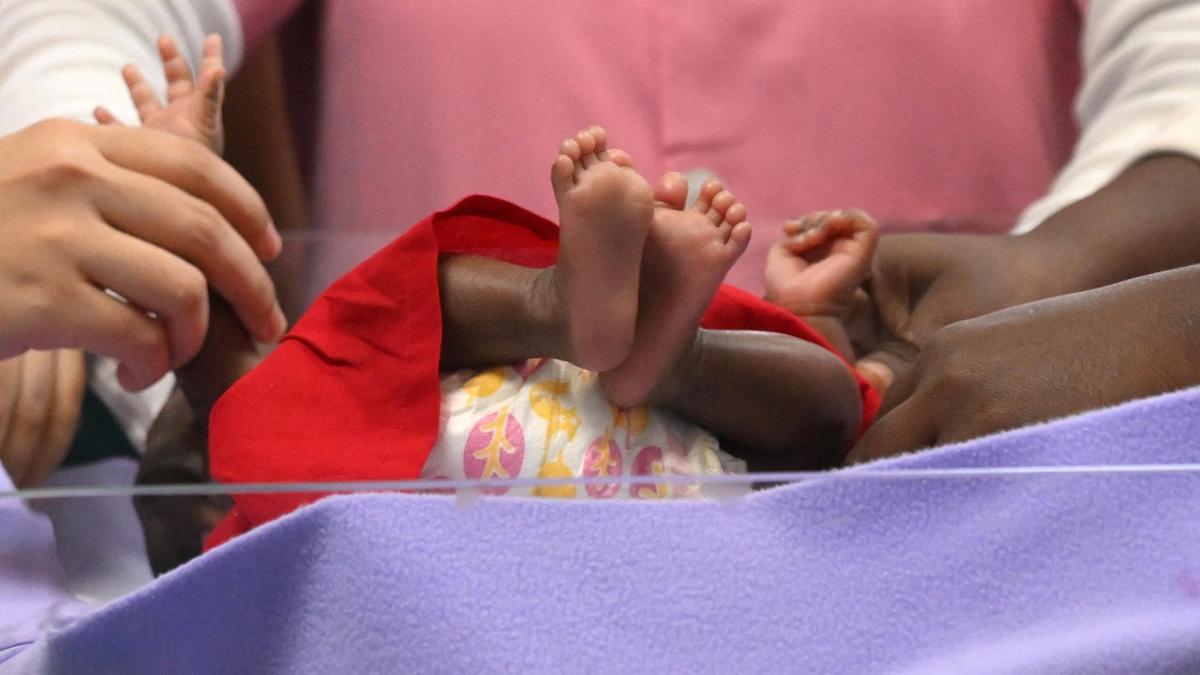
The story so far: India’s latest civil registration data, CRS 2024, was released on Wednesday (July 1, 2026) with the latest figures regarding birth rate, death rate, stillbirths and sex ratio at birth, as determined by registration of these events. While indicating near-universal coverage of births, though the registrations have improved vastly across the country, there remain gaps, the data says. What is the CRS? Birth and death are the two most important vital events that define the life of an individual. Not only do they describe the legal existence of an individual, but registration of these events is a primary source of vital data of the population to which they belong. Civil Registration is a continuous, permanent, compulsory recording of the occurrence and characteristics of vital events, like births, deaths and stillbirths. These vital statistics are invaluable for planning, monitoring and evaluating various programmes related to primary health care, family planning, maternal and child health, education etc. Looking at data from CRS, birth registration has hit 99.1% and death registration has improved to 99.4% in 2024. Of course, there are regional differentiations. 13 States have birth registrations in the high 90s, and 15 States have similarly high death registrations. India’s sex ratio at birth is 917 females per 1,000 males, meaning that 917 girls are born for every 1,000 boys. The data indicates that the sex ratio at birth is improving in some places, but the progress is uneven across States and Union Territories. The highest sex ratio at birth, based on registrations, was in Arunachal Pradesh at 1050 females per 1000 males. It was followed by Andaman & Nicobar Islands (984), Meghalaya (974), Mizoram (972), and Kerala (970). Nagaland (806), Lakshadweep (865), and Jharkhand (890) had the lowest ratios. Historically, with its son preference, India has had a problem maintaining normal sex ratios at birth. The skew has always been towards more boy babies than girls, though female babies are biologically the hardier gender. Haryana and Punjab have recorded the lowest sex ratios at birth, with the former recording 834 girls per 1000 boys and the latter, 846, during the 2011 census. The Indian state has waged a war for decades against this, in an attempt to reduce the skew. As per CRS 2024, the number of stillbirths in 2024 was recorded as 81,117, with 69% of stillbirths happening in urban centres. Registered births rose from 252.1 lakh in 2023 to 254.7 lakh in 2024, while registered deaths increased from 86.6 lakh to 89.4 lakh. What does increasing births and deaths mean? Increasing number of births and deaths do not necessarily mean that the birth rate and death rates are rising or falling. In India, which has shown a falling Total Fertility Rate dropping below replacement levels, it only indicates that number of people registering births and deaths has increased. While in India, the registration of births and deaths is mandatory under provisions of the Registration of Births and Deaths (RBD) Act, 1969(18 of 1969), it has been an uphill task to exact compliance in many States. The issue of under-registration came into sharp relief during the COVID-19 pandemic when calculating excess mortality data. The reporting and application forms were comprehensively amended and simplified in December 2006, to make the forms more user-friendly and to eliminate redundant data. The United Nations Economic and Social Commission for Asia and the Pacific (UNESCAP) has, over the past decade, made efforts to strengthen Civil Registration and Vital Statistics (CRVS) systems in the region, including India. They have focused on deploying a range of improvement tools aimed at achieving universal civil registration and generating reliable vital statistics for reporting and planning. India’s efforts to simplify the civil registration system too was in sync with this regional progress agenda. The civil registration system of any country is the bedrock of a modern society, providing crucial data that will help the government plan policies and interventions. Civil registration is the continuous, permanent, and compulsory recording of vital life events like births, deaths, and marriages. While providing citizens (via certificates) with valid legal identities, it is equally crucial to generate vital statistics essential for governments to plan schemes – public health, education, civic and social services – for the citizens. A reliable, comprehensive record of vital statistics will be essential to determine what services should be provided, the quantum and to which group, so that they are relevant and particularly useful. Working with wrong, inadequate or inaccurate capture of data will also frustrate the proper implementation or delivery of government services.
Towards robust civil registration systems — CRS 2024
Explore India's CRS 2024 data revealing vital statistics trends in birth, death, and sex ratios essential for effective policy planning.
756 words~3 min read