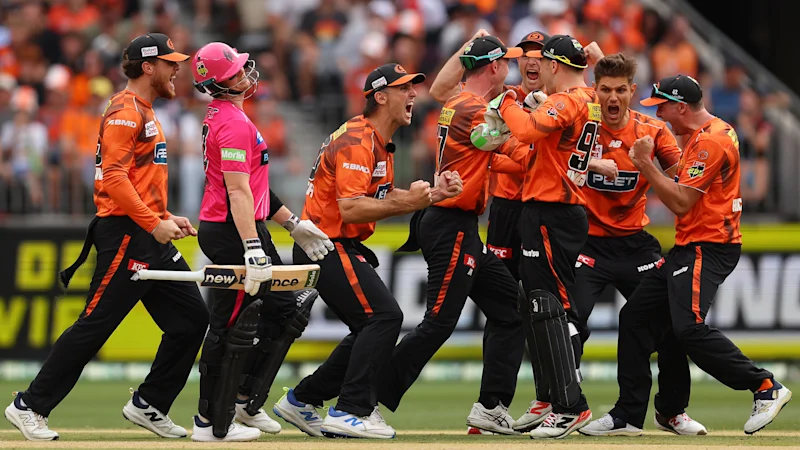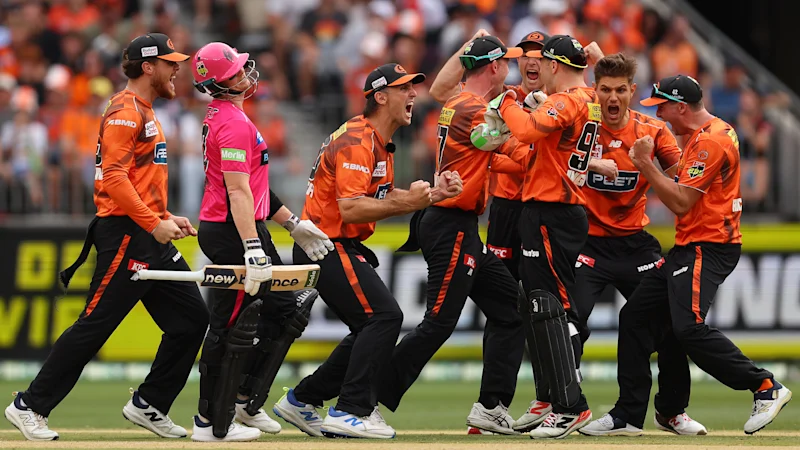
July 2, 2026 — 3:57pmPlayers boss Paul Marsh has confirmed top Australian cricketers have been offered more than $1 million apiece to abandon the Australian summer and play in the privately owned South African Twenty20 competition, amid concerns about unclear plans to sell stakes in Big Bash League teams.Marsh also confirmed that some Australian players were still yet to sign their central contracts with Cricket Australia for this summer, even though the new financial year kicked in this week.The Perth Scorchers won last summer’s BBL title.Getty ImagesCricket Australia and the Australian Cricketers Association are currently in negotiations for a way to put more BBL salary cap money into the hands of the best Australian players, with the overseas player draft likely to be scrapped to meet that end.This masthead previously reported that a group of senior players would seriously consider asking Cricket Australia for no-objection certificates to play in the SA20 in 2028 if they could not be assured of what they see as fair market value for their services in the BBL. Australian captain Pat Cummins denied considering the SA20 in a social media post.Talks between CA and the ACA are still continuing, in parallel with wider discussions about the future of the BBL and possible private investment. The sale of stakes in teams is currently up in the air pending other issues for agreement between CA and the states, including new governance for CA and the BBL.Marsh, however, made it clear that players were awaiting those outcomes in an environment where rival leagues were circling. The best Australian players currently taking part in the BBL are paid somewhere around $300,000 per season or less. CA and the ACA want to find ways to ensure those players receive something closer to $800,000 per season.“Some of our players have been offered in excess of $1 million Australian to go to the SA20,” Marsh told this masthead. “When you compare that to what they’re earning in the BBL, in some cases it is five times plus.“It’s definitely real, there are lots of players who are getting offered pretty significant financial outcomes to go, and there are players who are weighing that up. That’ll be difficult if they’re Australian-contracted players, but if they’re not it becomes a bit easier.“In a perfect world our players would rather stay here and play in the BBL and sign Australian contracts, but there are some realities here we’re all aware of. There are real opportunities out there.”Asked how many players Australian cricket stood to lose to South Africa and elsewhere should the BBL salary cap not rise, Marsh said he was still hopeful that a mass walkout of players to freelance on the franchise circuit could be avoided.“Hopefully not any, because we land on a deal that will allow us to keep our players here, that’s the goal,” he said. “But we’re also in a world where players do have more options than they’ve ever had. It’s something we’re very aware of the threat here and we’re trying to do something about it.ACA chief executive Paul Marsh.Getty“Some [players] think we should push ahead with privatisation, some don’t think we should. But there’s a series of opportunities in front of our players at the moment, so they’re trying to understand where this is all going, so they can help inform decisions they’re going to make.“The schedule is one of the biggest issues in cricket, and we need to get to a point where we have windows for international cricket, so the players don’t have to make some of the choices they’re currently making.”Should the sale of BBL clubs go ahead in any form, it would open up a renegotiation of the collective agreement between the players and CA that currently runs until 2028. The ACA wants the players’ revenue percentage to increase from its current level of 27.5 per cent to more than 30 per cent, a prospect that has not gone down well with CA or the states.Before that disagreement can be thrashed out, the governance model of Australian cricket is likely to change. Marsh said the players were adamant that an independent review was preferable to a negotiated deal between CA and states.“If they’re pushing down the path of a governance review, we think it should be an independent review,” Marsh said. “To work out what the best governance model is for Australian cricket, rather than a compromise deal between CA and the states.“That meeting provided a level of unity, but the devil’s in the detail here. We’ve got some concerns about the potential governance changes that could come from this, and really what’s needed here is an independent review of the governance model rather than some sort of negotiated outcome, because it’s probably the biggest issue in Australian cricket and it does need to be worked through.“In terms of what the governance of the BBL looks like, we want to have a serious discussion around that, and then the state funding model and the MoU are all tied into the overall finance model.”News, results and expert analysis from the weekend of sport are sent every Monday. Sign up for our Sport newsletter.From our partners
Million-dollar offers: South African league could poach Australia’s top cricket players
Players boss Paul Marsh has confirmed top Australian cricketers have been offered more than $1 million apiece to abandon the Australian summer and play in the privately owned South African T20 competition, amid concerns about unclear plans to sell stakes in Big Bash League teams.
860 words~4 min read