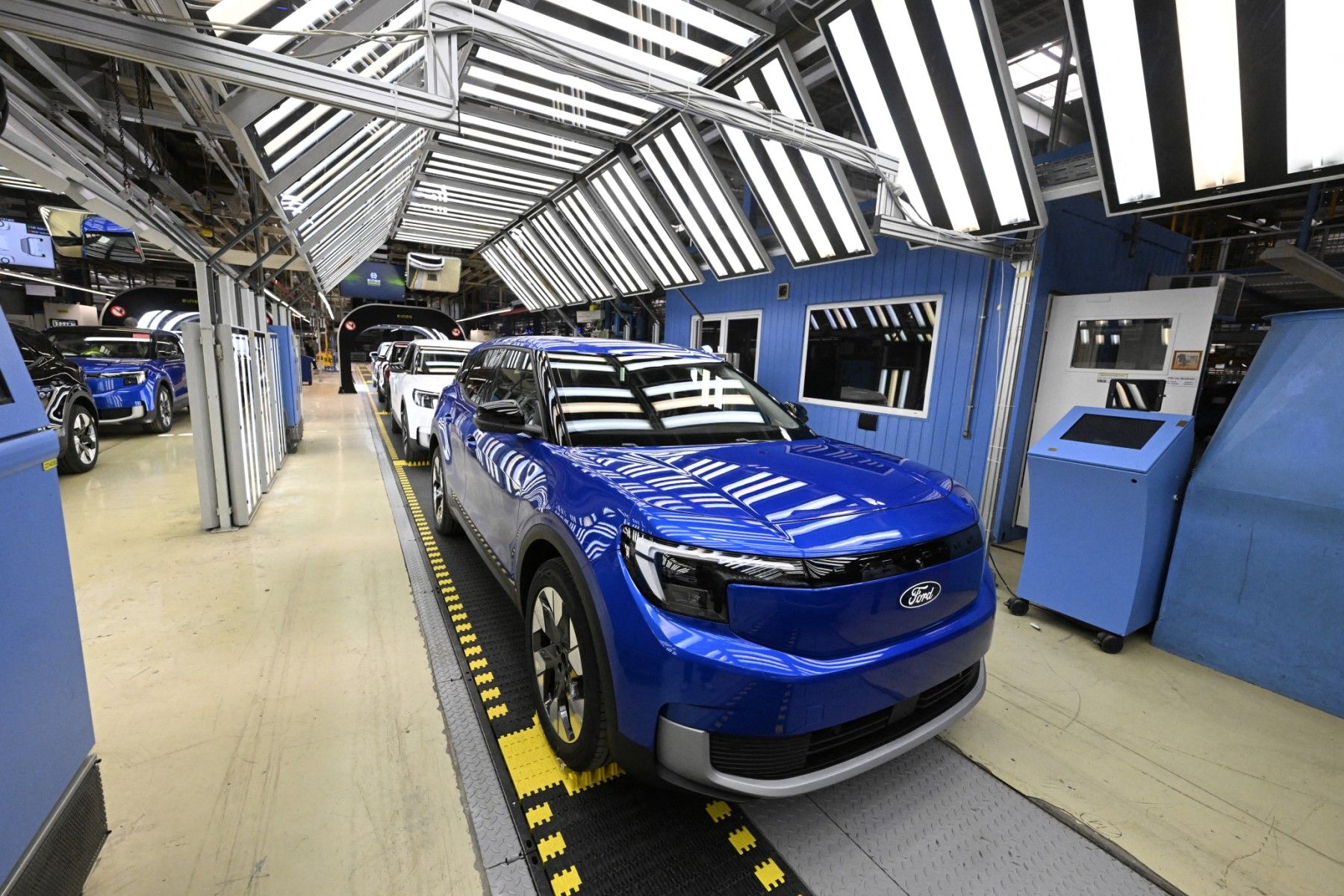
Ford's decision to rehire around 350 experienced engineers after AI-powered quality systems failed to meet expectations underscores the limits of automation in complex manufacturing. According to Silicon Canals, the move is less a retreat from AI than a recognition that seasoned human expertise remains indispensable for building, training and refining intelligent systems.Artificial intelligence came with a bang and changed the face of corporations. It entered our lives much like a Bollywood movie actor, an ultimate savior. Writing an email? AI it. Want to make a PPT? AI it. Don't know coding? AI it. And of course, the companies felt it was like a magic wand. They started chunking off the employees and substituting them with the bots. And at a point in the middle of last year we all believed we would be replaced forever. Ford Motor Company also did the same.However, the script completely flipped here. It had to rehire 350 veteran engineers after discovering that AI-driven quality inspection systems and automated manufacturing processes fell short of delivering the product quality it had envisioned. Rather than completely throwing off AI, the company is now relying on the very engineers it had asked to leave to make its AI systems work better, as reported by Silicon Valley, a media house located in Amsterdam, Netherlands. The story raises the same fundamental question that kept on hitting the walls of our brains: Will AI ever be efficient enough to replace humans?Ford admits it misread automation's limitsAccording to Silicon Canals, Ford executives acknowledged that the company had overestimated what automation could achieve on its own.Speaking to reporters there, Charles Poon, Ford's Vice President of Vehicle Hardware Engineering, said the automaker had misjudged the capabilities of automated quality systems. Chief Operating Officer Kumar Galhotra similarly acknowledged that Ford's increasing reliance on automated inspection tools had not produced the expected manufacturing standards.The company's response was telling. Rather than expanding automation further, Ford brought experienced engineers back into the design and production process to identify problems long before vehicles reached the assembly line.It was an admission that even sophisticated AI systems still lacked something manufacturing has always depended on, engineering judgement built over decades.The AI was powerful, but the experience was missingFord's reversal is striking because the company had publicly championed artificial intelligence as a key pillar of its manufacturing strategy.As cited by Silicon Canals, the BBC had previously reported that Ford planned to deploy AI extensively across its factories, including approximately 900 AI-powered cameras designed to detect quality issues during production. Chief Executive Officer Jim Farley had also spoken publicly about AI's potential to reshape white-collar work.On paper, the strategy made perfect sense. Machines could inspect thousands of components without fatigue, process enormous volumes of production data, and flag irregularities almost instantly. Yet Ford's experience revealed a gap that algorithms alone could not bridge.Identifying a defect is not the same as understanding why it occurred, predicting where it might appear next or redesigning a process to eliminate it altogether. Those decisions often rely on years of tacit knowledge, experience accumulated through countless engineering challenges that rarely exist in manuals or datasets.Why Ford is rehiring engineers instead of retreating from AIDespite the headlines, Ford is not walking away from artificial intelligence. According to Silicon Canals, the rehired engineers are now mentoring younger employees while also helping retrain and improve the company's AI tools, a detail first reported by Bloomberg.The distinction is significant.Ford is effectively arguing that AI is not replacing expertise; it is amplifying it. But that amplification only works when experienced professionals remain part of the system.Jim Farley has also indicated that the strategy has delivered financial benefits by reducing warranty costs and expensive recalls. The company further acknowledged that improving quality required leadership changes across engineering, manufacturing and supply chain functions, underscoring that technology alone could not solve systemic problems.Does Ford's experience signal an AI bubble?Ford's experience does not suggest that the AI revolution is collapsing or the AI bubble is about to burst. What it does challenge is one of the technology sector's most ambitious assumptions, that artificial intelligence can quickly substitute for highly specialised human expertise.Across industries, companies have announced AI-led restructuring programmes, workforce reductions, and automation initiatives. Those announcements often receive significant investor attention because they promise lower costs and higher productivity.Far less visible are the occasions when companies quietly rehire experienced employees because critical institutional knowledge disappeared with them.Ford is unusual because it has publicly acknowledged that process. The company's experience illustrates that AI systems are only as capable as the knowledge embedded within them. If experienced engineers leave before that knowledge is transferred, automation may identify problems without understanding their root causes, resulting in defects that ultimately prove more expensive than the labour savings they were meant to create.A turning point in the AI conversationFor manufacturers across the world, Ford's decision may become an important case study rather than an isolated incident.The lesson emerging from the automaker's course correction is not that AI has failed. It is that the technology has limits when deployed without the people whose expertise gives it context.The current wave of artificial intelligence may still transform factories, offices, and engineering teams. But Ford's experience suggests that the companies likely to benefit most will not be those that replace experienced professionals the fastest.Instead, they may be the ones that recognise a fact: the intelligence in artificial intelligence still begins with human intelligence.
Ford bet big on AI, now it's turning back to veteran engineers: What the automaker's U-turn says about the AI hype
Artificial intelligence came with a bang and changed the face of corporations. It entered our lives much like a Bollywood movie actor, an ultimate savior.
896 words~4 min read