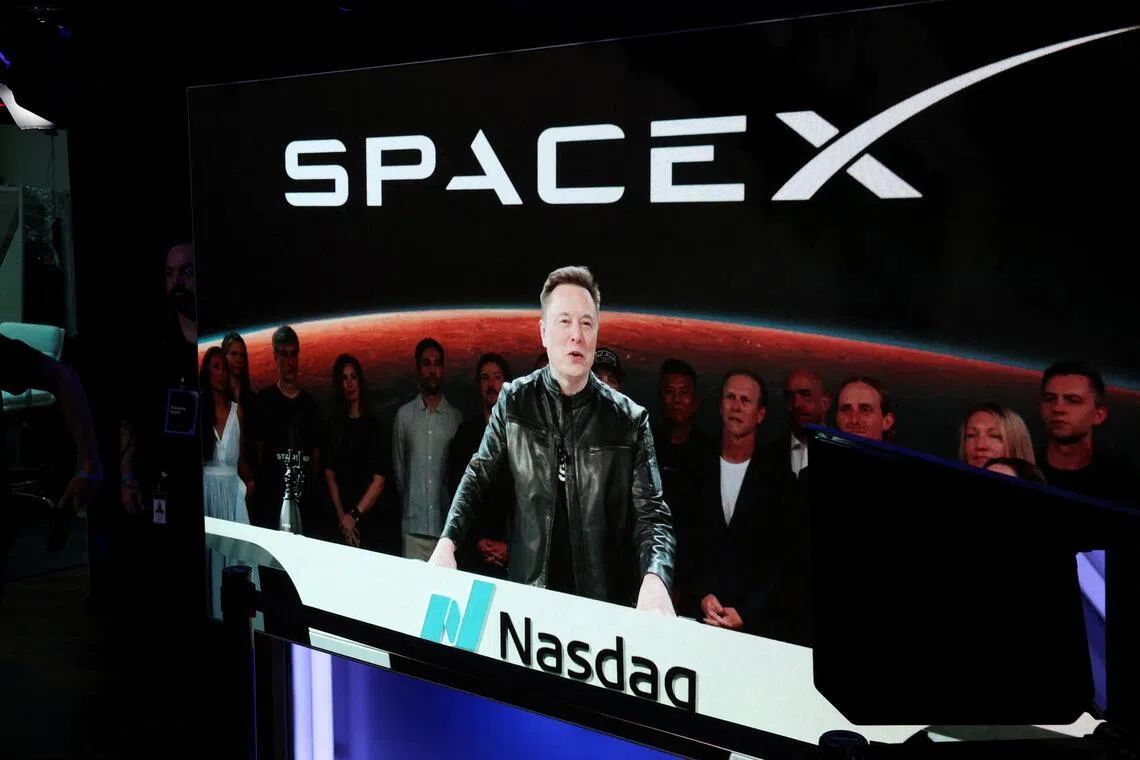
SpaceX has not announced an AI phone but the Wall Street Journal reported that SpaceX had shown investors an early handset-like prototype said to be slimmer than an iPhone, built around a proprietary operating system, xAI technology and Qualcomm Snapdragon silicon. Elon Musk replied that the report was “utterly false”. That leaves no confirmed product, no dimensions, no model name, no price, no launch date, no India availability and no basis to treat any online specification sheet as real.Still, the story deserves more attention than a standard gadget rumour. SpaceX now owns xAI, operates Starlink, has a direct-to-cell satellite service built for ordinary LTE phones, and sits within a Musk business group that has repeatedly clashed with Apple over app distribution, App Store economics and AI competition. A handset is not proven. The strategic ingredients for one are already in public view.Key TakeawaysThere is no confirmed SpaceX AI phone. The original report came from unnamed sources, while Musk publicly denied it. Claims about a custom operating system, xAI integration, Qualcomm hardware and a body slimmer than an iPhone remain reported, not verified specifications. Starlink Direct to Cell is real and works with existing LTE phones. It is the most credible part of the wider SpaceX-mobile story. Musk has previously floated an “alternative phone” if Apple and Google became intolerable app-distribution gatekeepers, but Tesla has never announced a smartphone. A SpaceX phone would face a far harder problem than industrial design: app support, carrier deals, payments, compliance, privacy, repairs and software updates. In India, satellite permissions and service authorisations would add another layer. The phone that may not exist is still a useful signalThe immediate story is straightforward. The Wall Street Journal said SpaceX had displayed an AI-focused device to investors and stakeholders before its IPO. The publication described it as a sleek, handset-like prototype, thinner than an iPhone, with a proprietary operating system, xAI tools and a Qualcomm Snapdragon chip. The project was reportedly early, subject to changes and not assured of a commercial release.Musk then denied the report. Reuters quoted his response as “utterly false”, without further explanation. SpaceX and Qualcomm did not comment on the original claims. That is the key editorial boundary: the report may be accurate, partially accurate, misunderstood or based on a project that changed after the conversations described. But it is not an announcement.The sensible response is not to repeat the rumour as if a SpaceX phone were arriving next quarter. It is to ask why the claim sounded credible in the first place.SpaceX has gradually become more than a rocket company. Its Starlink operation already sells satellite internet. Starlink’s Direct to Cell service has been designed to let satellites act like mobile towers for ordinary LTE handsets. SpaceX formally acquired xAI in February 2026, bringing Grok and an AI operation inside the same corporate group. That combination does not prove a phone, but it does make a mobile hardware project more conceivable than it would have been two years ago.The alleged device also lands in a period when major technology companies are searching for the next interface after the smartphone. Apple is pushing Apple Intelligence across its devices. Google and Samsung have placed Gemini at the centre of Android’s AI pitch. Meta is betting on AI glasses. Microsoft has experimented with AI-first workplace hardware. The common ambition is to make AI more present in daily computing, ideally without forcing people to open a separate chatbot app for every task.A SpaceX device, should one ever emerge, would be part of that race. The difference is that SpaceX could combine AI with a satellite network. That is a more distinctive proposition than simply placing another assistant button on the side of a phone.What has actually been reported about the SpaceX AI phone?The reported features are specific enough to be interesting but thin enough to be impossible to test.The Wall Street Journal said the device was slimmer than an iPhone. It did not publish a measurement in the report surfaced publicly, and no SpaceX specification sheet has appeared. Apple currently sells several iPhone models, including iPhone Air, iPhone 17 and iPhone 17 Pro, with different dimensions. Saying that an object is thinner than “an iPhone” is incomplete without a reference model, weight, battery capacity, camera design and structural details.A very slim phone can be impressive. It can also involve trade-offs. There is less internal volume for battery cells, vapour chambers, antennas, cameras, speakers and repairable parts. A thin body can raise demands on engineering around heat and rigidity. That does not make thin phones bad. It means thinness is a starting point for questions, not evidence of superiority.The report also said the device would run a proprietary operating system. That phrase carries much more weight than the public conversation around it suggests.A proprietary operating system could mean a full, independent mobile platform. It could mean a modified version of Android. It could mean a specialised AI interface sitting on top of existing Android foundations. It could even describe a device that is handset-like but not intended to replace a mainstream smartphone.Those are radically different things.A full operating system gives SpaceX the most control. It can decide how AI permissions work, which services appear by default, how satellite connectivity behaves, what forms of payment are accepted and how applications are distributed. It also inherits the worst problem in consumer technology: persuading people to use a platform without the app catalogue, developer tools and day-to-day habits they already have on iPhone and Android.That is why a custom operating system would be more consequential than a Snapdragon chip or a thin design. A phone can survive a mediocre camera. It cannot survive a missing bank app, broken authentication flow, unreliable messaging service or absent ride-hailing platform in a market where users expect all of those things to work immediately.The reported Snapdragon element is technically plausible. Qualcomm’s mobile platforms are designed for on-device generative AI, including tasks that can run locally rather than being sent to remote data centres. Qualcomm says its chips can support real-time responses, lower latency, device-level privacy and AI experiences that continue when connectivity is poor or unavailable.That would fit a satellite-linked device well. A phone in a remote area cannot depend on cloud AI for every query. Satellite connectivity is valuable, but it is neither free nor unlimited. A device that can summarise a message, translate a phrase, identify an object, organise an emergency report or assist with navigation locally could reduce how much information needs to travel through the network.The popular version of the story imagines an all-knowing Grok phone that works anywhere. The more realistic version is quieter: a device that decides which AI tasks stay on the phone, which can wait for Wi-Fi or 5G, and which are worth sending through a satellite link.That is less cinematic. It is how a viable product would probably need to work.Why Starlink makes the idea more credible than a conventional “Tesla phone”The term “Tesla phone” has been attached to Musk-related rumours for years. It is usually misleading.Tesla has never announced a smartphone. Musk has, however, occasionally talked about the possibility of an alternative phone. In November 2022, during a public dispute over Twitter’s position in Apple’s App Store and Google Play, he said he would make an “alternative phone” if there were no other choice. It was a conditional comment, not a product launch.The current SpaceX report is different because Starlink gives the concept a technical anchor.Starlink Direct to Cell is a real service, not a concept render. Starlink says the system works with existing LTE phones and that satellites carry antennas acting like cell towers in space. The stated aim is to extend mobile coverage where ordinary terrestrial networks do not reach.This is not the same as a classic satellite phone.Traditional satellite phones often depend on specialised hardware, larger antennas, clear sky visibility and expensive service plans. Direct-to-cell systems aim to use conventional phones, compatible spectrum and partnerships with terrestrial mobile operators. A user may see a satellite link as another coverage option when they are outside the reach of an ordinary tower.That is a meaningful difference. It could make satellite messaging, emergency alerts, location sharing and low-bandwidth communication more accessible to people who do not want to buy a second device for rare emergencies.It also has limits.A satellite is far from the phone compared with a terrestrial tower. The handset has limited transmit power, a small antenna and a finite battery. Buildings, trees, terrain and local radio conditions can affect the connection. Capacity is shared across users. The physics does not disappear because the service has an elegant name.Starlink’s own public material has focused on satellite messaging and stages of service development, rather than promising that every existing phone will receive unlimited satellite broadband equivalent to a strong urban 5G connection.That makes the commercial logic for a SpaceX device more specific.A SpaceX phone could potentially use a carefully designed antenna system, a battery-management approach built around intermittent connectivity, emergency features, better satellite availability indicators and AI functions tuned for constrained networks. The company could make the hardware, software, AI assistant and connectivity service work together more closely than a third-party device maker might.The more important point is that SpaceX may not need to make the phone at all.A direct-to-cell network gains value when it works with as many phones as possible. Supporting millions of existing iPhones and Android devices may be more commercially useful than restricting Starlink capabilities to one new handset. Carrier partnerships, lawful spectrum access and service reliability could matter more than hardware margins.A SpaceX device would make most sense only if the company concludes that existing phones cannot deliver the satellite experience, AI controls or customer relationship it wants.The xAI connection is a business case, not yet a feature listSpaceX’s acquisition of xAI matters because it places Grok, satellite connectivity and potential consumer hardware under one corporate roof. SpaceX’s own update said the acquisition would create a vertically integrated company spanning AI, space technology, communications and real-time information platforms.That sounds like the beginning of a product stack. It is still not a phone specification.For a future SpaceX device, xAI could provide a voice assistant, local and cloud-based search, image understanding, message drafting, translation, navigation help, emergency workflows and proactive alerts. X could provide a social and communications layer. Starlink could provide backup connectivity. Tesla integration could eventually be another selling point for owners of Musk’s cars.The attractive version of that pitch is simple: one device, one assistant, one account system and connectivity that keeps working when a tower disappears.The difficult version begins with the questions companies tend to leave for later.Would Grok be optional or unavoidable? Would requests be processed on-device, in a SpaceX cloud, through xAI data centres or through a mix of all three? How much data would be retained? Would users be able to opt out of training use? Would the device require a paid AI subscription? What happens if the satellite connection is poor? Could users replace the default assistant? Could third-party developers access the AI layer safely?No official product documentation answers these questions.That matters because AI integration is increasingly a privacy and control question, not simply a convenience feature. A chatbot that can read a screen, inspect a photo library, access contacts, draft messages or act on behalf of a user needs clear permission boundaries. The stronger the assistant becomes, the more important those boundaries become.Apple’s approach offers one reference point. Apple says that users must grant permission before Siri sends requests, documents or photos to ChatGPT, and that requests can be handled without linking to an OpenAI account. Apple has also said IP addresses are obscured in those requests and that OpenAI does not store them when the user does not connect an account.Whether one trusts Apple’s method is a separate matter. The point is that an AI phone cannot simply announce an assistant. It must explain how the assistant sees, stores, processes and acts on personal information.A SpaceX phone would face that test early because Grok is already politically and commercially contentious. Any claim that it is “more open” or “less restricted” than rival assistants would need to be accompanied by a serious explanation of safety, privacy and accountability.Elon Musk’s Apple conflict gives the theory a commercial logicMusk’s public history with Apple is one reason the SpaceX phone rumour has travelled so quickly.His criticism has covered App Store fees, content moderation, distribution power and Apple’s partnership with OpenAI. In 2022, he attacked the App Store’s commission structure during his dispute with Apple over Twitter. Apple’s published developer terms state that it charges 30 per cent on sales of digital goods and services through the App Store in standard cases, with lower 15 per cent rates available through programmes such as the Small Business Program and for qualifying subscriptions.Musk’s view is sharper. He has described Apple’s commission as a “30% tax on the Internet”, and he has repeatedly portrayed Apple as a gatekeeper capable of restricting the reach of companies that rely on iPhone users.The conflict moved into AI after Apple announced its ChatGPT integration. Musk criticised the partnership and later threatened legal action over what he claimed was Apple’s unequal treatment of rival AI apps. In August 2025, xAI and X filed a lawsuit against Apple and OpenAI, alleging that the companies conspired to suppress AI competition and preserve monopoly control. Apple and OpenAI disputed the claims; Apple argued that its OpenAI arrangement was not exclusive, while OpenAI characterised the litigation as part of Musk’s broader campaign against it.A US judge later allowed the case to proceed past the dismissal stage. That is not a ruling that Apple or OpenAI broke the law. It means the court did not end the case at that preliminary stage. The factual and legal issues remain unresolved.This legal battle does not prove that Musk is building a phone. It does help explain why he might want one.A Musk-controlled handset could create default access for Grok, X, Starlink and other services. It could reduce dependence on Apple’s App Store and Google Play for discovery, payments, subscriptions and software rules. It could give Musk a direct consumer relationship across services that are currently fragmented across different operating systems and app marketplaces.But it would also create an awkward contradiction.Musk criticises Apple’s gatekeeping. A proprietary SpaceX phone would itself need to decide who can distribute apps, what payment systems are permitted, how moderation works, which AI services get privileged access and how much choice users have over defaults. Building a rival platform does not abolish gatekeeping. It changes who holds the gate.The reader should be careful with the word “monopoly” in this context. Musk has alleged that Apple’s behaviour is anticompetitive. Apple rejects that characterisation, and the courts have not delivered a final finding in the xAI case. The fairer description is that Musk sees Apple’s control of iPhone distribution as strategically hostile to his businesses, while Apple argues that its policies support security, privacy and user experience.Both positions matter because any SpaceX phone would be built inside that fight.A custom operating system would be the real gambleA new phone can look polished within a year. Building a usable platform takes far longer.The reason Apple and Google dominate mobile computing is not merely that they sell popular devices. Their operating systems are entwined with identity, payments, work, transport, health tracking, media, cameras, cars, cloud storage, authentication and hundreds of millions of applications.That is the wall any SpaceX phone would have to climb.A proprietary operating system would give SpaceX freedom to prioritise satellite access, run Grok more deeply, alter notification rules, redesign permissions and build its own app-distribution model. It could make a strong case to users who want a tightly integrated device rather than another Android skin.It could also leave buyers with a phone that lacks the services they use every day.A credible challenger must support major messaging platforms, banking apps, password managers, ride-hailing, maps, enterprise tools, streaming services, accessibility features and secure payment systems. It must give developers a reason to maintain their applications. It needs documentation, testing tools, crash reporting, security reviews, device-management systems and an answer to fraudulent software.That is before the company begins selling hardware.An alternative route would be to use Android underneath a custom interface. That would preserve more app compatibility and reduce the barriers for developers. It would also limit SpaceX’s independence from Google’s foundations, and could weaken the argument that the company is escaping mobile-platform control.A third route is to build a companion device rather than a full smartphone. It could handle satellite messaging, emergency connectivity, AI assistance and field communication while leaving banking, entertainment and mainstream apps to an existing iPhone or Android phone.That may be less glamorous. It might also be more realistic.The market is full of examples showing that good hardware alone does not create a platform. Consumers will accept unfamiliar designs. They will rarely tolerate missing essentials.Why thinness is the least interesting claimThe claim that the prototype was slimmer than an iPhone attracted attention because it creates an easy comparison. It also distracts from the things that would determine whether a SpaceX device succeeds.The real questions are not about a millimetre measurement. They are about battery life during satellite use, thermal performance while running on-device AI, radio efficiency, antenna behaviour, repairability, software support and service costs.Satellite communication creates particular demands. A device may need to search for a signal, maintain a link in difficult conditions and manage power carefully. AI tasks can also consume battery and generate heat. A phone that is unusually thin has less physical room to absorb those constraints.Qualcomm’s on-device AI pitch addresses part of that challenge. Local processing can reduce round trips to the cloud, improve response times and help keep sensitive tasks on the device. Qualcomm also describes its AI hardware as designed for lower-power operation and privacy benefits.Yet on-device AI does not solve everything. Large models need memory, processing power and thermal headroom. The most capable systems may still depend on cloud infrastructure, especially for long reasoning, large documents, image generation or complex multimodal tasks. A future SpaceX phone would probably need a hybrid system, shifting work between the device, terrestrial networks, Starlink and cloud data centres.That is why “AI phone” needs a definition.A useful AI phone would not merely generate novelty images or rewrite messages. It would use local intelligence to make connectivity more reliable and efficient. It could prioritise emergency text, convert voice notes into concise messages, help users navigate when maps cannot refresh, translate without a network, or compress information before transmission.The product has to save effort where the network is weakest. Otherwise it is simply another premium phone with a chatbot attached.India is a hard but potentially important test caseIndia could be a major long-term market for satellite-assisted mobile services. The country has vast geography, remote regions, disaster-prone areas, crowded cities and a large population that depends on mobile devices for payments, work, logistics, public services and communication.It is also not a market where an imported premium phone with vague satellite claims can arrive and improvise.India’s Department of Telecommunications lists Starlink Satellite Communication Private Limited among companies holding Unified Licence authorisation for Global Mobile Personal Communication by Satellite services as of June 2025. That is an important regulatory milestone for satellite communications. It is not automatic permission for every kind of consumer phone service, direct-to-device offering or spectrum use case.TRAI’s more recent consultation material shows that the regulatory treatment of satellite communication networks, spectrum assignment and direct-to-device services remains active policy work. Starlink itself has submitted comments supporting direct-to-device service using IMT spectrum, but regulator consultations and stakeholder positions do not equal a retail service launch.For a SpaceX phone, India would require answers across several layers: device certification, radio compatibility, carrier partnerships, lawful spectrum use, satellite-service permissions, consumer protection, tax treatment, warranty support, repairs and software compliance.Then comes the practical test.Indian buyers do not merely use phones for social media and video. They use them for UPI, banking, OTPs, identity-linked services, language input, rail and flight bookings, workplace authentication, transport, shopping and schoolwork. A new operating system that cannot support those routines would struggle regardless of its Starlink story.This is where the theory becomes commercially demanding. A SpaceX device might appeal to expedition users, defence-adjacent environments, disaster teams, logistics fleets, field engineers, high-end travellers or remote workers. It would need a different proposition to become a broad consumer phone in India.The better initial business may be service, not hardware. Starlink-linked emergency messaging or low-bandwidth connectivity that works on existing phones could reach more users than a new premium device. A purpose-built SpaceX handset could follow later if the company finds a use case that existing iPhones and Android phones cannot serve well.Three outcomes are more likely than “iPhone killer”The first outcome is that Musk’s denial is broadly correct, and the report described something inaccurate, outdated or too preliminary to call a product. Companies make prototypes, mock-ups and internal experiments all the time. The report itself said the alleged device remained early and might never reach the market.The second is that SpaceX is exploring AI hardware, but not a conventional smartphone. It could be a satellite communicator, field device, wearable, home terminal, vehicle accessory or specialised work tool. That would fit the company’s technical assets without requiring it to replace Android or iOS overnight.The third is that SpaceX eventually builds a full handset because Starlink, xAI and Musk’s broader platform ambitions make direct device control worth the pain. The product could combine satellite access, a voice-first assistant, camera-based AI, X communications, Tesla controls and a dedicated subscription model.That remains the most ambitious outcome. It is also the one with the most ways to fail.The audience for a new phone is not asking for a corporate stack. It is asking whether the device will work when a family member calls, when a payment is due, when a train is late, when a map is missing, when a screen breaks, when an app needs updating and when a network vanishes.Apple and Google have spent years making those problems feel ordinary. A challenger has to make them disappear without making users feel that they have become beta testers for someone else’s ambition.VerdictThe SpaceX AI phone should be treated as an unverified report, not a product announcement.The Wall Street Journal published detailed claims about a handset-like prototype. Musk denied the report. Neither SpaceX nor Qualcomm has supplied public confirmation, specifications, images, pricing, availability or a roadmap. That means the claims around a custom operating system, xAI features, Snapdragon hardware and thinness are not established facts.The idea still matters because the underlying strategy is coherent.SpaceX has Starlink. Starlink already works on direct-to-cell connectivity for existing LTE phones. xAI gives SpaceX an AI layer through Grok. Musk has a long-running dispute with Apple over App Store economics, platform control and AI distribution. Qualcomm’s mobile technology can support AI tasks on-device. Those facts create a plausible route to a future SpaceX mobile product.They do not create a confirmed phone.The most important question is not whether the alleged prototype is slimmer than an iPhone. It is whether SpaceX can make satellite connectivity, AI and software control genuinely useful enough for people to change the device they carry every day.Until the company publishes a product, buyers should ignore “Tesla Pi Phone” renders, online price cards, alleged launch dates and feature lists that have no primary-source trail. The story to watch is whether SpaceX turns Starlink and xAI into a working consumer experience, or whether the phone remains another compelling Musk-shaped idea that never needs to survive contact with ordinary users.FAQ: SpaceX AI phone, Starlink and xAIIs SpaceX making an AI phone?SpaceX has not announced an AI phone. The Wall Street Journal reported that SpaceX had shown investors an early AI handset prototype, but Elon Musk called the report “utterly false”. There is no official product page, confirmed model name, price, release date or launch-market list.Did Elon Musk confirm a SpaceX phone?No. Musk denied the report about a SpaceX AI handset prototype. His response did not explain whether SpaceX has explored any internal mobile hardware, but it means the reported device cannot be treated as confirmed.Is the SpaceX phone thinner than an iPhone?There is no verified thickness figure for a SpaceX phone. The claim came from reporting about an alleged prototype, not from a published specification sheet. No comparison is meaningful without dimensions, weight, battery capacity and a named iPhone reference model.Will a SpaceX AI phone use xAI or Grok?No official information confirms this. The Wall Street Journal report said the alleged device would use xAI technology. SpaceX owns xAI, so integration would be technically plausible, but no feature list, privacy policy, model name or subscription plan has been announced.Will a SpaceX phone use Starlink satellite internet?There is no confirmed SpaceX phone linked to Starlink. Starlink’s Direct to Cell service already works with existing LTE phones, using satellites that act like mobile towers in space. A future SpaceX device could potentially integrate that service more closely, especially for remote messaging and emergency functions.Can Starlink replace normal 4G or 5G mobile data?Not in the same way as strong terrestrial mobile coverage. Direct-to-cell satellite connectivity is designed to extend coverage beyond conventional towers. It faces limits around distance, capacity, battery power, terrain, buildings and spectrum arrangements. It is most useful as coverage extension, not as a simple replacement for urban 5G.Is there a Tesla phone?Tesla has not announced a smartphone. Musk has spoken conditionally about creating an “alternative phone” during arguments about Apple and Google’s app stores, but no Tesla handset has followed. Most Tesla-phone specifications and renders online are unsupported concepts or recycled rumours.Why has Elon Musk criticised Apple and the iPhone?Musk has criticised Apple’s App Store commissions, software-distribution power and Apple’s partnership with OpenAI. His companies X and xAI sued Apple and OpenAI in 2025, alleging anticompetitive conduct. Apple and OpenAI contest those claims, and the litigation has not produced a final ruling on the merits.Could a SpaceX phone run a custom operating system?It could, but there is no confirmed evidence that it will. A custom operating system would give SpaceX more control over AI, payments, satellite features and app distribution. It would also face a major app-support challenge, particularly around banking, messaging, work software, payments and security updates.Will the SpaceX AI phone launch in India?There is no India launch, price, carrier partnership, repair plan or warranty programme announced for a SpaceX phone. Starlink holds a relevant satellite-service authorisation in India, but any future phone and direct-to-device service would need to meet separate technical, commercial and regulatory requirements.Should you wait for the SpaceX AI phone?No. There is no confirmed product, launch timetable, price or specification. Anyone buying a phone should compare devices that are actually available rather than delaying a purchase for a disputed report.end of article
SpaceX AI phone: Elon Musk denies report, but Starlink and xAI make the idea worth watching
Elon Musk has denied reports of a SpaceX AI phone, but Starlink, xAI and his fight with Apple explain why the idea keeps returning. Here is what is confirmed.
4,466 words~20 min read