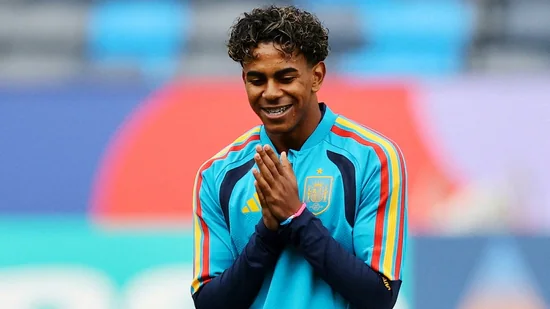
Get free access to the most comprehensive World Cup coverage in The Athletic appLamine Yamal hoovered up the headlines after making his first World Cup start in Spain’s convincing 4-0 victory over Saudi Arabia on June 21 — and with good reason.The Barcelona forward scored the opening goal, and his first at the competition, while becoming the only player to have started both a European Championship and World Cup game aged 18 or younger (he turns 19 on July 13).While Spain went on to also win their third group game against Uruguay 1-0, their second match was their most convincing of this World Cup, with patterns of play that could be instructive for the rest of the tournament.Yamal was a thorn in Saudi Arabia’s side, drifting infield to unleash shots from distance but also peppering the penalty area with wicked deliveries from the right flank. Luis de la Fuente’s team made 23 open-play crosses in the game, which was the joint-third highest tally across their past five major international tournaments (three World Cups and two European Championships).Incidentally, their highest tally of 27 was clocked up six days earlier, in the goalless draw with Cape Verde — albeit with much less attacking potency. It was telling that De la Fuente tweaked things on both flanks in their second group game against Saudi Arabia, with Yamal, who was only fit enough to come off the bench in Spain’s opener, and Alex Baena coming in for Ferran Torres and Gavi.These wide areas are a key point of De la Fuente’s attack. However, it would be unfair to focus solely on Spain’s attacking wingers to outline their success. Another of the starting line-up changes against the Saudis saw Pedro Porro come in for Marcos Llorente at right-back, with the 26-year-old Tottenham defender offering a different profile to support his team-mates in attacking positions.Rarely has a side been able to play with quite so much ease as Spain did in that match, but the patterns were evident as they looked to expose their opponents’ back five in wide areas.“Opposite movements” was the term that United States women’s head coach Emma Hayes used to describe Spain’s approach against Cape Verde, with players pulling the opposition into certain spaces for their team-mates to exploit.
How Spain’s clever off-the-ball movement can get the best out of Lamine Yamal
In Luis de la Fuente's system, the use of over- and under-lapping full-backs unlocks the potential of their brilliant wide forwards
1,035 words~5 min read