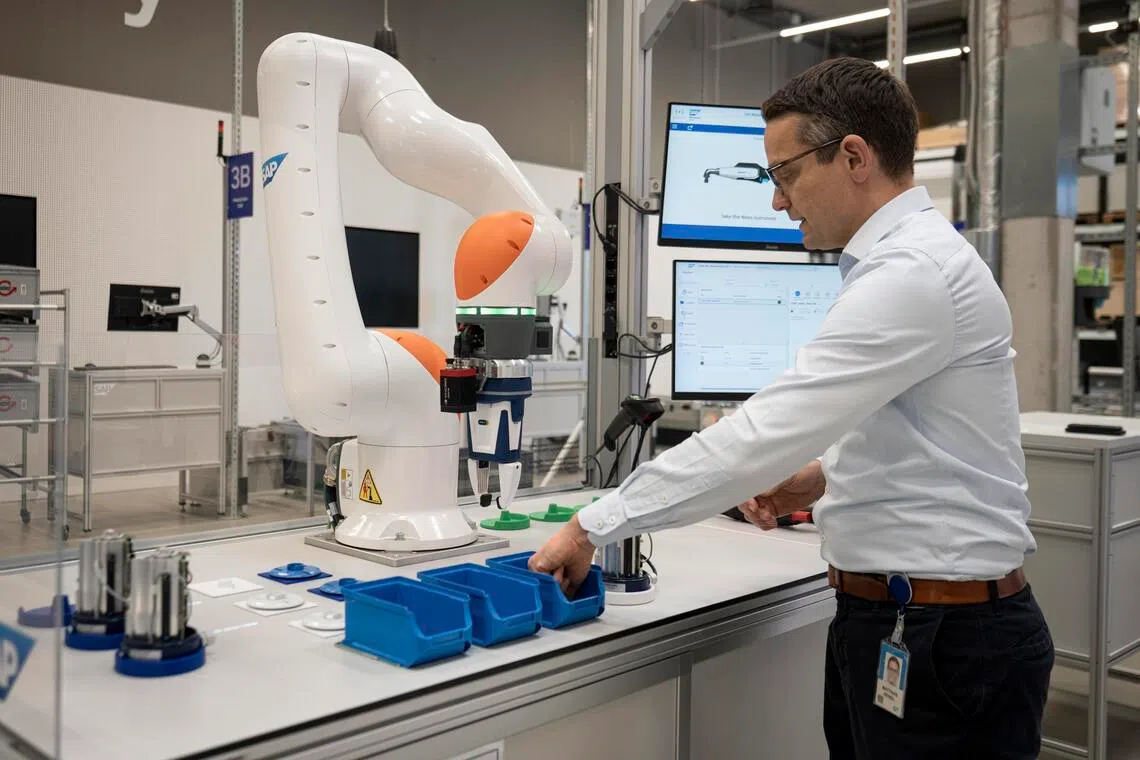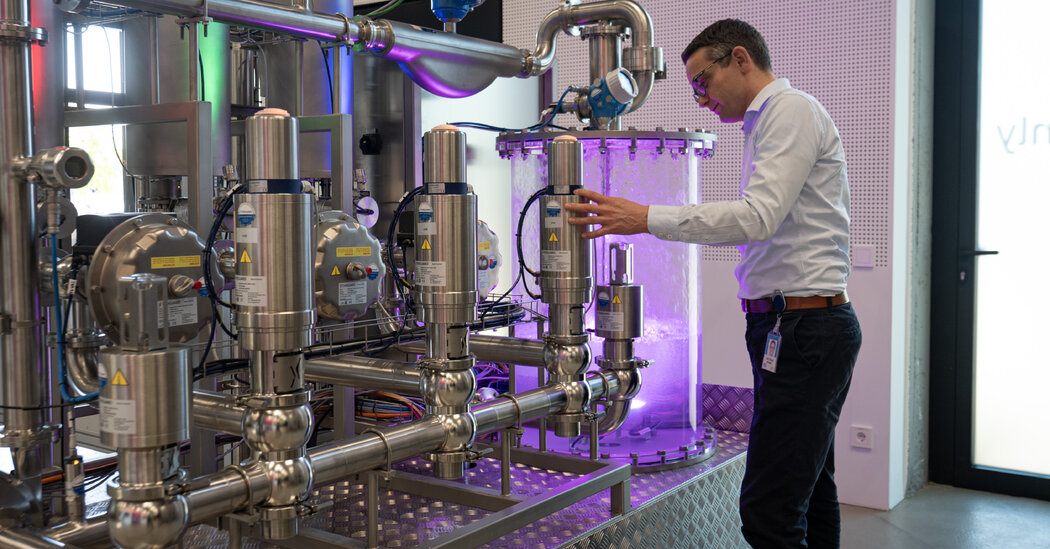
AdvertisementSKIP ADVERTISEMENTYou have a preview view of this article while we are checking your access. When we have confirmed access, the full article content will load.The German software giant SAP says it is betting that employees can reinvent jobs instead of eliminating them. Experts are divided on whether it will work.Listen · 9:24 min Matthias Deindl, a product management executive for the company SAP, at an A.I.-enhanced production line in Walldorf, Germany.Credit...Lena Mucha for The New York TimesBy Jim TankersleyReporting from SAP global headquarters in Walldorf, Germany, and from a professional soccer training center in nearby Zuzenhausen.July 2, 2026Artificial intelligence has taken over much of what used to be Fabrizio Primerano’s software engineering job. It brainstorms with his colleagues, researches competitors and writes and tests code.But Mr. Primerano still has a job, at the German software giant SAP. It includes fewer routine tasks and more of what feels like managing and mentoring A.I. agents, or bots that can be programmed to act like personal assistants and, increasingly, human employees.“It’s freeing me up to do more of this creative work,” Mr. Primerano said recently.That is what executives of SAP, the largest software company in Europe by market value, say they want. SAP, long seen as a stoic provider of back-office products, says it is taking a lean-in approach to the technology that poses an existential threat to its coders and its business model.Its leaders concede that A.I. is eliminating the need for humans to do many of the tasks its software engineers did until very recently. In a round of restructuring two years ago, SAP cut nearly 10,000 jobs, some as a result of A.I., the company said. SAP would not break down exactly how many were related to A.I. or say what sort of jobs were eliminated.To try to avoid eliminating more positions, they say they have encouraged workers to invent new, more valuable jobs, aided by the rapidly improving technology available to them. Company officials say that even with the previous restructuring, they have added more than 3,500 jobs on net since 2023, including new job titles like “forward‑deployed engineers,” or those who work with customers to develop A.I.-driven solutions.“I’m not sure if here someone in two or three years will still code software,” Christian Klein, the chief executive, told me in a recent interview. He said he did not expect to operate with a smaller work force, “but with a very, very different work force.”Thank you for your patience while we verify access. If you are in Reader mode please exit and log into your Times account, or subscribe for all of The Times.Thank you for your patience while we verify access.Already a subscriber? Log in.Want all of The Times? Subscribe.AdvertisementSKIP ADVERTISEMENT
Can You Embrace A.I. Without Layoffs? This Company Says It’s Trying.
The German software giant SAP says it is betting that employees can reinvent jobs instead of eliminating them. Experts are divided on whether it will work.
454 words~2 min read