Story audio is generated using AI
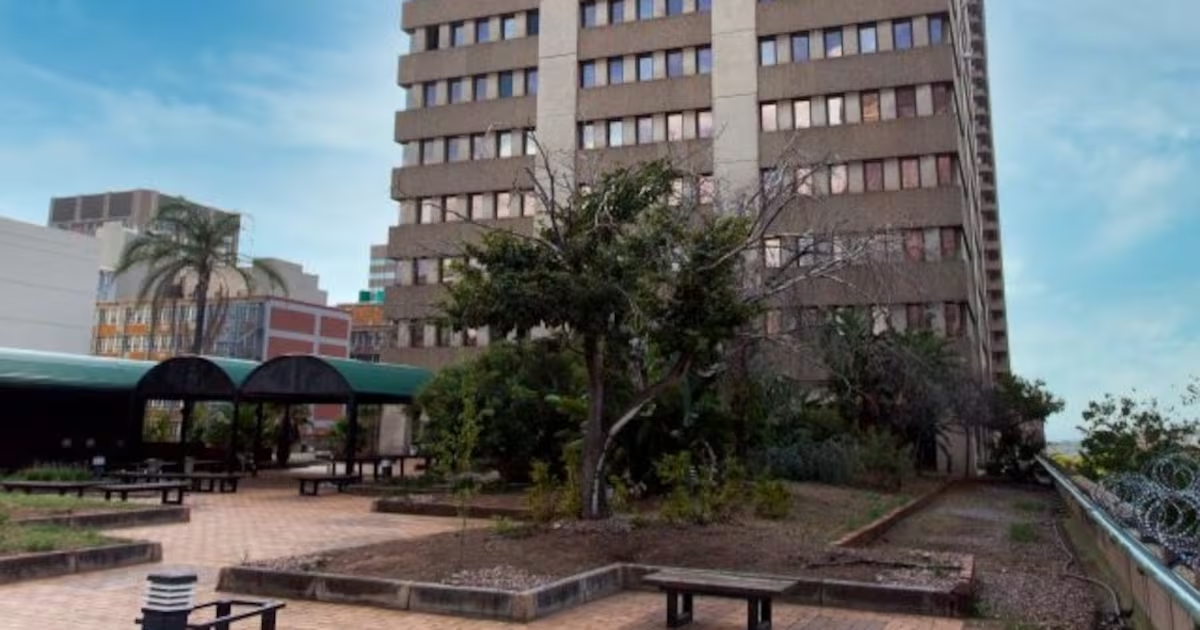
Delta Property Fund, which has one of the largest government tenant bases in the listed property sector, could straddle both public and private sector demand as policy shifts reshape leasing dynamics. This comes as public works & infrastructure minister Dean Macpherson signalled a move to house government departments in state-owned buildings, as the state reduces its reliance on private-sector leases.“We have noted recent statements from the minister of public works & infrastructure signalling an intention for government departments to occupy state-owned buildings and believe our portfolio will remain attractive to both public and private sector tenants in the years ahead,” the group said in its annual report.It continued to strengthen its balance sheet during the year, with interest-bearing debt falling to R3.6bn from R3.9bn. It made capital repayments of R291.3m, funded by proceeds from the disposal of noncore properties.During the year, the group sold non-core, and largely vacant properties as it continued to rationalise its portfolio. Eleven properties were sold for about R186m during the period, with additional assets transferred after year-end and others still awaiting transfer. In total, the 2026 financial year disposal programme covered assets with a combined fair value of about R336m.The group now holds 72 properties, down from 83 in the 2025 financial year. Its property valuations also turned a corner, recording a R20.4m fair value gain after a R178.3m loss the previous year.About 87% of the group’s portfolio is let to government tenants, underscoring its heavy public-sector exposure. Despite this concentration, it is showing clear signs of recovery, returning to a net profit of R127m after a prior-year loss of R104.2m, while vacancy levels have eased to about 27%.Operational performance also improved, with rental collections nearing full recovery and borrowings continuing to decline, lifting the loan-to-value ratio to the mid-50% range. No dividend was declared for the 2026 financial year, as it continues to prioritise debt reduction and liquidity preservation. “Our high debt is still a concern; the perceived risks are still being translated into punitive pricing. Though the business has shown strength in its balance sheet recovery, leadership is handling cash forecasting and all other capital expenditure budgeting centrally to ensure control and prevent leakage,” the group said.Although office vacancies remain high, the gradual return to the workplace could begin to shift the balance back towards landlords. The group expects growing demand for office space, driven by more companies requiring employees to return to the office and improving business confidence, to support lower vacancies and rental growth.