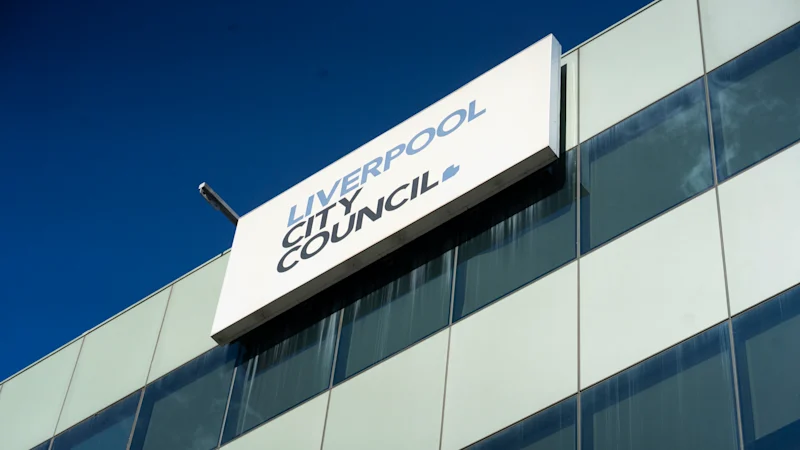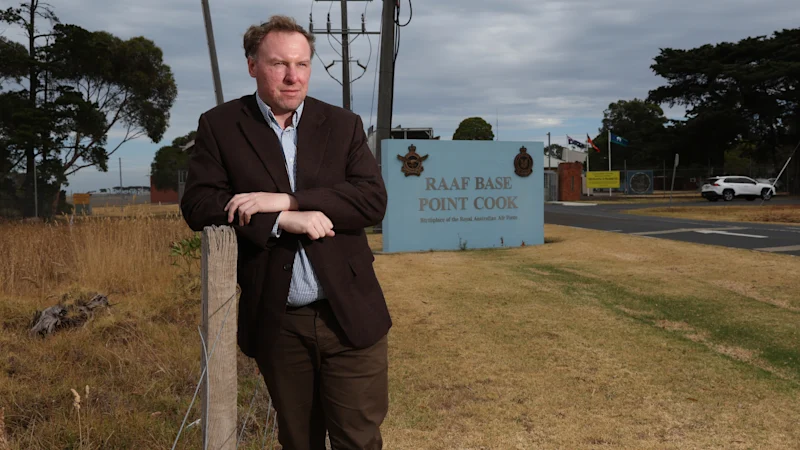
July 2, 2026 — 11:45amMost reporters don’t like to be part of the story. So it was an uncomfortable feeling to learn of my small part in the spiteful soap opera playing out at Wyndham City Council, a local spat that is taking on wider, and some say troubling, implications for democracy in Victoria.My discomfort was magnified by the fact that it was not me, but one of my story’s subjects who had paid for my accidental breach of one of the old, golden rules of journalism.Wyndham mayor Josh Gilligan has been suspended twice this year for breaching the councillor code of conduct, including for comments he gave to The Age. Alex CoppelThe central character is Josh Gilligan, a pugnacious Labor-aligned councillor and former mayor who is currently suspended for providing comments to The Age that were ruled to have breached Victoria’s “model councillor code of conduct”, introduced by the Labor government in October 2024.Gilligan’s ban is a part of two stories: one is local, about the poisonous political dynamic in Wyndham; the other is statewide, about a legislated code that critics say is impinging on free speech in local government.A quick recap: in February, the Department of Defence announced a nationwide sell-off of its surplus land. The Age covered a local angle, including the potential sale of the RAAF’s historic first home in Point Cook.Then Wyndham mayor Gilligan, who was approached for comment, said: “We’re prepared to go to DEFCON 1 to protect our city from this housing incursion because we’re sick of housing and no jobs and services for people who move into them.”The RAAF base at Point Cook.Paul JeffersIt was a punchy, if seemingly unremarkable, slice of fight-your-corner rhetoric from a local mayor. The story ran that evening, after which the news cycle promptly moved on.The story had a surprise coda last week, when Gilligan was suspended for two weeks for misconduct, in part for his statement to this masthead.Independent arbiter Dr Meredith Gibbs, brought in to examine the comments in line with the process outline in the state government legislation, ruled Gilligan had breached the model councillor code of conduct because he had spoken out on the Point Cook land before the council had adopted a formal position.Gibbs also ruled that Gilligan had likely misled the public because his quoted comments “created the impression that there was a settled council position”, which was not true.The council did settle on a position three months later, when it formally adopted a stance that it “strongly opposes any residential redevelopment of the site, citing existing population and infrastructure pressures within Point Cook”.The position was identical to that previously expressed by Gilligan in The Age, minus his rhetorical reference to preparing for nuclear war.The arbiter’s findings, tabled without discussion or debate at Wyndham council’s June 23 meeting, is on a growing list of examples of Victorian councillors being sanctioned for misconduct after speaking to the media or commenting about political matters on social media.The code has become a subject of increasing disquiet across the political spectrum.Libertarian MP David Limbrick successfully moved a parliamentary motion calling for the code to be reviewed.The AgeLibertarian upper house MP David Limbrick moved a parliamentary motion calling for the code’s review last month, noting that “frivolous and vexatious cases are still going through the internal arbitration process, relying on external arbiters at significant cost”.His move was supported by the Coalition, the Greens and Legalise Cannabis. The Labor government is not compelled to consider the motion.During debate, Limbrick listed several recent arbitration rulings leading to one-month suspensions, including for Knox councillor Peter Lockwood after he called rival councillors “a pack of grinches” for voting against funding Christmas street decorations, and gave Channel 10 an interview suggesting they could be paid for by cutting council’s catering bill; and for Golden Plains councillor Les Rowe for criticising the standard of the council’s own road repairs in an interview with local newspaper, the Golden Plains Times.In Lockwood’s case, arbiter Jo-Anne Mazzeo found he breached standard 2 of the code by failing to treat other councillors with dignity and respect, with his conduct going beyond robust political debate. He also breached standard 4, ensuring a councillor’s behaviour does not bring discredit upon the council.Rowe was found to have breached standards of conduct by publicly criticising council staff.Limbrick told The Age the code needs reform, urging the government to get to work and do so.“The whole point of local councils is to have a group of democratically elected people debate the merits or otherwise of issues that impact their communities,” he said. “The idea that nobody should be allowed to talk until everyone agrees is unhealthy.”Coalition local government spokesperson Bev McArthur also said the code “has had a chilling effect on free speech and democratic representation in local government” and is “regularly weaponised by activist councillors to settle petty political scores”.Liberal MP Bev McArthur.Justin McManusThe Victorian Greens have also pushed for a review of the code and to make it “fit for modern democracy”, after Greens-aligned Merri-bek councillor Adam Pulford was suspended for two weeks in November after calling another councillor “duplicitous” in a debate about rainbow crossings.“Voters expect their representatives to be allowed to speak without being muzzled. We would not entertain this level of interference in a Parliament,” Greens MP Anasina Gray-Barberio told parliament in December.The model councillor code of conduct provides sitting councillors with an internal arbitration process with which to settle disputes. Matters are heard by a panel of nine government-appointed arbiters under the model introduced less than two years ago. Previously, councils had their own codes of conduct.Monash City councillor Geoff Lake is one of Victoria’s most experienced councillors, having been an elected councillor since 2000 and having led both the Municipal Association of Victoria and Australian Local Government Association.Geoff Lake is one of Victoria’s most experienced councillors.Joe ArmaoHe said the arbitration framework failed to allow for robust political debate.“There is no merits review of these decisions, and given the consequences of a councillor being suspended for up to a month, these are very significant outcomes, in circumstances where arbiters come in with little or no experience in local government or political matters,” Lake said.Municipal Association of Victoria president Jennifer Anderson.“They’re applying a lens on how a HR process might resolve something in a corporate hierarchy, but divorced from the political overlay that local government sits in.”Municipal Association of Victoria president Jennifer Anderson said that mayors “are regularly asked to speak for their whole community at short notice, often reacting in real time, on complex issues where the council’s own position may still be forming”.Anderson said the government’s reforms to local government laws should “be matched by real investment in supporting councillors and mayors to carry out their roles”.“Victorian mayors carry that responsibility on behalf of all of us, and they need backing, alongside clear guidance on the spokesperson role, practical support, and the time and resources to do it well,” Anderson said.Limbrick said he was also concerned about the potential for the code to be weaponised and create discontent and dysfunction in local government.Wyndham is already characterised by discontent and dysfunction. The arbiter’s ruling against Gilligan followed an application by Labor-aligned councillor Robert Szatkowski, who has twice taken Gilligan to arbitration.Wyndham mayor Preet Singh.FacebookThe first ruling against Gilligan, tabled in February, led to a one-month suspension and the loss of the mayor’s role for calling a former councillor a “raging lunatic” on Facebook.His replacement, Liberal-aligned Preet Singh, has clung to the mayoral position despite a no-confidence vote by all 10 other sitting councillors. There is no mechanism within the Local Government Act for his removal.Gilligan’s two-week suspension also came about last week because he was deemed to have failed to treat Szatkowski with courtesy and respect in an email exchange.The compulsory code of conduct was introduced following a recommendation by corruption watchdog IBAC in its report on Operation Sandon, a major investigation into corruption on Casey council that was sparked by reporting in The Age.A Victorian government spokesperson said the code of conduct empowered councillors to hold each other to account and implemented clear, consistent standards.“Nothing in the code prevents councillors from debating issues or expressing their personal views. Instead, it provides a framework to ensure those views are expressed in a respectful way,” the spokesperson said.Speaking personally while serving his suspension, Gilligan argued that local councillors were being held to a restriction on speaking out that did not apply to other tiers of government.“Can you imagine a premier or prime minister being told they’d be subject to a misconduct finding if they spoke on an emerging issue of importance before it passed the parliament?” he said.He said he feared his suspension would have a chilling effect on councillors’ willingness to engage with the media.“The law has gone way too far. Every journalist wanting to report news should be shocked by this ruling.”Start the day with a summary of the day’s most important and interesting stories, analysis and insights. Sign up for our Morning Edition newsletter.From our partners
Talking to The Age got a councillor suspended. Now there are warnings about democracy
A councillor’s two-week suspension for misconduct after his criticism of a development proposal has sparked concerns that the Local Government Act is stifling political debate.
1,503 words~7 min read