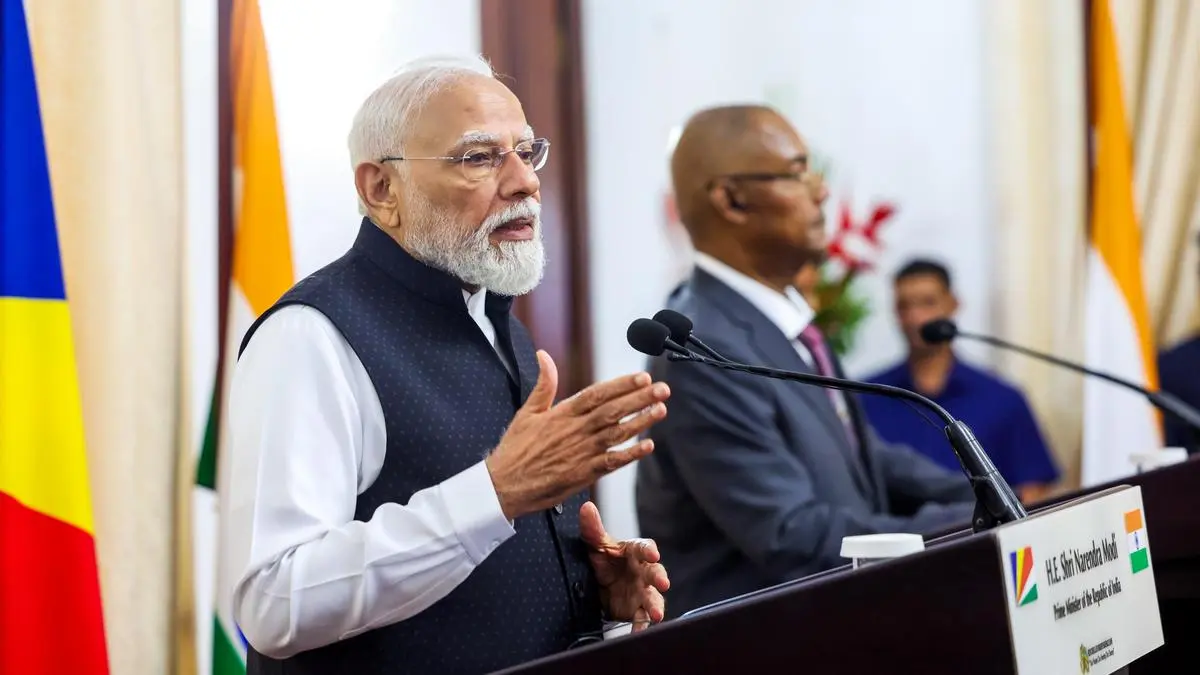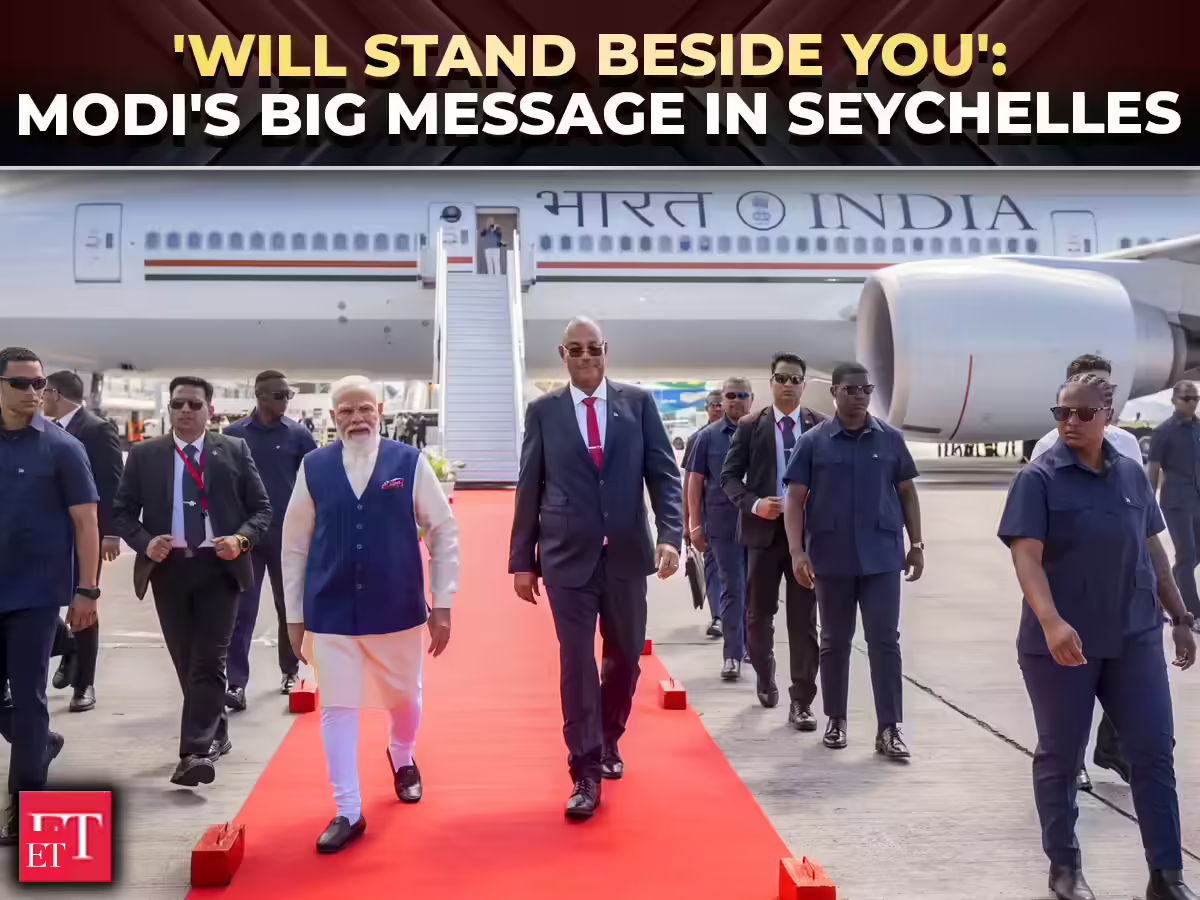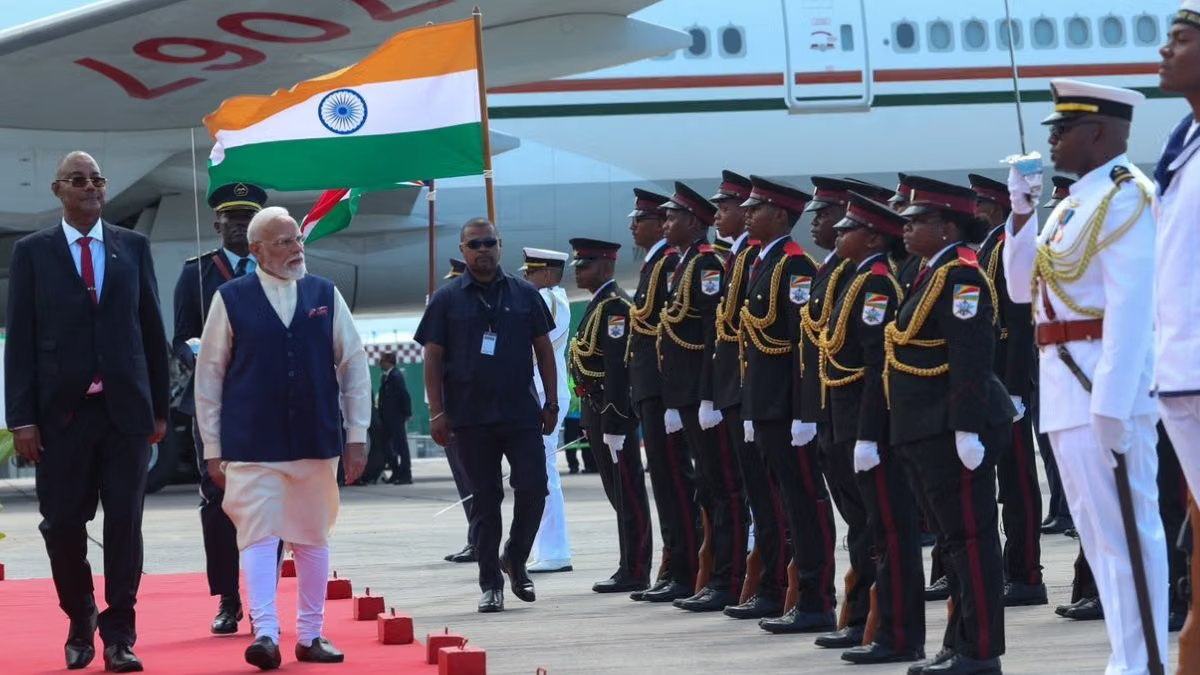
Prime Minister (PM) Narendra Modi’s recent visit to Seychelles underscores the growing centrality of the Indian Ocean to India’s strategic calculus. It also provides an opportunity to examine a broader transformation unfolding across the wider Indo-Pacific. India’s expanding outreach across the Indian Ocean and Australia’s growing security engagement in the Pacific reflect the increasing strategic importance of the two maritime theatres that the Indo-Pacific framework sought to connect. At the same time, Washington appears to be rethinking the strategic logic that has underpinned its engagement across this wider region. The result is not a single coordinated shift, but an evolving regional order in which the organising principles themselves may be changing.India provides one of the clearest illustrations. The Indo-Pacific framework elevated New Delhi as a central pillar of a wider balancing coalition. (PTI)If India and Australia illustrate how regional powers are adapting to an evolving Indo-Pacific, Washington’s own strategic thinking suggests that the organising logic of the region may also be changing. The Pentagon’s decision to rename the US Indo-Pacific Command as the US Pacific Command (PACOM) is one manifestation of that shift. The change may appear symbolic, yet it raises a larger question: Is Washington moving away from the Indo-Pacific as the organising principle of its regional strategy towards a more selective approach centred on strategic utility, burden-sharing and balance-of-power politics?Also Read: India’s role in fostering convergence within G7The Indo-Pacific was never merely a geographical construct. It was a strategic idea. As China’s power expanded, Washington sought to build a wider coalition of States capable of preserving a favourable balance of power across Asia. By linking the Indian and Pacific Oceans into a single strategic theatre, the framework elevated India’s strategic importance, strengthened Quad, and encouraged a wider network of diplomatic, economic and security partnerships.That coalition-building logic now appears to be evolving. Recent American strategic thinking suggests that Washington is placing greater emphasis on reciprocity, burden-sharing, and strategic utility than on expanding coalition frameworks. The shift does not diminish the importance of partners; rather, it changes the basis on which partnerships are evaluated.The Trump administration’s National Security Strategy (NSS) 2025 and National Defense Strategy (NDS) 2026 provide some clues. Both emphasise sovereignty, reciprocity, burden-sharing and what the NSS calls ‘flexible realism.’ Rather than organising regional strategy around broad coalitions, Washington increasingly appears focused on securing tangible strategic returns from its partnerships. Flexible realism, therefore, represents more than a change in rhetoric; it signals a shift towards judging partnerships by the capabilities, responsibilities and strategic value they bring.Also Read: Who is ‘Honourable’ in the Indian republic? High Court order sparks a questionThe other question is of strategic relevance in an era of burden-sharing. The changing logic of American strategy has implications that extend well beyond Washington. Across the Indo-Pacific, partners are increasingly adapting to an environment in which strategic relevance depends less on formal alignments than on the capabilities and contributions they bring to regional security.India provides one of the clearest illustrations. The Indo-Pacific framework elevated New Delhi as a central pillar of a wider balancing coalition. India’s continuing outreach across the Indian Ocean reflects not only its own maritime ambitions but also the growing importance of demonstrating strategic value through sustained regional engagement.Australia offers a complementary example. AUKUS demonstrated Washington’s willingness to prioritise strategic utility over established partnerships. More recently, the Nakamal Agreement between Australia and Vanuatu reflects Canberra’s efforts to consolidate its position as the Pacific’s principal security partner at a time of intensifying strategic competition.The pattern extends beyond the Indo-Pacific. Repeated American demands for greater burden-sharing within the North Atlantic Treaty Organisation (Nato) reflect the same expectation that allies should assume more responsibility for their own security. Across regions, the underlying message is increasingly consistent: Partnerships remain important, but they no longer guarantee open-ended commitments or automatic strategic accommodation. Reciprocity, rather than reassurance, is becoming the organising principle of alliance management.This does not mean that the US is withdrawing from Asia, nor does it imply the disappearance of the Indo-Pacific from strategic or diplomatic vocabulary. American power remains deeply embedded in the region, and competition with China will continue to shape Washington’s choices. What appears to be changing is not America’s presence, but the logic underpinning its regional engagement.In part, this evolution reflects the growing constraints on American power. A State confident in its primacy can afford to provide public goods, sustain broad coalitions and tolerate asymmetric burden-sharing. A state confronting fiscal pressures, domestic polarisation and intensifying strategic competition is more likely to expect greater reciprocity and measurable strategic returns from its partnerships.Also Read: Strait of Hormuz crisis underlined India’s energy resilienceThe implications extend well beyond the US. As India expands its maritime outreach across the Indian Ocean, Australia strengthens its security partnerships in the Pacific, and other regional actors deepen their own strategic engagement, the emphasis is shifting from participation in coalition frameworks to demonstrating enduring strategic value. Strategic relevance will increasingly depend on capabilities, contributions and the willingness to shoulder greater responsibility for regional security.The renaming of PACOM is best understood as one manifestation of this broader transformation rather than its defining feature. The more important question is whether coalition-building will continue to serve as the organising logic of the Indo-Pacific, or whether burden-sharing, strategic utility and a more flexible balance-of-power approach will increasingly shape the region’s future order.G Venkat Raman is professor at the Indian Institute of Management Indore. The views expressed are personal
With a renamed US Pacific Command, understanding the changing strategic logic of the Indo-Pacific
Burden-sharing and strategic utility are increasingly shaping the regional order.
900 words~4 min read