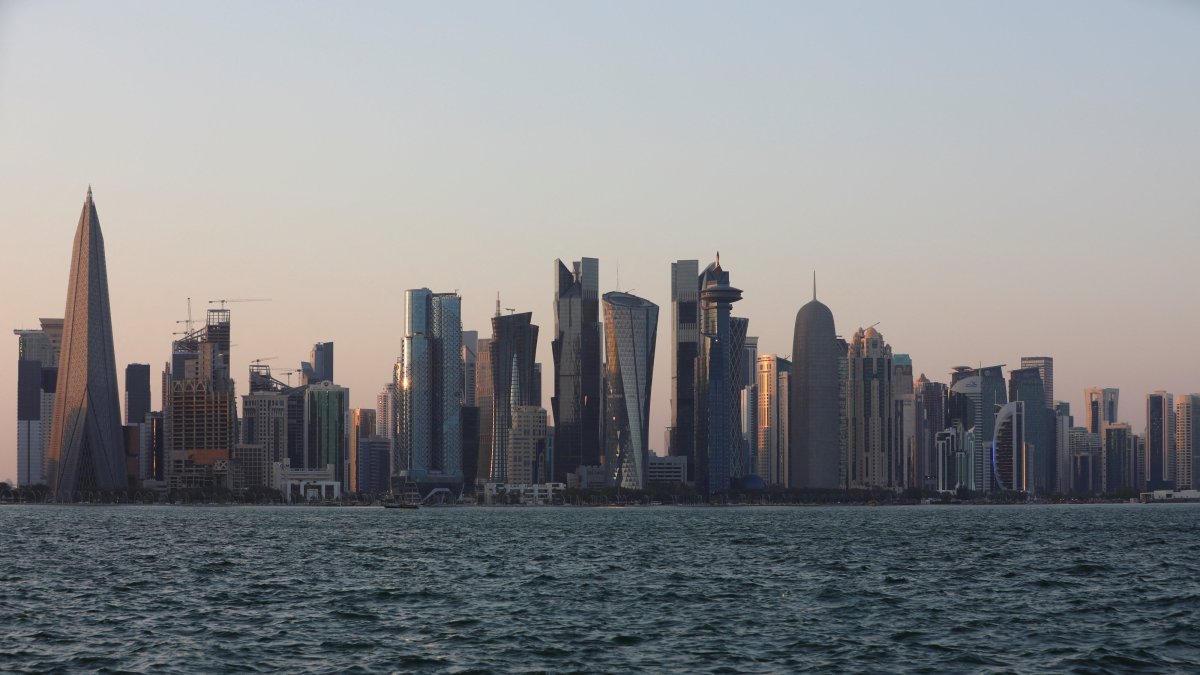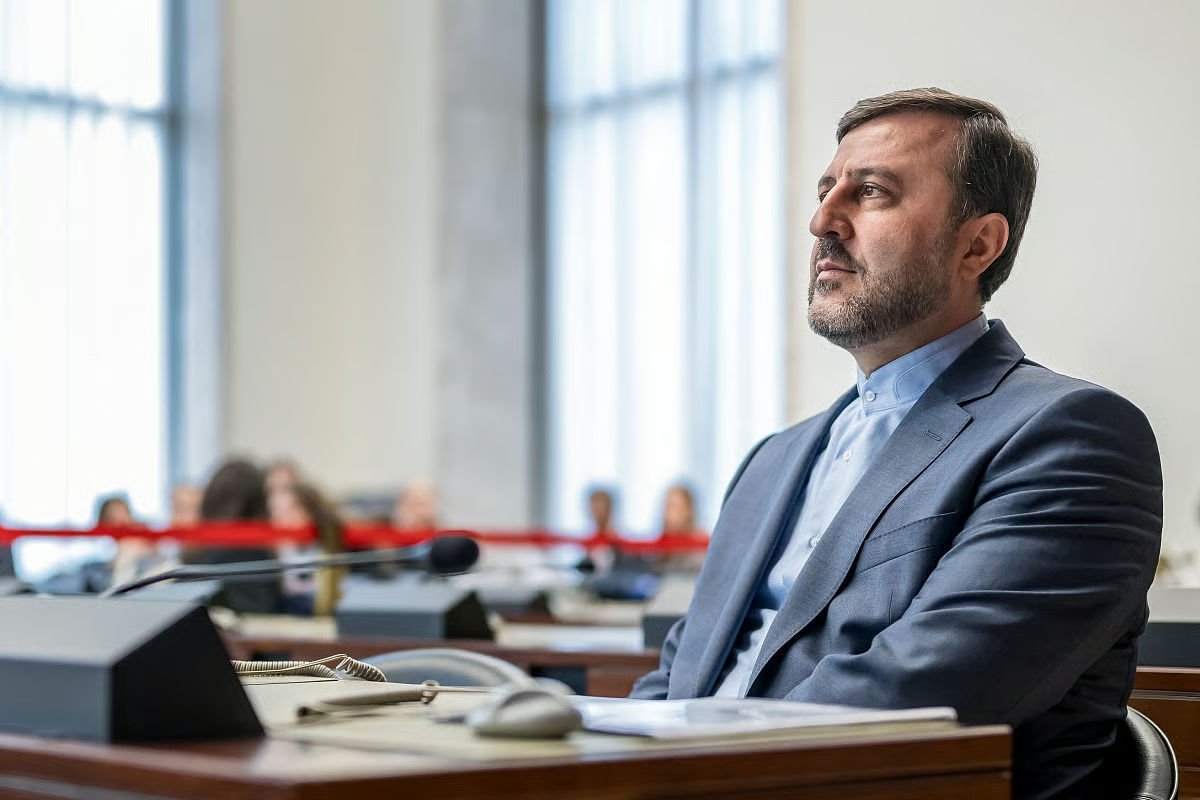
New communication channel agreed in Qatar as sides test path from war to dealLast updated: July 02, 2026 | 05:104 MIN READThis photo taken on February 23, 2026 shows Iran's Deputy Foreign Minister Kazeem Gharibabadi waiting to address the audience during the annual high-level debate of the United Nations Conference on Disarmament in Geneva.AFPUS President Donald Trump said Wednesday that indirect talks with Iran in Qatar were making progress, offering a tentative sign that diplomacy was holding after recent exchanges of fire threatened efforts to end the Middle East war.Iran's Deputy Foreign Minister Kazem Gharibabadi, who led Tehran's delegation, later said the talks had concluded and that the sides had agreed to establish a communication channel by Thursday to report and record violations of their initial memorandum of understanding.Iran had insisted there would be no direct negotiations in Doha on the deal, which aims to end the war that began with US-Israeli strikes on Iran in late February."As far as things are going, the denuclearisation of Iran is moving along well," Trump told reporters before boarding Air Force One."We hit them very hard... but we're getting along very well."US Vice President JD Vance, speaking at Naval Air Station Oceana in Virginia Beach, thanked US military personnel and said the ongoing negotiations with Iran were taking place from a position of strength.He said the talks had been possible "not out of weakness" but "out of strength."Lines of contactThe Qatar discussions, held at a lower level and focused on implementing the memorandum, were meant to "build on the progress made at the Lake Lucerne Summit," a diplomat told AFP on condition of anonymity.Tehran denied Trump's earlier claim that the talks would be direct, with foreign ministry spokesman Esmaeil Baqaei saying Iran had "no plans for negotiations with the American side at any level over the coming days."Gharibabadi said the discussions also covered frozen Iranian assets, whose release Tehran has demanded as part of any settlement.He said officials reviewed the use of part of an initial $6 billion and agreed that goods needed by Iran would be purchased and made available.US envoys Jared Kushner and Steve Witkoff were not taking part in the technical talks, the diplomat said, after meeting Qatar's Prime Minister Sheikh Mohammed bin Abdulrahman Al Thani on Tuesday.The memorandum of understanding, mediated by Qatar and Pakistan and sealed at a summit last month in Lucerne, Switzerland, includes a 60-day ceasefire, the reopening of the blockaded Strait of Hormuz and a timetable for a final deal on the war and Iran's nuclear programme. 'Overall positive message'Qatar's foreign ministry said the three discussed the US-Iran negotiations and developments in Lebanon.On Wednesday, the office of Qatar's emir said Kushner and Witkoff had also met ruler Sheikh Tamim bin Hamad Al Thani.Anna Jacobs, a non-resident fellow at the Arab Gulf States Institute, said it was "very early in the negotiation process and battles are being fought privately and publicly.""The overall positive message is that they are continuing to engage after the clashes last week," she told AFP.Ceasefire strainsSince the US-Iran deal was signed last month, the sides have exchanged fire in the Gulf, underscoring the difficulty of turning the initial truce into a lasting settlement.Tehran targeted a commercial ship it said had strayed from its approved route through the Strait of Hormuz, and US Central Command responded by saying it had struck 10 Iranian military targets.Iran then hit US bases in Kuwait and Bahrain, drawing condemnation from both Gulf states.Iran's chief negotiator Mohammad Bagher Ghalibaf said Tuesday that "when a war of this magnitude comes to an end... it is inevitable that there will be implementation challenges, incidents and differences of opinion, especially where parties such as the Israeli regime are concerned."He said Iran's delegation in Doha would focus on implementing clauses related to Hormuz and the fighting in Lebanon.The exchanges of fire appeared to have eased in the days before the Qatar talks, with oil prices falling as markets took encouragement from the continued US-Iran engagement.Israel-Hezbollah front 'quiet'On the Lebanon front, fighting between Israel and Hezbollah has also been relatively quiet.Iran-backed Hezbollah drew Lebanon into the wider Middle East war in March with rocket fire at Israel, triggering Israeli airstrikes and a ground invasion.Tehran has insisted any final deal should include an end to the Lebanon conflict and the withdrawal of Israeli troops from the south, part of which they occupy.'US maintains a lot of options': VanceVance also contrasted the current US approach toward Iran with the wars in Afghanistan and Iraq, arguing that President Donald Trump would only authorise military action with clearly defined objectives."[Trump's] negotiating from a position where Iran's nuclear program has been destroyed and their conventional military has been destroyed too, and what I notice about the people who are attacking the administration for negotiating is that they're the very same people who, for example, encouraged us to just go a little bit further and just drop a few more bombs in places like Afghanistan," Vance said."Now, the president of the United States maintains a lot of options today in 2026, but if he ever asks you to go and drop bombs, it's going to be for something specific," he added.Also In This PackageGet Updates on Topics You ChooseUp Next
US, Iran agree to establish communication channel
Indirect US-Iran talks in Qatar yield a new communication channel to monitor ceasefire violations, address frozen assets and support efforts to end the Middle East war.
871 words~4 min read