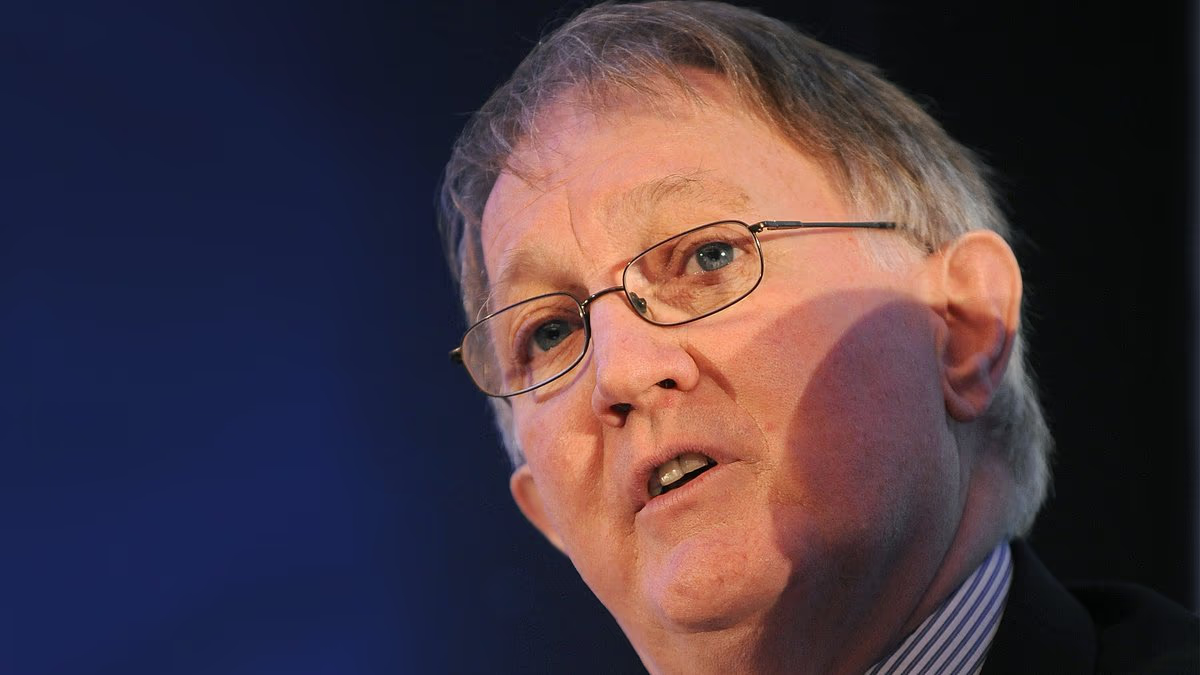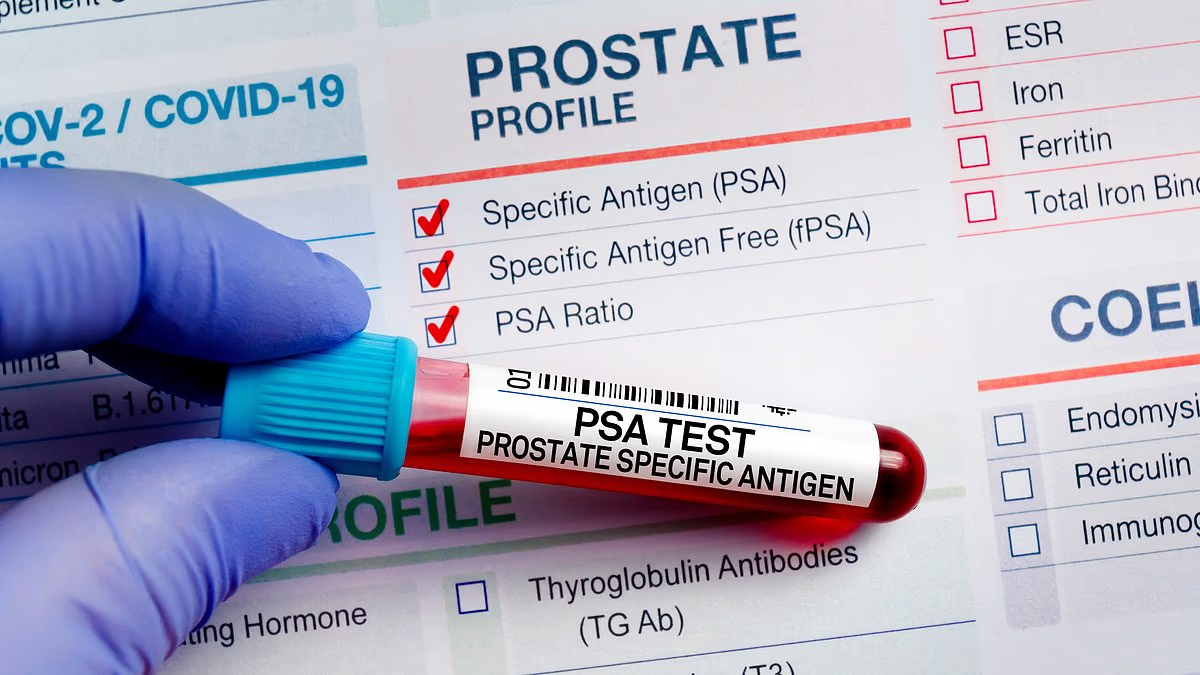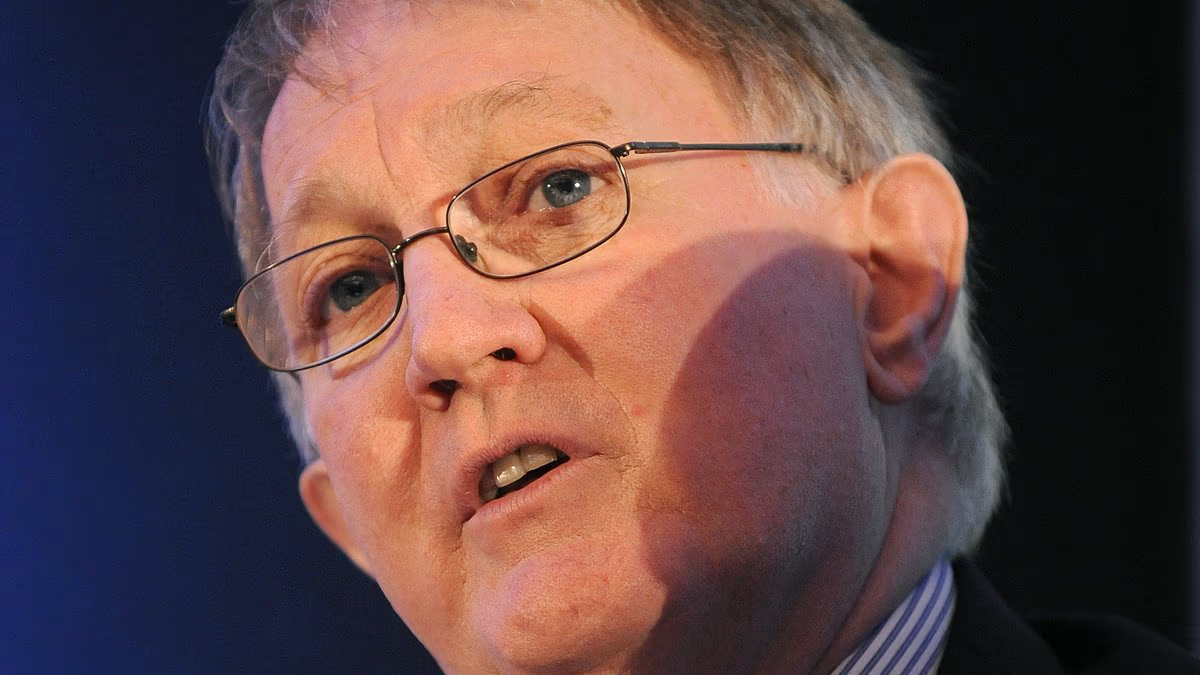
The decision to reject a major screening programme was made by a committee that did not contain a single prostate cancer expert, the Daily Mail can reveal.In May, the UK National Screening Committee (UKNSC) rejected calls to widen the scheme in a decision experts said amounted to 'clinical negligence'.Campaigners have now highlighted the astonishing absence of a practising prostate specialist on the committee, saying it will 'cost lives' because members were unaware of advances in how the disease is diagnosed and treated.In a powerful intervention in Thursday's Daily Mail, Oscar-winning director Sir Steve McQueen also questioned why the committee had no black members – despite black men being more likely to develop prostate cancer and twice as likely to die from it.He suggested it may have made a different choice had there been 'someone in the room who understood, from personal experience, what this disease does to black families'.The committee also faced calls to 'modernise and adapt' after some of its senior figures spent years warning about the potential 'risks' and 'harms' of screening rather than highlighting the life-saving benefits.Prostate cancer is the most common cancer in the UK, with 63,000 cases and 12,000 deaths each year. But unlike breast, bowel and lung cancer, there is no national screening programme.The Daily Mail is among those campaigning to end needless prostate cancer deaths and for a national screening programme, initially targeted at high-risk men, such as those who are black, have a family history of the disease or specific genetic mutations. Pictured: the committee chairman, Professor Sir Mike Richards In a powerful intervention, Oscar-winning director Sir Steve McQueen (pictured) also questioned why the committee had no black members – despite black men being more likely to develop prostate cancer and twice as likely to die from itBut as few as 1,500 men are likely to be invited for the checks after the health officials said that only men aged 45 to 61 who have a rare gene mutation combined with a family history of breast, ovarian, pancreatic, or prostate cancer should qualify.The committee ruled that the PSA blood test used to check for a marker of potential prostate cancer risk is not accurate enough for population-wide use. Treating these false positives – or those with prostate cancer that will progress too slowly to cause problems or early death – puts the men at unnecessary risk of impotence and incontinence, it said.The UKNSC website says committee membership 'normally includes… practising clinicians who have expertise in one or more relevant areas'.But despite the huge significance of its decision for millions of men, it had no urologists – the specialists who diagnose and treat prostate cancer.Campaigners contrasted this with the EU which is pushing ahead with wider prostate cancer screening after it was backed by the expert body, the European Association of Urology.Chris Booth, a retired consultant urologist and founder of men's health charity Chaps, said the lack of real-world expertise meant the committee's position rested on 'discredited, deeply flawed' research which led to a 'laughable' decision not to expand screening, which 'will cost lives'.David James, of Prostate Cancer Research, accused the committee of being 'static and backwards-looking'. Pictured: UKNSC director of programmes, Professor Anne Mackie'The UKNSC must adapt and modernise its approach, because to do anything else would risk failing the very people it was set up to protect,' he said.Martin Davies, chairman of the Prostate Project charity, also said the committee's concerns about harm caused by over-diagnosis and over-treatment appeared to be based on 'out-of-date information'. The days when a positive PSA test led automatically to aggressive interventions was 'a thing of the past', he added.Professor Frank Chinegwundoh, consultant urologist at Barts Health, said the committee's 'grave' mistake to treat black men and those with a family history of the disease the same as the low-risk population was 'clinical negligence'.Health Secretary James Murray accepted the UKNSC recommendation on prostate cancer screening in full.The Department of Health and Social Care said the committee had made its decision using the most up-to-date NHS pathway for prostate cancer diagnoses, which included MRI before biopsy. A spokesman said: 'The Government is committed to improving outcomes for all men with prostate cancer. The UKNSC will keep its recommendations under active review as new evidence emerges.'
Panel that rejected prostate plan had NO specialists in the cancer
In May, the UK National Screening Committee (UKNSC) rejected calls to widen the scheme in a decision experts said amounted to 'clinical negligence'.
708 words~3 min read