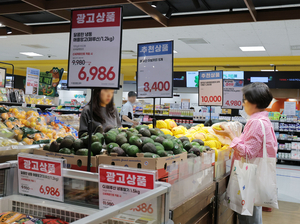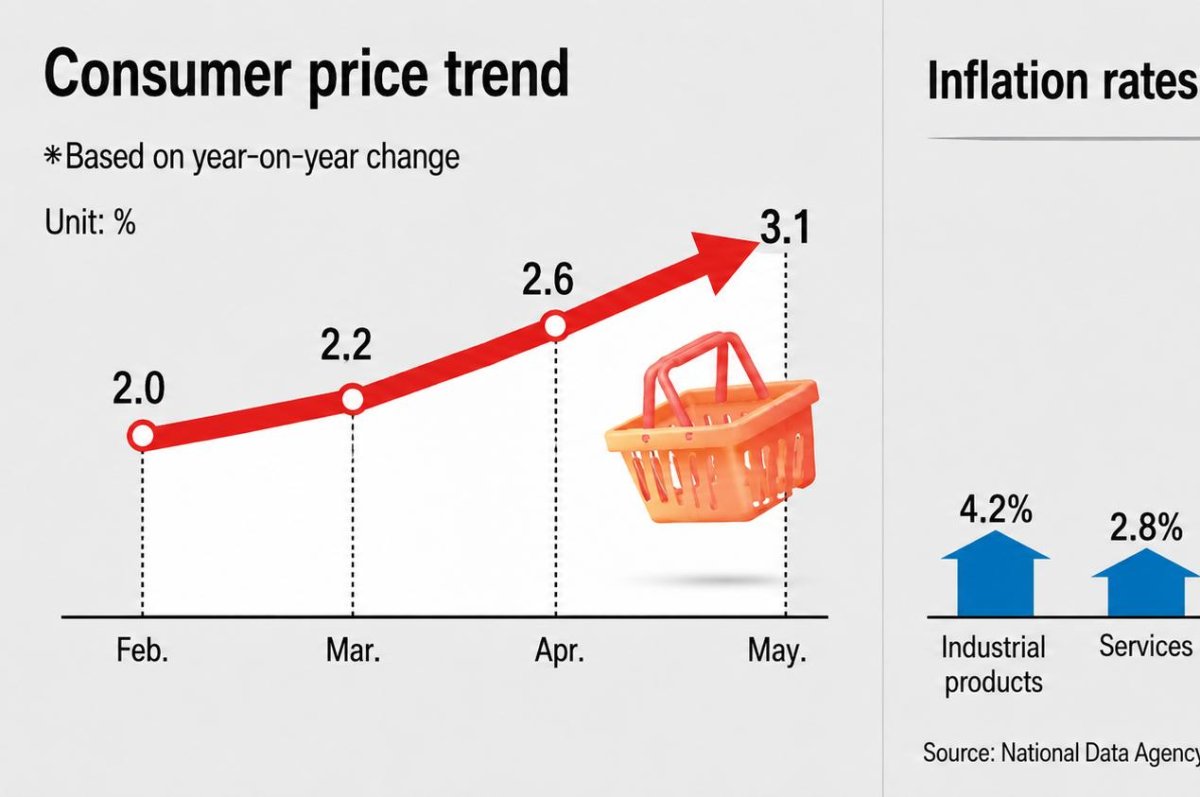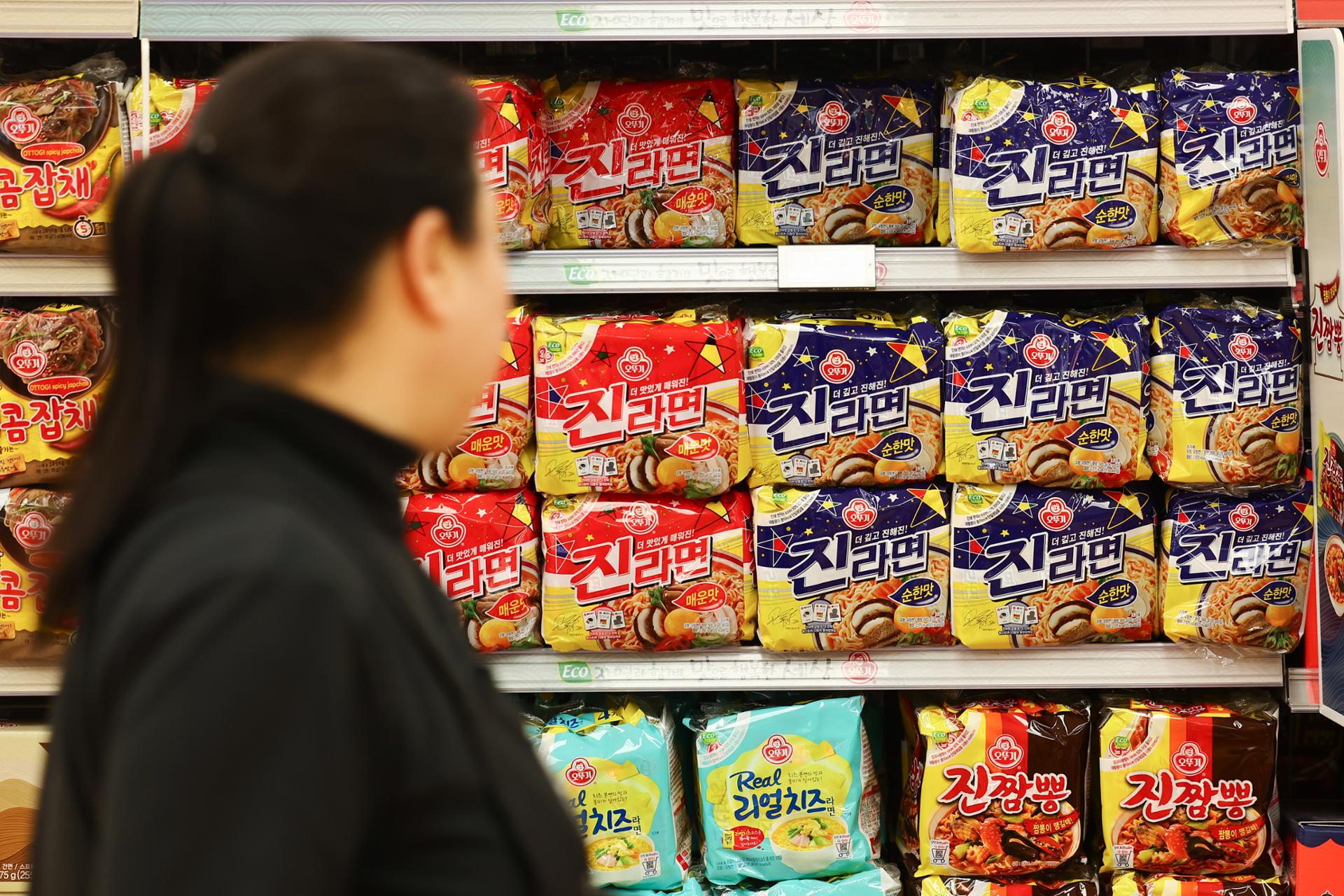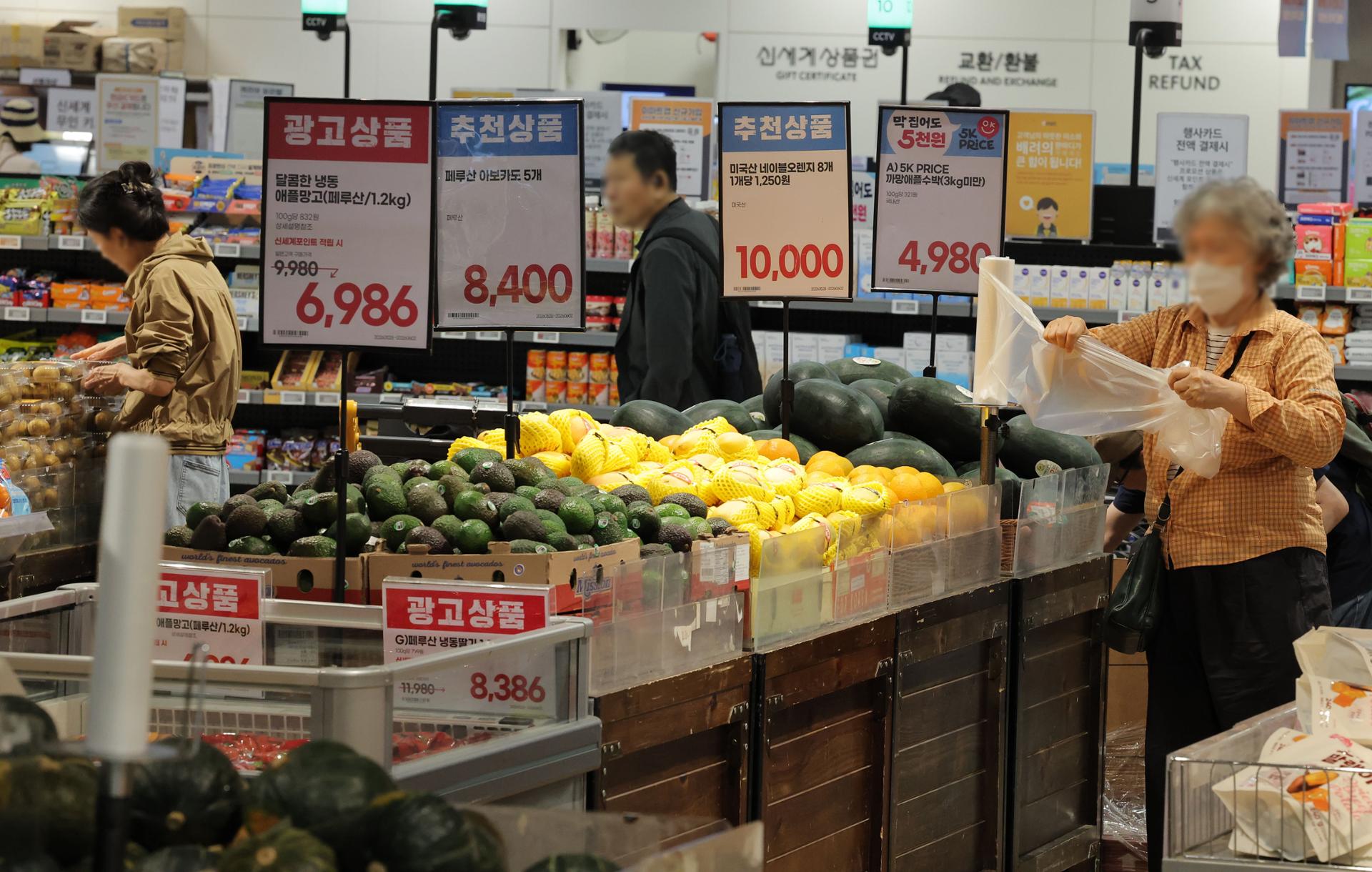
Shoppers purchase groceries at a supermarket in Seoul on Tuesday. (Yonhap) South Korea's consumer prices rose more than 3 percent from a year earlier for two straight months in June, reflecting the lingering impact of the Middle East war on supply chains and oil prices, data showed Thursday.Consumer prices, a key gauge of inflation, increased 3.2 percent last month from a year earlier, according to data from the Ministry of Data and Statistics. It marked the sharpest increase since December 2023, when the figure was at the same level.Prices of industrial products rose 4.4 percent, driven largely by higher fuel prices.The data ministry said fuel prices shot up 24.7 percent, contributing 0.93 percentage point of the overall increase in consumer prices. It was the sharpest growth since 35.2 percent posted in July 2022.In detail, gasoline prices rose 23.1 percent and diesel prices jumped 33.7 percent. South Korea relies heavily on imports to meet its energy needs.Prices of agricultural and fishery products went up 3.2 percent, led by increases in beef and rice prices.Service prices increased 2.6 percent from a year earlier, driven by higher insurance costs.Core inflation, which excludes volatile food and energy prices, advanced 2.5 percent from a year earlier last month, the data showed.During a meeting with related ministries, First Vice Finance Minister Lee Hyoung-il stressed the need to make efforts to keep inflation at around 3 percent in the second half of 2026.South Korea recently announced plans to implement discount events at local retail stores in July and August, while importing additional eggs to tame inflation."Related ministries will bolster on-site inspections so that all measures will contribute to the stabilization of consumer prices," Lee added. (Yonhap)
Consumer prices rise to highest in 30 months in June on Middle East war impact
South Korea's consumer prices rose more than 3 percent from a year earlier for two straight months in June, reflecting the lingering impact of the Middle East w
279 words~1 min read