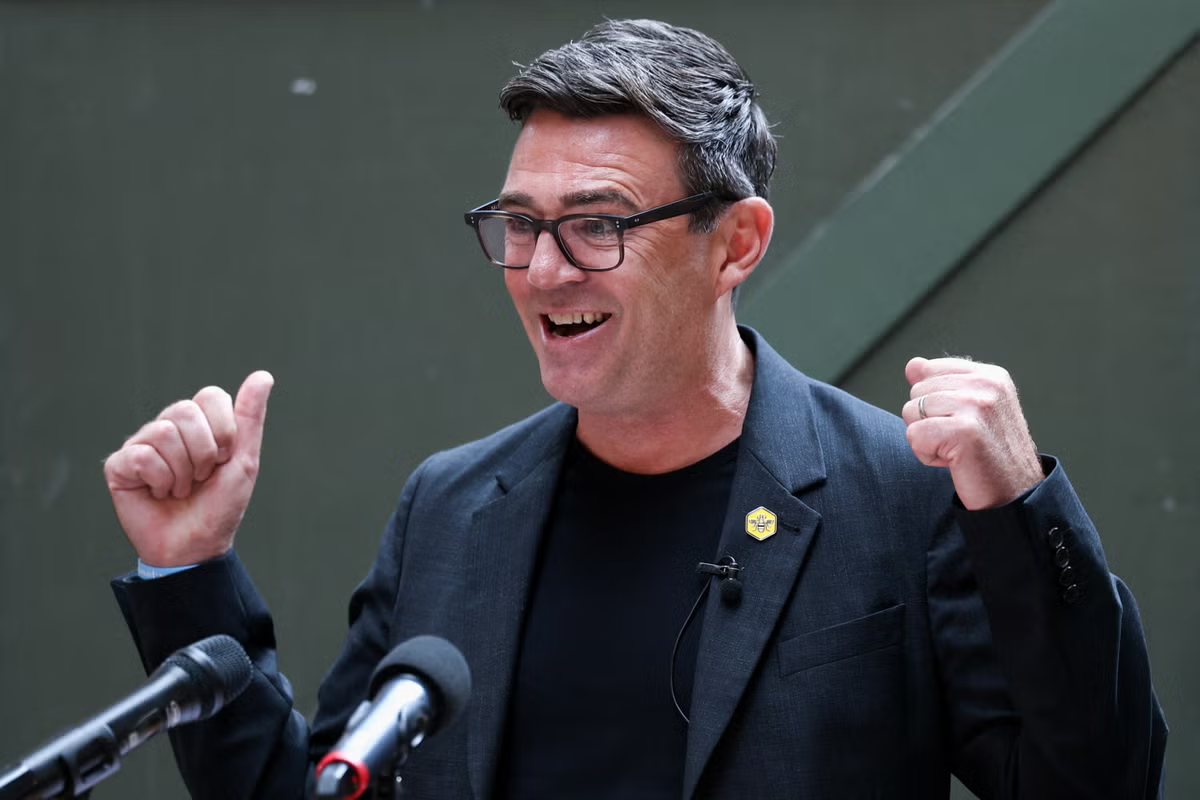
Everyone wants to know who Andy Burnham will pick to be his chancellor, where he’s going to live if he’s prime minister (not Downing Street, it seems), and whether he’ll dress more like Volodymyr Zelensky than Jacob Rees-Mogg for official duties. But relatively little attention has been focused on how he plans to transform the way England and Wales are governed…What does Andy Burnham want?If there is one thing that is clear about the 10-year “mission” Burnham has set himself, it’s the revolutionary potential. It is not just Manchester that would achieve greater autonomy, but every region in England – and possibly Wales. This, so the argument goes, would ensure that public spending and decisions on planning, housing, and industrial strategy are taken closer to the ground. In time, the country would be less dependent on southeast England for growth and its larger cities would become engines for growth. Opportunity knocks for Newcastle, Leicester, Portsmouth and Norwich as well as Manchester, Leeds and Liverpool. “Manchesterism” is a bit of a misnomer for something that is supposed to be applied across the whole country: it is regionalism, or federalism. How would it work?Larger areas might have a directly elected mayor, while others more like a traditional local council area would raise some additional money locally through a combination of reformed council tax, business rates and maybe a local income tax. The rest of the funds would still be provided by the Treasury. Regional authorities would have the power to spend the money as they wish, though the degree of autonomy is unclear. How much power would the regional administrations have? That’s not clear, but Burnham is proud of what he’s done in housing, economic regeneration and public transport – and he suggests health should also be regionally devolved. It is worth mentioning that Burnham prefers proportional representation, so the political priorities in different regions could be very varied.What would that mean for politics?It would be transformative. Take the NHS: at present, health secretary James Murray is only responsible for the NHS in England because the service is already devolved in Scotland, Wales and Northern Ireland. Under Burnham’s plan, Murray wouldn’t have much to do with health policies and provision in any of the English regions either, as these would be under their own regional “ministers of health”. In principle, there’d be nothing stopping radically different policies being implemented by the various regions, provided they didn’t erode the UK “internal market”. Indeed, taxation and social security rates might also vary. Would elections matter?Of course, but general elections for the parliament at Westminster would be far less important than now, and regional elections would be far more significant for England than most municipal elections are now. A Westminster government might be unable to dictate to any given English region whether or not they should introduce prescription charges or means-test long-term care or privatise the water supply in their area.What would the regions look like?Some are obvious and more or less consensual: Greater London, Liverpool City, Tees Valley. Others would be more controversial. Combining Liverpool City Region and Greater Manchester for a “North West Region” might be tricky, as would trying to find a way of giving the whole of the southeast of England an identity, or merging Devon and Cornwall, which is fiercely opposed by the latter. They don’t have to be as large as the current 12 official “primary standard regions”, and could respect strong local wishes, in which case Cornwall and Rutland would need special status. The nations and regions would also have a strong voice in the proposed upper house that would replace the House of Lords. One downside is that some citizens would end up with three or four tiers of government.Would it work?Federal systems are normal in many countries; the United States, Germany, Australia, and Canada all function and “asymmetrical devolution” has been running for many decades in Spain and the UK. It can be hard work, however, and is no guarantee of economic success or political stability.
Could Andy Burnham’s vision of a federal United Kingdom succeed?
Almost three decades after devolution in Scotland and Wales, could the new prime minister’s plan transform the UK into a federalised state? Sean O’Grady tests the Manchester mayor’s vision
670 words~3 min read