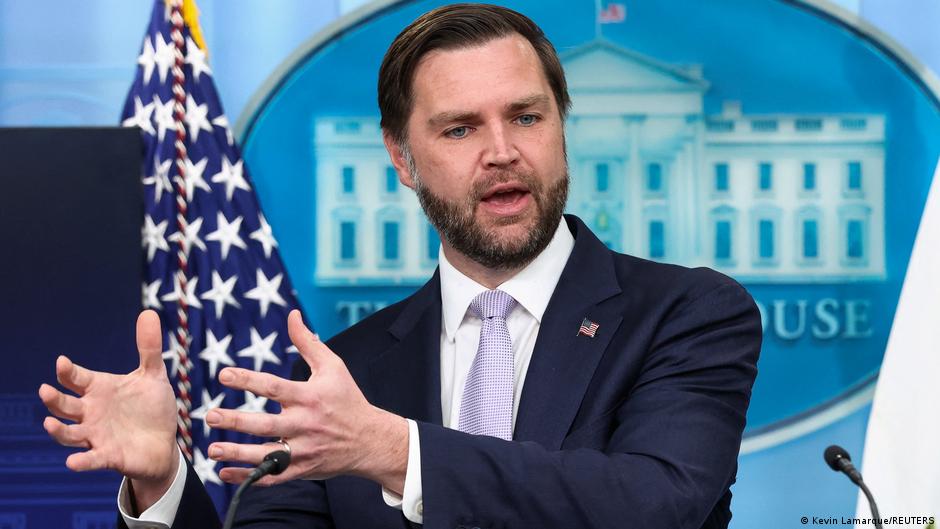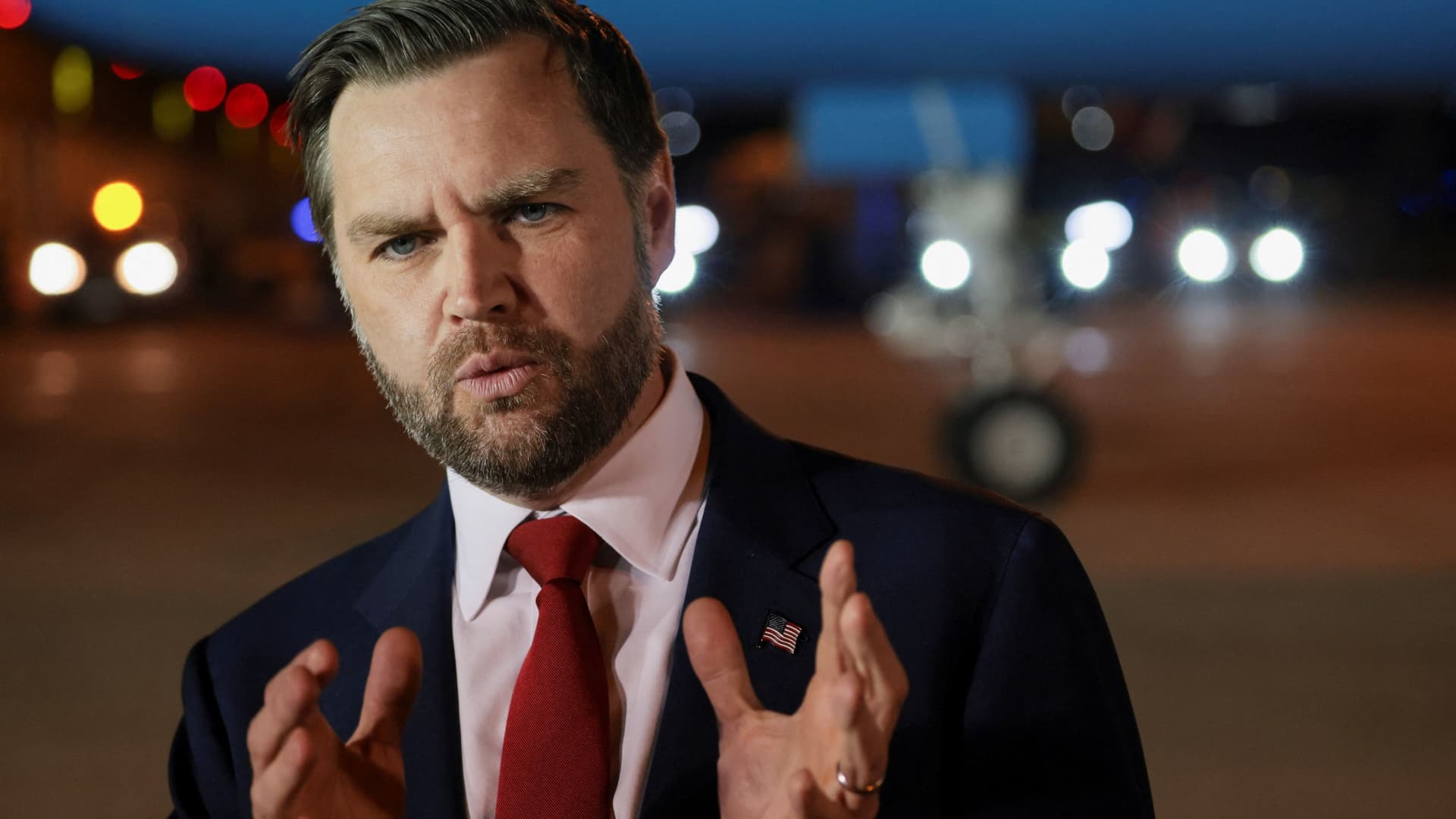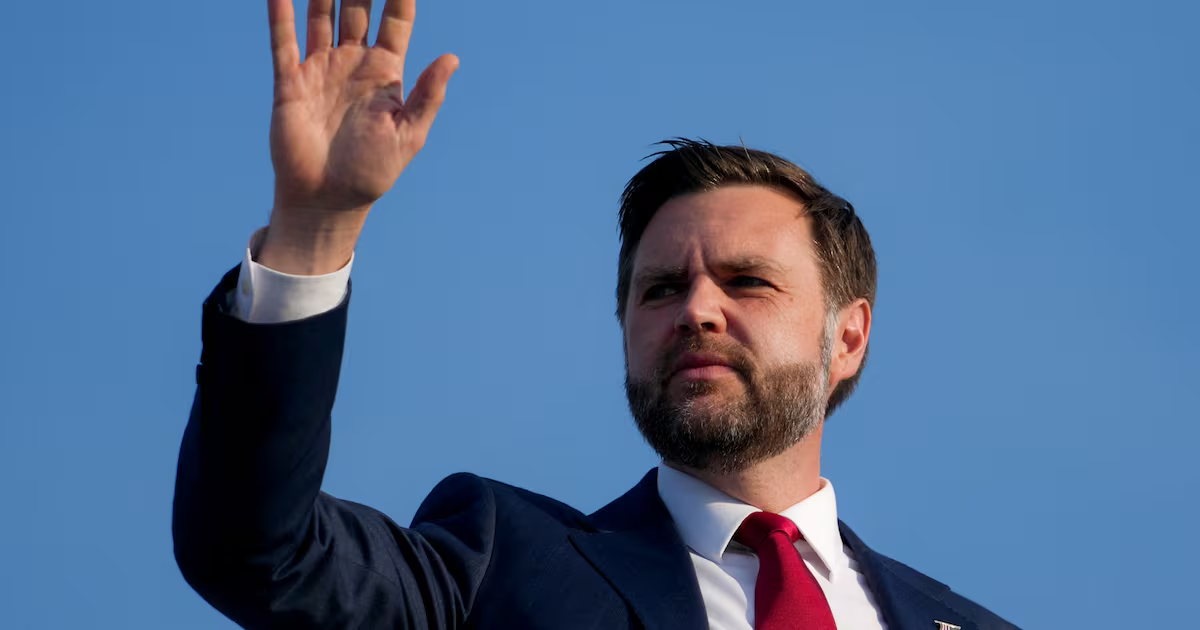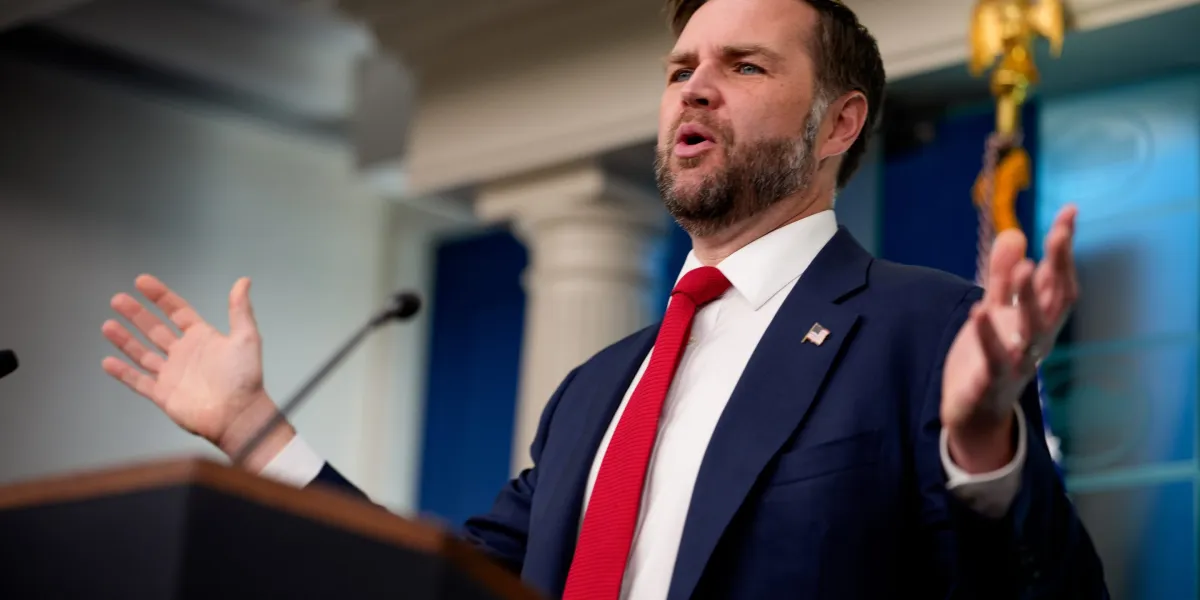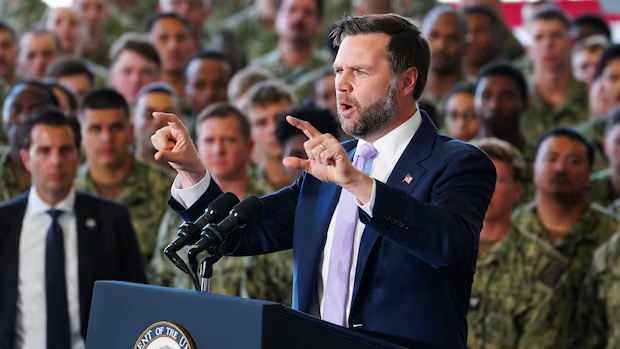
WorldU.S. Vice-President JD Vance said discussions between the U.S. and Iran were going well as they held indirect technical talks in Qatar about the Strait of Hormuz on Wednesday, adding Washington would not return to full combat unless necessary.U.S. vice-president said indirect talks between the 2 countries were going wellThomson Reuters · Posted: Jul 01, 2026 3:00 PM EDT | Last Updated: 2 hours agoListen to this articleEstimated 5 minutesThe audio version of this article is generated by AI-based technology. Mispronunciations can occur. We are working with our partners to continually review and improve the results.U.S. Vice-President JD Vance speaks during an event marking 250 years of the American military at Naval Air Station Oceana in Virginia Beach Wednesday. (Ken Cedeno/Pool/Reuters)U.S. Vice-President JD Vance said discussions between the U.S. and Iran were going well as the two countries held indirect technical talks in Qatar about the Strait of Hormuz on Wednesday. He added that Washington would not return to full-scale combat unless necessary.The talks are based on a 14-point interim accord signed last month. The agreement was intended to halt the war that began with U.S. and Israeli strikes on Iran in February, reopen the strait and establish 60 days of negotiations toward a permanent peace deal.However, the U.S. and Iran have sparred publicly over the meaning of the interim pact, leading to tit-for-tat military strikes over the past week and leaving little sign of progress on more complex issues, including Iran's nuclear program.Vance said he could not guarantee that Washington would avoid a return to full combat operations before next month's deadline. For now, however, President Donald Trump has directed officials to reach a deal, he said."I can't commit to anything, because, obviously, it depends on what the Iranians are ultimately going to do," he told reporters on a visit to Virginia Beach, Virginia. "What I can commit to is: The president's not going to send our military back in unless he has to, unless there's a clearly defined purpose for it."WATCH | Trump's threats to Iran:Trump's death spiral of threatening Iran | About ThatJune 29|Duration 2:57Talks focus on shipping and strait for nowVance said the technical talks in Doha were focused on commercial shipping in the strait and would later turn to Tehran's nuclear capabilities."It's still pretty early, but talks are going well," he said.Iran is determined to secure international recognition of its control over the key oil-shipping waterway and its ability to levy fees on ships entering or leaving the Gulf, even if it must do so by force, according to two senior Iranian sources.Traffic has partially resumed through the strait, which handled one-fifth of global oil and liquefied natural gas trade before the war.Iran attacks Bahrain and Kuwait following U.S. strikes, threatens to halt talks to end warIran says it has launched retaliatory strikes on U.S. bases in Kuwait, BahrainU.S. strikes Iran in retaliation for attack on cargo ship in Strait of HormuzTrump, who has said the removal of Iran's highly enriched uranium is a top priority, told reporters Wednesday that "the denuclearization of Iran is moving along well." He did not provide details.Asked about the possibility of returning to all-out war with Iran, Trump added: "Well, I think they've come a long way. We hit them very hard last week. I think they're fine."WATCH | Attacks weaken already troubled ceasefire:U.S.-Iran ceasefire more fragile after strikesJune 28|Duration 2:13The ceasefire between Iran and the U.S. was made more fragile after they exchanged attacks and threats over the weekend, but some experts say a shaky agreement is still better than nothing.The indirect talks, mediated by Qatar and Pakistan, began Tuesday night and continued Wednesday, an Iranian official said.The negotiations are structured as sessions involving chief negotiators and specialists, according to a source with knowledge of the talks. The source said Trump's son-in-law, Jared Kushner, and envoy Steve Witkoff met Qatar's prime minister to lay the groundwork but would not attend the talks. Kushner and Witkoff later met Qatar's emir to discuss U.S.-Iran negotiations and developments in Lebanon, where a parallel conflict between Israel and Iran-backed militant group Hezbollah erupted in early March.Iranian Deputy Foreign Minister Kazem Gharibabadi led a delegation of representatives from the country's foreign ministry, central bank and agriculture ministry. The delegation met Qatar's prime minister and held talks with mediators.Iran has stated publicly that its priorities include reaching an agreement on the management of the strait and securing the release of $6 billion US in Iranian frozen assets. The Iranian official said the current discussions would focus on those two issues.The stated priority of the U.S. is to ensure the free flow of traffic through the strait, the source with knowledge of the talks said.Iranian state media said on Wednesday that a foreign container ship had run aground in the strait after entering shallow waters outside the shipping route designated by Iranian authorities."Hormuz continues to reopen but it's patchy, unpredictable, and not fully transparent," said Vandana Hari, founder of oil market analysis provider Vanda Insights.Intensive talks on LebanonThe war triggered Iranian attacks on Gulf states hosting U.S. military bases, killed thousands of people — mainly in Iran and Lebanon — and pushed up oil and fuel prices.Trump faces domestic pressure to contain the war's economic fallout before the midterm elections in November. He also faced criticism from members of his own party who say the interim deal leaves U.S. objectives unmet.In Iran, the theocratic leadership survived the war but faces domestic anger over a shattered economy.The interim agreement between the U.S. and Iran also calls for an end to the conflict in Lebanon.Israel, Lebanon sign framework agreement with U.S. in 'first step' toward peaceCarney says he talked about Iran, NATO in wide-ranging security call with TrumpThe U.S. has supported a separate track of talks between Israel and the Lebanese government. Those negotiations produced a framework security agreement that Hezbollah has dismissed and analysts warn could entrench Israel's occupation of southern Lebanon.Intensive diplomatic discussions on Lebanon involving the U.S. and other parties continued until Tuesday evening, the source with knowledge of the talks said.
Trump won't return U.S. to full war in Iran 'unless he has to,' Vance says | CBC News
U.S. Vice-President JD Vance said discussions between the U.S. and Iran were going well as they held indirect technical talks in Qatar about the Strait of Hormuz on Wednesday, adding Washington would not return to full combat unless necessary.
1,008 words~5 min read