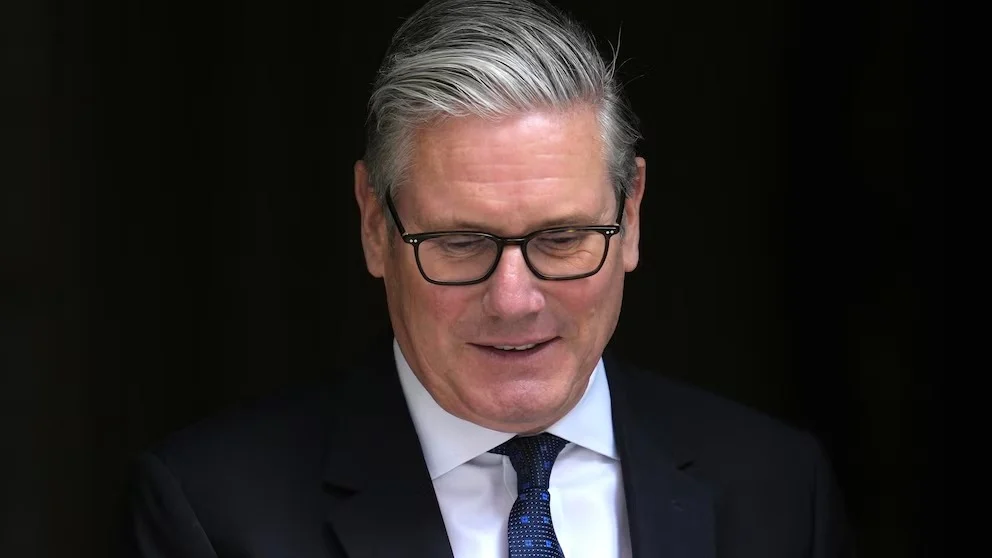
Incumbent Prime Minister of the U.K. Keir Starmer recently announced a policy to ban social media for children under-16. This was part of an arc of initiatives and announcements in Australia, Indonesia, Malaysia, France, and Canada to curb children’s access to social media. This has triggered debates in India, especially at the State level, along the same lines.The various contentions against a social media ban are not uniformly convincing. There is the argument that bans limit an “important source of information and learning” for children. However, the extent to which social media is used by children for learning is empirically arguable. It is also normatively questionable whether such platforms are an apt space for learning in the first place.Scientific literature is full of intense debates regarding a clear and uniform correspondence between children’s usage of social media and harmful experiences. Young adults respond to similar online circumstances differently; more so in jurisdictions that are as socially, economically, and digitally variegated as ours. What is required, foremost, is to identify the conditions where a high degree of correspondence does exist, and understand who are the most vulnerable among the expansive category of ‘children’.Ineffective bansMeanwhile, there are numerous reasons why a ban for below-16s is unlikely to be effective. Curtailing access assumes that stout mechanisms of age verification exist on platforms. One must also be aware that age-verification allows social media platforms to collect sensitive identity data of under-16s. Bans tend to get circumvented by teenagers using the credentials of a willing family member or older peers. Even without external support, many young adults can manage to gain access though technological circumvention. There is also the anxiety that bans could inculcate a wider culture of work-arounds among young adults — a behaviour which once ingrained could extend, in the years to come, to offline legal responsibilities too.A combination of slack age verification systems and technological workarounds makes a mockery of a ban. Besides, the Australian experience has shown that ‘age-gating’ on social media platforms has pushed under-16s to migrate to less entrenched services; we are yet to know whether they are safe spaces.Given the limited efficacy of bans, the alternative is to focus on the governance of social media platforms. This moves attention from those at risk to those contributing to creating the conditions of risk. Discussions on young adults’ safety offer a potent opportunity to deepen debates on platform governance in India.Charitable arguments point at design defects in some social media platforms that drive cravings and dependence among under-16s. But let’s face it — addiction is central to the aims and operations of all service providers in the converged media environment. In fact, in the attention economy, platforms cannot compete without instituting, by design or deceit, some forms of dependence.If addiction is the key concern, the Chinese response of capping screen time for children seems better directed. It amounts to the state mandating platforms to do what many concerned and informed parents do through other means. That said, in countries relatively less regulated, surveilled, and socially regimented than China, practices of borrowing credentials and technological workarounds to surmount screen-time caps will continue. Moreover, like bans, instituting caps requires age-verification, and will thereby legitimise platforms to harvest additional data of under-16s.Limiting access and regulating platforms involve different registers of monitoring and enforcement. In the case of a ban or caps on social media use by under-16s, two levels of enforcement can be visualised. The first is at the individual and household level; here, enforcing a ban, if feasible at all, would lead to intrusive forms of monitoring by platforms. The second will be at the platform level; a ban or screen time caps would demand age-verification and safeguards to privacy by platforms be rigorously enforced by the government.Holding platforms accountableThe alternative is to legally oblige platforms to be transparent on their design, and provisions on safe spaces. Here, governments are likely to face structural and operational barriers. Governments that rely on social media giants to promote or protect their own interests are unlikely to push platforms to create transparent and accountable mechanisms. Furthermore, ensuring compliance on matters of design would make governments vulnerable to allegations of selective enforcement.Evidently, the policy option of curtailing access is easier than that of making platforms accountable. Governments find it socially acceptable and legislatively convenient to make a case for age-gating. Devising effective and fair protocols that hold platforms accountable for their unwillingness to design safe spaces is far more complex.Those advocating to curtail access should be cognisant of three matters. Foremost, they ought to evidentially make their case against social media platforms. Second, they should realise that bans or capping screen-time is nowhere close to a well-rounded regulatory strategy to tackle online safety. Finally, they must anticipate the burden on regulatory and judicial bodies that bans and their enforcement could lead to, and the perils to privacy that come with age-verification.Vibodh Parthasarathi is with the Centre for Culture, Media and Governance, Jamia Millia Islamia, New Delhi
On curbing young adults on social media
Under-16 social media ban: Given the limited efficacy of bans, the alternative is to focus on the governance of platforms. This moves attention from those at risk to those contributing to creating risk
830 words~4 min read