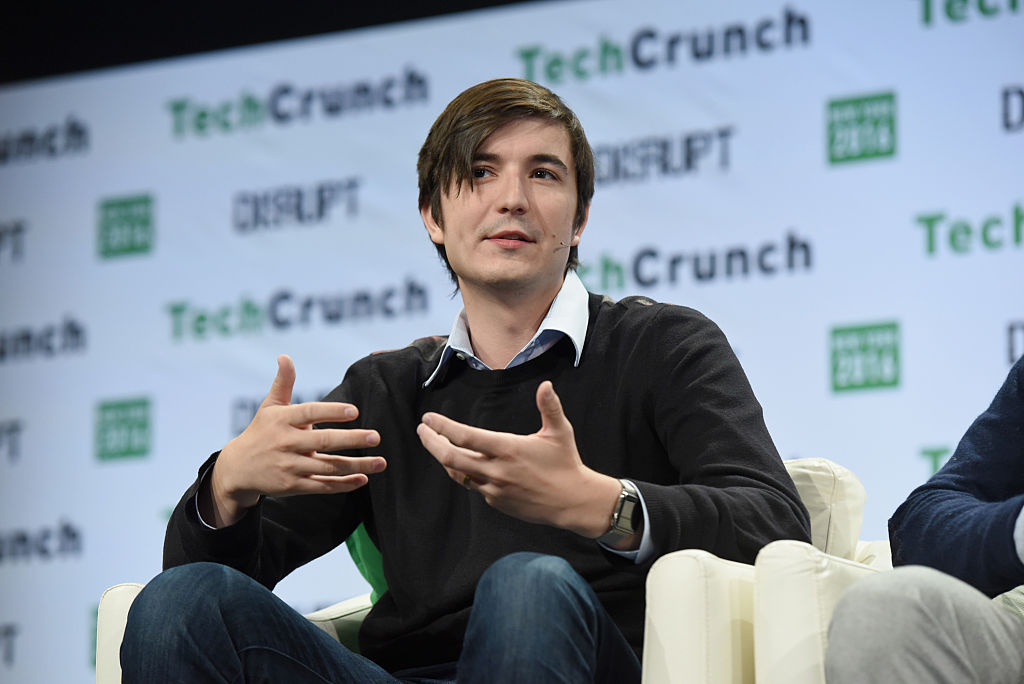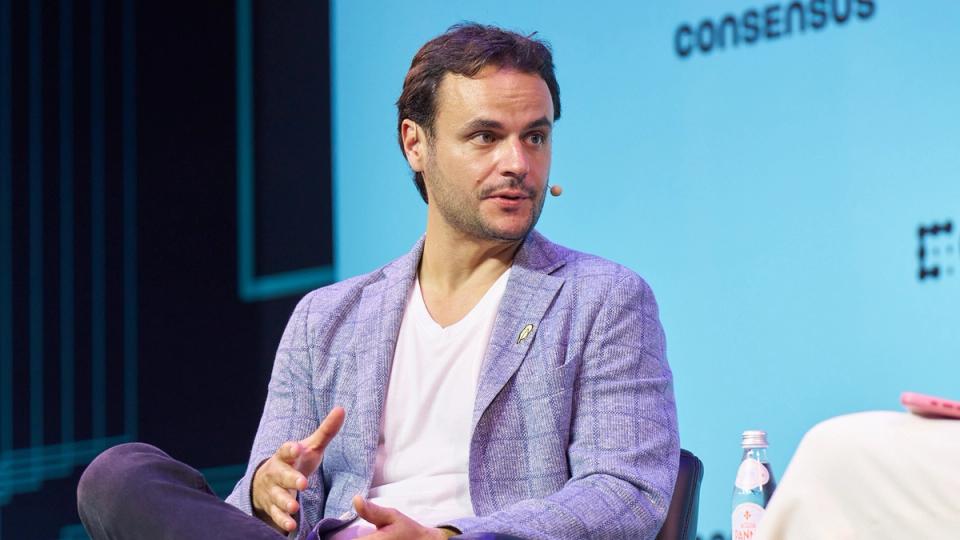
Vlad Tenev, cofounder, CEO and Chairman of RobinhoodGuerin Blask for ForbesRobinhood was built for the last great retail investing boom: commission-free stock trades, fractional shares, options and crypto, all compressed into a clean mobile interface that made markets feel more accessible to everyday investors. Now it is positioning for the next one.At Robinhood’s “The World Is Flat” event in London, the company unveiled a sweeping set of crypto and AI-powered products, including its own blockchain, a new generation of stock tokens, decentralized lending, new crypto perpetual futures and AI agent trading capabilities. In other words, Robinhood no longer sees itself as just a brokerage for younger investors. It wants to be the front door to a faster, more global and more speculative version of financial markets where stocks, tokens, derivatives, prediction markets and AI agents increasingly sit inside the same app.The centerpiece of that vision is the launch of the Robinhood Chain, a blockchain the company describes as “AI-native and purpose-built for real-world assets.” “This one really is a continuation of our Cannes event, where Vlad championed the ability for crypto technology and tokenization to improve access to financial services and laid out a roadmap of how to get there,” says Jordan Sinclair, who leads Robinhood’s brokerage and crypto business in the U.K., the company’s first international market.Robinhood Chain was built on Ethereum Layer-2 Arbitrum technology and supported by automated market-making mechanisms from Uniswap and Pleiades. It will also integrate Robinhood’s first decentralized lending product, Robinhood Earn, which allows app users in the U.S. to earn an estimated 7% APY on USDG stablecoins via the decentralized lending protocol Morpho. The blockchain’s launch places Robinhood in a growing category of corporate-backed networks, where crypto and payments companies are increasingly building their own rails rather than simply relying on existing public blockchains. Coinbase’s Base and Stripe’s Tempo are among the most visible examples, shifting attention and value away from the more neutral, developer-led ecosystems that originally defined the industry.Robinhood’s crypto revenue fell 47% in the first quarter compared with the first quarter of 2025, pressured by a broad selloff in digital assets. But the company’s overall business continued to expand: total revenue rose 15% year over year to $1.07 billion, while assets on the platform grew 39% to $307 billion. In 2025, Robinhood reported total net revenue of $4.5 billion.That gives the company room to keep pushing out new products even as crypto trading volumes fluctuate and a reason to move aggressively before crypto-native rivals, prediction markets and legacy brokerages converge on the same customer.One of Robinhood’s biggest bets is tokenized stocks. The company is rolling out a new generation of stock tokens designed to trade across a variety of crypto platforms, including third-party wallets such as Ledger and Trust Wallet and decentralized exchanges such as Uniswap and 1inch. These tokens are meaningfully different from Robinhood’s existing stock tokens, which are blockchain-based derivatives that mirror the price movements of underlying equities but are confined to the Robinhood app and available only to European Union residents. The new stock tokens will be available in more than 120 countries (not including the U.S.), and usable across decentralized finance venues beyond Robinhood’s platform, according to Seong Seog Lee, head of product at Robinhood Crypto. They are structured as tokenized debt instruments redeemable for cash through authorized participant providers, with plans to enable redemptions for the underlying securities in the future. Robinhood’s first generation of stock tokens, now called classic stock tokens, will continue to be available in the Robinhood Europe app.The company is also moving further into derivatives. In Europe, Robinhood is launching new perpetual futures tied to commodities, ETFs and foreign exchange, offering up to 10x leverage. Crypto-based perpetuals are already one of the company’s fastest-growing products in the region. Now, users will also be able to trade perpetual futures and earn points on Lighter, a fast-growing decentralized exchange, through an integration with Robinhood Chain.In the U.S., Robinhood is adding tools for more sophisticated crypto traders, including a maker-taker fee model (as low as 0% based on volumes) and extended agentic trading capabilites—beyond equities and options to crypto. The latter allow users to connect their preferred AI models to Robinhood’s data and tools to analyze markets and build trading strategies at no cost.In May, the platform introduces a feature allowing AI agents to ma to their Robinhood Gold credit card to make purchases autonomously based on set parameters.Robinhood is expanding geographically too. Following its acquisition of Canadian digital asset platform WonderFi, the company is pushing into Canada as well as Singapore. Additionally, it is planning to launch crypto trading in the U.K soon.“We’re trying to lead the industry in shipping new products that have not historically been available through brokers,” says Gina Pasqua-Abeles, senior director of product at Robinhood. “We’re also trying to create a mobile-first experience for traders of prediction markets and derivatives, which are probably the fastest-evolving business lines that we have.”Robinhood’s competitive universe has changed profoundly in mere months. A decade ago, it was trying to pull young investors away from traditional brokerages. Today, it is competing with Schwab and Interactive Brokers on one side and crypto exchanges including Coinbase, Kraken, Hyperliquid as well as prediction markets Kalshi and Polymarket on the other. The prize is no longer just the brokerage account, but rather a daily trading habit of a younger investor who is more comfortable with speculation, more willing to use non-traditional platforms and less attached to the old boundaries between asset classes.“While Boomer balances at legacy incumbents are more than 20x larger than Robinhood’s median customer’s average balance of roughly $12,000, we view Robinhood’s relatively young customer base as positioning Robinhood to have little in terms of a legacy book to defend as compared to incumbents,” write analysts at crypto data provider Artemis and investment firm North Island Ventures. “We believe asset per customers will keep growing due to Robinhood’s strong product velocity and foothold with Gen Z and Millennials, a demographic we expect to benefit from an impending intergenerational wealth transfer, positioning Robinhood as a winner of retail finance.”
Robinhood Launches Its Own Blockchain, New Stock Tokens And DeFi Products
The brokerage app is pushing deeper into tokenized finance, AI trading and crypto derivatives as it tries to capture the next era of retail investing.
1,011 words~5 min read