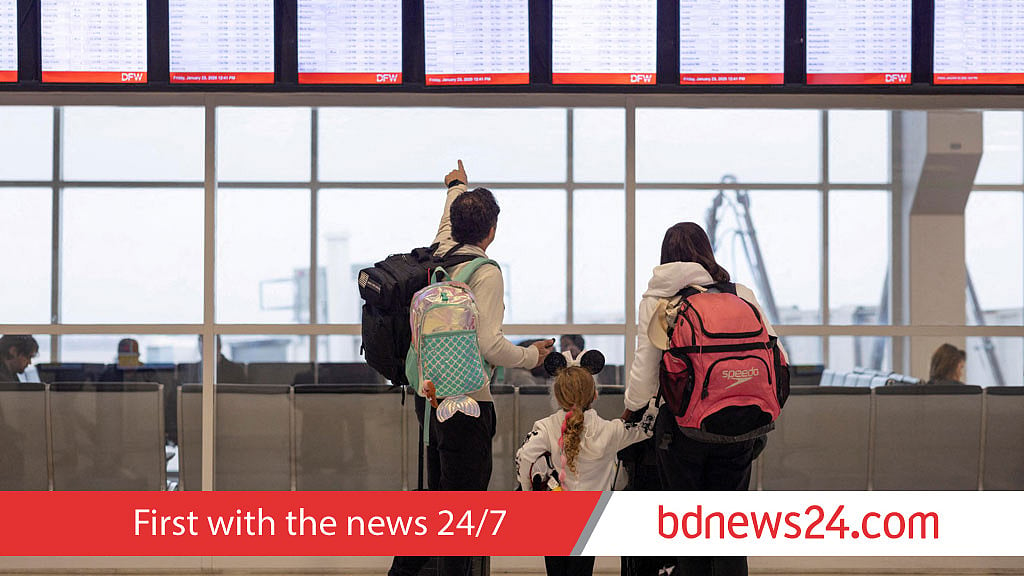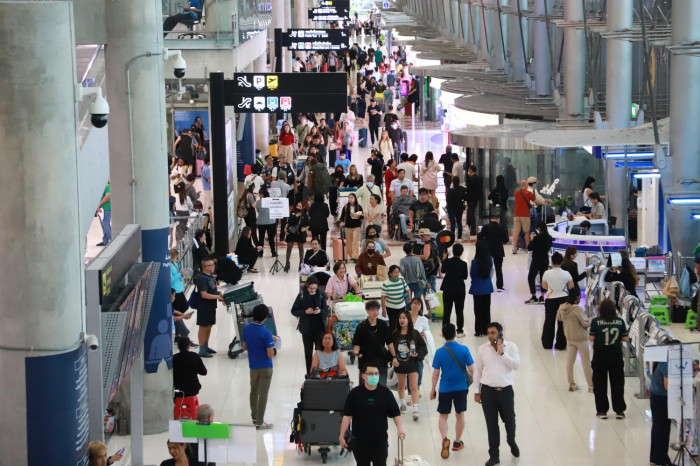
IATA expects jet fuel prices will take time to return to pre-crisis levels, and airfares could remain high longer than passengers expect. (Photo: Somchai Poomlard)
Despite optimism around the US-Iran ceasefire and the reopening of the Strait of Hormuz, it will take time for jet fuel prices to return to pre-crisis levels and airfares could remain high for longer than passengers expect, says the International Air Transport Association (IATA).Sheldon Hee, regional vice-president for Asia-Pacific at IATA, said it will take several months for the energy supply chain to normalise and have an impact on the aviation sector.
After the war between the US and Iran started in February, jet fuel prices more than doubled. In recent months, the average jet fuel price was roughly 60-80% higher year-on-year.
Though the jet fuel price has fallen from its peak of US$220 per barrel to less than $150-160, the decrease was not as sudden as for crude oil, said Mr Hee.
Jet fuel is produced from crude oil, and even if crude oil starts to flow through refineries again, a lead time is needed to return jet fuel production to previous levels and distribute it to airports and airlines.