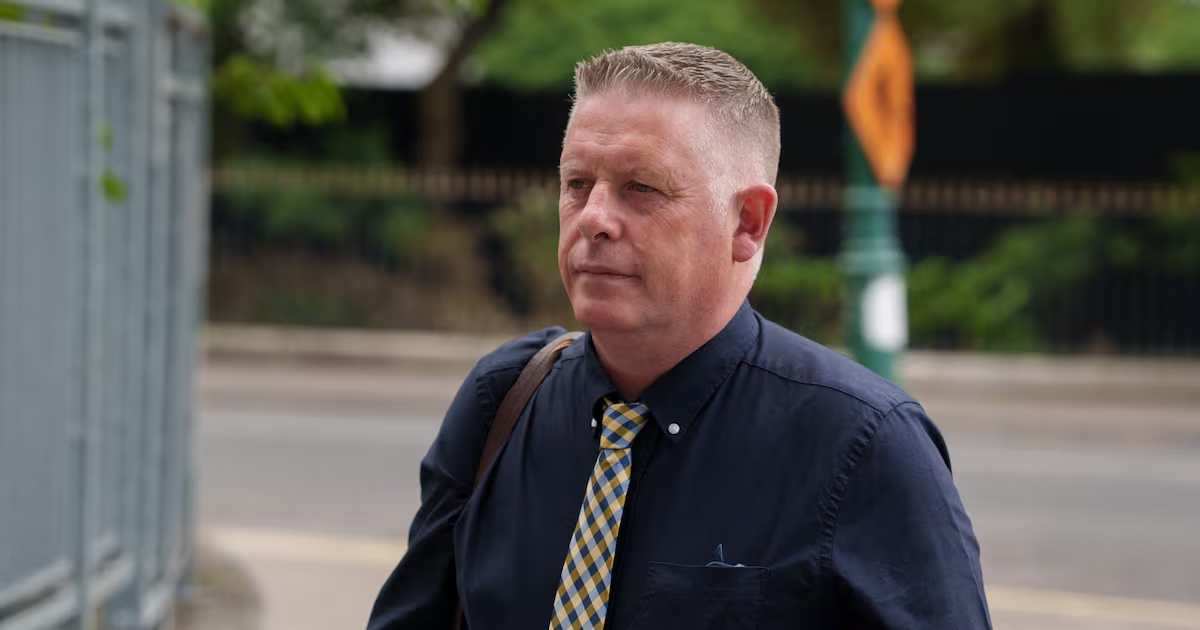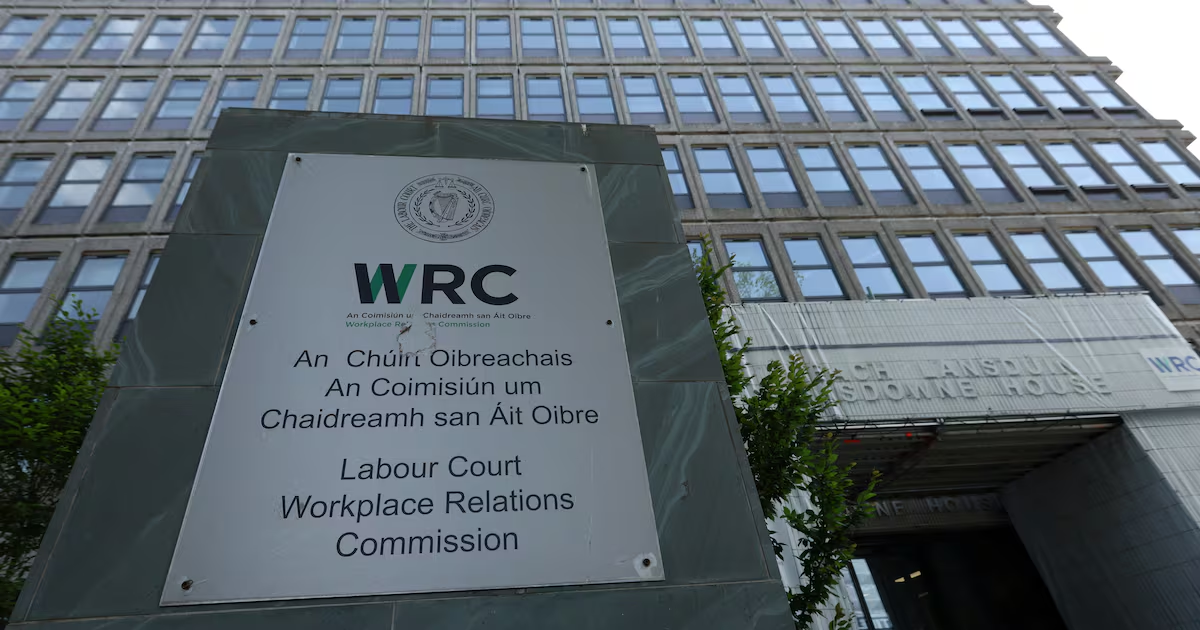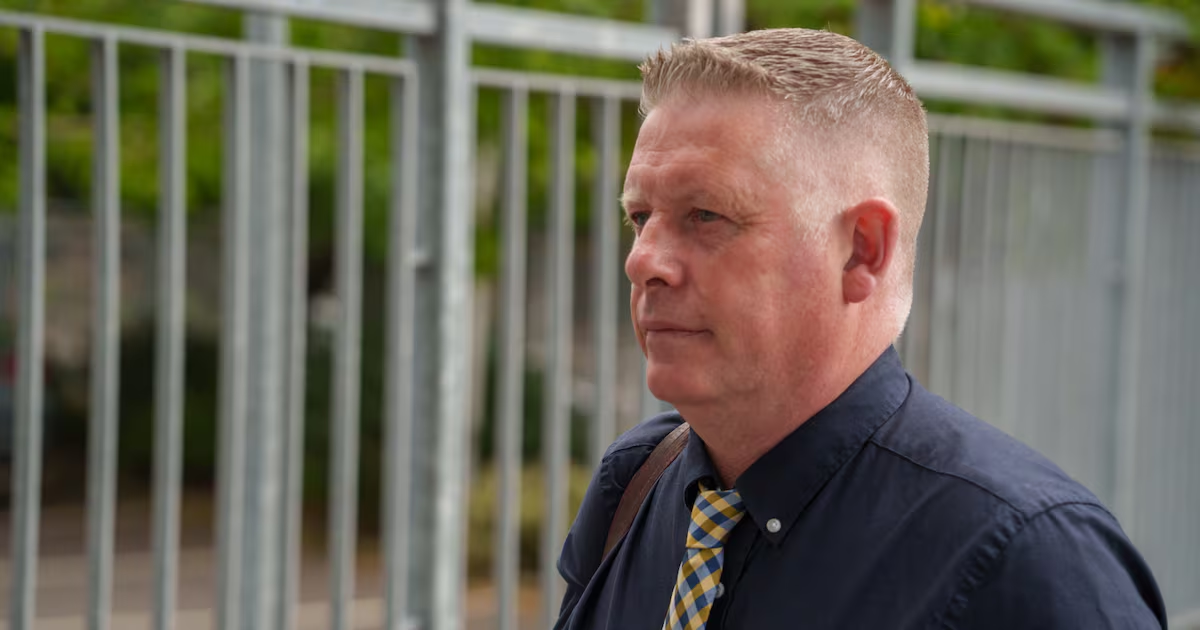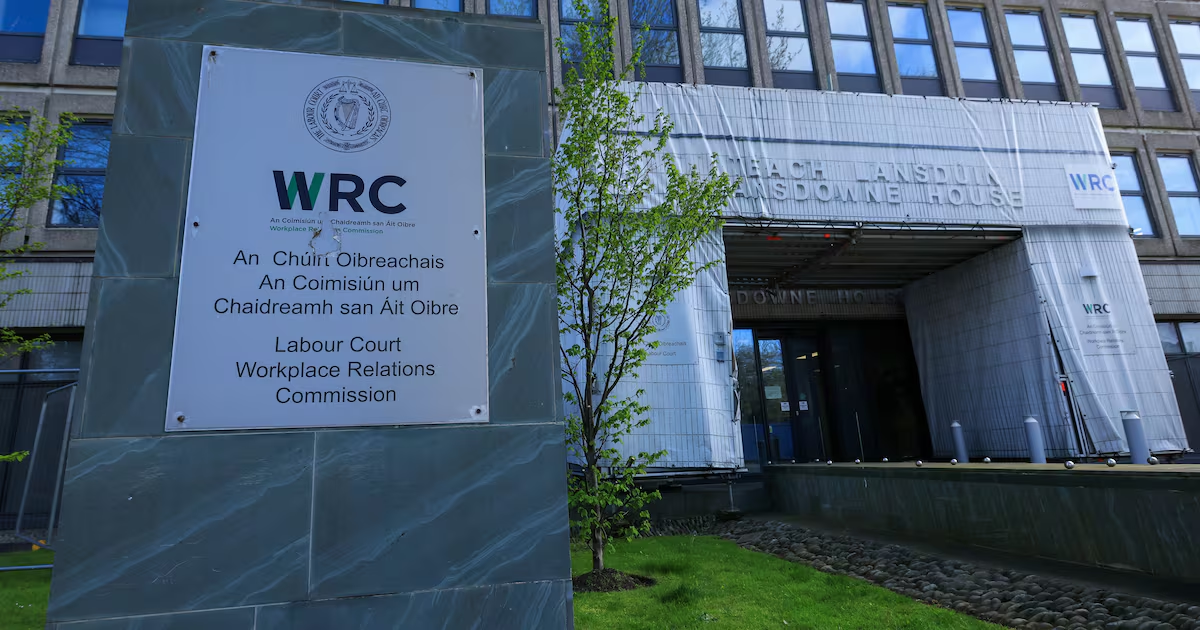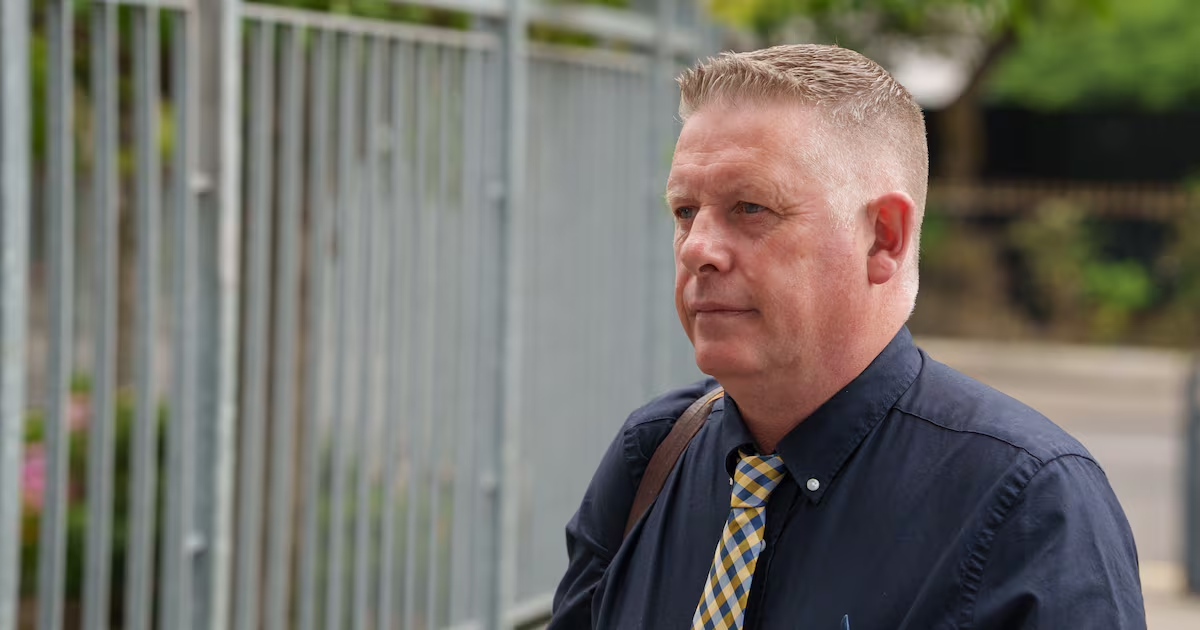
The former chief executive of a State agency considered taking his own life as he felt isolated by his employers who he believed were acting in step with external actors and politicians against him, an employment tribunal has heard. Francis O’Donnell, former head of Inland Fisheries Ireland (IFI), told the Workplace Relations Commission (WRC) on Wednesday he had been dismissed with immediate effect in June 2025, with his contract paid until its expiry date last November. He said this happened a couple of weeks after he had made a protected disclosure to the secretary general of the Department of Climate, Energy and Environment.He also said he had been blocked from returning to his previous role as a regional director with IFI, despite previously being assured this could happen after his term as chief executive.O’Donnell maintained the board of IFI had refused to allow him access an enhanced sick-leave scheme for occupational injuries. He contended that the IFI’s own occupational health physician had been directed by the organisation to change her medical report that found he had experienced a work-related illness.Giving direct evidence on the first day of a resumed hearing, O’Donnell said since he was dismissed as chief executive in June 2025, he had found it impossible to get a job. He said he was “basically broke” and was “trying to figure out how to pay the mortgage”.He had tried to find employment in the public, private and NGO sectors, without success. He said his name had been in the media on numerous occasions and only in recent weeks, following contact with a recruitment consultant, had he been told to expect to be called for a job interview. However, he said an elected politician had made comments about him while on the hustings and he had not been asked to interview for the post.O’Donnell is claiming he was unfairly dismissed by IFI and penalised after making protected disclosures under whistleblower legislation.He has maintained he was threatened by a former chairman of IFI after he suspended a relative on foot of an official investigation. O’Donnell also maintains he was blackmailed by a senator. In relation to the blackmail, he says allegations against him, set out in a protected disclosure, would have been made public unless the suspended employee was reinstated.The tribunal heard O’Donnell had been exonerated by an investigation into allegations he had used IFI staff and resources to transfer a boat to his home. The report found he had unfairly assisted a candidate for a job interview, although O’Donnell disputes this finding. O’Donnell told adjudication officer Michael McNamee he had been shocked by developments at a meeting for his annual performance review in January 2024. He said ministerial appointees were present at the meeting and they indicated he should consider resigning from his role. This suggestion was made, he said, because he had “hurt people” in the organisation. He was told the report of an investigation into a protected disclosure made against him – then not published – might not make for good reading.O’Donnell said he inferred that the claim he had “hurt people” related to an investigation he had launched into theft and fraud at IFI. Shortly after the meeting, he said he suffered a mental breakdown at home, adding that the days were “very hard and very dark”.“At that point, I felt absolutely on my own. I could not even articulate to people the frustration and anger that I felt about where the whole thing had come to,” he said. “My employers were in step with external actors, politicians and to some degree with the complainant (who had made allegations against him).“I am embarrassed and ashamed to say I was going to take my own life at the time. I, very luckily, did not do that.”He said he believed he was considered a “troublemaker” within the organisation for pointing out breaches of process in dealing with the protected disclosure against him and “for going the road that I had gone down, hurting people”. O’Donnell said IFI’s occupational health doctor Deirdre Gleeson had questioned him at length “about various reasons why I was going to do certain things and the decision not to do them”.He said he told her about untrue material about him being read into the Oireachtas record by politicians. He also told the doctor about “interference from political actors up to a very high level and that my employer was following no procedures or process and this had an immense impact on me and my reputation was badly damaged”.O’Donnell said he felt very isolated, no one was listening to what he was saying and he had been brought to a very dark place. However, he said he had thought about his children. “I said, in the end, I did not do that as I did not want them to find me,” he said. He added that going through with it “would be a stone around their neck for the rest of their lives”.The hearing continues on Thursday.
Former State agency chief says he contemplated suicide after being isolated by employer
Ex-chief executive of Inland Fisheries Ireland tells Workplace Relations Commission untrue allegations about him were read into Oireachtas record
831 words~4 min read