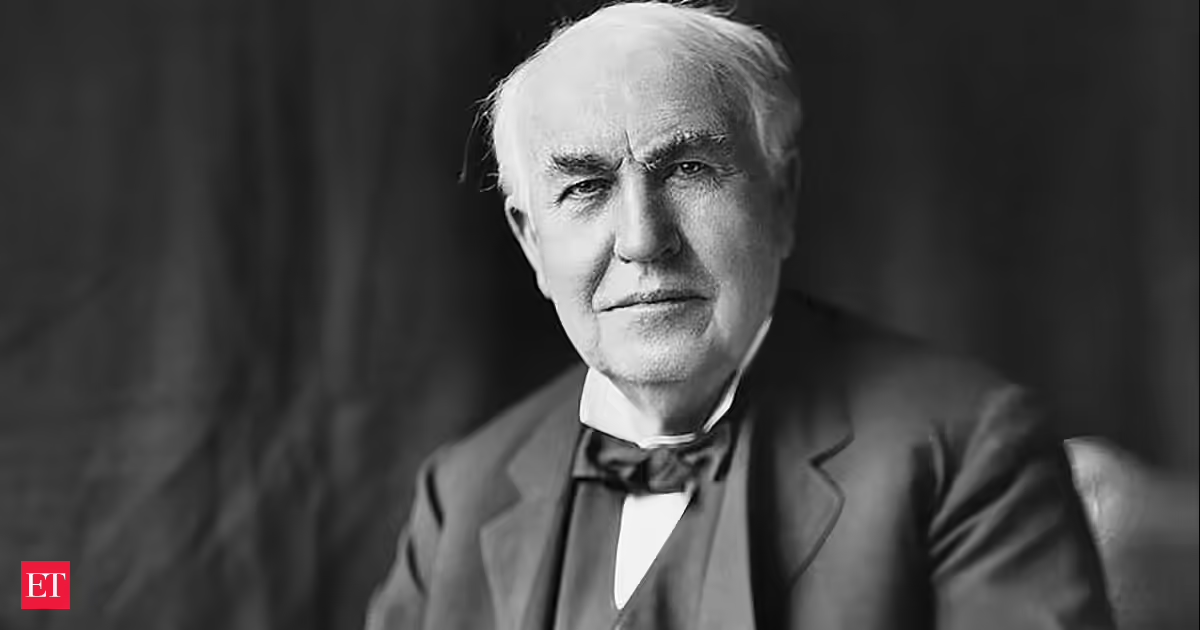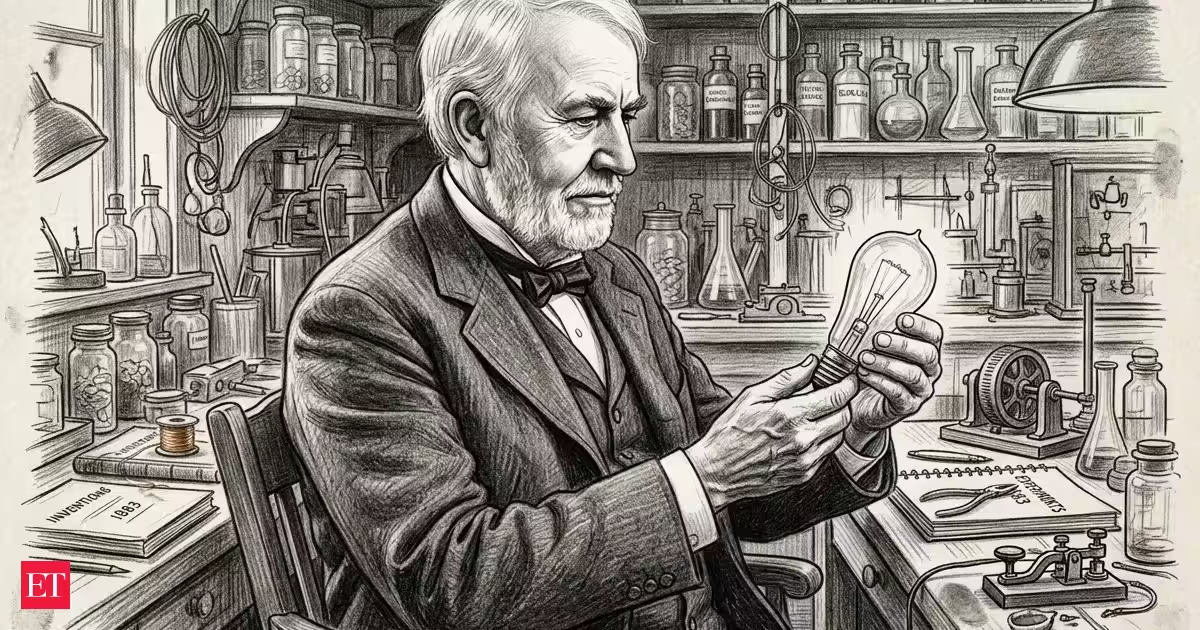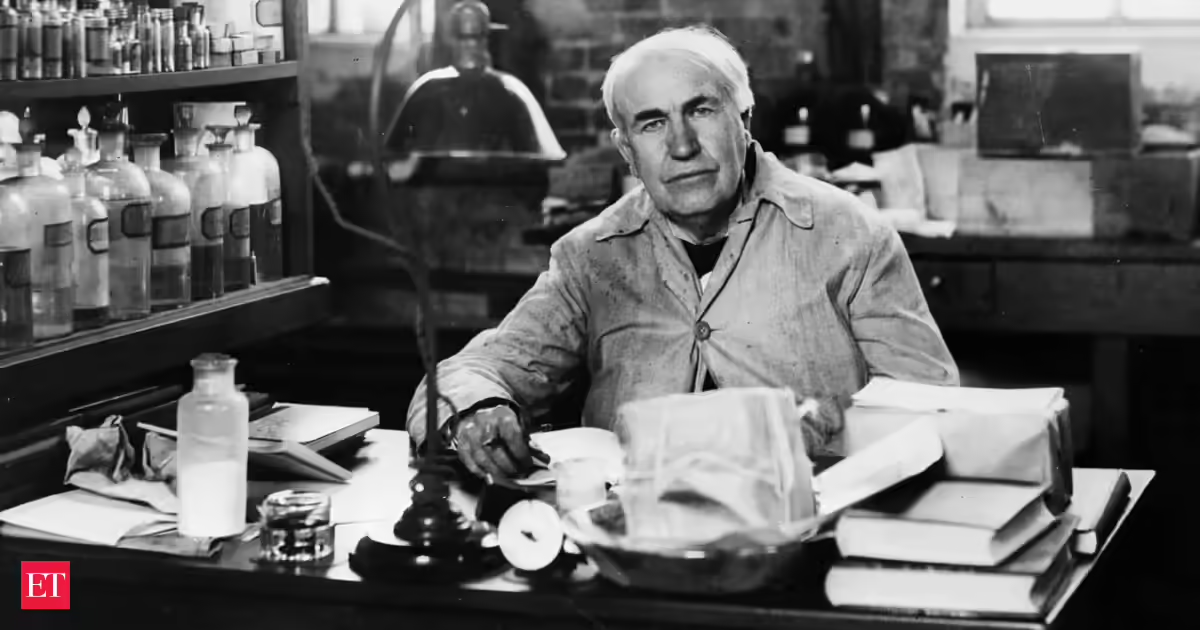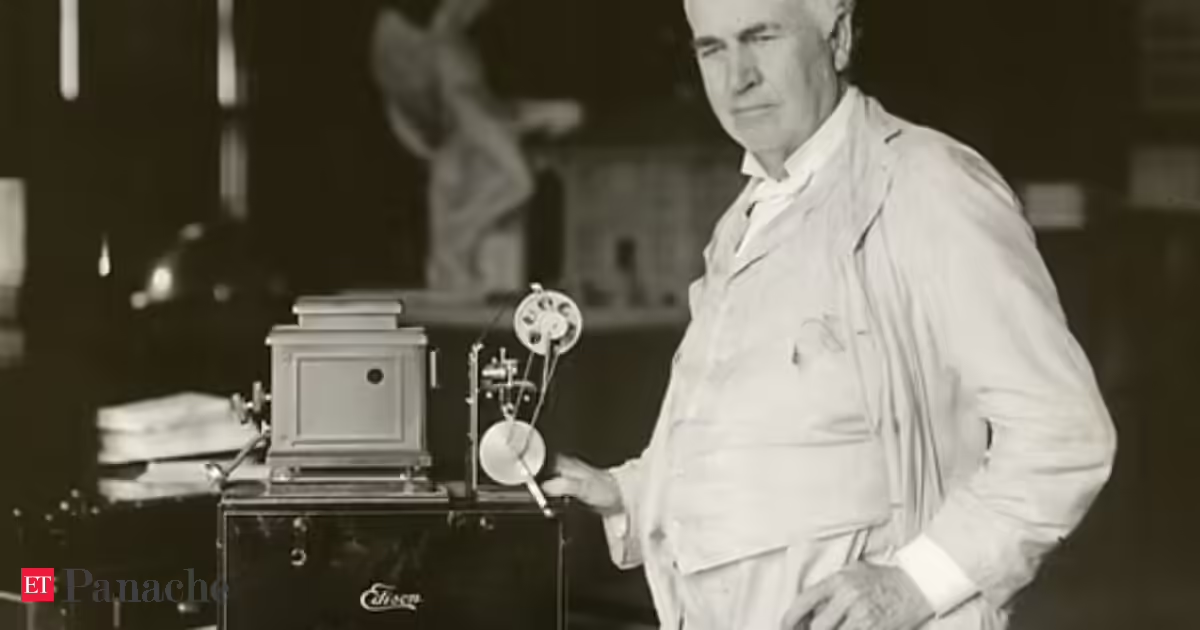
Success stories often focus on the final achievement, while the setbacks that came before it are rarely discussed. Yet many of history's most influential people reached their goals only after years of mistakes, experiments and disappointments. Among them was American inventor Thomas Alva Edison, whose words on failure and perseverance continue to inspire people across generations. One of the most widely shared quotes associated with him reminds readers that failed attempts are often part of the journey rather than the end of it.Thomas Edison is widely credited with saying, "It is not that I have failed 10,000 times. I have successfully found 10,000 ways that will not work. Our greatest weakness lies in giving up. The most certain way to succeed is always to try just one more time."The quote encourages people to look at failure differently. Instead of treating unsuccessful attempts as defeat, it suggests seeing them as lessons that bring someone closer to a working solution. Every failed experiment, wrong decision or unexpected result adds knowledge that can be used in the next attempt.The second part of the quote shifts the focus to persistence. Edison argues that giving up too early is often the biggest obstacle to success. According to this idea, many goals remain out of reach not because they are impossible but because people stop trying before they reach the breakthrough. The message continues to resonate because it applies not only to scientific discoveries but also to education, careers, business and everyday life.Why this quote is associated with Thomas EdisonAlthough the quotation is commonly shared as a single statement, historians note that it is actually a modern combination of two separate ideas that have long been attributed to Edison.The first part, about finding "10,000 ways that will not work," reflects his comments on years of trial-and-error experimentation. The idea is linked to accounts from an 1890 interview published in Harper's Monthly Magazine, where Edison discussed the long process behind developing practical inventions, including work related to the incandescent light bulb and later the alkaline storage battery.The second part, "Our greatest weakness lies in giving up. The most certain way to succeed is always to try just one more time," appears as a separate maxim that reflects his long-standing belief in persistence. Variations of this thought appeared in his letters, interviews and public remarks throughout his career.Thomas Edison: The inventor who helped shape the modern worldThomas Alva Edison was born on February 11, 1847, in Milan, Ohio, and grew up in Port Huron, Michigan. Curious from an early age, he developed a strong interest in science despite receiving little formal education. Hearing problems during childhood also influenced his life, but they did not stop him from pursuing experiments and learning independently.He began working as a telegraph operator in the 1860s. That experience introduced him to electrical technology and eventually led him to become a full-time inventor. In 1869, he left telegraphy to focus on creating and improving new devices.Edison later established his famous laboratory at Menlo Park, New Jersey, in 1876. Often described as the world's first industrial research laboratory, it brought together engineers, mechanics and researchers who worked on inventions under one roof. The facility earned Menlo Park the nickname "The Invention Factory."Inventions that changed everyday lifeDuring his lifetime, Edison held 1,093 patents, either individually or jointly, making him one of the most prolific inventors in history.His work led to several inventions and improvements that transformed daily life. These included the phonograph, the carbon-button transmitter that improved telephone communication, the practical incandescent lamp, motion-picture technology and more efficient electric power systems. He also helped establish one of the first commercial electric lighting and power distribution systems, paving the way for widespread use of electricity.Rather than relying on a single breakthrough, Edison built his reputation through continuous testing and refinement. His approach to invention involved repeated experiments, careful observation and making improvements step by step.
Quote of the day by light bulb inventor Thomas Edison: 'It is not that I have failed 10,000 times. I have successfully found 10,000 ways that will not work...' These famous words teach how every failure is a big step towards success
Thomas Edison's famous quote on failure and perseverance continues to inspire people by encouraging them to view setbacks as learning experiences rather than defeats. Here's a look at the meaning behind the widely shared quote, its historical origins, and how Edison's remarkable life and inventions reflected the philosophy of persistence that helped shape the modern world.
648 words~3 min read