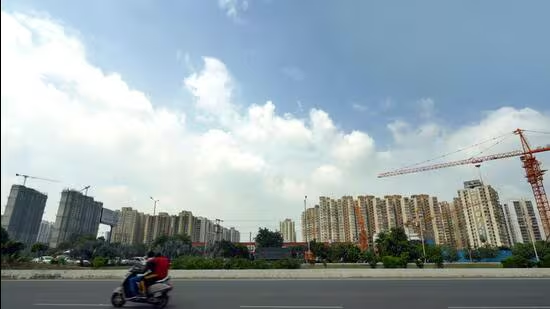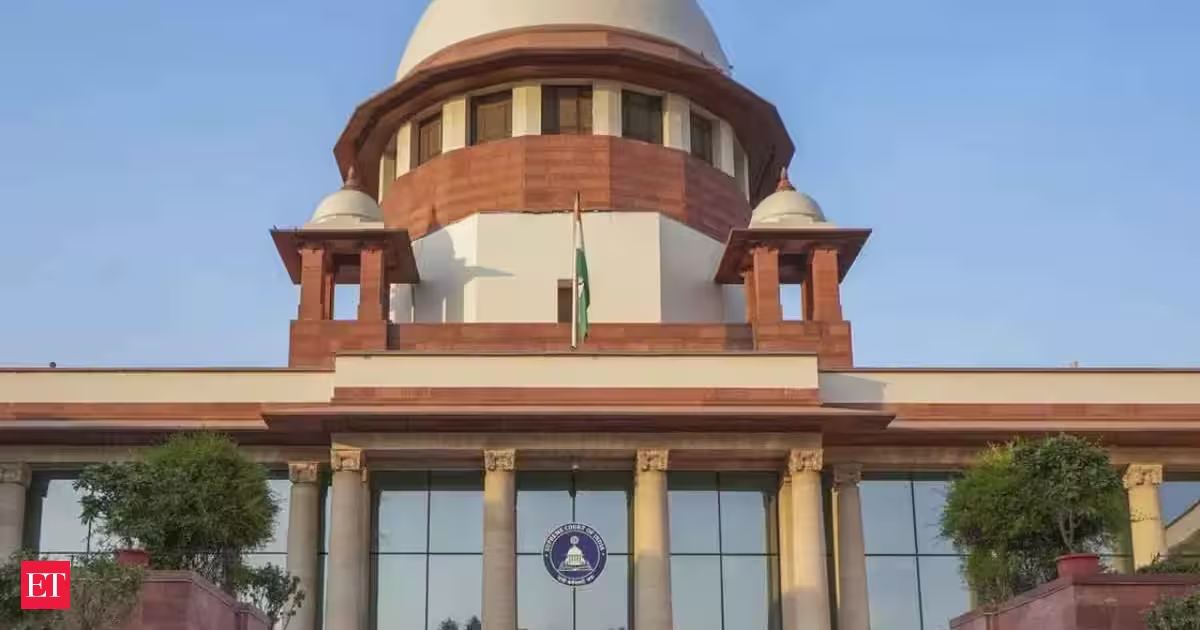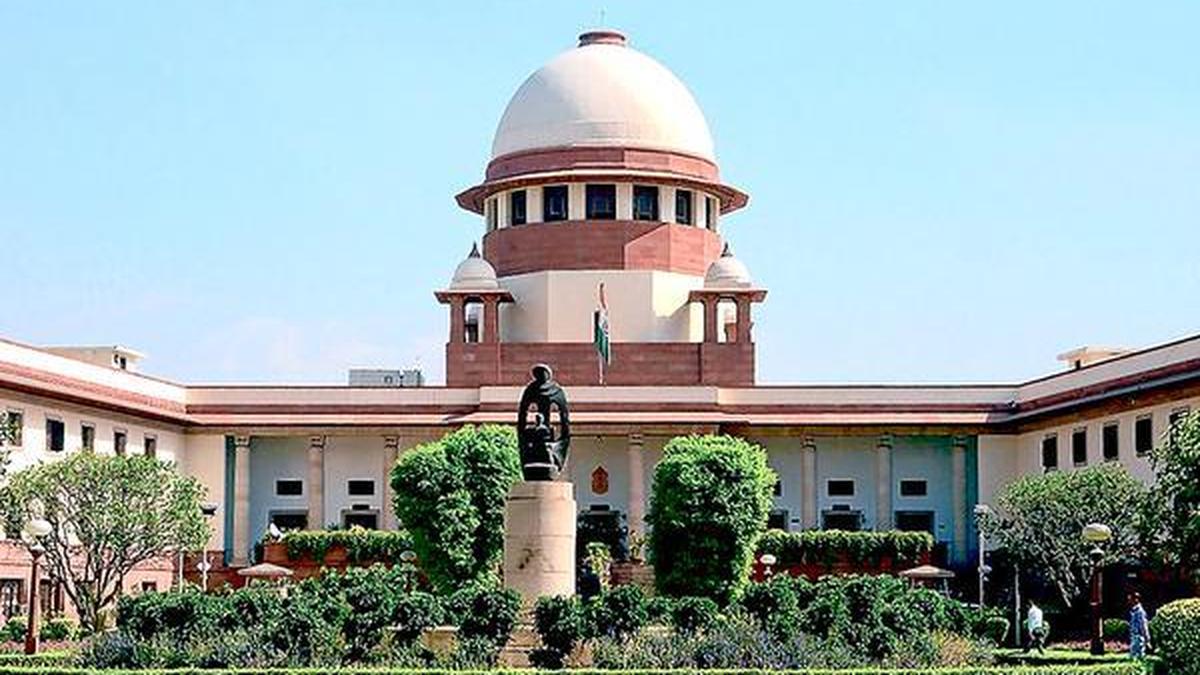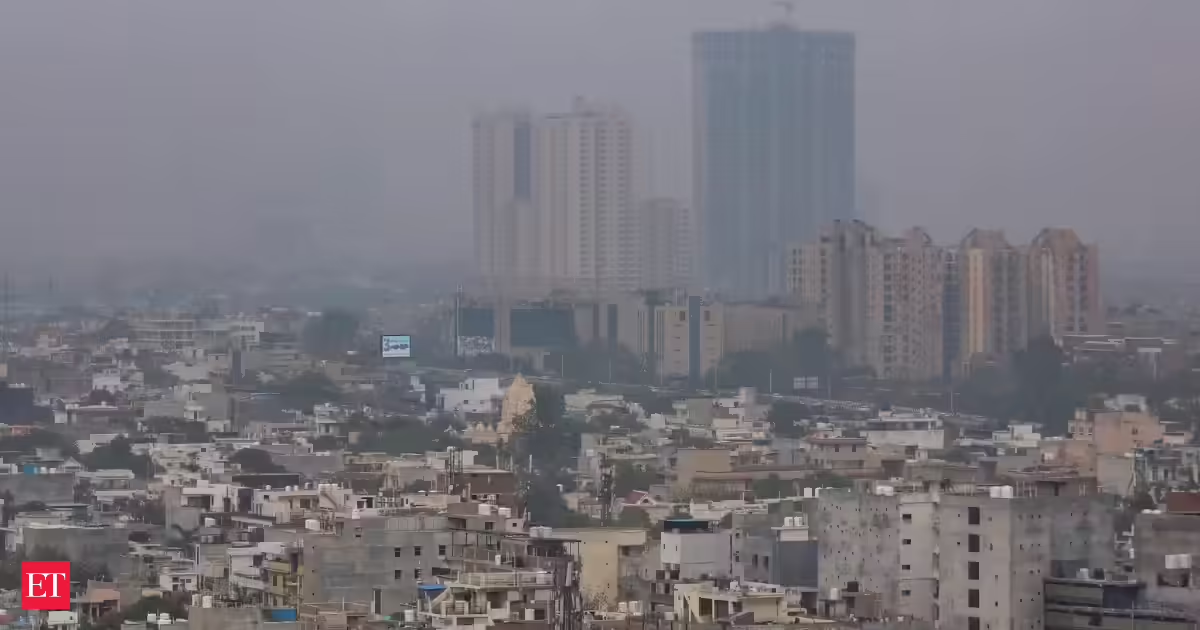
For nearly two decades, a cluster of modest homes in Greater Noida existed in a state of uncertainty.The dispute stemmed from a 2007 acquisition of about 230 hectares, with the court allowing homeowners to seek civic amenities on payment of development charges. (HT Archive)Built on tiny plots measuring between 100 and 200 square yards, these houses belonged to families that had poured their savings into securing a roof over their heads. Since 2007, however, the homes stood in the shadow of a land acquisition drive launched by the Uttar Pradesh government for Greater Noida’s industrial expansion.By an order released on June 25, the Supreme Court finally brought that uncertainty to an end.Invoking its extraordinary powers under Article 142 of the Constitution to do “complete justice”, a bench comprising Chief Justice of India Surya Kant and Justice V Mohana exempted the houses of 16 homeowners from acquisition, even while leaving intact the acquisition of the remaining land for public purposes.The ruling marks the culmination of an 18-year legal battle that began when the state sought to acquire around 230 hectares of land in village Ibadullahpur alias Badalpur in present-day Gautam Budh Nagar district for the industrial development of Greater Noida.While the acquisition itself survived judicial scrutiny, the Supreme Court held that the peculiar facts of the case warranted a tailored remedy to protect the affected families.“The appellants have approached this Court primarily for the protection of their residential units” noted the bench, observing that they were not seriously pressing for the entire acquisition to be quashed.The acquisition process commenced in June 2007, when the state invoked the urgency provisions of the then Land Acquisition Act, 1894, citing the need to rapidly develop industrial infrastructure and attract domestic and foreign investment. The Allahabad High Court upheld both the acquisition and the invocation of the urgency clause in 2009.The homeowners then moved the Supreme Court.In July 2010, the apex court ordered maintenance of status quo, effectively shielding them from dispossession. That interim protection remained in force for nearly 16 years while the appeals remained pending.By the time the matter reached final hearing, the landscape around the disputed plots had dramatically changed.The Supreme Court noted that almost 19 years had passed since the acquisition process began. Planned development had taken place in the surrounding area, while the appellants continued to occupy their homes. The Greater Noida authorities themselves acknowledged that residential structures had come up on the plots, though they described them as unauthorised.Against this backdrop, the court concluded that strict application of the acquisition proceedings would produce an inequitable result.“In these peculiar facts and circumstances,” the bench said, it was a fit case for invoking Article 142.The court accordingly set aside the acquisition only in respect of the appellants’ residential plots, clarifying that the acquisition of the rest of the land would remain unaffected.A notable feature of the case was the socio-economic profile of the litigants. During the hearing, counsel for the homeowners emphasised that they did not belong to affluent sections of society and had invested their life’s savings in constructing their houses. Their plea was not directed at derailing a large public project but at preserving the only homes they possessed.Accepting that limited plea, the court drew a distinction between the validity of the acquisition and the equities arising from nearly two decades of continued occupation under judicial protection.The bench also permitted the homeowners to seek basic civic amenities from the development authority. However, it clarified that they would be required to pay development charges in accordance with applicable regulations.For the families involved, the judgment closes a chapter that began in 2007 and survived multiple rounds of litigation. What started as a challenge to a sweeping acquisition for Greater Noida’s industrial growth has ended with the Supreme Court preserving a handful of homes that might otherwise have been lost to the march of development.
SC ends 18-year land row, saves 16 Greater Noida homes from acquisition
The court exempted residential plots of 16 families, citing nearly two decades of occupation under judicial protection while allowing the wider project to continue. | India News
643 words~3 min read