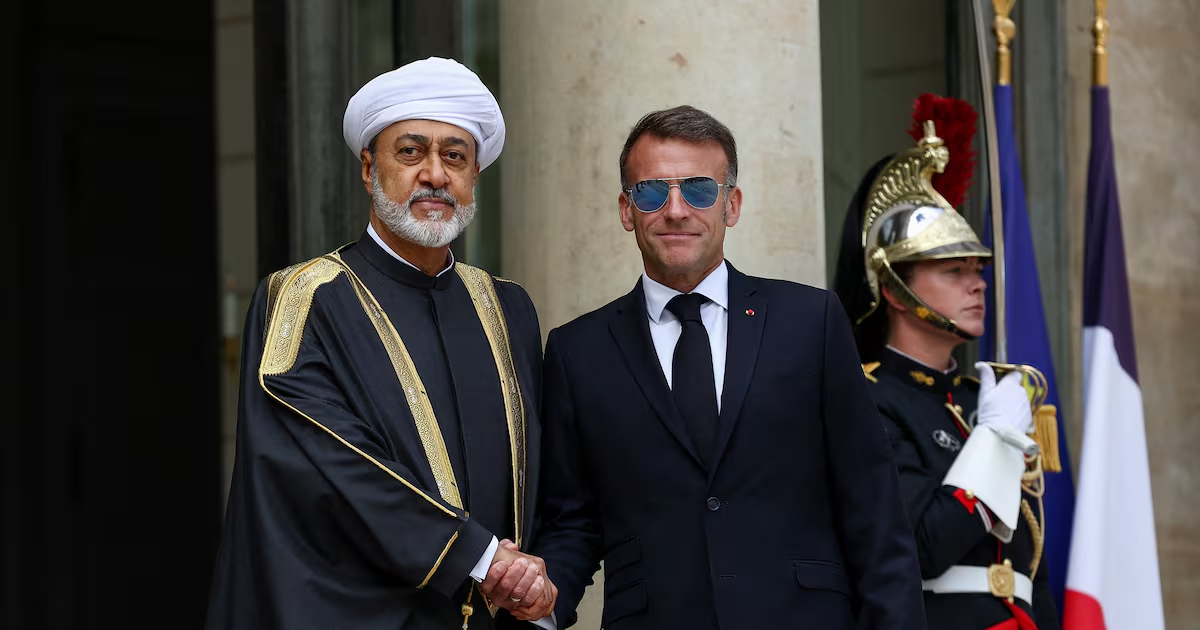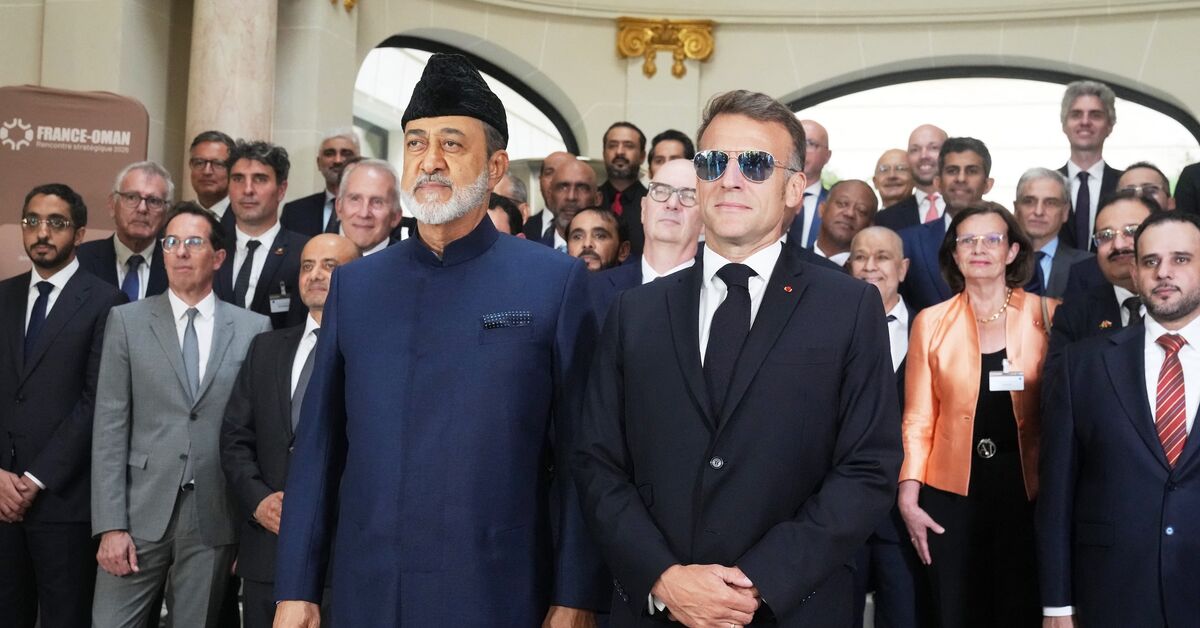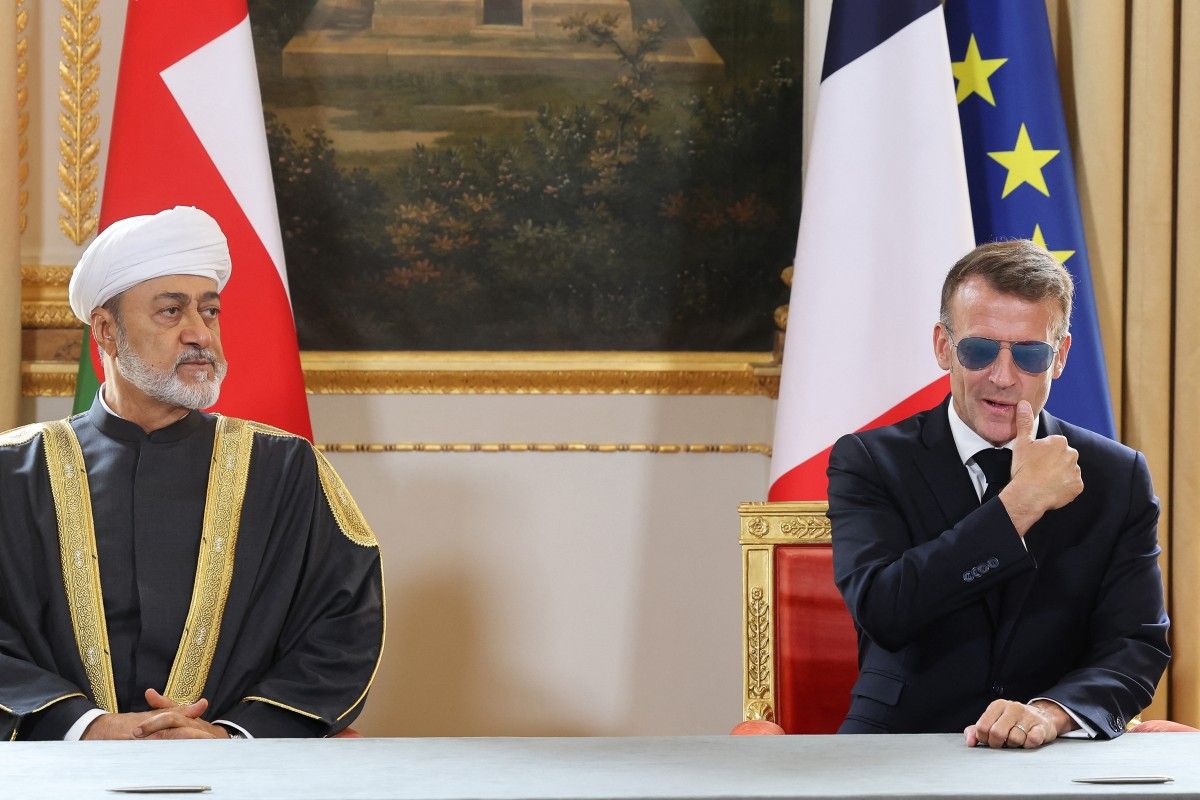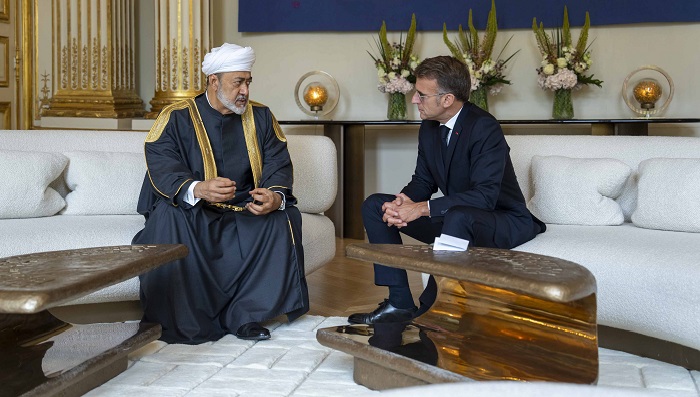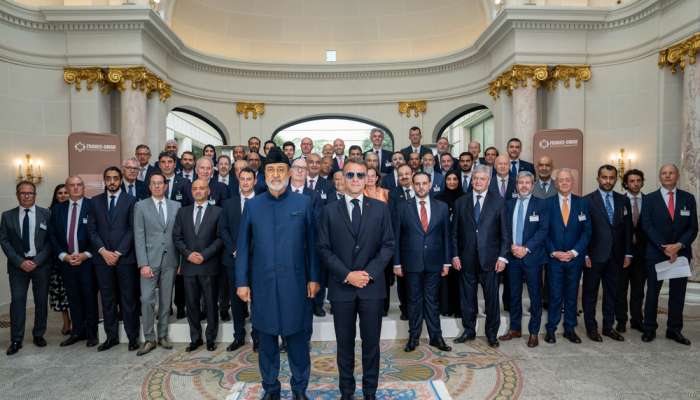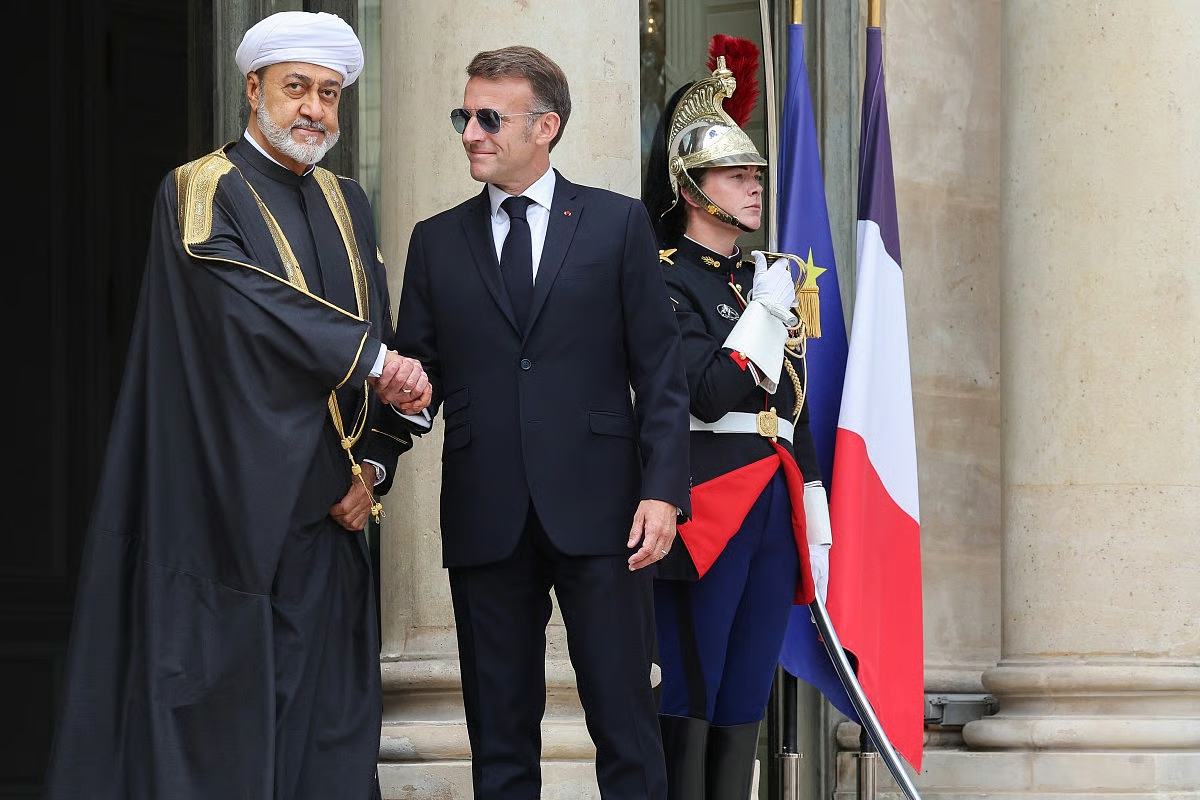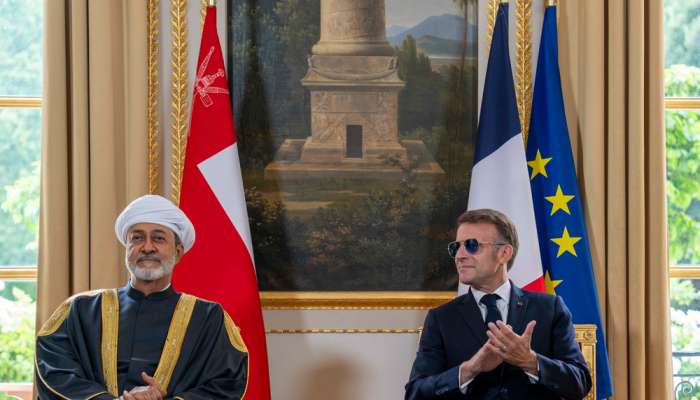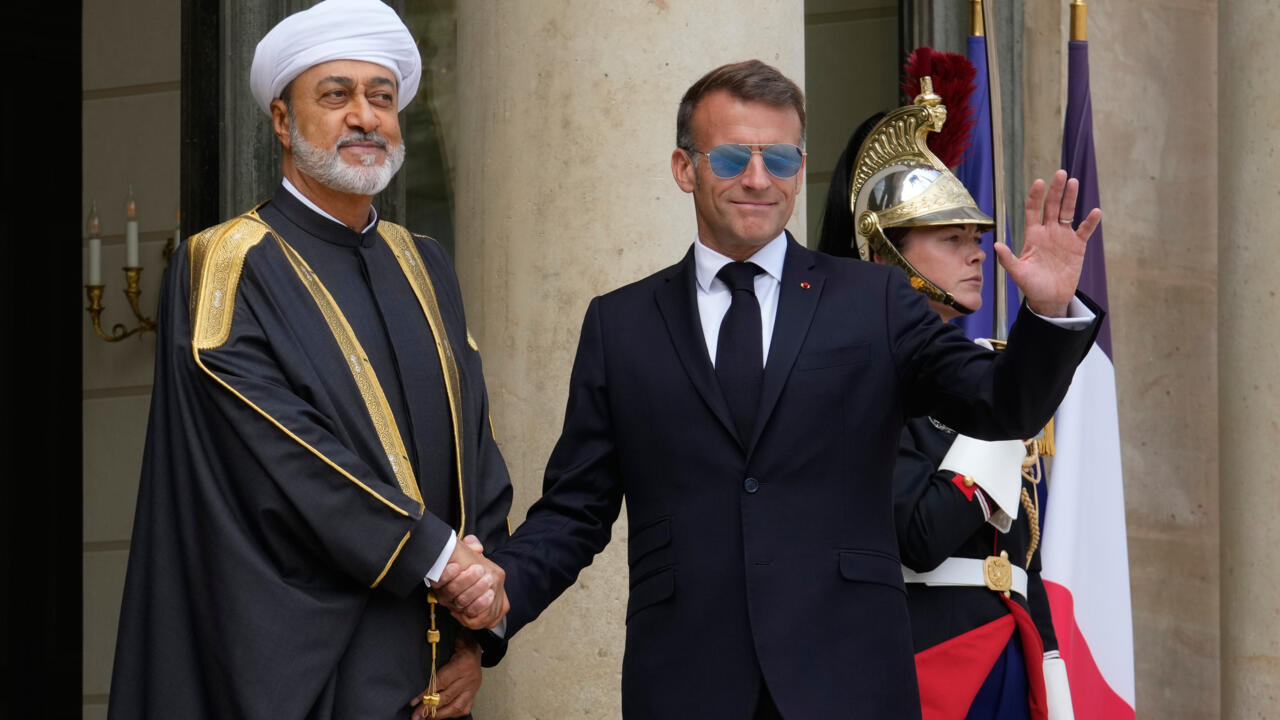
French President Emmanuel Macron, sporting his now-infamous aviator sunglasses, and Oman’s turbaned sultan made a striking pair as they shook hands for reporters before their meeting at Paris’s Élysée Palace on Monday. Their message was clear: France and Oman are set to deepen economic ties. "I'm eager to cooperate more and grow our relationship," Macron said, announcing a series of major contracts for French companies. The sultan responded in kind: "We are opening our doors to all new business partners." It was Sultan Haitham bin Tariq’s first state visit to France since his ascension to the throne in 2020 following the death of his cousin, Sultan Qaboos bin Said.
French President Emmanuel Macron, left, greets the Sultan of Oman Haitham bin Tariq before a meeting at the Elysée Palace, Monday, June 29, 2026. © Michel Euler, AP
Qaboos was one of the Middle East’s longest-serving rulers. During his nearly 50 years as absolute monarch, he dramatically modernised and developed the country’s economy and ended its international isolation, deftly positioning it as “the Switzerland of the Middle East” between its neighbouring Gulf states, Iran, and their hotbed of thorny relationships. Watch morePragmatic diplomacy: 'Oman is committed to de-escalation & peace in the region', analyst says Now the sultanate's long-held neutrality is being tested and shifted, given Oman’s geographically advantageous position with territorial waters across from Iran in the Strait of Hormuz. The critical waterway has been paralysed since February 28, when US-Israeli strikes on Iran first began. Prior to the war, 20 percent of the world's oil passed through the strait daily, free of charge. The Iranian regime now intends to impose a toll – or “maritime service fee”, when it plays on semantics – on ships passing through the waterway. The US has repeatedly rejected any sort of fee, repeatedly insisting that the strait is an "international waterway". Macron and Sultan Haitham on Monday called for "free navigation, without conditions or restrictions" through the Strait of Hormuz. Read moreHow ships are risking ‘safe’ passage through the Strait of Hormuz