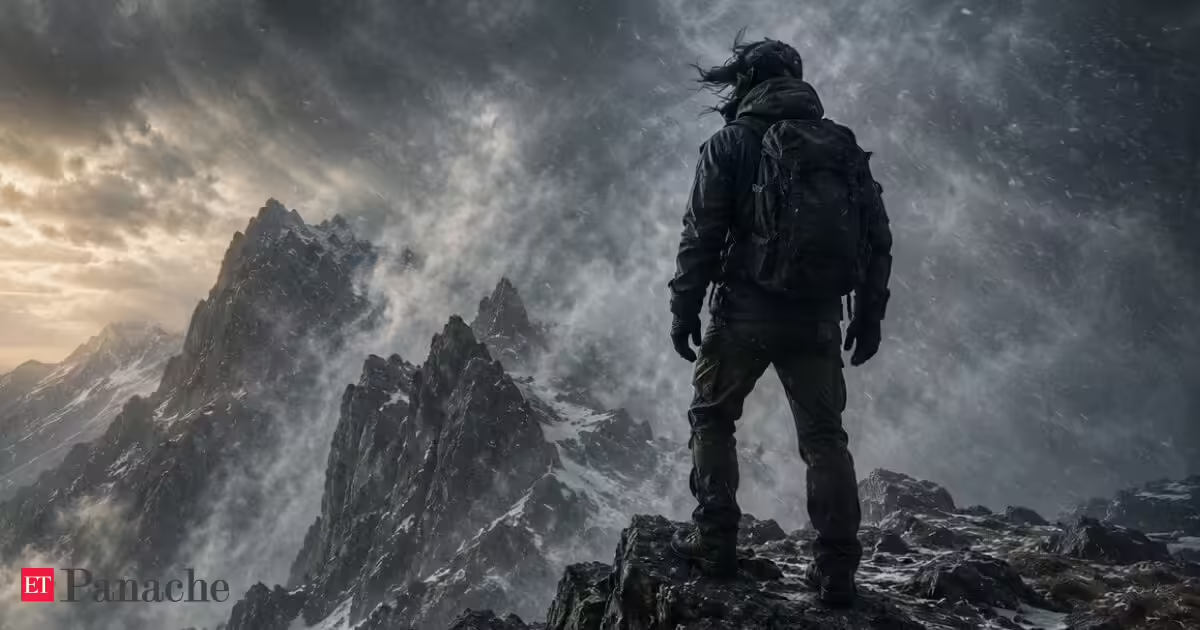
Success is something many people spend years chasing. Bigger goals, better jobs and greater recognition often become the main focus. But an old German proverb reminds us that while ambition has its place, it should never come at the cost of the simple things that truly keep life going. The saying uses the image of mountains and valleys to explain a lesson that has stayed relevant for generations.The proverb says, "He who wishes to stand upon the highest mountains must also look the fiercest wind in the eye; yet do not forget that it is down in the valley where the flowers bloom that actually nourish the stomach."The first part of the proverb points to ambition. Anyone who wants to achieve something big should expect hardship, criticism and difficult moments. Reaching the top is rarely comfortable. Just as mountain peaks face strong winds and harsh weather, people aiming for high achievements often deal with pressure, responsibility and loneliness.The second half changes the focus. It reminds people not to ignore the quiet parts of life while chasing success. The valley, where flowers bloom and life grows, represents family, everyday routines, peace of mind and the small comforts that support people over the long run. The proverb suggests that these ordinary things may not look impressive, but they are what truly sustain a person's happiness and well-being.A saying shaped by mountains and historyThe mountain imagery has deep roots in the Alpine regions of Germany, Austria and Switzerland. For centuries, farmers, mountaineers and local storytellers used the contrast between high, windy peaks and fertile valleys to explain life's challenges. Mountains represented risk and achievement, while valleys stood for stability, food and survival.The first half of the saying is often linked to ideas found in the work of German philosopher Friedrich Nietzsche, particularly in his 1883 book Also sprach Zarathustra. In that work, mountains are used as a symbol of striving for higher human achievement. Over time, traditional Alpine wisdom appears to have added the second part of the proverb, balancing the idea of ambition with a reminder that everyday life should never be neglected.Similar versions, including phrases like "Wer auf höhere Berge steigen will, muss auch schärferen Wind vertragen," have circulated for many years as life advice and motivational sayings across German-speaking regions.Why the proverb still matters todayThe message feels especially relevant in a world where success is often measured through promotions, wealth or social recognition. The proverb encourages people to work hard and dream big, but also to remember what gives life lasting meaning.Many people discover that professional achievements alone cannot replace time with loved ones, good health or simple moments of contentment. The proverb argues that ambition and balance are not opposites. Instead, both are necessary for a fulfilling life.Germany's tradition of practical wisdomGerman proverbs are known for using simple images from nature and everyday life to express practical advice. Many have close English equivalents, while others rely on unique local imagery that reflects the country's history and landscape.Located in Central Europe, Germany is the continent's most populous nation and its largest economy. The country is known for its engineering, rich cultural heritage and strong traditions. The landscapes that inspired many old German sayings, from mountain ranges to fertile valleys, continue to shape the country's folklore and philosophy, giving proverbs like this one a lasting place in everyday life.
Proverb of the day from Germany: 'He who wishes to stand upon the highest mountains must also look the fiercest wind in the eye; yet do not forget...' An old saying that reminds us that success comes with a hidden cost
Today's German proverb, "He who wishes to stand upon the highest mountains must also look the fiercest wind in the eye; yet do not forget that it is down in the valley where the flowers bloom that actually nourish the stomach," highlights the balance between ambition and everyday life. Rooted in Alpine tradition and influenced by philosophical ideas associated with Friedrich Nietzsche, the saying reminds people that while success often demands resilience and sacrifice, lasting happiness comes from valuing family, peace of mind and the simple things that truly sustain life.
558 words~3 min read