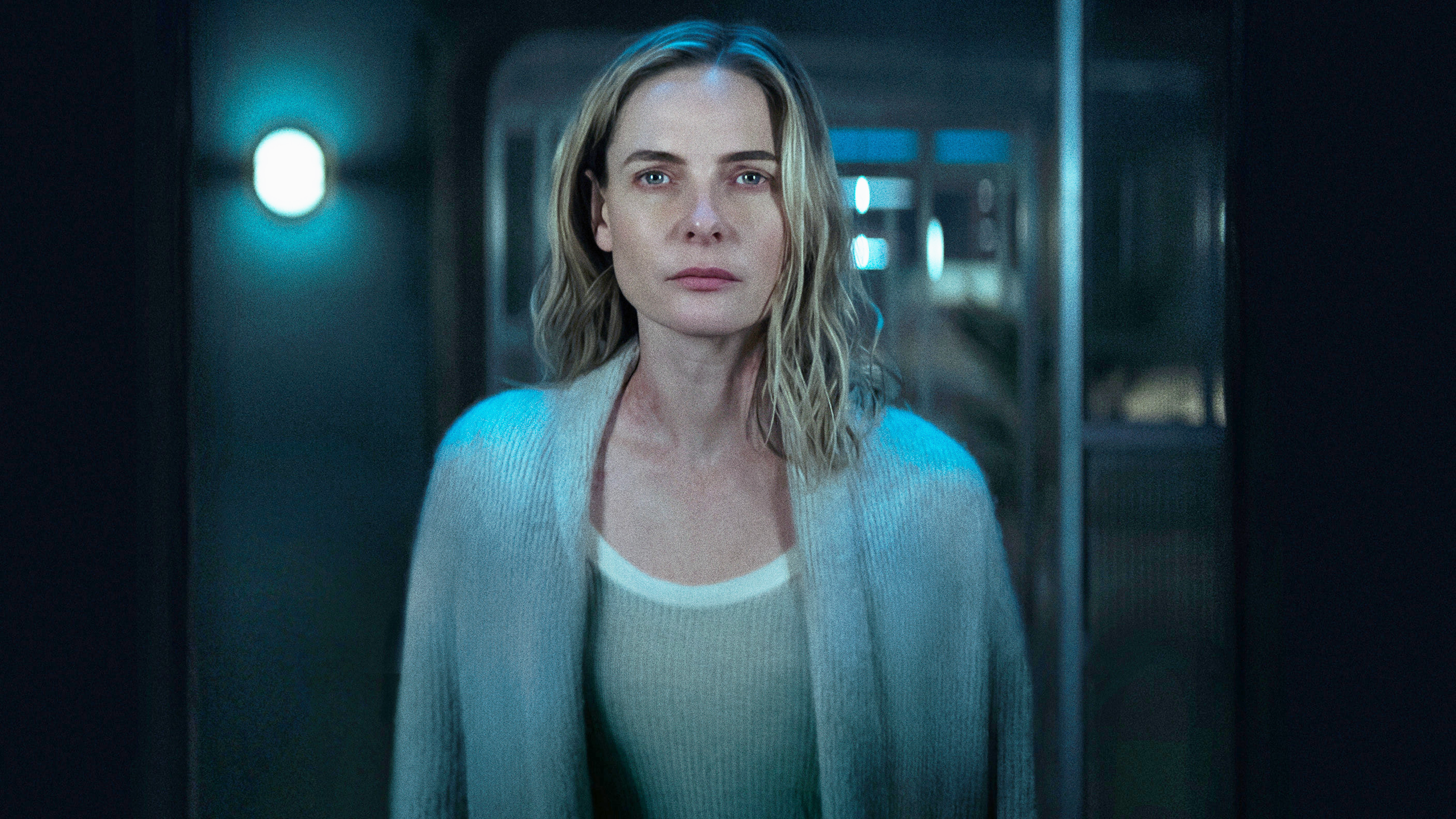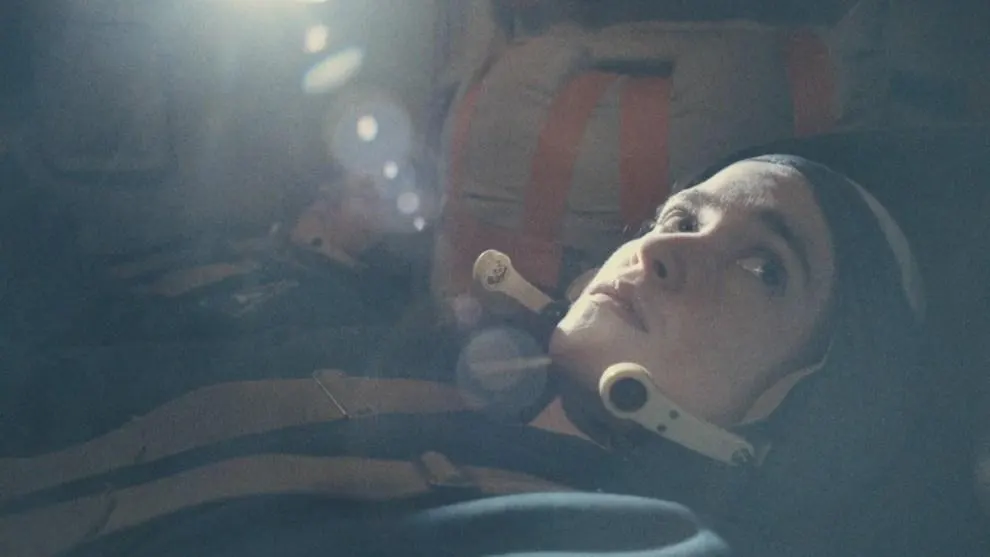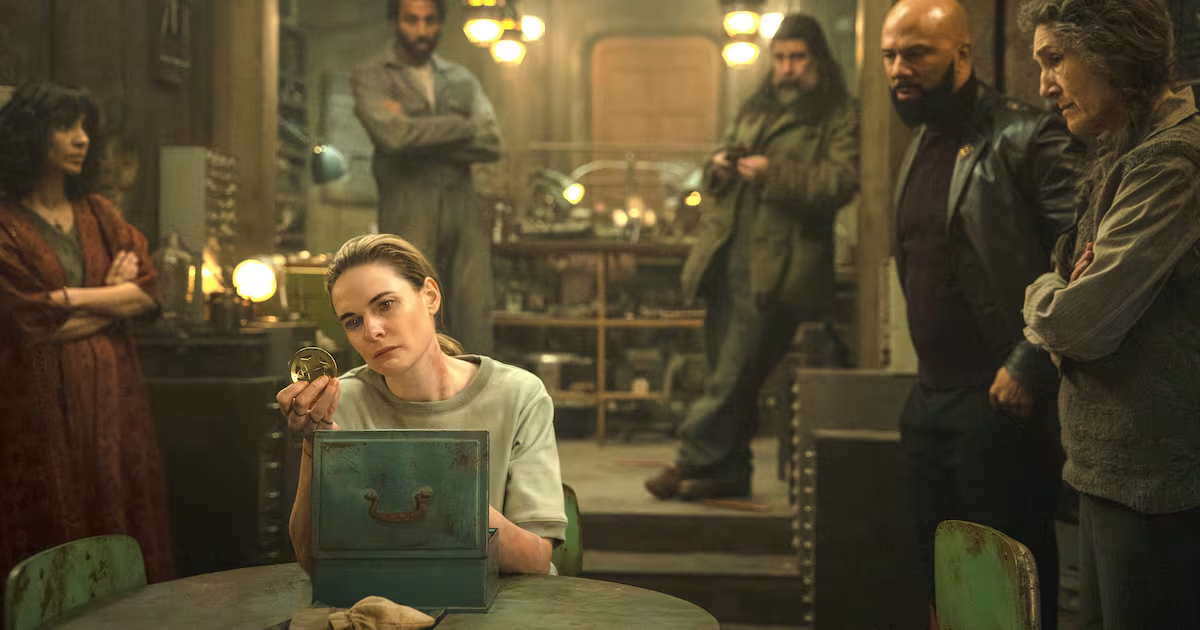
Apple TV+ has gradually become one of the strongest homes for science fiction on television.The streaming service has invested heavily in ambitious genre storytelling, from alternate-history space dramas and dystopian mysteries to literary adaptations, workplace thrillers and stories about artificial intelligence.The result is a library that feels focused. Its best sci-fi shows such as Silo and Severance use big ideas to explore grief, memory, identity, power and the future of human life. Even its less popular offerings, including Amazing Stores and See, have redeeming qualities.Here, ranked by Metacritic score, we highlight the best and worst sci-fi shows on Apple TV+, from the platform’s defining hits to occasional misfires.1. PluribusPluribus star Rhea Seehorn was also in creator Vince Gilligan's series Better Call Saul. Photo: Apple TVInfoMetacritic score: 87Key review: “It’s made with such confidence, such artistry, and such joy.” – What’s Alan WatchingVince Gilligan’s Pluribus stars Rhea Seehorn (Better Call Saul) as Carol Sturka, a romance novelist who finds herself strangely isolated after the rest of humanity is drawn into a state of unnatural happiness.The premise is odd, darkly funny and unsettling in a way that suits Gilligan’s return to science fiction after his early work on The X-Files. Pluribus turns an apocalypse into something eerily polite, using its hive-mind mystery to ask what remains of the self when pain, conflict and loneliness are removed from human life.2. SeveranceMetacritic score: 85Key review: “With smart performances, an intriguing script, and buckets of style from Ben Stiller in pure thriller mode, it easily climbs up the list of Apple TV+’s best shows.” – ConsequenceFew shows have defined Apple TV+ as strongly as Severance. Created by Dan Erickson, the series imagines a workplace where employees undergo a procedure that separates their office memories from their personal lives.What begins as a dark joke about work-life balance becomes one of television’s sharpest studies of identity and corporate control. Adam Scott leads a strong ensemble cast, while Lumon Industries gives the show an instantly recognisable retro-futurist atmosphere.3. Star CityStar City is a spinoff of the series For All Mankind. Photo: Apple TVInfoMetacritic score: 80Key review: “Star City is worlds away from For All Mankind – and is all the better for it.” – Radio TimesStar City expands the world of For All Mankind by shifting the perspective to the Soviet side of the space race. Created by Ben Nedivi, Matt Wolpert and Ronald D Moore, the series follows cosmonauts, engineers and intelligence officers working behind the Iron Curtain.The drama leans into secrecy, suspicion and political pressure, following people whose work is shaped by ambition and surveillance at the same time. Its version of space exploration is as much about what happens on the ground as it is about what happens beyond it.4. SiloMetacritic score: 78Key review: “It is an instant classic …” – iBased on Hugh Howey’s novels, Silo is set in a vast underground structure where the last remnants of humanity are told the outside world is uninhabitable. Rebecca Ferguson stars as Juliette, an engineer whose search for answers exposes the secrets holding the community together.The show combines dystopian thriller, murder mystery and post-apocalyptic drama, building tension through rules, corridors, machinery and whispered doubts. Its world feels sealed off, with every answer raising another question about who built the silo and why.5. For All MankindMetacritic score: 76Key review: “Mankind is the most thoughtful and thought-out show on TV.” – USA TodayFor All Mankind asks a simple question: what if the Soviet Union had beaten the US to the Moon? From there, it builds an alternative history in which the space race never ends, reshaping politics, technology and personal lives across decades.The series follows astronauts, engineers and families as scientific progress becomes inseparable from national pride and private sacrifice. Its scale grows season by season, but the drama is often strongest in the cost paid by those asked to keep moving history forward.6. The Last Days of Ptolemy GreyMetacritic score: 75Key review: “Emotionally thrilling … Jackson brings every conceivable shading to the role.” – TV Guide MagazineThe Last Days of Ptolemy Grey sits at the quieter edge of science fiction. Based on Walter Mosley’s novel, the limited series stars Samuel L Jackson as Ptolemy Grey, an elderly man with dementia who is offered an experimental treatment that can temporarily restore his memories.That premise gives the series its speculative frame, though the show is closer in tone to a memory drama. Its attention is fixed on ageing, family and the unfinished business of a life, with Dominique Fishback co-starring as Robyn, the young woman who helps Ptolemy confront what he has lost and what he still needs to do.7. Dr BrainDr Brain is the first Korean Apple TV+ series. photo: Apple TVInfoMetacritic score: 71Key review: “The writing seamlessly weaves the threads and characters together.” – The AV ClubDr Brain is Apple TV+’s first Korean-language original series. Directed by Kim Jee-woon, the thriller follows a neuroscientist who tries to access the memories of the dead while investigating a tragedy involving his family.The series moves between science fiction, crime drama, horror and psychological mystery. Sleek and disorientating, it treats memory as something unstable and dangerous, pulling its central character deeper into a case that keeps shifting under him.8. MurderbotMetacritic score: 71Key review: “Like Wells’ books, the Apple TV+ series … is accessible and funny.” – SlateBased on Martha Wells’s The Murderbot Diaries, Murderbot stars Alexander Skarsgard as a security android that has hacked its own control system and would rather watch entertainment feeds than deal with humans.The series is built around corporate control, dangerous missions and artificial intelligence, but its best idea is smaller: a killing machine slowly trying to understand why it cares about the people around it. Its humour comes from that gap between what Murderbot was designed to do and what it would prefer to be doing.9. The Big Door PrizeMetacritic score: 71Key review: “The result is an engaging show with big heart.” – VarietyThe Big Door Prize begins with a simple speculative hook: a mysterious machine appears in a small-town grocery store and claims it can reveal each person’s true life potential. Based on MO Walsh’s novel, the series stars Chris O’Dowd as Dusty Hubbard, a teacher whose neighbours begin remaking their lives around what the machine tells them.The machine’s answers unsettle the town because they turn private doubts into public choices. The show uses its premise to look at marriage, regret, ambition and the quiet panic of wondering whether life has already taken the wrong shape.10. SugarMetacritic score: 69Key review: “Sugar feels like a show that is destined for success.” – RogerEbert.comSugar starts as a stylish Los Angeles detective story, with Colin Farrell playing John Sugar, a private investigator hired to find the missing granddaughter of a powerful Hollywood producer. For much of its first season, the series plays like a sunlit neo-noir shaped by old movies, family secrets and Farrell’s gentle, watchful performance.The larger secret behind Sugar himself turns the series into something stranger than it first appears. That shift gives the show an unusual blend of crime drama, melancholy and science fiction, with the familiar rhythms of a missing-person case opening into a bigger question about who is watching whom.11. SunnyMetacritic score: 69Key review: “The most original and tonally arresting show of the week was Sunny.” – The ObserverSunny stars Rashida Jones as Suzie, an American woman living in Japan whose husband and son disappear after a plane crash. Her life changes when she is given Sunny, a domestic robot built by her husband’s company.The show uses science fiction on a smaller, stranger scale than many space dramas or dystopian mysteries. It moves between mystery, dark comedy and tech thriller, exploring grief, companionship and the unsettling intimacy of artificial intelligence inside the home.12. FoundationLee Pace stars in Foundation, based on the book series by Isaac Asimov. Photo: Apple TV+InfoMetacritic score: 68Key review: “Watch and you have the feeling that you are at the outset of a momentous journey … Spectacular.” – NewsdayFoundation is based on Isaac Asimov’s novels and follows an attempt to preserve knowledge and guide civilisation through the predicted collapse of a galactic empire.Led by Jared Harris, Lee Pace and Lou Llobell, the show is dense, lavish and often more interested in ideas than quick momentum. Its scale is part of the appeal, with dynasties, mathematics, faith and political control all folded into its vision of a civilisation trying to survive its own decline.13. Strange PlanetMetacritic score: 68Key review: “For a show that doesn’t actually have any humans in it, it manages to have quite a lot to say about humanity.” – Paste MagazineBased on Nathan W Pyle’s webcomic and co-created with Dan Harmon, Strange Planet is an animated comedy about blue beings on a planet that looks a lot like ours. Its joke is also its structure: ordinary human experiences are translated into literal alien language, making everyday life feel strange again.The show is gentle, deadpan and often built around simple observations. Its planet, beings and careful vocabulary give familiar stories about anxiety, love, family, work and social rituals a gently alien perspective.14. Monarch: Legacy of MonstersMetacritic score: 67Key review: “Monarch: Legacy of Monsters tells the human-driven story the MonsterVerse has always needed.” – Paste MagazineSet within Legendary’s MonsterVerse, Monarch: Legacy of Monsters expands the world of Godzilla and the Titans through a story that moves between generations. Kurt Russell and Wyatt Russell play the same character at different stages of life, giving the series one of its most effective devices.The show focuses on family secrets, government cover-ups and the human cost of living in a world where monsters are real. Its creature spectacle matters, but the drama is often rooted in what people inherit from the disasters they survive.15. CallsMetacritic score: 65Key review: “Calls is wholly immersive and totally chilling.” – DeciderCalls is one of the strangest science-fiction experiments on Apple TV+. Created and directed by Fede Alvarez, the short-form series tells its story through a series of phone conversations, with abstract visuals replacing traditional scenes.The result feels closer to an audio drama than a conventional television series, which is part of what makes it memorable. Across nine episodes, ordinary calls begin to reveal something much larger and more frightening, as strangers are pulled into events leading towards an apocalyptic rupture.16. Dark MatterDark Matter is based on the hit book by Blake Crouch. Photo: Apple TVInfoMetacritic score: 64Key review: “It’s a series that knows exactly what it wants to be and where it wants to go.” – The Daily BeastBased on Blake Crouch’s novel, Dark Matter stars Joel Edgerton as Jason Dessen, a physicist who is abducted and wakes up in an alternate version of his life. The result is a thriller built around parallel realities and the choices that define a person.The series grounds its multiverse concept in domestic stakes. Jason’s journey turns regret, ambition and love into physical worlds, each one shaped by a different version of the life he might have lived.17. ConstellationMetacritic score: 63Key review: “There’s plenty of time for the show’s many stories to unfurl.” – iConstellation stars Noomi Rapace as Jo, an astronaut who survives a disaster aboard the International Space Station and returns to Earth to find that parts of her life no longer feel right.The series blends space survival, psychological horror and quantum mystery. It can be slow and divisive, but its atmosphere is distinctive, built around the fear of returning home and finding that home has become unfamiliar.18. Hello Tomorrow!Metacritic score: 60Key review: “It’s the right mix between a perfect cast, a unique retro-futuristic world, and strong writing.” – ColliderHello Tomorrow! is set in a retro-future version of America, where travelling salesmen sell timeshares on the Moon. Billy Crudup stars as Jack Billings, a charismatic salesman whose optimism hides a more complicated relationship with the dream he is selling.The series is built around midcentury design, floating cars, domestic robots and a version of the future imagined through the language of old advertising. Its science fiction is less about technology itself than the promises attached to it, especially when a better life is always being sold just out of reach.19. ExtrapolationsMetacritic score: 56Key review: “It is an ambitious science fiction story, but it makes room for the more intimate moments of humanity.” – ColliderCreated by Scott Z Burns, Extrapolations imagines a near future shaped by climate change. Each episode moves through a different point in time, following characters whose lives are altered by environmental collapse, political failure, new technology and the changing value of survival.The cast includes Meryl Streep, Sienna Miller, Kit Harington, Daveed Diggs, Tahar Rahim, Edward Norton and Marion Cotillard. Across its connected stories, the series looks at climate change through daily life, politics, medicine, technology and the choices people make as the world around them becomes harder to recognise.20. InvasionMetacritic score: 53Key review: “A refreshing and often thrilling juggling of plot-threads.” – RogerEbert.comInvasion follows an alien attack from several points of view around the world, beginning with characters who do not immediately understand that their private crises are part of something global. Created by Simon Kinberg and David Weil, the series stars Golshifteh Farahani, Shioli Kutsuna and Shamier Anderson.The show takes a slower approach to alien-invasion drama, focusing as much on families, soldiers and survivors as on the extraterrestrial threat itself. Its story is large, but its early tension comes from confusion: people trying to understand whether what is happening to them is personal, political or planetary.21. Amazing StoriesMetacritic score: 51Key review: “The first episode of Amazing Stories … is OK, but doesn’t merit its A-list adjective.” – CNNAmazing Stories revived Steven Spielberg’s 1980s anthology series with five self-contained episodes involving time travel, fantasy, mystery and everyday people caught in extraordinary situations.The reboot arrived with a major name attached, but it struggled to find the spark of the original anthology. Its best moments come from the simplicity of the format: ordinary lives interrupted by impossible events, with each episode resetting the rules.22. SeeMetacritic score: 40Key review: “See is a lightly sci-fi trip through bland environments fronted by forgettable characters.” – VoxSee is set centuries after a virus has left humanity without sight, with Jason Momoa starring as Baba Voss, a warrior protecting children born with the ability to see.The series is expensive, serious and built around a world in which survival, belief and power have all been reshaped by the loss of vision. Its reviews were weak, but the premise remains distinctive, imagining a society in which sight has become myth, threat and weapon at the same time.
All 22 of Apple TV+'s sci-fi series ranked from best to worst | The National
From Severance to Silo, the streaming service has built one of the genre's strongest libraries
2,420 words~11 min read