TL;DR: The idea is to use a set of ordinary JPEG images as a distributed medium for an encrypted container. The data is split into redundant fragments and distributed across the images, allowing the container to be recovered even if some of the JPEG files are lost. We will not examine the code; instead, we will focus only on the general principle behind the approach.
Where the idea came from
Most steganographic systems follow a "one image — one file" model. If the image is lost or damaged, the embedded data is lost with it. The idea was to distribute the data container across multiple JPEG images while preserving the ability to recover the data even if some of those images are lost.
I should point out right away that this is not steganography in the traditional sense. The additional data is written to JPEG images after the EOI (End Of Image) marker, where it can be easily detected by even the simplest analysis. The goal is not to completely hide the presence of the data, but to use ordinary JPEG images as a distributed medium for an encrypted container.
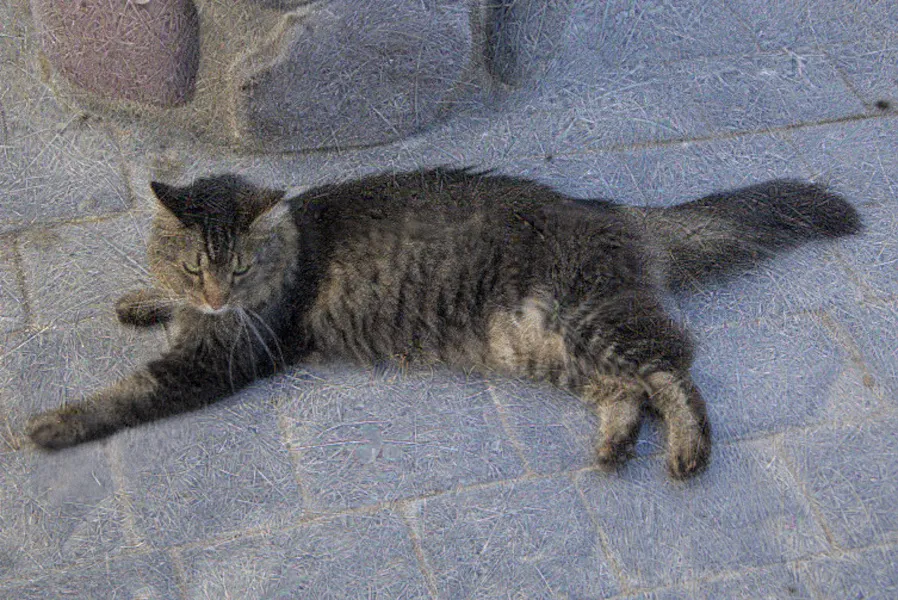
At the same time, in everyday use the JPEG images remain fully functional, look like ordinary photographs, and do not attract attention. Even if the additional data is detected, it does not reveal whether it is an encrypted container, write artifacts, or simply an arbitrary sequence of bytes.