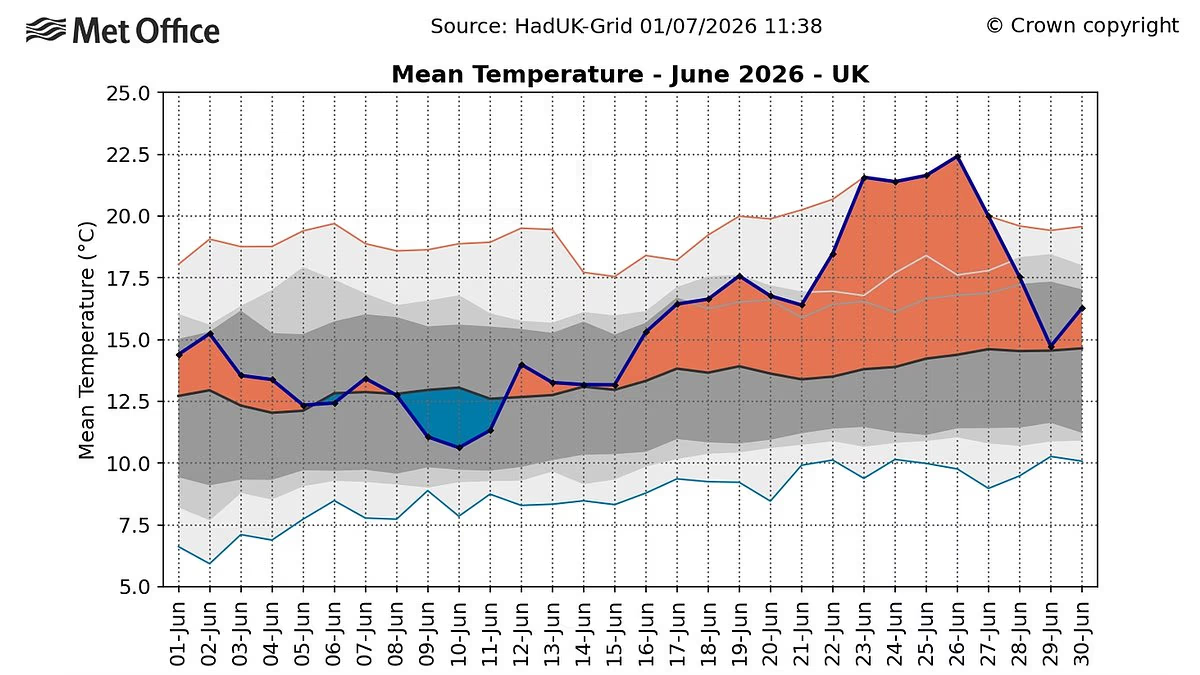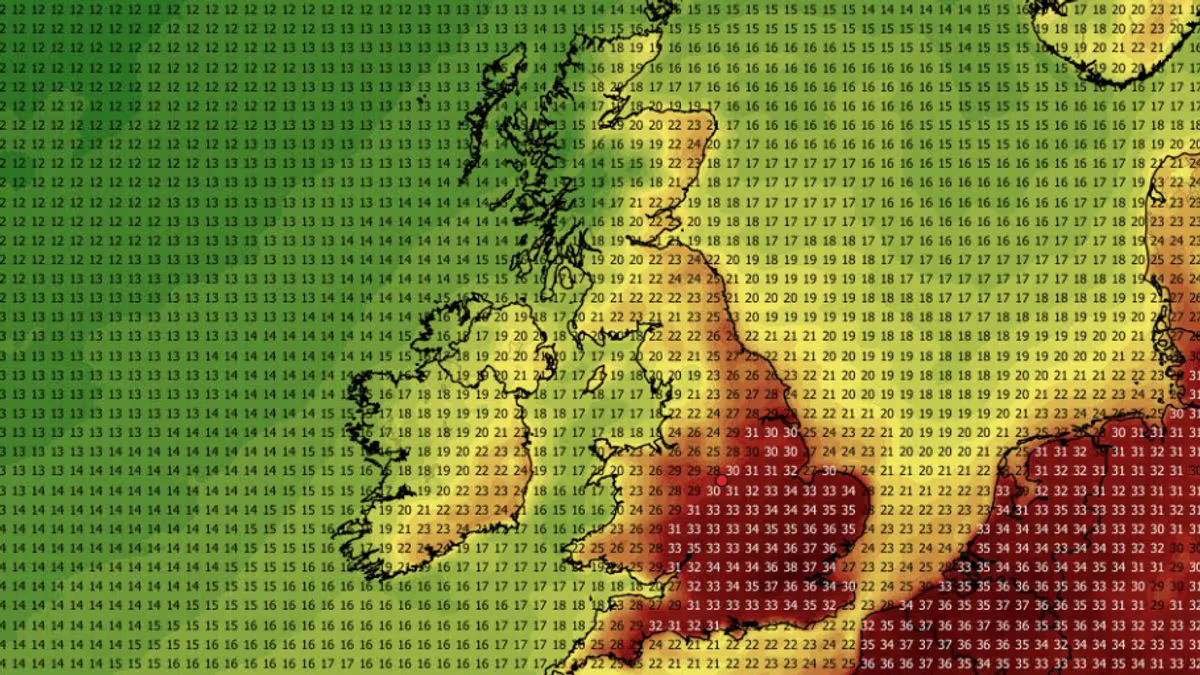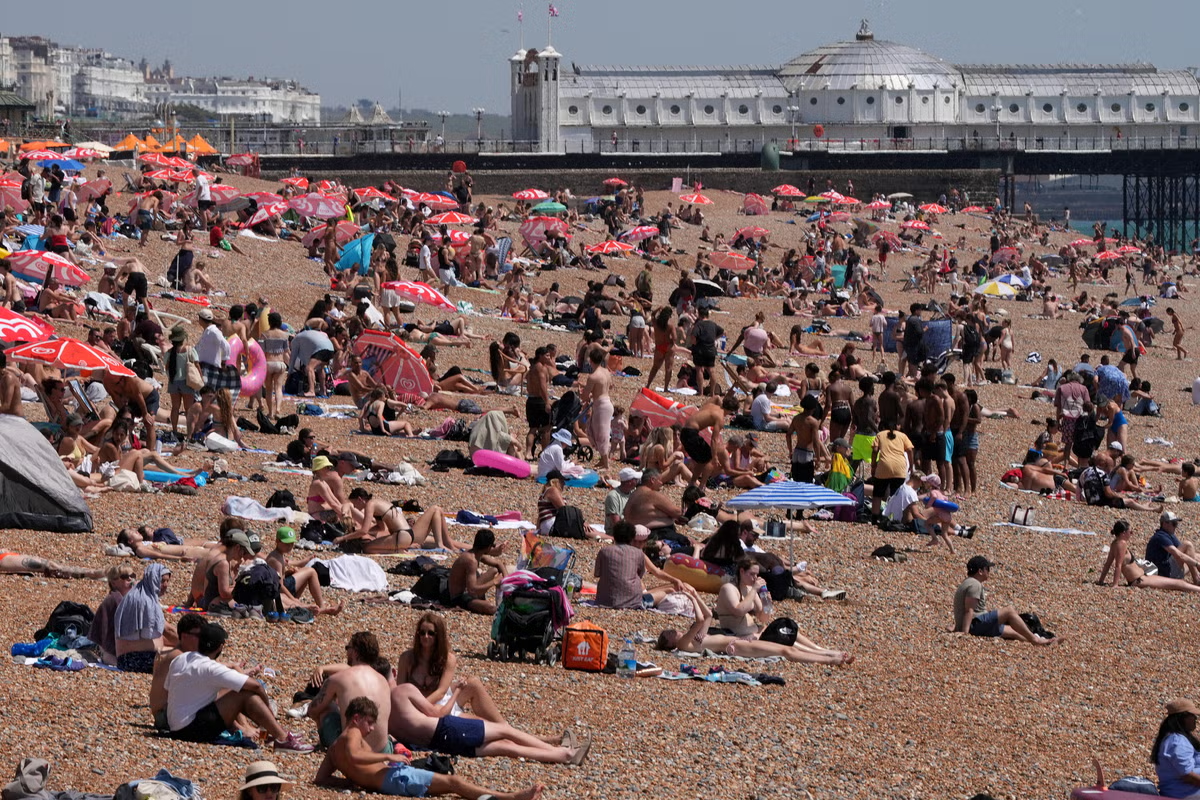
Temperatures topped 37C across parts of England and came close to 40C in some areas, with the country's highest ever June temperature record broken on three consecutive days.14:39, 01 Jul 2026Updated 14:57, 01 Jul 2026Last month was the hottest June on record, driven "by an intense and record-breaking" heatwave, the Met Office has said.Provisional statistics show that June 2026 was England's warmest on record for average mean temperature, the forecaster explained. The UK as a whole and Wales recorded their second warmest June, with the UK's behind only June 2023.The Met Office said: "A defining feature of the month’s heatwave was the exceptionally warm overnight temperatures, with frequent ‘tropical nights’ helping to drive the highest average June minimum temperatures on record for the UK, England and Wales. Scotland recorded its joint highest on record."This comes as the second half of June brought a red warning for extreme heat for three consecutive days following a period of unsettled weather conditions. The Met Office said this was the first time the extremely rare warning was issued for three days in a row since it was introduced in 2021.Temperature records for the month of June were broken on three consecutive days last week, culminating with 37.3C on Friday.The scorching conditions have been described as "unprecedented" by the forecaster, with the "extent and persistence of the heat particularly notable". The Met Office said: "Records dating back several decades, in some cases over a century, were challenged or exceeded during this event."Across the UK, June 2026's minimum temperature was more than 2C higher than average, while England recorded overnight temperatures 2.6C above average. Met Office scientist Dr Emily Carlisle said: "This June is a clear example of how UK weather can deliver both unsettled conditions and record-breaking heat within the same month."The intensity of the late June heatwave, combined with exceptionally warm nights, has driven England’s warmest June on record for mean temperature, while the UK and Wales recorded their second warmest June on record. Coming 50 years after the 1976 heatwave, it also highlights how similar events are now playing out in a warmer climate, with higher temperatures and more widespread impacts than we would have seen in the past."Dr Carlisle added that the high temperatures observed last month are part of a "broader pattern of warmth" this year. This comes as five out of the first six months of 2026 recorded mean temperatures at least 1C above average, with only January being cooler.Article continues belowSpring this year was the warmest on record for England and Wales, and the third warmest for the UK, due in part to an exceptionally early and record-breaking heatwave at the end of May.A new heat health alert has also been issued across a large chunk of the UK, bringing a "greater risk to life for vulnerable people" as Brits brace for a potential second heatwave. The yellow alert will cover the south of England and parts of the Midlands and will be in place between 12pm on July 4 and 5pm on July 8.As a result of the high temperatures, impacts across health and social care services in the East Midlands, South East, South West, east of England and London could be observed, the UK Health Security Agency (UKHSA) said.
Met Office says June hottest on record as another heatwave likely in days
Temperatures topped 37C across parts of England and came close to 40C in some areas, with the country's highest ever June temperature record broken on three consecutive days.
542 words~2 min read