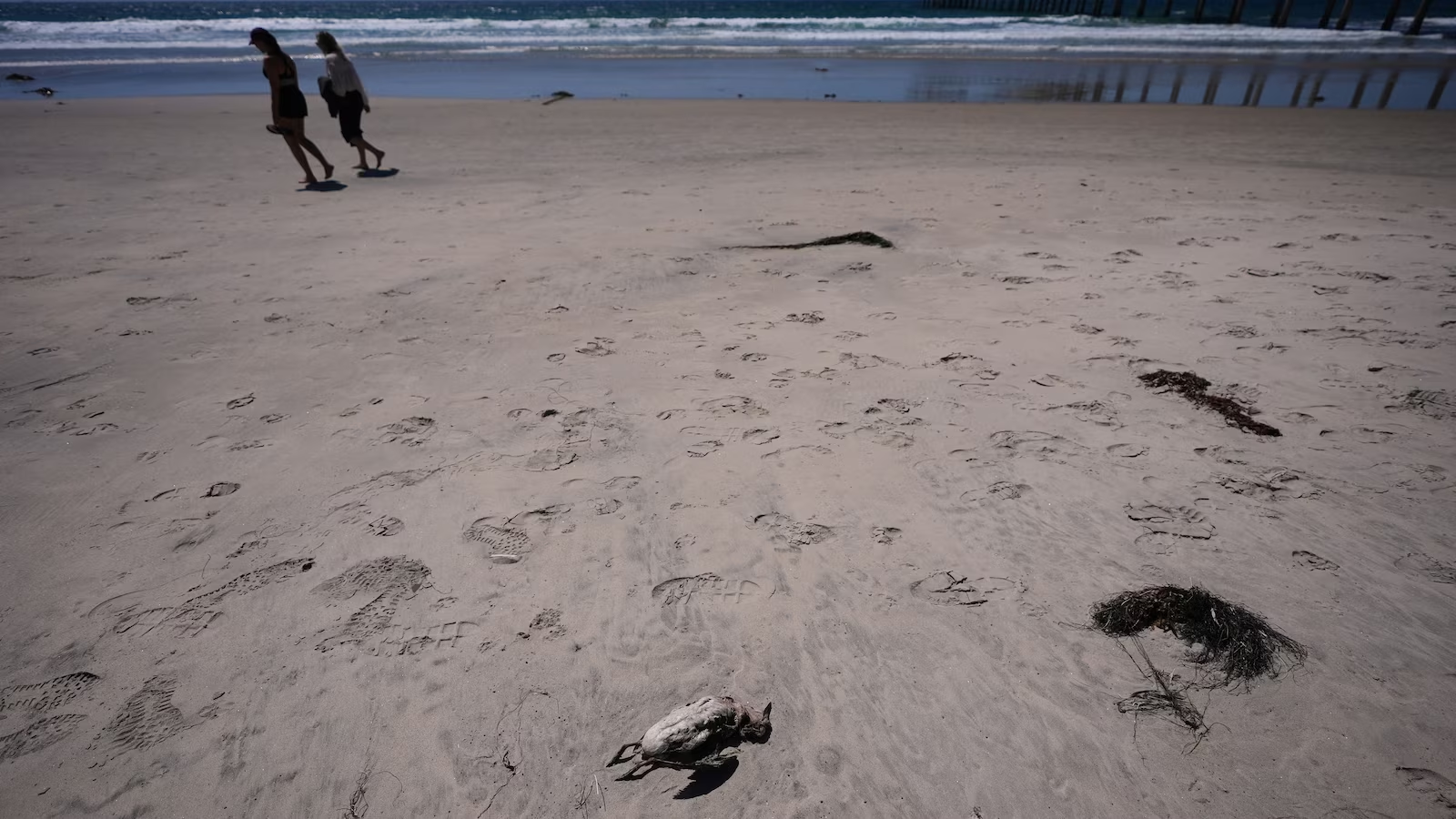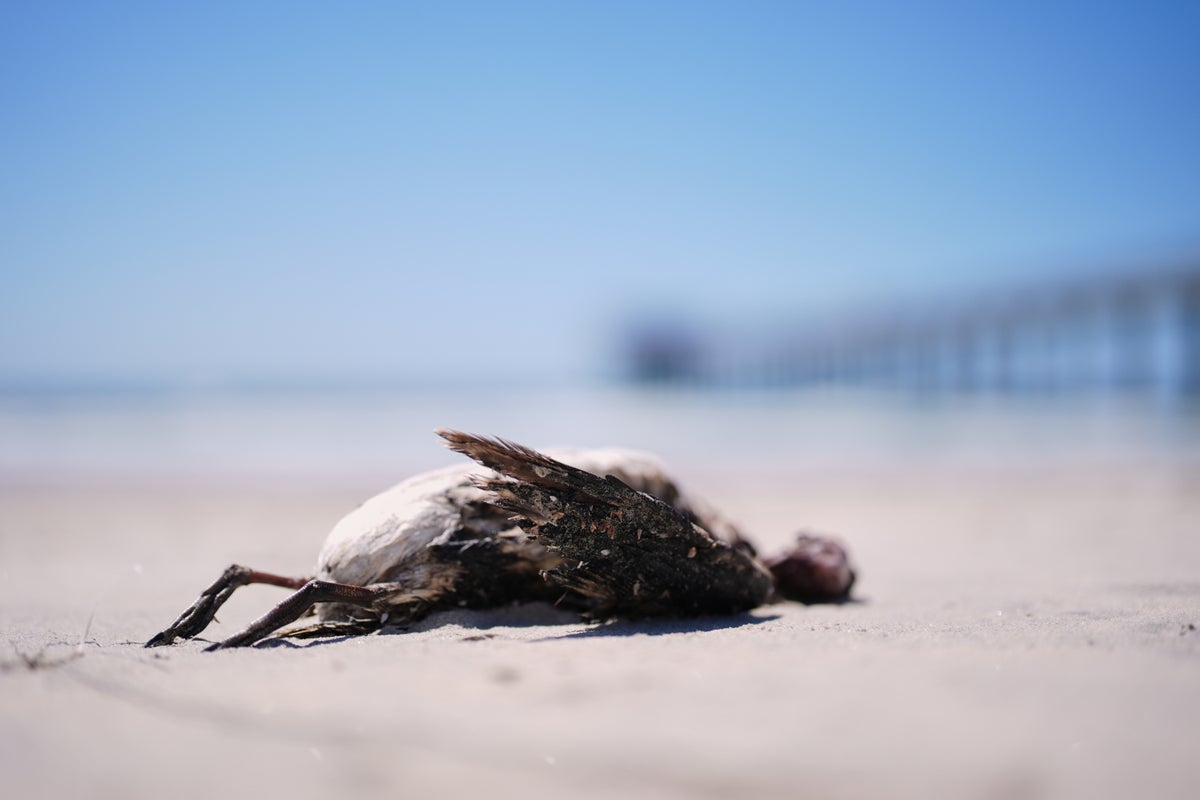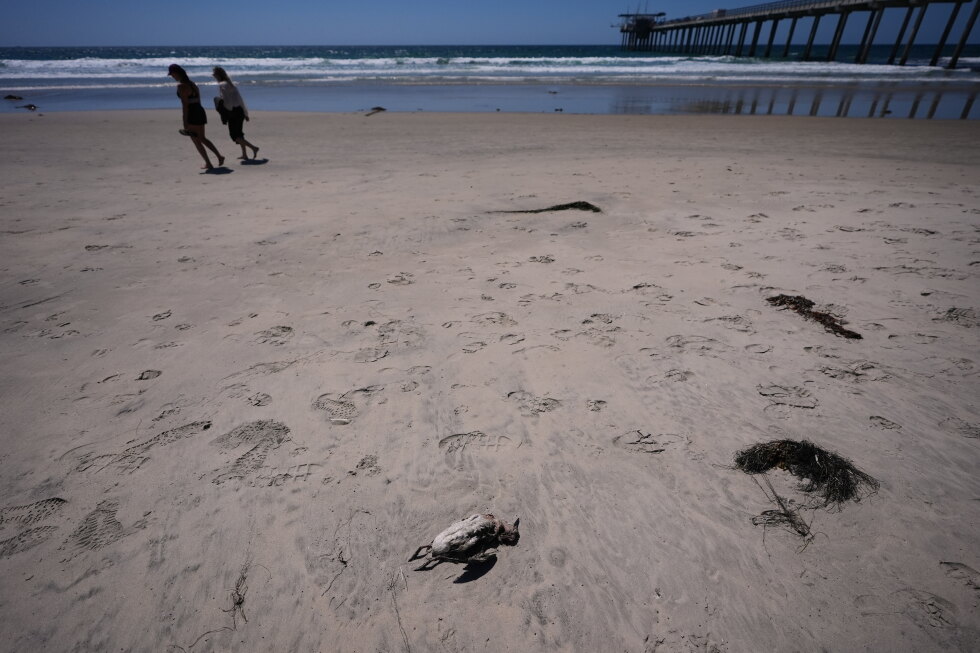
SAN DIEGO (AP) — Within minutes of walking on a San Diego beach, marine ornithologist Tammy Russell found the feathered carcasses — one after another.Some were mixed in with washed up kelp. Others were under rocks.Each month, scientists and volunteers conduct surveys of dead seabirds and find what Russell describes as a grim assessment of the impact of a massive marine heat wave that has lingered for months off parts of the California coast.The surveys that have been carried out by various organizations for decades help build a baseline of information on beached sea life to detect threats and their impact.
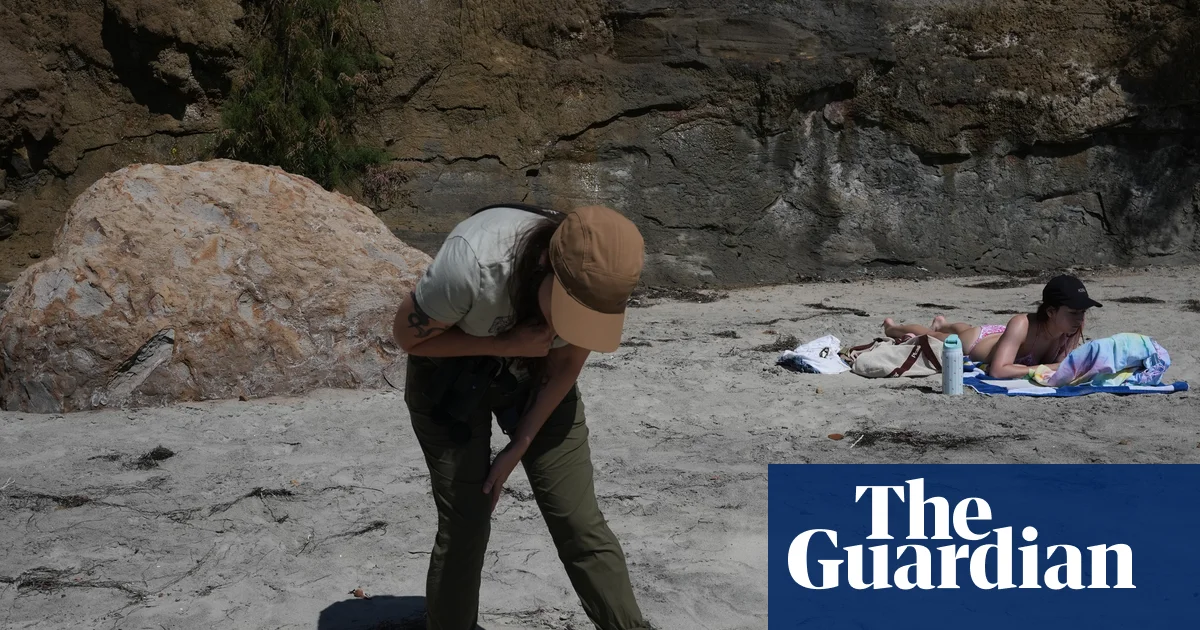
Marine ornithologist Tammy Russell, left, looks at a dead seabird near a beach goer during a survey along Blacks Beach on Wednesday, May 6, 2026, in San Diego. (AP Photo/Gregory Bull)
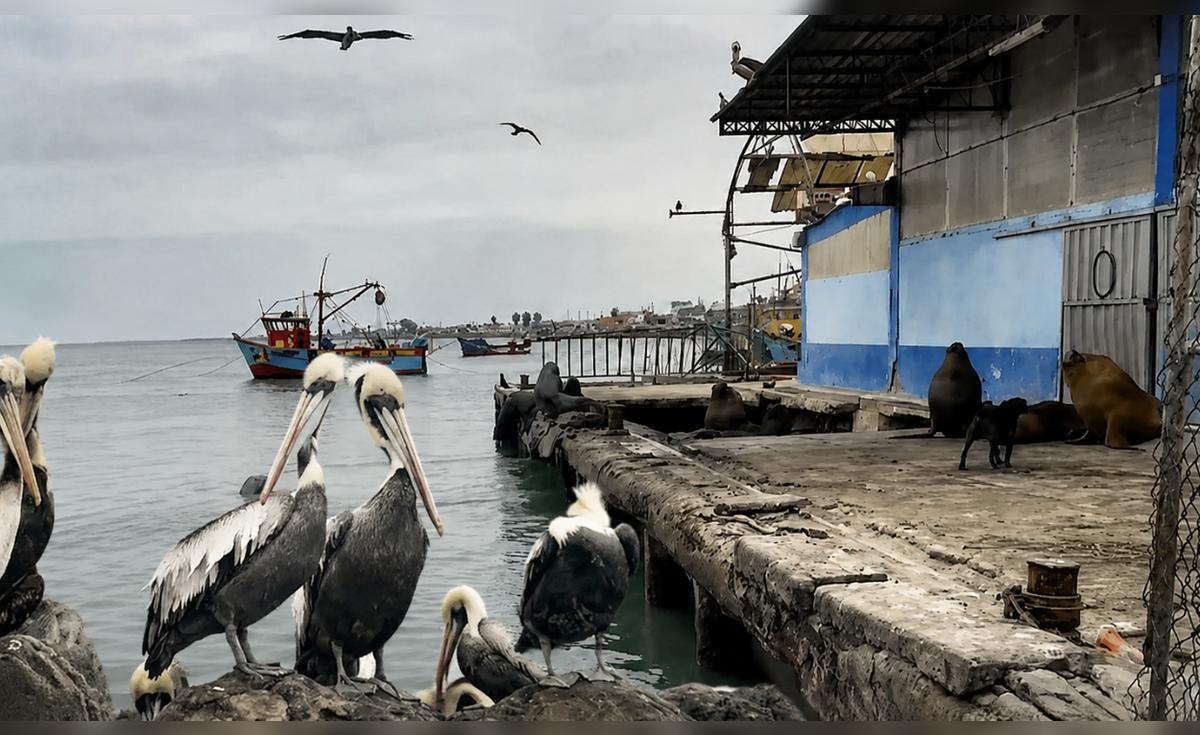
Many seabirds, including California brown pelicans, loons and grebes, starved to death in recent months as record-setting ocean temperatures decreased the band of cold, nutrient-rich surface water where krill, anchovies and sardines thrive near the shore, said Russell, a postdoctoral scholar at the University of California, San Diego, Scripps Institution of Oceanography.
“We’ve been seeing cormorants walk to shore and then just die within the hour. I mean one time it happened within 15 minutes, and I’ve never seen that before,” Russell said. “That has been heartbreaking for me and we’re seeing this happening across the whole coast.”Scientists fear the die-off could worsen with the recently formed El Nino, the natural warming of parts of the central Pacific that alters weather worldwide and spikes global temperatures.