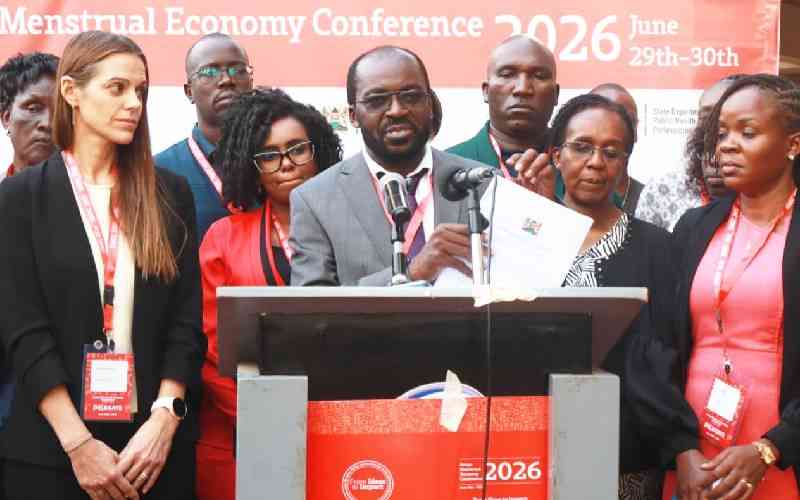
Alex Manyasi, Head of Policy, Advocacy and Research at CentAPro unveils the Kenya Menstrual Economy Conference (KMEC) 2026 Declaration at KICD in Nairobi. [Elvis Ogina, Standard]
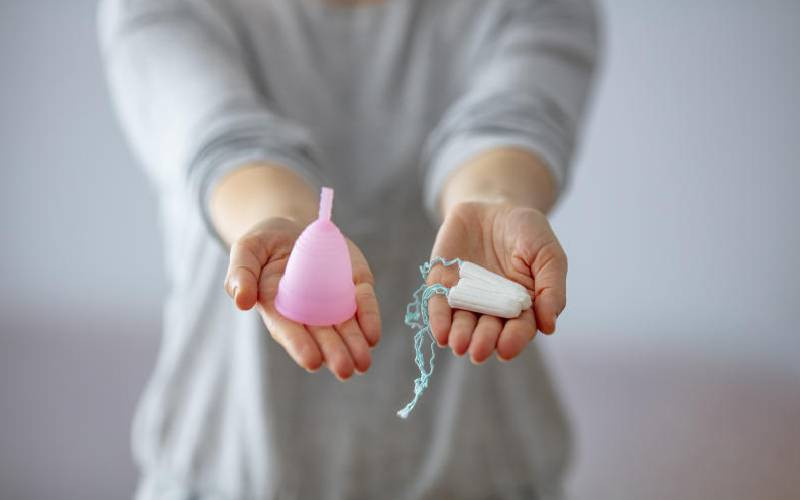
The government has reaffirmed its commitment to improving access to affordable menstrual health products by supporting local manufacturing, maintaining tax incentives on sanitary products and strengthening partnerships aimed at ensuring no woman or girl is left behind.
The commitments were highlighted during the adoption of the Kenya Menstrual Economy Conference (KMEC) 2026 Declaration at the Kenya Institute of Curriculum Development (KICD) in Nairobi, where stakeholders from government, development partners, manufacturers and civil society endorsed a roadmap to transform the country's menstrual economy.
Presenting the declaration in Nairobi, Alex Manyasi, Head of Policy, Advocacy and Research at the Centre for African Progress (CentAPro), said the government has already taken significant steps to make menstrual products more affordable by removing taxes on sanitary towels while creating an enabling environment for local manufacturers.
"The government has omitted taxes on sanitary towels to make the products affordable to everybody. This is part of the broader effort to ensure that menstrual health remains a priority and that no girl or woman is denied access because of cost," Manyasi said.