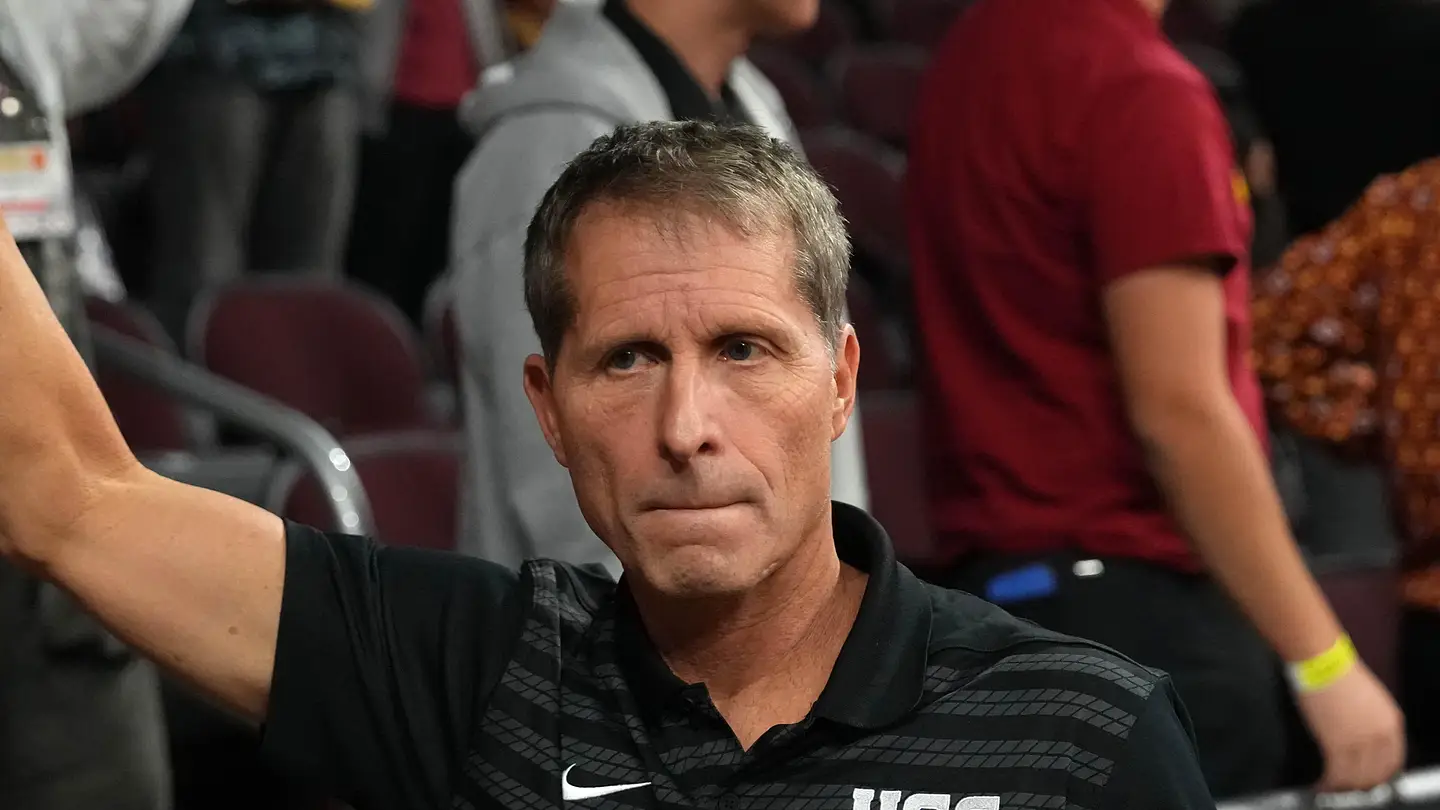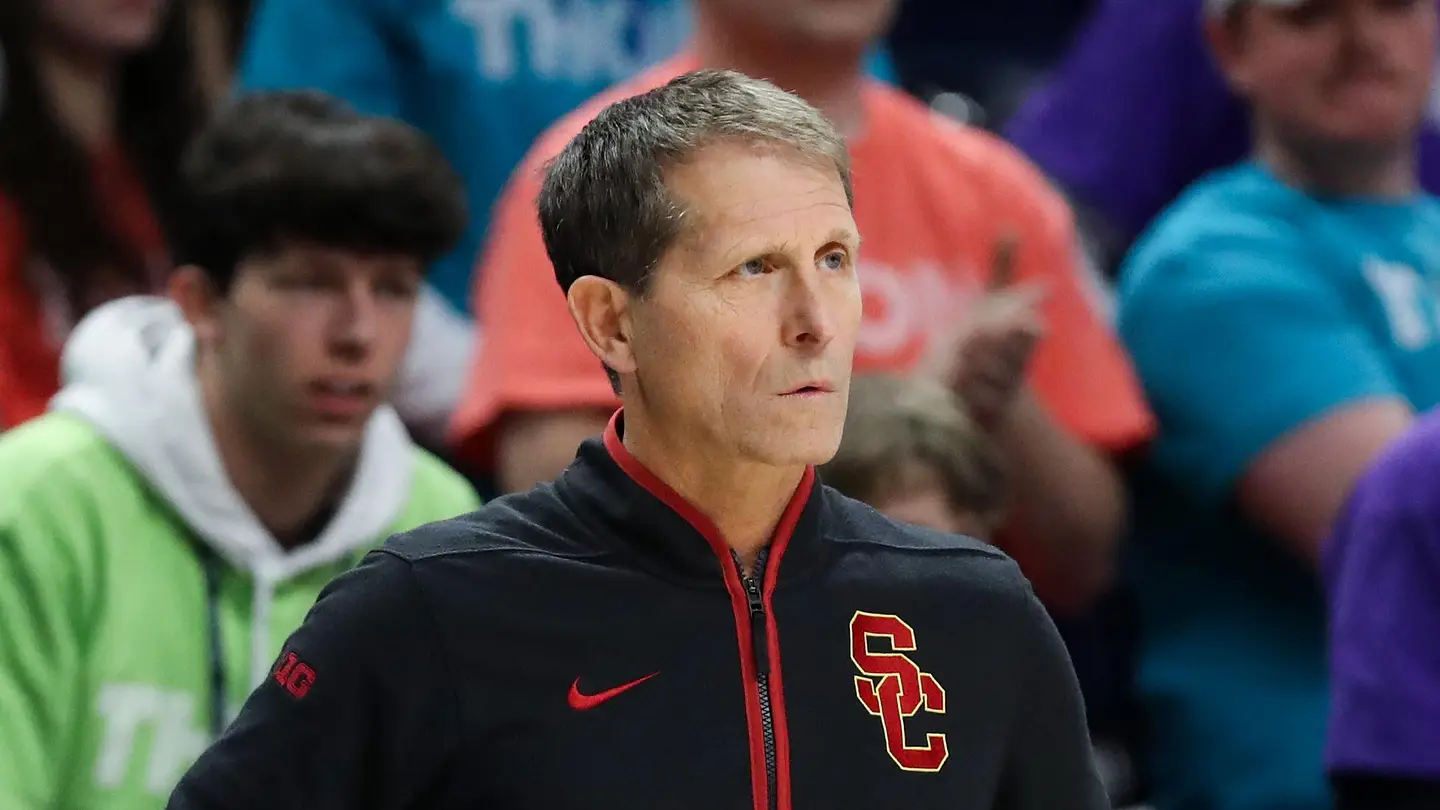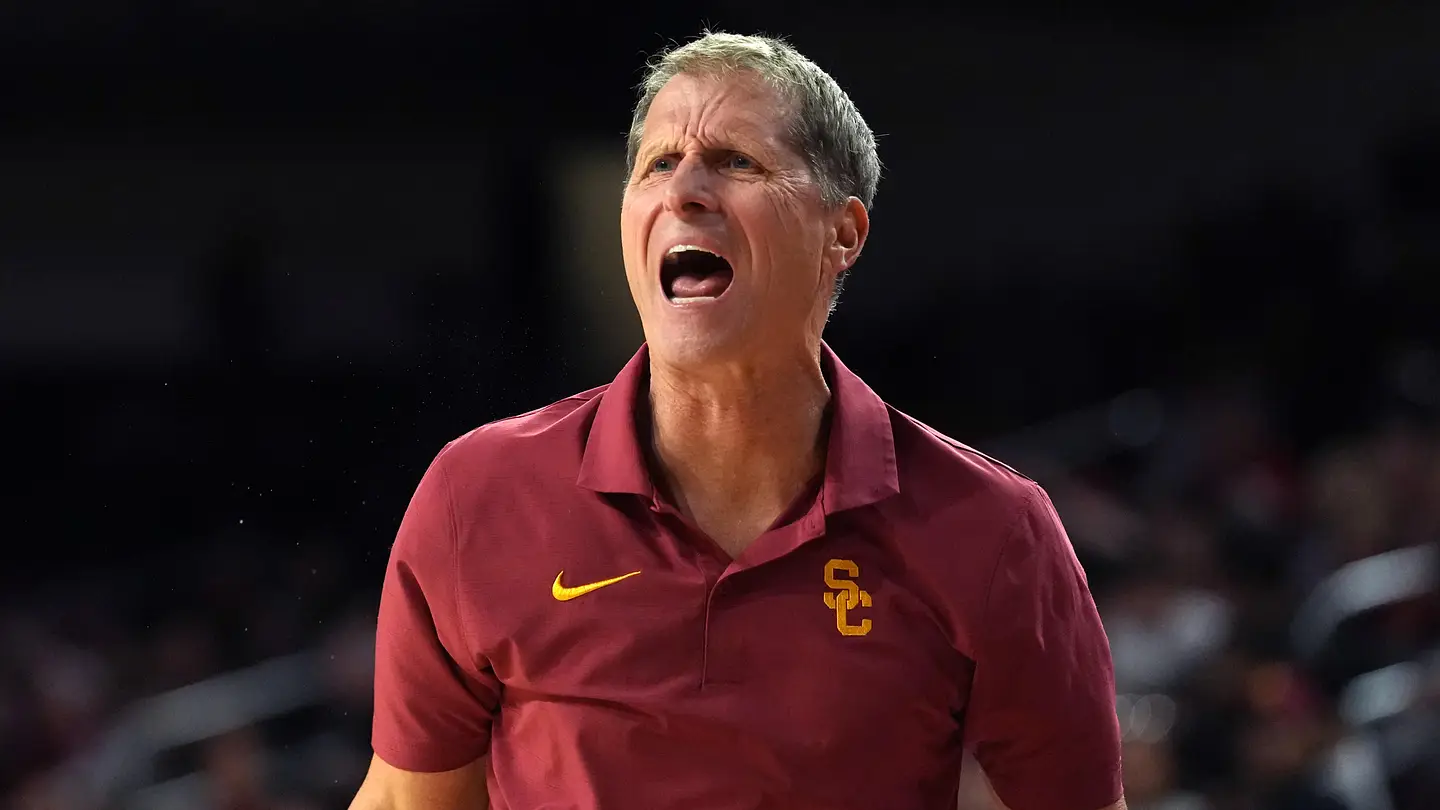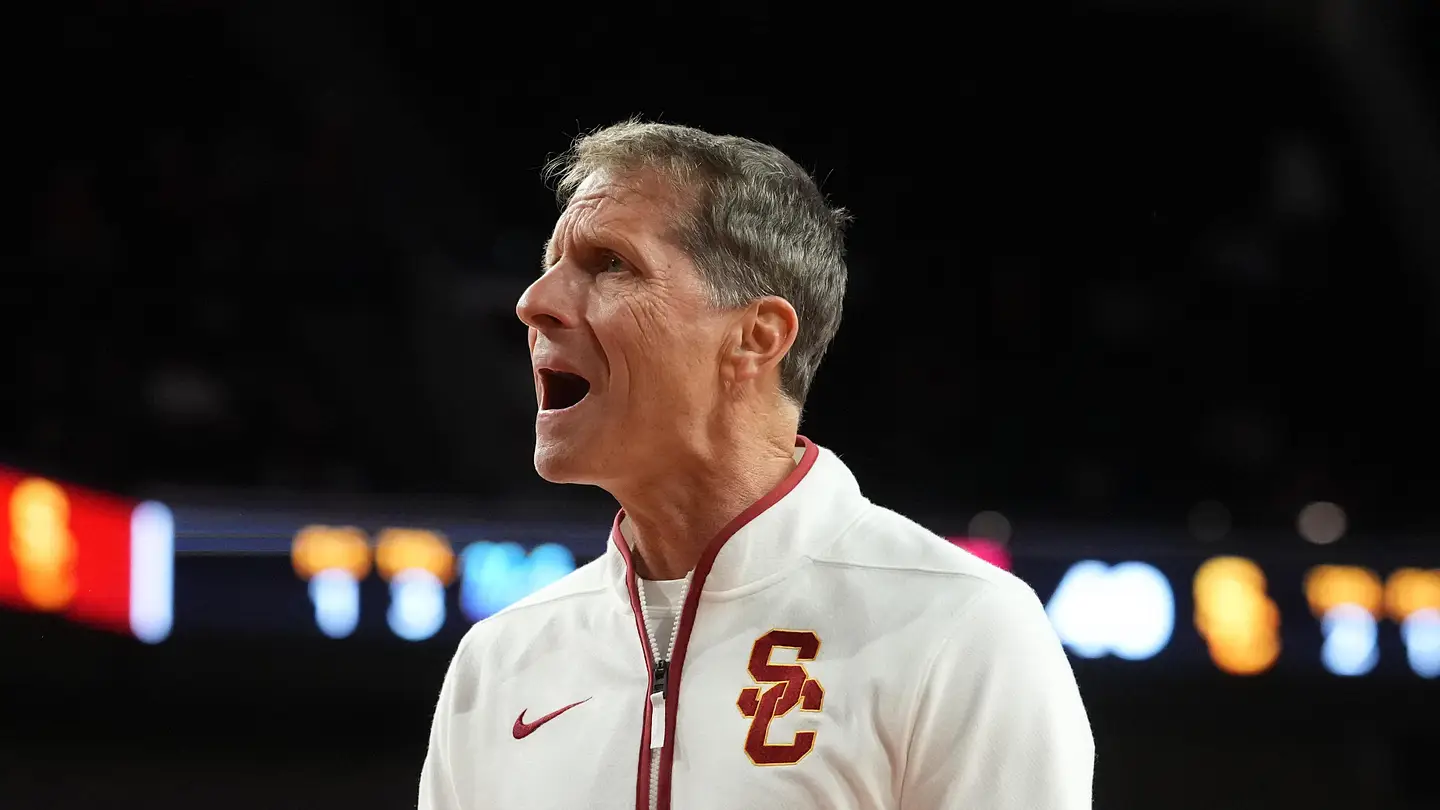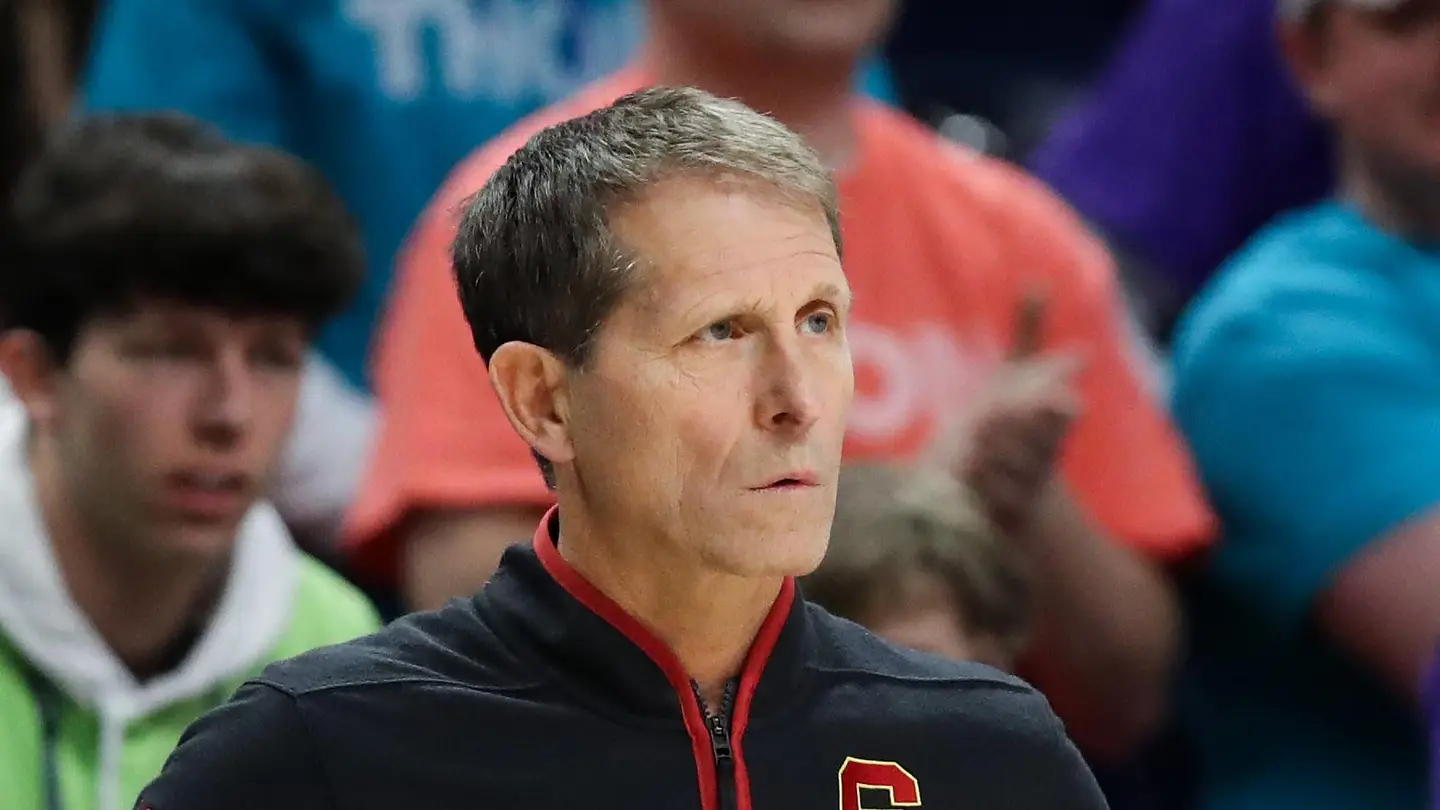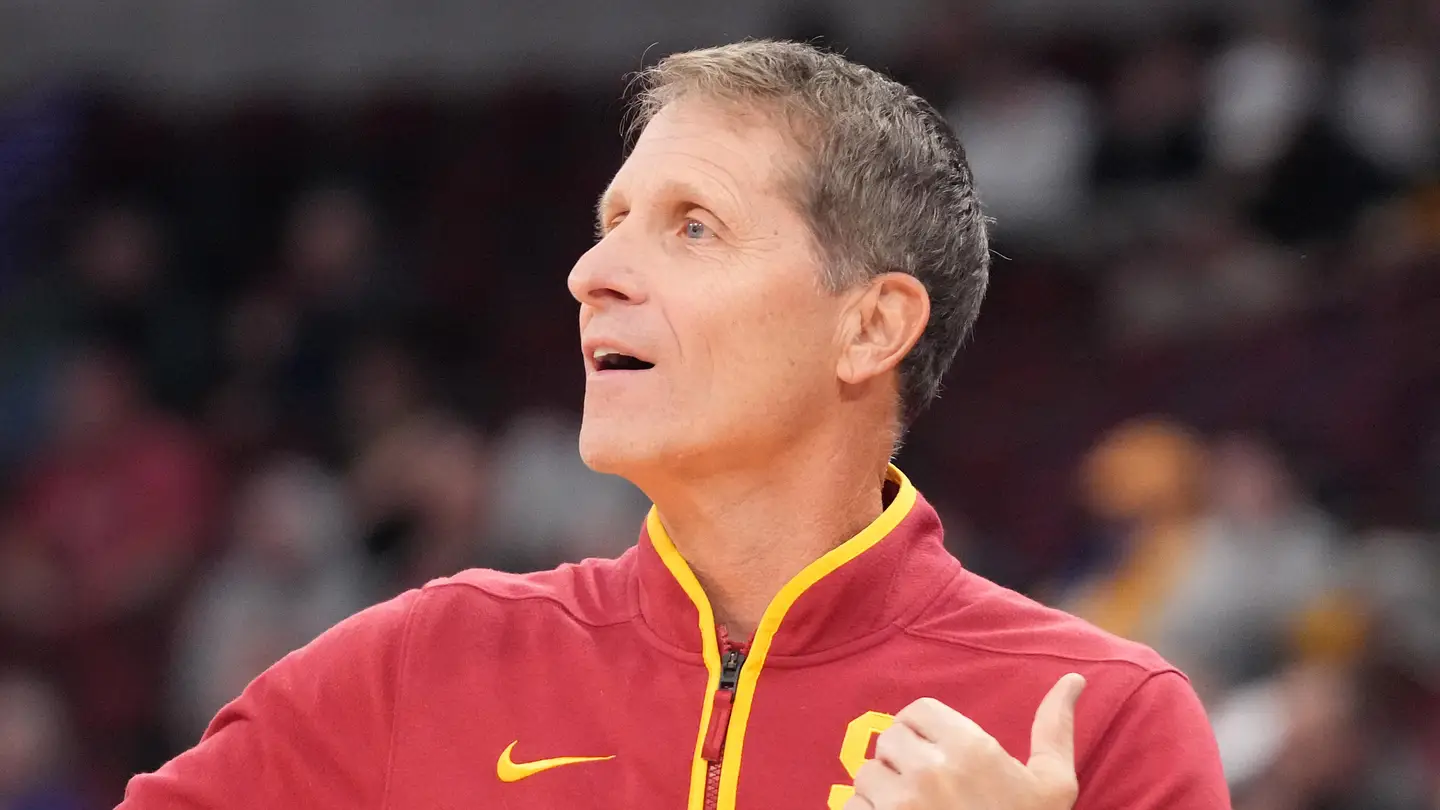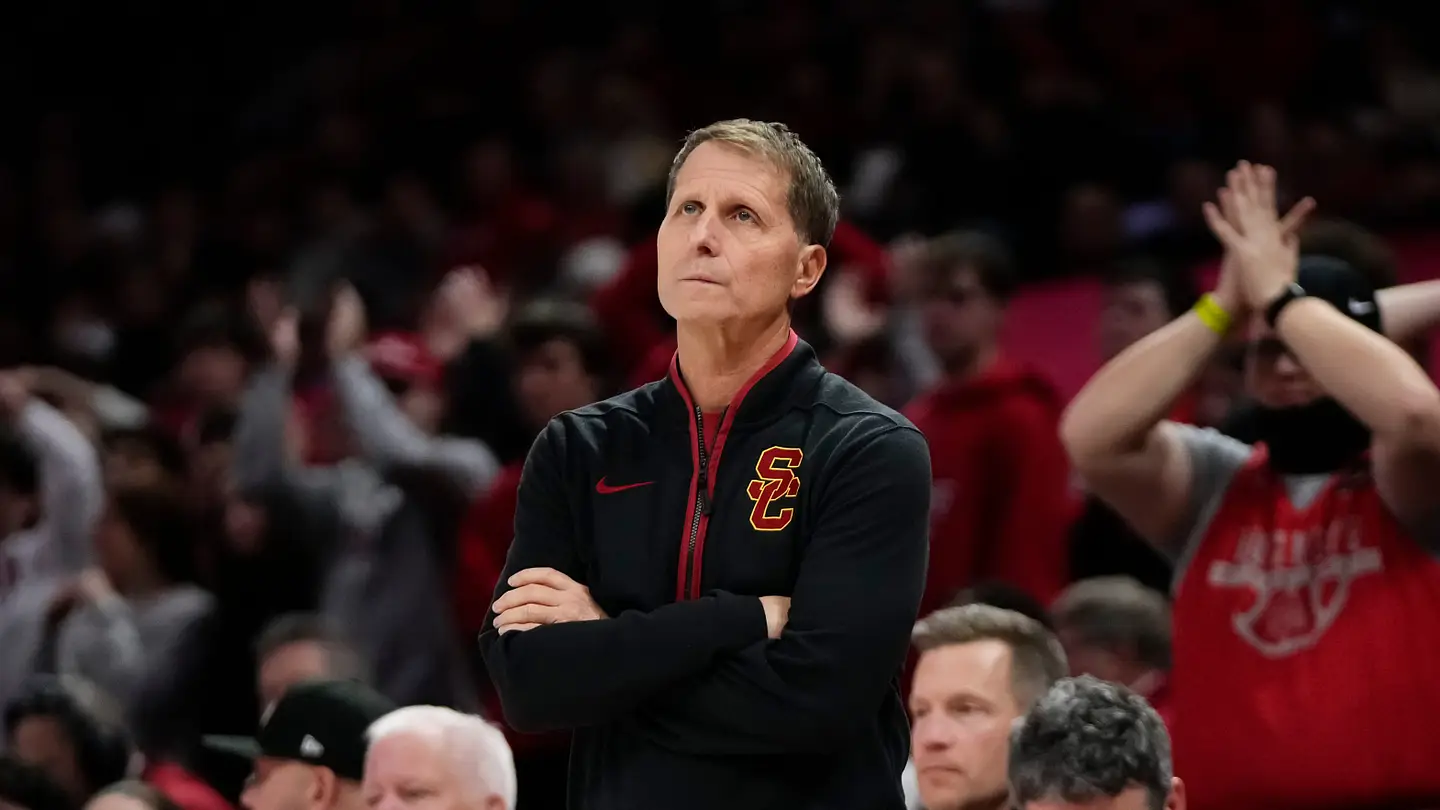
It is no secret that college basketball is changing. Between the transfer portal, NIL and the NCAA's evolving eligibility rules, building a championship-caliber roster has become more challenging than ever. The modern landscape of college athletics has forced coaches to constantly adapt as roster construction becomes more unpredictable each year.On Monday, USC coach Eric Musselman shared the blueprint he believes programs must follow to build sustained success.Musselman believes building a winning roster in today's college basketball landscape is about identifying the right returning players, supplementing them with high-upside freshmen and using the transfer portal to address remaining needs.Feb 15, 2025; Los Angeles, California, USA; Southern California Trojans head coach Eric Musselman (right) talks with guard Desmond Claude (1) and guard Wesley Yates III (6) against the Minnesota Golden Gophers in the first half at Galen Center. Mandatory Credit: Kirby Lee-Imagn Images | USA TODAY Sports via Reuters ConnectThe idea isn't anything new. For decades, successful college basketball programs were built around veteran players who stayed in the program, developed over multiple seasons and grew within the same system. What has changed is how difficult that model has become to maintain in an era where players can transfer freely and rosters can turn over every offseason.“I think, regardless of sport, regardless of university, regardless of college, everybody understands retention is important,” said Musselman. “You retain the right guys and incoming freshmen that are either super talented or that you can build through, and then the portal. I think all three of those are just going to be factors.”Retaining the right piecesAt first glance, USC’s roster somewhat appears to contradict Musselman's claims about retention. The Trojans return just three scholarship players from last season alongside three incoming freshmen and seven transfers.Nov 14, 2025; Inglewood, California, USA; Southern California Trojans guard Rodney Rice (1) shoots a free throw during the first half of the Hall of Fame Series game against the Illinois State Redbirds at Intuit Dome. Mandatory Credit: Kiyoshi Mio-Imagn Images | IMAGN IMAGES via Reuters ConnectHowever, it is worth noting that Musselman never said a coach has to retain as many players as possible, he spoke about retaining the “right guys.” In today's world of NIL and revenue sharing, retaining a whole starting five is nearly impossible. Elite programs can no longer afford to spread financial resources evenly across a 15-man roster just for the sake of continuity.So when Musselman talks about retention, it means identifying a small, elite core of players worth building around, then constructing everything else through recruiting and the transfer portal.This offseason, that reality unfortunately meant letting notable names walk away. Guard Jerry Easter II entered the portal and left for Oregon, while big man Gabe Dynes transferred to Louisville. They were joined in the portal by Jordan Marsh, Amarion Dickerson and E.J. Neal Jr.USC prioritized a specific, foundational trio in Alijah Arenas, Rodney Rice and Jacob Cofie.Mar 11, 2026; Chicago, IL, USA; Southern California Trojans guard Alijah Arenas (0) drives to the basket against the Washington Huskies during the first half at United Center. Mandatory Credit: Kamil Krzaczynski-Imagn Images | IMAGN IMAGES via Reuters ConnectArenas gives the Trojans a true scorer and immediate offensive threat. Arenas averaged 16.4 points and 3.2 assists per game across 32 starts last season. Rice adds another layer of scoring, coming off a season where he averaged nearly 13 points a game. Lastly, Cofie anchors the glass and gives the Trojans a physical versatile presence.Together, Arenas, Rice and Cofie give the Trojans a balanced mix of scoring, playmaking and physicality that everything else can be built around.High-upside freshmenThe second pillar of Musselman’s blueprint focuses on high-upside freshmen. This year, the Trojans brought in a top-10 national recruiting class featuring five-star forward Christian Collins and the Ratliff twins. Musselman’s vision is to develop this group into the next wave of program anchors.“Christian (Collins) is just so high energy, and then the Ratliffs, they're different. To lump them together is unfair, other than they're both seven-footers and have the same last name,” said Musselman. “Adonis has really shot the ball well and has played really well, and then Darius has a different skill set of being more interior player.Mar 31, 2026; Glendale, AZ, USA; Darius Ratliff (13) during the McDonalds All American Boys Game at Desert Diamond Arena. Mandatory Credit: Mark J. Rebilas-Imagn Images | IMAGN IMAGES via Reuters Connect“I don't use the word lightly, but they all three have tremendous upside.”The ultimate goal of this freshman blueprint is to somewhat replicate what Ohio State accomplished with Bruce Thornton.“When his name got called at 31, I was super happy because he went way higher than projected,” Musselman said of Thornton. “You want that for guys who have the mindset to stay at one place for four years.”Instead of transferring, Thornton stayed at OSU all four years in Columbus, where he became the Buckeyes' all-time leading scorer with over 2,100 career points. He developed under one roof, grew within the league and was ultimately rewarded by being selected in the NBA Draft.Feb 12, 2023; Columbus, OH, USA; Ohio State Buckeyes guard Bruce Thornton (2) returns the ball in the second half of their NCAA Mens Division I Basketball Game at Value City Arena. Mandatory Credit: Brooke LaValley/Columbus Dispatch
Eric Musselman Explains USC Basketball’s Roster-Building Blueprint
It is no secret that college basketball is changing. Between the transfer portal, NIL and the NCAA's evolving eligibility rules, building a championship-caliber
1,092 words~5 min read