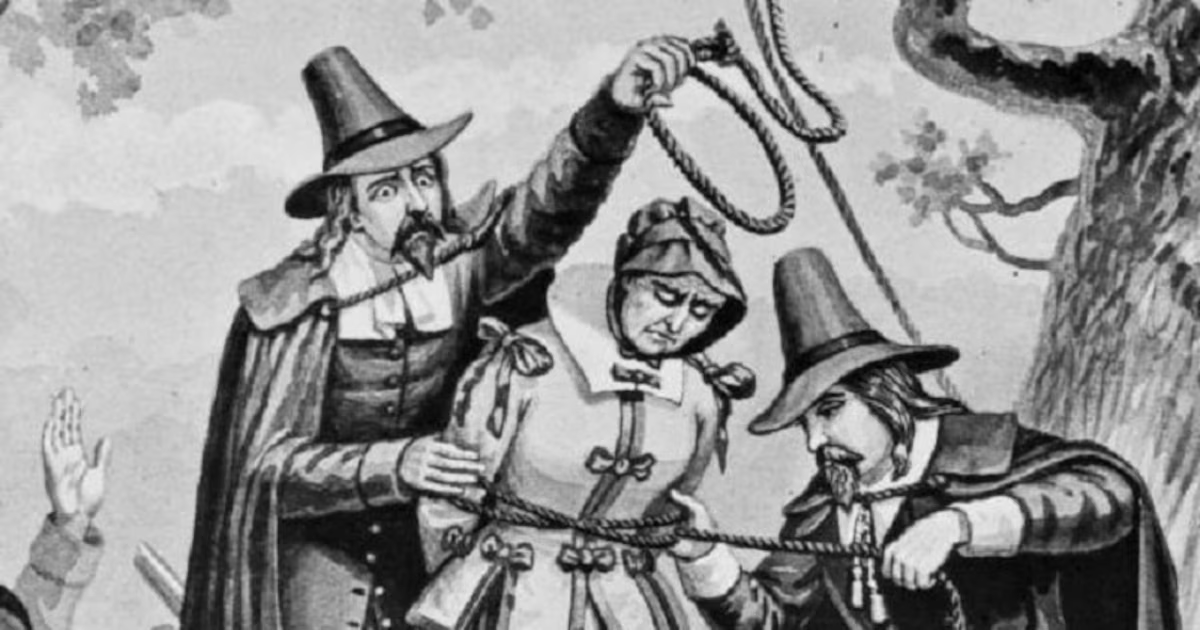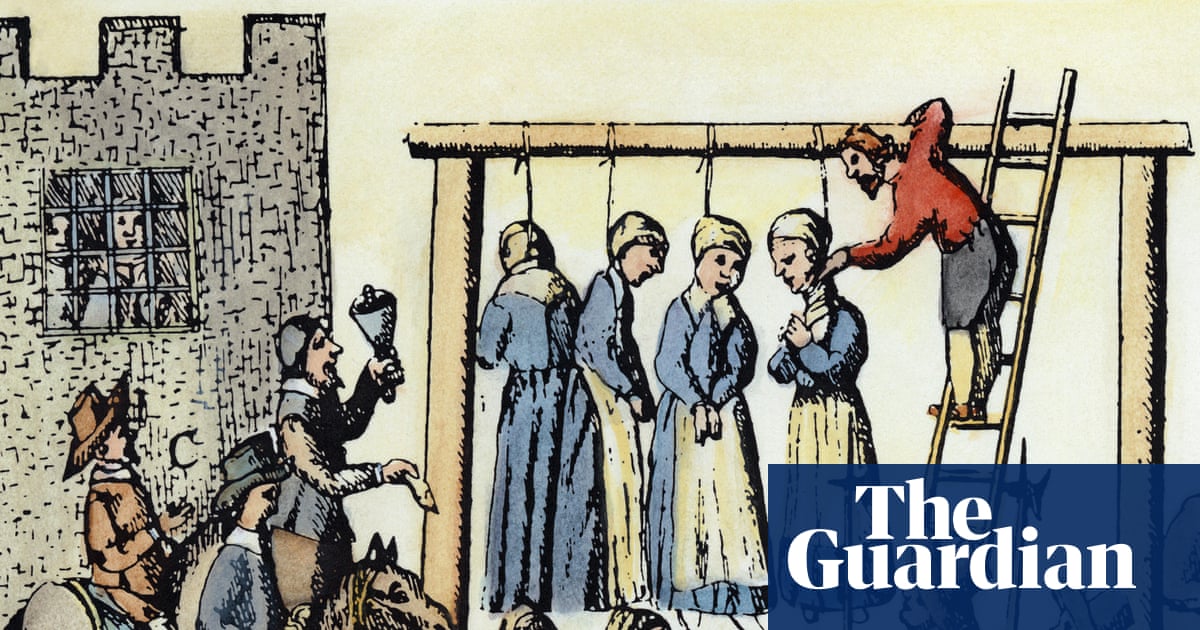
In the winter of 1692, a nine-year-old girl and her eleven-year-old cousin began having violent fits inside a parsonage in Salem Village, Massachusetts. They screamed, threw objects, contorted their bodies, complained of being bitten and pinched by invisible hands, and reported seeing spectral figures that no one else could see. Within weeks, more girls in the tightly knit Puritan community were exhibiting the same behaviour, and the local doctor, finding no physical explanation, delivered a verdict that would set the entire episode in motion. He concluded the girls were bewitched. What followed between February 1692 and May 1693 would become one of the most studied, debated and haunting episodes in American history, resulting in the execution of 19 people, the imprisonment of more than 150 others and the death of at least five more in jail, all within a community of fewer than 600 people living in a cold, stressed and deeply frightened corner of colonial New England.How Tituba's confession turned Salem's suspicions into a full-blown witch huntThe two girls at the centre of the initial outbreak were Betty Parris, daughter of Salem Village's deeply unpopular minister Samuel Parris, and her cousin Abigail Williams, who lived in the same household. A third girl, Ann Putnam Jr., aged around 12, soon exhibited similar symptoms. Tituba, an enslaved woman from Barbados who worked in the Parris household and had reportedly told the children stories of magic and the spirit world, was among the first three women formally accused of witchcraft when Salem Village men filed a complaint with the town magistrates on February 29, 1692. Tituba's confession, which she gave under what historians believe was considerable coercion, described elaborate meetings with the devil, a black dog, a tall man from Boston and other witches, and it electrified the community. Rather than ending suspicion, her testimony expanded it dramatically, implying that an organised network of witches was actively operating within Salem and its surrounding towns.The social and political conditions that made Salem so vulnerableHistorians have consistently argued that the witch trials did not emerge from nowhere but were the product of a community already under severe and compounding stress. Salem Village itself was a deeply divided settlement, split between a farming western portion and a more commercially oriented eastern side with strong ties to Salem Town, and the two halves had been in bitter dispute over land, taxes, church leadership and local authority for years. Reverend Parris had arrived in 1689 having already alienated large portions of his congregation before the crisis began. Beyond the local quarrels, the entire Massachusetts Bay Colony was operating under profound political instability. Its original charter had been revoked by the English Crown in 1684 and had not yet been replaced, leaving the colony in a legal limbo without a legitimate governing framework. A brutal frontier war with the Wabanaki Confederacy, supported by French Canada, had been pushing traumatised refugees into Salem from destroyed frontier communities throughout the preceding years. Historian Mary Beth Norton, in her scholarly work examining the trials, argued that the deep connections between the witchcraft accusations and the frontier war have been systematically underexamined, and that many of the afflicted girls and key accusers had direct personal experience of war trauma and refugee displacement before the crisis began.The ergot theory and what the fungus in the rye might explainOne of the most widely discussed scientific explanations for the initial symptoms was proposed in 1976 by psychologist Linnda Caporael in a paper published in the journal Science. Caporael argued that the cold winter of 1691 followed by a wet spring had created ideal conditions for the growth of ergot, a fungus that colonises rye grain and contains alkaloids chemically related to LSD. Convulsive ergotism, caused by eating bread made from infected rye, produces hallucinations, violent muscle spasms, sensations of crawling on the skin, visions and a burning sensation in the extremities, symptoms that match the court record descriptions of the afflicted girls with striking precision. Caporael also noted a compelling geographic pattern in the data, with most of the accusers coming from the western farming portion of Salem Village, which relied heavily on locally grown rye, while the accused tended to come from the eastern side, which sourced more of its grain from commercial trade routes less likely to be contaminated. The theory was challenged the same year by Nicholas Spanos and Jack Gottlieb, also writing in Science, who argued that ergot poisoning could not fully account for the social dynamics of the accusations and that no direct physical evidence of ergot contamination had been found in Salem's grain supply. The debate between physiological and purely social explanations has never been fully resolved.How spectral evidence drove the legal process toward mass executionWhat gave the Salem trials their specific and devastating momentum was the decision by the Court of Oyer and Terminer, convened in June 1692 to handle the rapidly multiplying cases, to accept spectral evidence as legally valid testimony. Spectral evidence was the claim that a witch's spirit or spectre could leave her body and torment victims in their dreams or visions, and crucially, that the witch herself might be entirely unaware her spectre was doing so. This meant that an accuser's testimony that they had seen someone's spirit harming them in a dream was treated by the court as valid evidence of guilt, an evidentiary standard that made it almost impossible for any accused person to mount a meaningful defence. The first person hanged under this system was Bridget Bishop on June 10, 1692. Eighteen more followed her to Gallows Hill over the course of the summer, including the Reverend George Burroughs, a Harvard educated former minister who recited the Lord's Prayer flawlessly at the gallows, a feat widely believed impossible for a witch, yet was hanged nonetheless. An elderly farmer named Giles Corey refused to enter a plea entirely and was pressed to death over two days under heavy stones, becoming the only person in American colonial history known to have died by this particular form of judicial torture.Why the trials ended when they didPublic confidence in the proceedings began to erode in the autumn of 1692 as the accusations began reaching people of higher social standing whose innocence seemed implausible even to those who had accepted earlier convictions. When the wife of the Governor of Massachusetts, Lady Phips, was herself accused, the political situation became untenable. Governor William Phips dissolved the Court of Oyer and Terminer in October 1692 and issued a proclamation that spectral evidence would no longer be admissible in any future proceedings. Without spectral evidence, the cases collapsed almost entirely. A new court convened in January 1693 acquitted the vast majority of remaining accused, and Phips subsequently pardoned all those still imprisoned. By May 1693 the official crisis was over, though not before it had destroyed families, seized properties, broken communities and sent 19 innocent people to their deaths on a hill outside a village that never fully recovered from what it had done.
The Salem witch trials explained: How fear, fungus and panic led to the deaths of 19 innocent people
In the winter of 1692, a nine-year-old girl and her eleven-year-old cousin began having violent fits inside a parsonage in Salem Village, Massachusetts. They screamed, threw objects, contorted their bodies, complained of being bitten and pinched by invisible hands, and reported seeing spectral figures that no one else could see.
1,165 words~5 min read