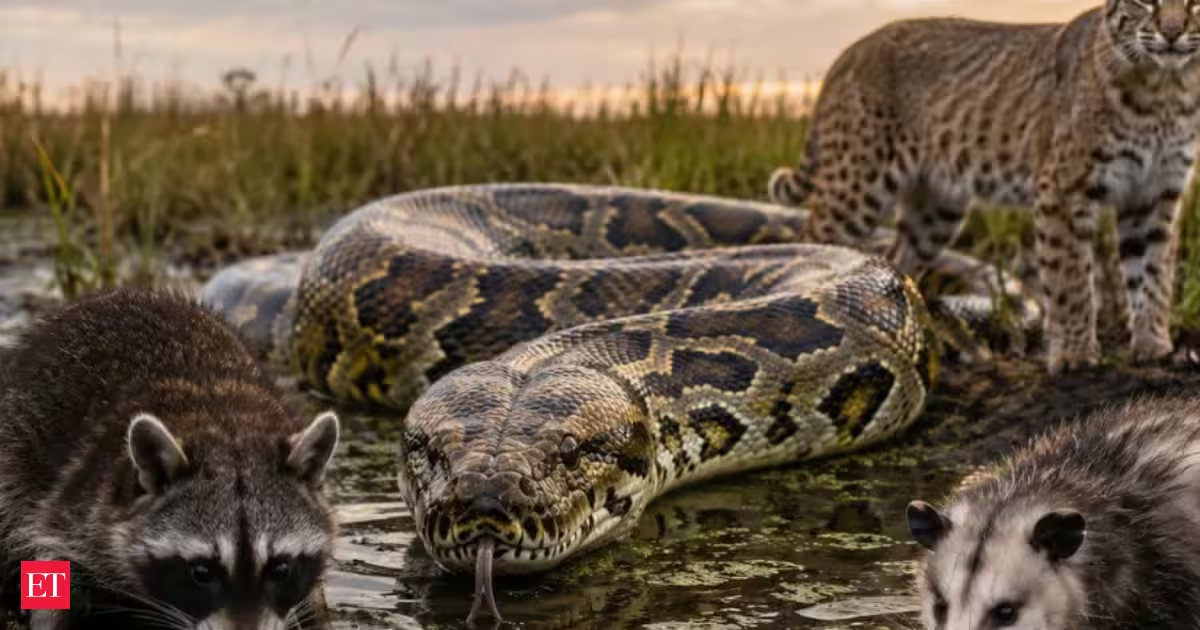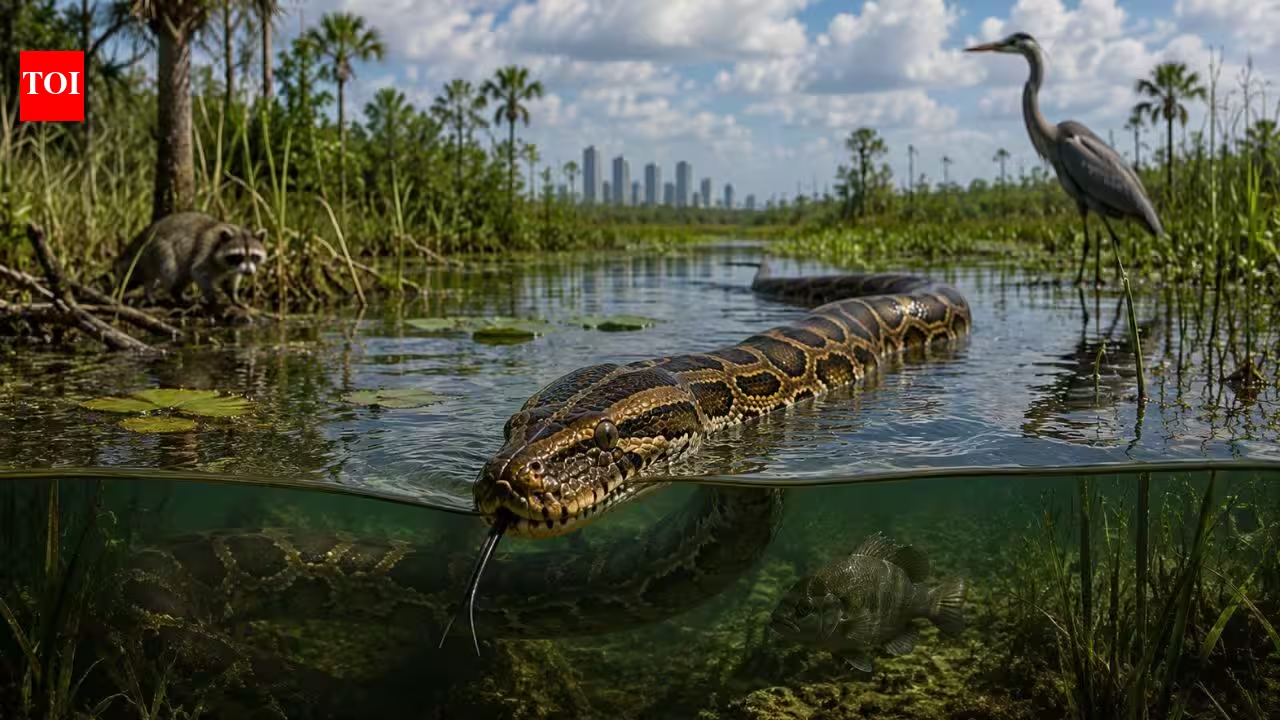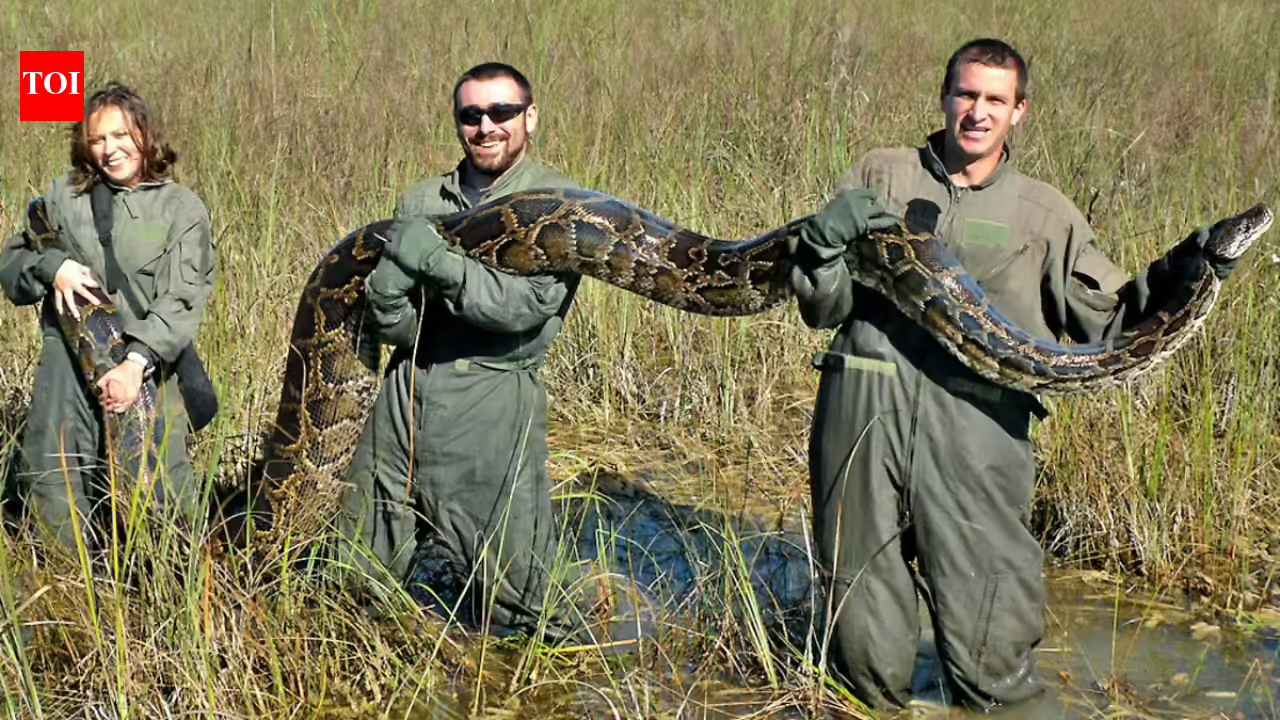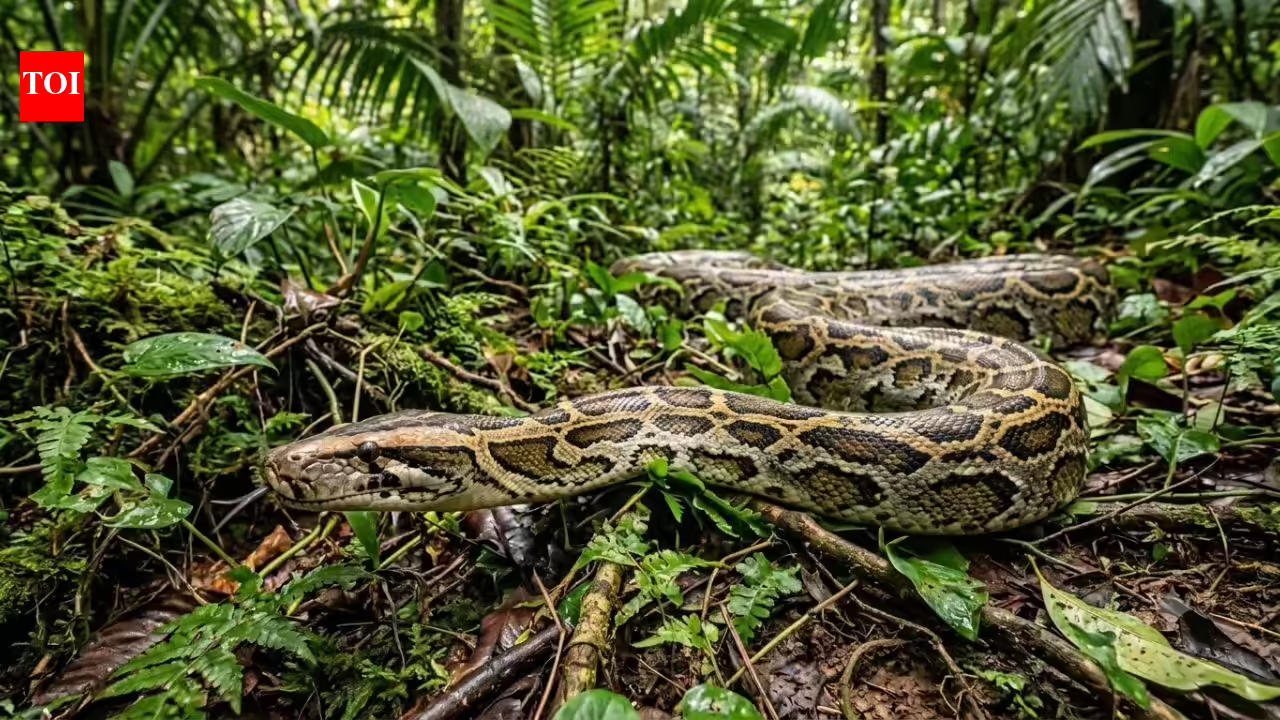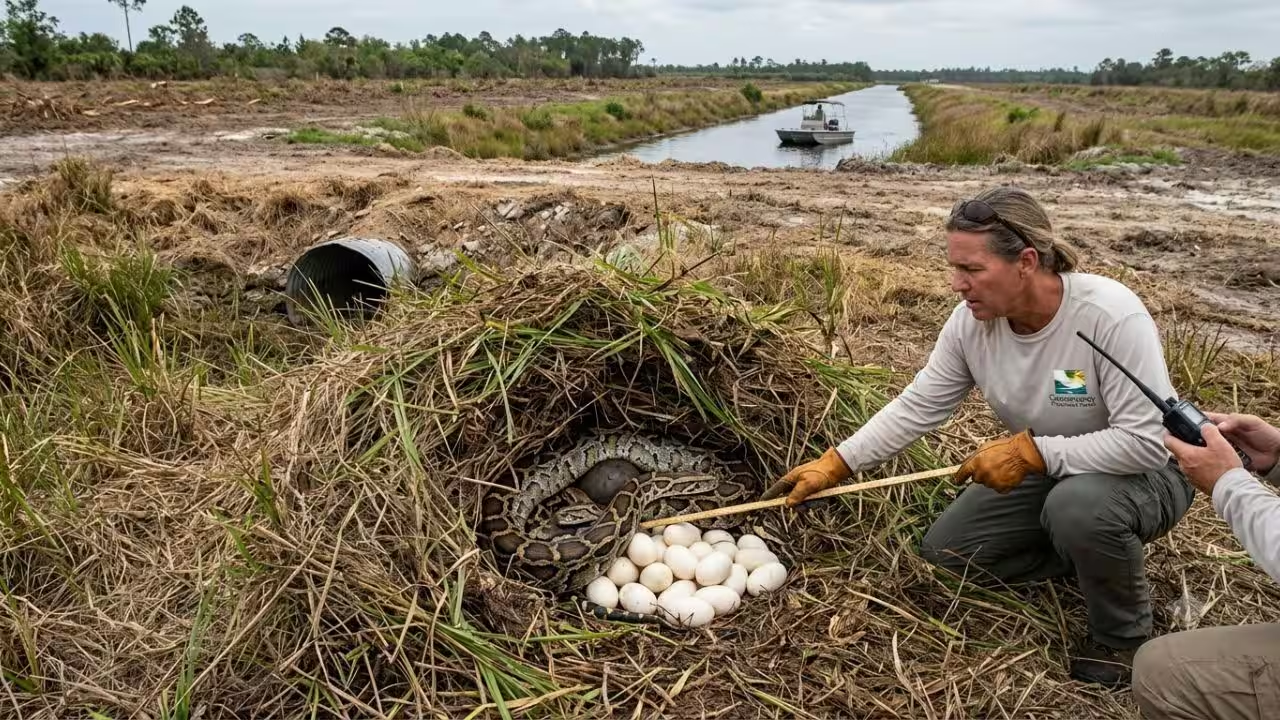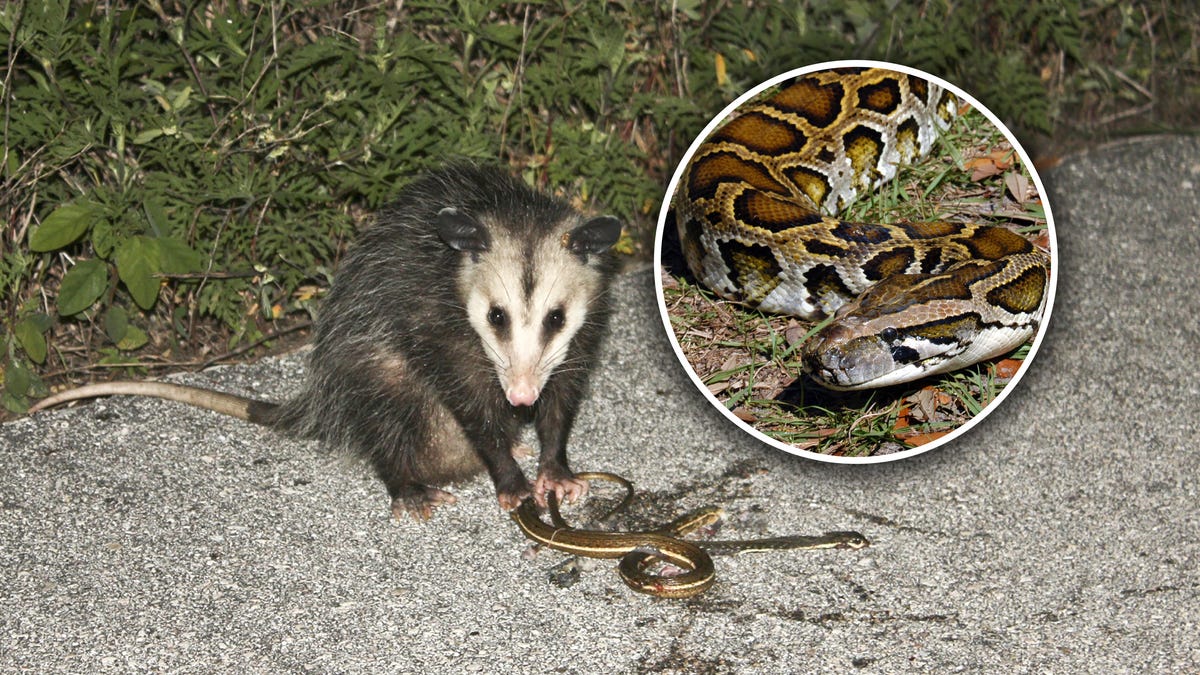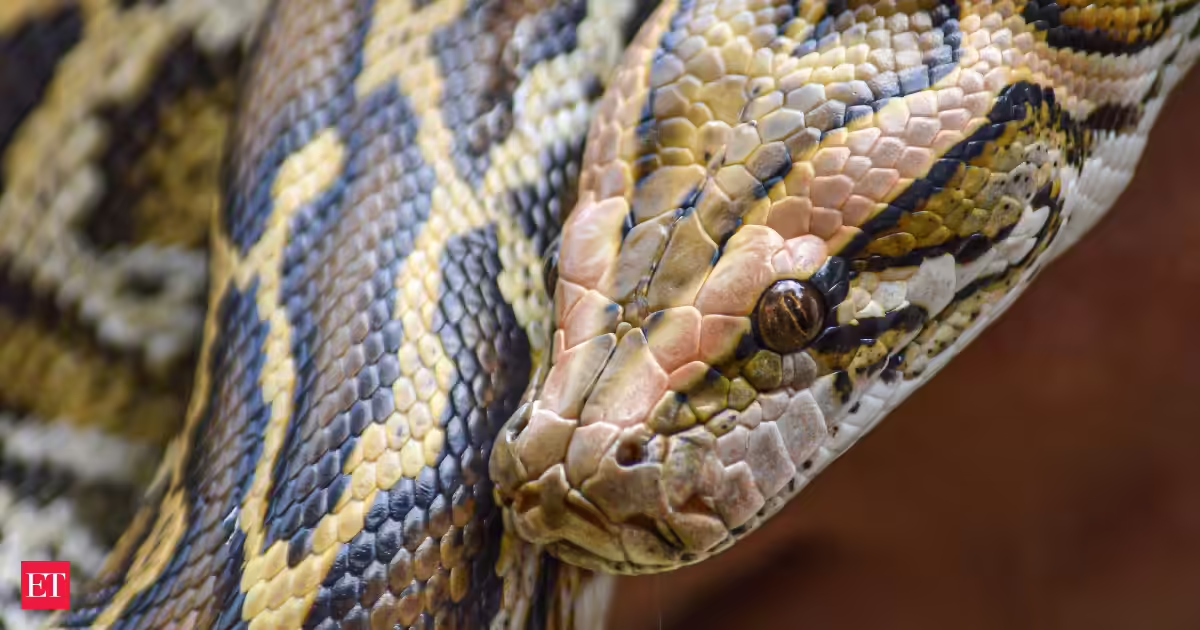
Burmese pythons aren’t supposed to be in Florida. These giant constrictors, native to Southeast Asia and capable of growing past 15 feet, ended up in the Everglades mostly because people bought them as exotic pets and then let them go into the swamp when they got too big to handle. Some pythons are also believed to have escaped during storms, including reportedly after Hurricane Andrew hit a breeding facility in 1992, according to reporting by the Florida Phoenix.In the study ‘Severe mammal declines coincide with proliferation of invasive Burmese pythons in Everglades National Park,’ published in Proceedings of the National Academy of Sciences, Dorcas and colleagues say pythons were seen only sporadically in Everglades National Park for about two decades before being formally declared an established breeding population around 2000. From there, the same study notes the number of pythons captured and removed from the park shot up, going from single digits in the mid-1990s to more than 300 a year in 2009 and 2010. The paper notes that Burmese pythons were first documented in Everglades National Park in 2000, but by 2007–2008, they were already considered firmly established in the park’s southern marshes. It also points out that the steepest mammal declines occurred in the remote southern Everglades, where pythons had been present the longest.What followed is one of the more dramatic wildlife collapses ever recorded in a US national park.What the road surveys foundPark staff tracked roadkill in Everglades National Park from 1993 to 1999, and researchers ran a systematic nighttime road survey between 1996 and 1997, before the widespread occurrence of pythons. The most common animals seen along the park roads at that time were raccoons and opossums. The contrast was staggering. The same study found that when researchers repeated the survey method from 2003 to 2011, driving a total of nearly 57,000 kilometers, raccoon sightings were down 99.3 percent. Opossum sightings went down 98.9 percent. Bobcat sightings were down 87.5 percent, and white-tailed deer sightings were down 94.1 percent. Rabbits and foxes, both common in the 1990s surveys, were not spotted even once during the later surveys.From nuisance to nearly nonexistent. Image Credits: PexelsThe authors also argue the pattern is unlikely to be driven by a park-wide disease or habitat collapse, because declines were strongest in the southern areas where pythons had been established longest. As they put it, the species that fell hardest were also the ones pythons are known to ambush along the water’s edge, making a predator-driven explanation more plausible.Those same researchers noted that raccoons were once such a common sight around park campgrounds that park staff conducted an active nuisance control program in the 1980s. The study said there have been no nuisance raccoon reports from the southern part of the park since 2005.The pattern that points to pythons, not diseaseThe most important evidence from the study is not the decline itself but where it happened. The mammal populations were still relatively healthy in the park areas where pythons had only recently arrived, and the researchers said the number of raccoon and opossum sightings at two sites north of the python’s known range were close to the historical numbers once recorded inside the Everglades. The researchers reported that the mammals hit hardest, raccoons, opossums, bobcats, deer, and rabbits, are also species that show up regularly in the stomach contents of pythons captured in the park, which argues against disease or some other single cause behind the crash.Interestingly, the same study does point out a silver lining: fewer raccoons around means fewer raccoons raiding the eggs of turtles, crocodilians, and birds, so some species may indirectly benefit even as others suffer. According to the authors, pythons in Florida have been documented eating a wide range of mammals and birds, including species of conservation concern, and the snake’s impact is most visible in the wetland’s lower food web. USGS scientists now focus on telemetry, breeding ecology, and juvenile survival to build population models that can identify the life stages most vulnerable to removal.Why does this matter beyond one parkThis is not just a Florida story. It is a real-world example of what happens when a new top predator with no evolutionary history in an ecosystem is introduced into a food web that has no built-in defenses against it. According to USGS researchers who continue to study Everglades pythons today, the snake has emerged as a dominant predator throughout the greater Everglades ecosystem and is thought to be a primary reason for the precipitous decline of mammal populations in the area, including deer.The species that simply stopped showing up. Image Credits: PexelsThe USGS page says researchers are now tracking ‘scout snakes’ year-round at two Big Cypress sites, one wet and one dry, to estimate growth, reproduction, survival, and sex ratios. They also collect eggs from breeding aggregations and fit some hatchlings with radio transmitters so they can model population growth and test which removal tactics may work best.For American readers, the bigger lesson is about the exotic pet trade itself. An animal purchased for its novelty and then released once it outgrows its tank can change an entire ecosystem, a pattern seen with lionfish along the Atlantic coast and feral hogs in the South.Where things stand todayFlorida has leaned hard into removal as its main strategy against pythons. The Florida Fish and Wildlife Conservation Commission said more than 22,000 wild Burmese pythons have been removed from Florida since 2000, including through the Florida Python Challenge, an annual 10-day contest that drew 857 contestants from 33 states and Canada in 2024 alone. State agencies also operate paid contractor programs that follow radio-tagged scout pythons that guide researchers to breeding females during mating season.Even so, nobody is calling this solved. Pythons are notoriously difficult to find in thick wetland habitat, and current estimates put Florida’s breeding population in the tens of thousands, according to the USGS. The USGS says reliable population estimates still have not been derived because pythons are so cryptic, and it is pushing longer-term tools such as genetic biocontrol alongside field removal. That helps explain why, even after years of intensive tracking and control work, the agency still describes the snake as a serious threat to ecological recovery in the Everglades.More than a decade after the original study documented the crash in mammal numbers, raccoons, rabbits, and bobcats are still far scarcer in the Everglades than they were before pythons arrived, a reminder of how a single invasive species can quietly reshape an entire ecosystem.
In the 1990s, escaped pet Burmese pythons established themselves in Florida's Everglades; by 2012, road surveys found raccoons down 99.3%, opossums 98.9%, and rabbits effectively gone
Discover how escaped Burmese pythons, originally exotic pets, have wreaked havoc on Florida's Everglades, causing dramatic declines in native mammal populations such as raccoons, opossums, and rabbits. Learn about ongoing research and efforts to combat this invasive species.
1,081 words~5 min read