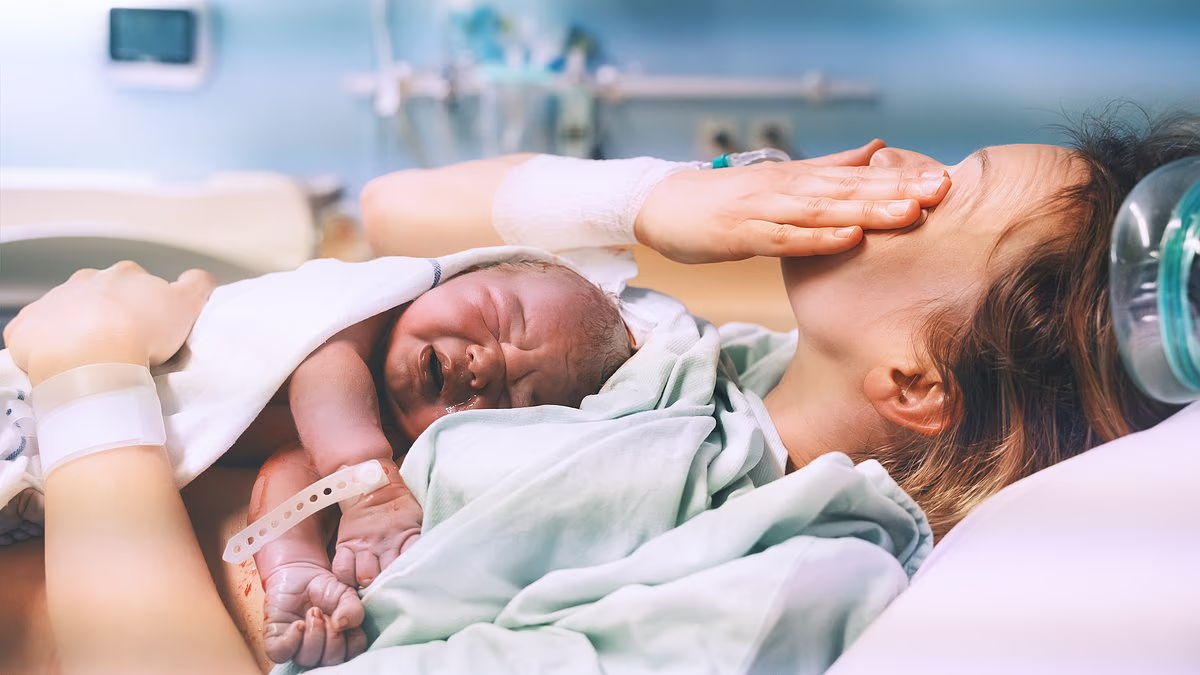
Hospitals have been ordered to open 24/7 hotlines that pregnant women can call with concerns in a bid to reduce avoidable deaths and harm.NHS England said all hospitals must operate such a service by the end of this financial year, with the phones manned by dedicated midwives who are not distracted by other work on labour wards.Women who still have anxieties after a phone consultation will be told to attend in-person, where they must be assessed within 15 minutes of arrival.The diktat - part of a new 10 Point Plan for maternity and neonatal services - comes after NHS England chief executive Sir Jim Mackey summoned health leaders and top midwives to a meeting yesterday to discuss two major maternity reviews.The damning reports highlighted serious concerns about maternity triage and potentially fatal delays when women phone for help or arrive at hospital for assessment.The National Maternity and Neonatal Investigation, chaired by Baroness Valerie Amos, this week found the NHS continues to inflict harm, ignore women and cover-up mistakes despite years of reviews, inquiries and hundreds of previous recommendations.Just days earlier, an inquiry into Nottingham University Hospitals NHS Trust, led by senior midwife Donna Ockenden, found more than 500 mothers and babies suffered avoidable harm or died due to ‘deeply embedded systemic failures’ at the ‘toxic’ hospital trust.The Amos review says maternity triage ‘has become the Accident and Emergency service for pregnancy’ and is where concerns such as reduced baby movements, abdominal pain, bleeding, headaches, sickness or signs of labour often first present. NHS England chief executive Sir Jim Mackey (pictured) summoned health leaders and top midwives to a meeting yesterday to discuss two major maternity reviews.But the investigation ‘heard repeatedly’ about the consequences of triage ‘not functioning as it should’, often because there are too few staff, a lack of experienced senior decision-makers and not enough beds and cots.This means early warning signs are missed and time-sensitive decisions not made, with ‘serious and irreversible consequences’.It calls for a national overhaul of maternity triage, such as the dedicated phone lines.Meanwhile, the Ockenden report highlights repeated concerns about telephone triage, women being discouraged from attending, delays after arrival, poor assessment, poor documentation, and delayed escalation.It says there was ‘evidence of poor telephone risk assessment throughout the continuum of the Review’, and that when women called, ‘pain was minimised or ignored, and mothers were not invited in for review.’Many women made several calls before being allowed to attend hospital and were left ‘scared and vulnerable at home’, it adds.In a letter sent to attendees after the meeting, Sir Jim urged staff to work together to urgently ‘rebuild trust and confidence’ in maternity and neonatal care.He added: ‘This must be a turning point for the NHS. Senior midwife Donna Ockenden (pictured) led the inquiry into Nottingham University Hospitals NHS Trust‘We cannot allow failures in care to persist and be followed by reviews that continuously highlight the same themes.’The letter is accompanied by the 10 Point Plan that says: ’All trusts must commit to delivering safe and effective triage, starting by completing a board-level audit within 3 months, with a focus on ensuring that maternity triage services are consistently safe, responsive and appropriately resourced.‘This will be supported by new NHS England guidance, which will be published this week.‘This includes having dedicated midwifery staffing to answer calls and provide face-to-face assessments, separate from other services such as the labour ward.‘Services should also have enough clinical, antenatal and bed capacity, with clear escalation routes in place at all times, including overnight and at weekends.’Other elements of the 10 Point Plan include giving families the right to a second opinion if they believe their clinicians are not taking their concerns seriously, improved patient experience surveys and a review of how trusts respond to failings.The Ockenden report gives one example where a mother rang the hospital three times after her waters broke and she was experiencing continuous pain.The family said their concerns were dismissed, she was told to ‘calm down’ and take paracetamol, as it would ‘probably be another 24 hours before the baby was born’. Baroness Valerie Amos (pictured) chaired the National Maternity and Neonatal InvestigationWhen she said she was coming in she was discouraged from doing so.On arrival she was put in a waiting room while a bed was found and when she was finally examined she was nearly fully dilated and the fetal heartbeat was slow.The baby was later born in poor condition via emergency c-section and sustained a serious brain injury resulting from a lack of blood and oxygen.It gives another example where a ‘high risk’ mother phoned maternity triage twice and was told she was not in labour because she could hold an 18-minute conversation.When she came in, the report records delay in escalation to an obstetrician; the baby was born in poor condition and later suffered seizures, although the cause was uncertain.The report stresses: ‘A woman calling a maternity hospital at any point in labour and requesting to attend should be welcomed in for care, emotional support, assessment of their wellbeing, and fetal surveillance.’Kate Brintworth, chief midwifery officer for England, said: ‘Too many women, babies and families have been harmed, bereaved or badly let down by maternity care, and too often women and families who raised concerns were not listened to.‘That must change – starting by giving every pregnant woman and new parent in England the comfort of knowing they will always have a midwife on the end of a call to answer their concerns if they are experiencing an emergency.‘This modernises maternity services so that pregnant women and parents who urgently need expert advice will no longer be left waiting for a call back or directed to a maternity unit voicemail – instead, they will get specialist advice straight away, helping them get the right care more quickly.‘I also know midwives need the time and space to carry out thorough risk assessments. By creating dedicated teams away from busy labour wards, we can support staff to make faster, safer decisions and deliver better care for mothers and their babies.’
Hospitals to open 24/7 pregnancy hotlines to reduce harm and deaths
NHS England said all hospitals must operate such a service by the end of this financial year, with the phones manned by dedicated midwives who are not distracted by other work on labour wards.
1,007 words~5 min read