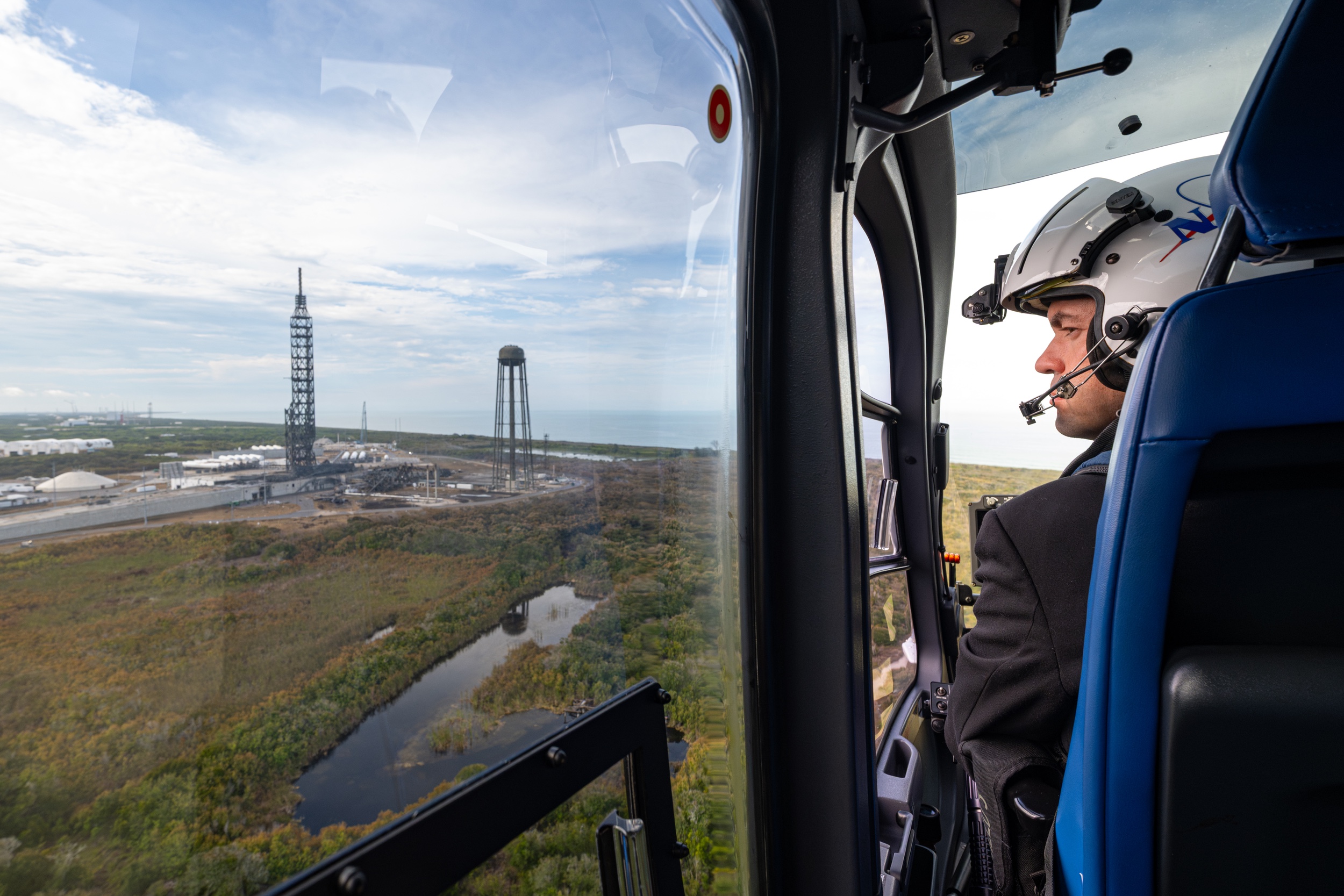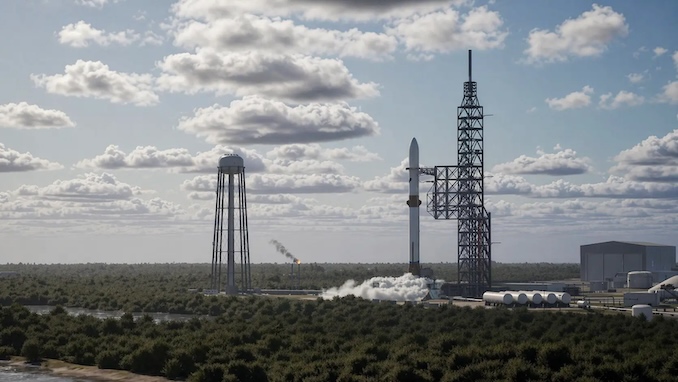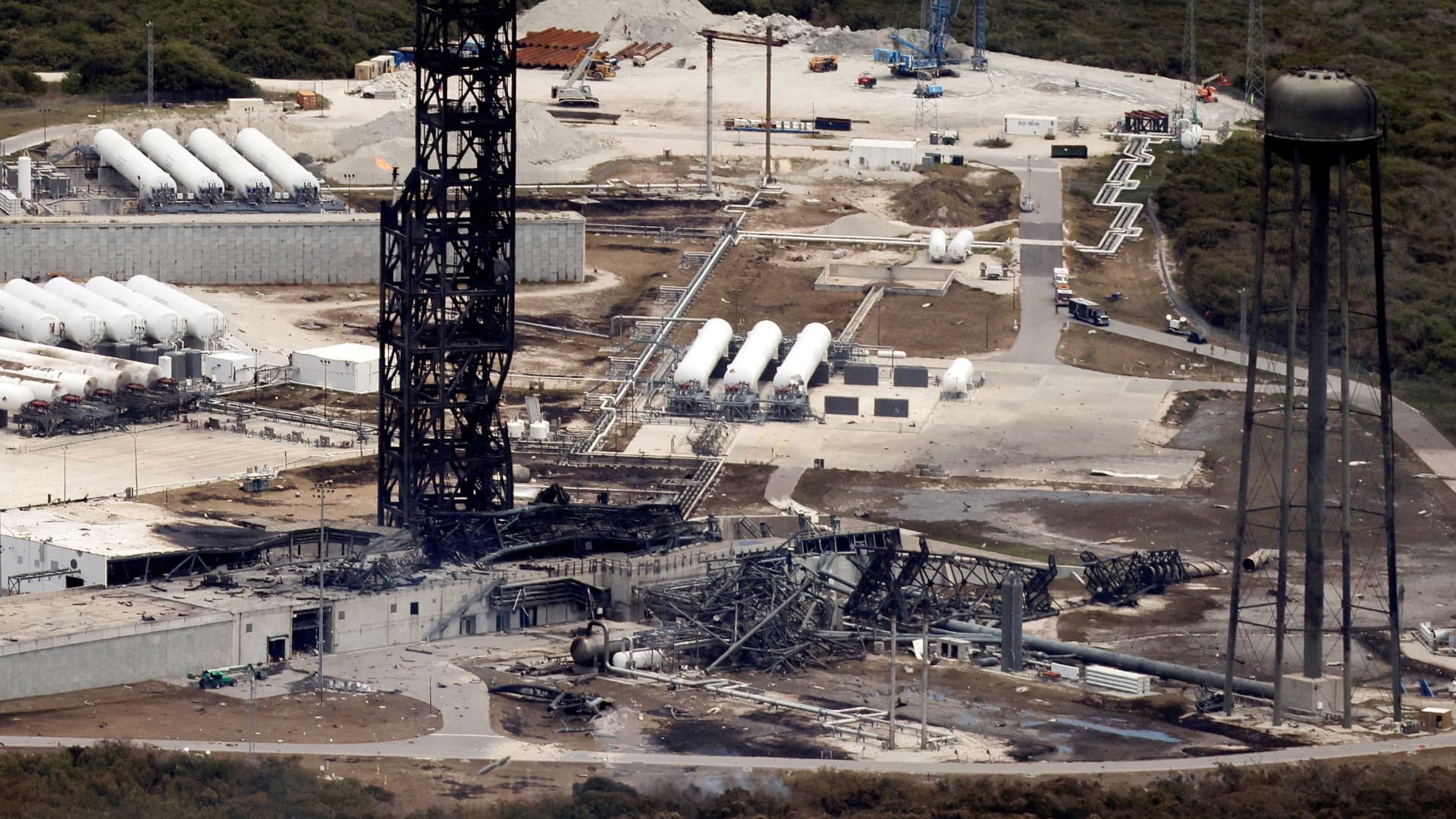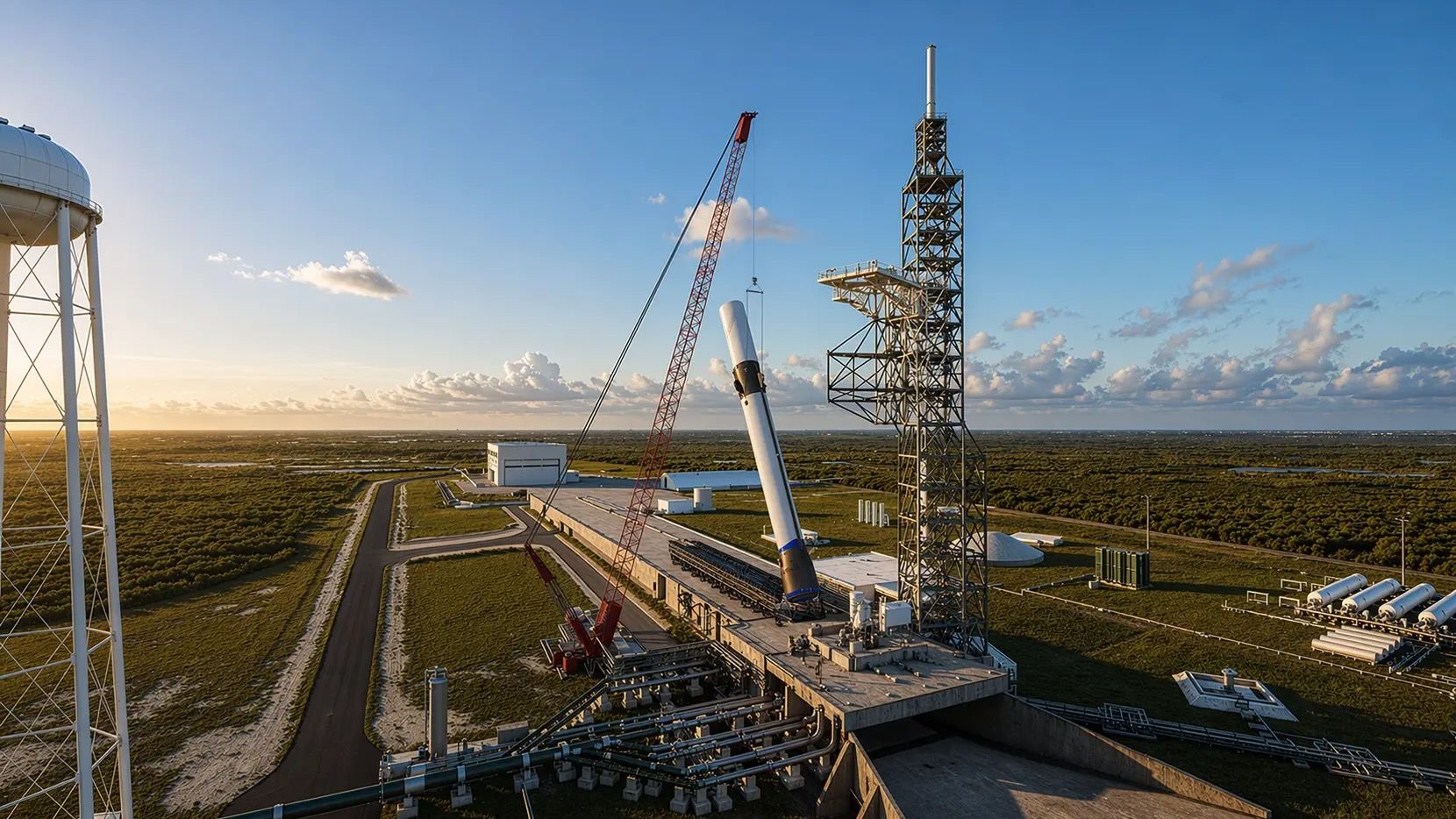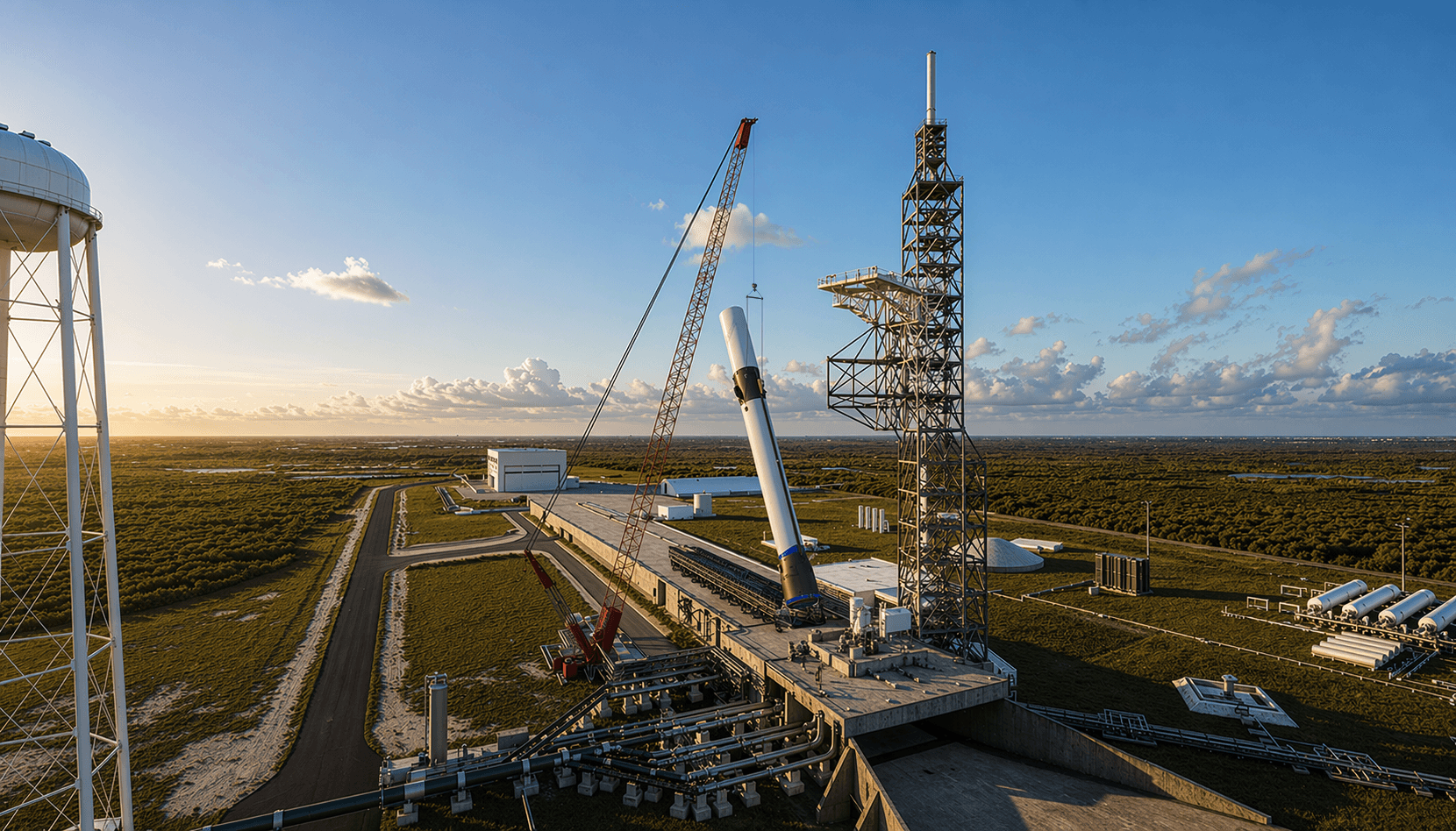
As part of Blue Origin's revised launch pad operations, New Glenn will be rolled out to the pad and then lifted into place with a crane. The rocket's payload will be installed after the vehicle is on the pad. Credit: Blue Origin
WASHINGTON — A month after a devastating pad explosion, Blue Origin reiterated its plans to return its New Glenn vehicle to flight from a rebuilt launch pad by the end of the year.
In a June 30 update, the company outlined the alternative approach, called a concept of operations, or CONOPS, it intends to use to transport the launch vehicle to the pad, replacing the transporter/erector destroyed in the May 28 explosion. That transporter/erector rolled the complete rocket out horizontally to the pad, raising it to the vertical position for launch.
“To return to flight this year, we’re not rebuilding the same pad. We’re going straight to a horizontal/vertical hybrid CONOPS we had already been developing for our 9×4 New Glenn launch vehicle,” wrote Dave Limp, Blue Origin’s chief executive, referring to the planned upgrade of New Glenn, “using existing infrastructure, skipping a new transporter-erector and creating a common CONOPS across two pads.”
The new approach involves transporting the vehicle, without the payload attached, horizontally from an integration facility to the pad. A crane raises the rocket to the vertical position and installs it on the pad. The payload is then rolled out and attached to the top of the rocket using the same crane.