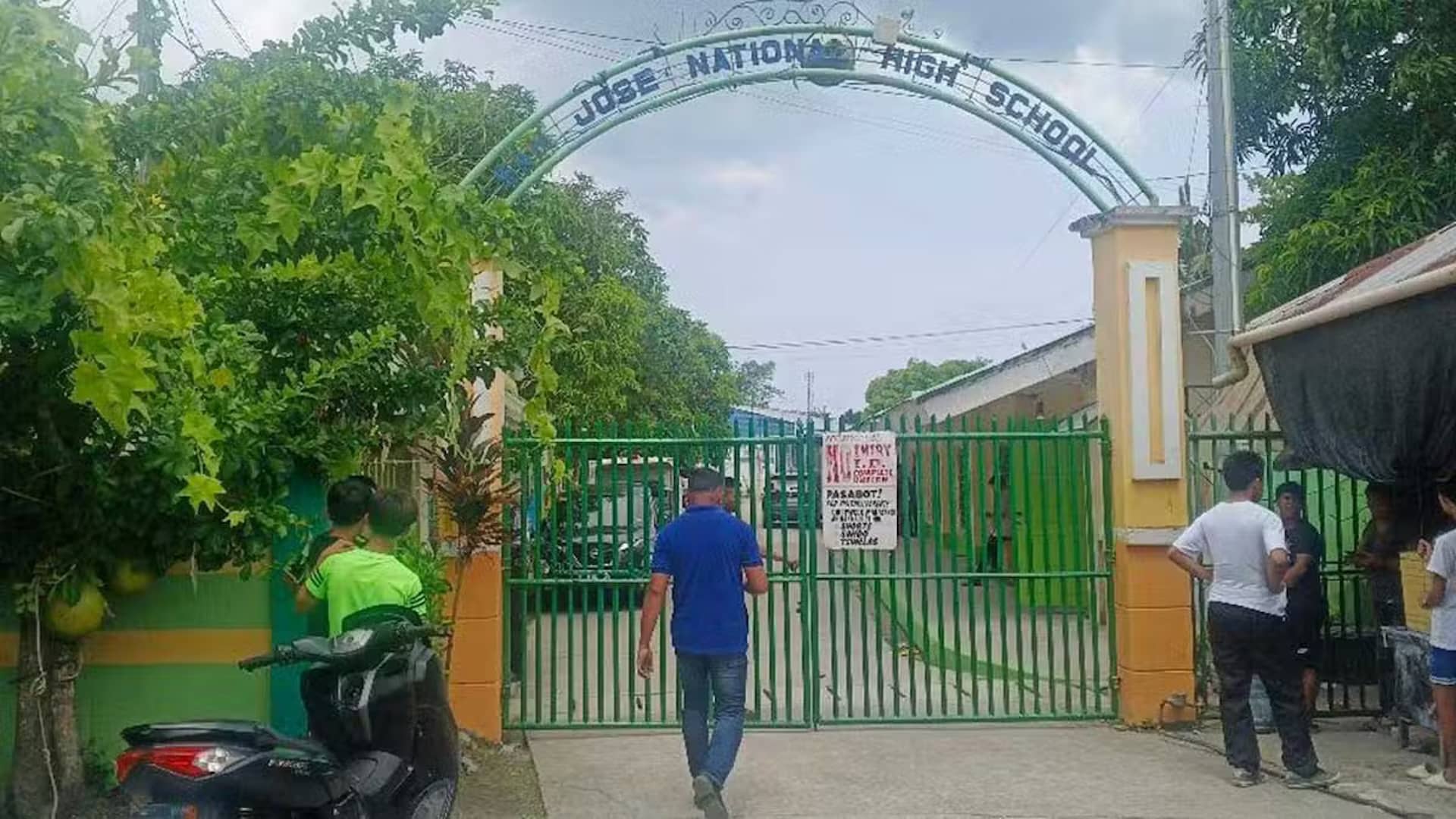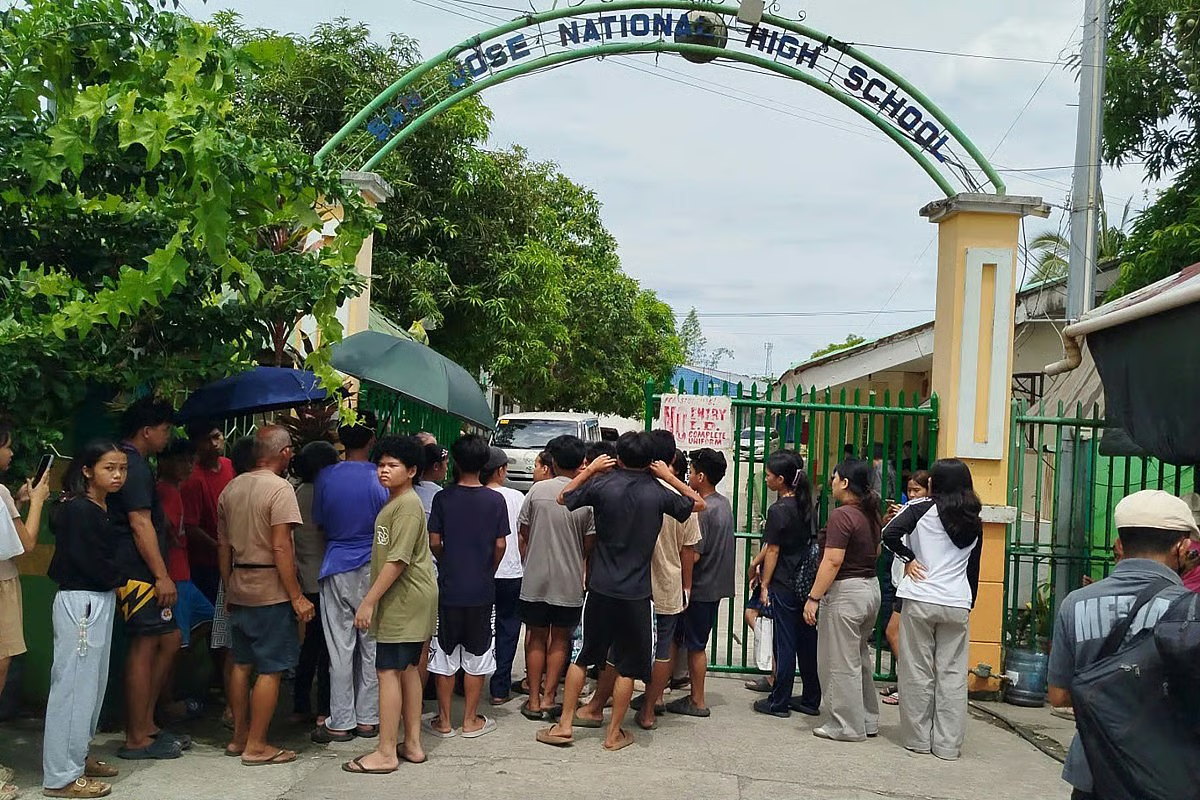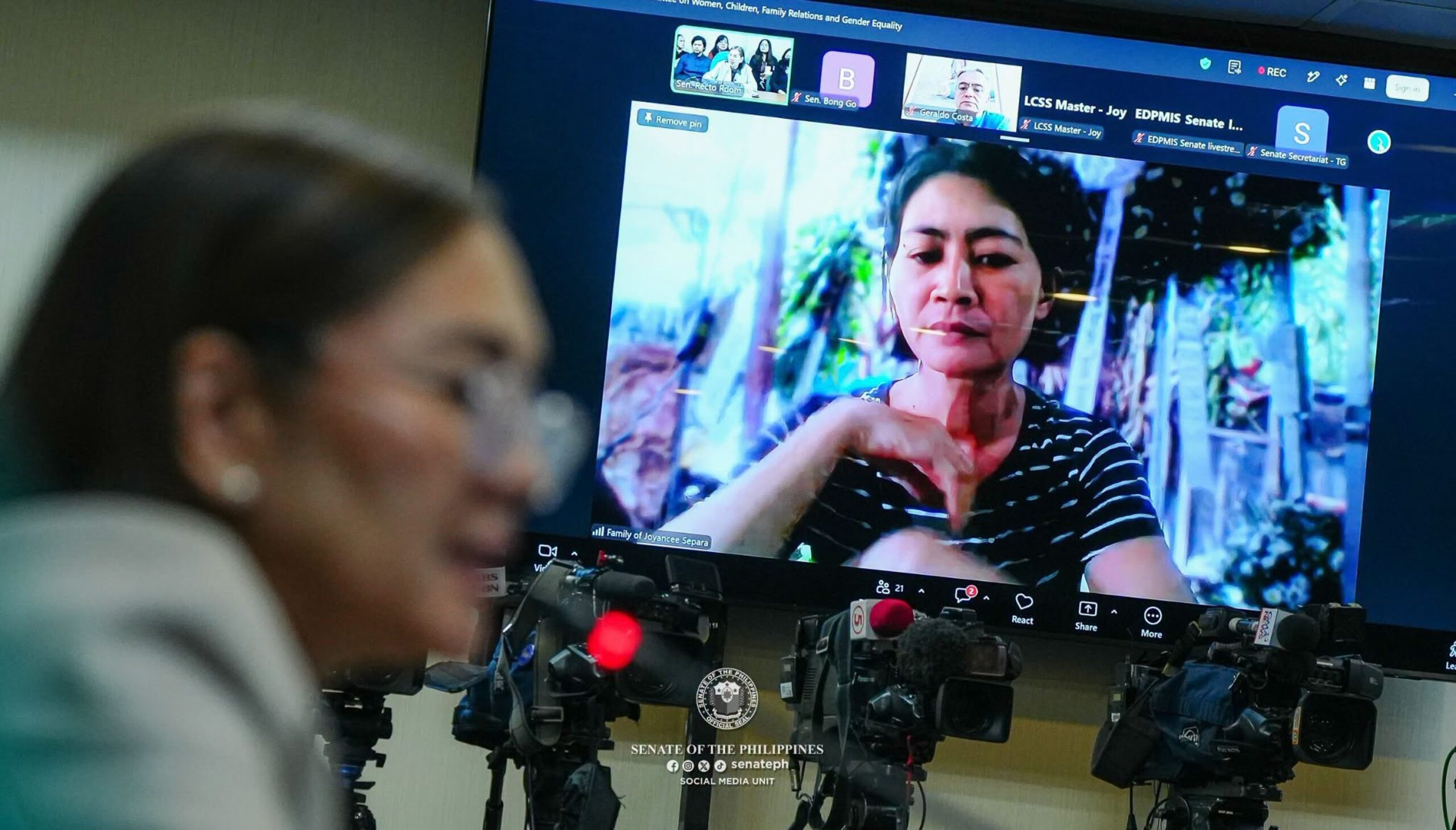
MANILA, Philippines – A Senate hearing on Tuesday, July 1 examined how online extremist networks recruit vulnerable young people following the fatal Tacloban school shooting, with experts describing a multi-stage grooming process that extends far beyond violent video games and into encrypted messaging platforms and online communities.
Senator Risa Hontiveros named a group called “764” that has links to grooming, leading to at-risk children committing violent crimes or being lured to sextortion schemes. It has been designated by the US Federal Bureau of Investigation as a “national security threat,” and a “terrorist group” by Canada. In the Philippines, it potentially could be one of the groups that influenced the school shooting in Tacloban.
This was the first time that the government or authorities identified a specific group to online grooming tied to nihilistic violent extremism (NVE), a loose online ecosystem that authorities say exploits children through psychological manipulation before encouraging acts of violence — an ecosystem that includes 764.
During the hearing, lawmakers heard testimony from psychologists, law enforcement officials, cybersecurity experts, and open-source intelligence researchers, and also explored possible legislative responses, including stronger age regulations for games, improved platform accountability, and broader measures targeting online grooming rather than violent content alone.