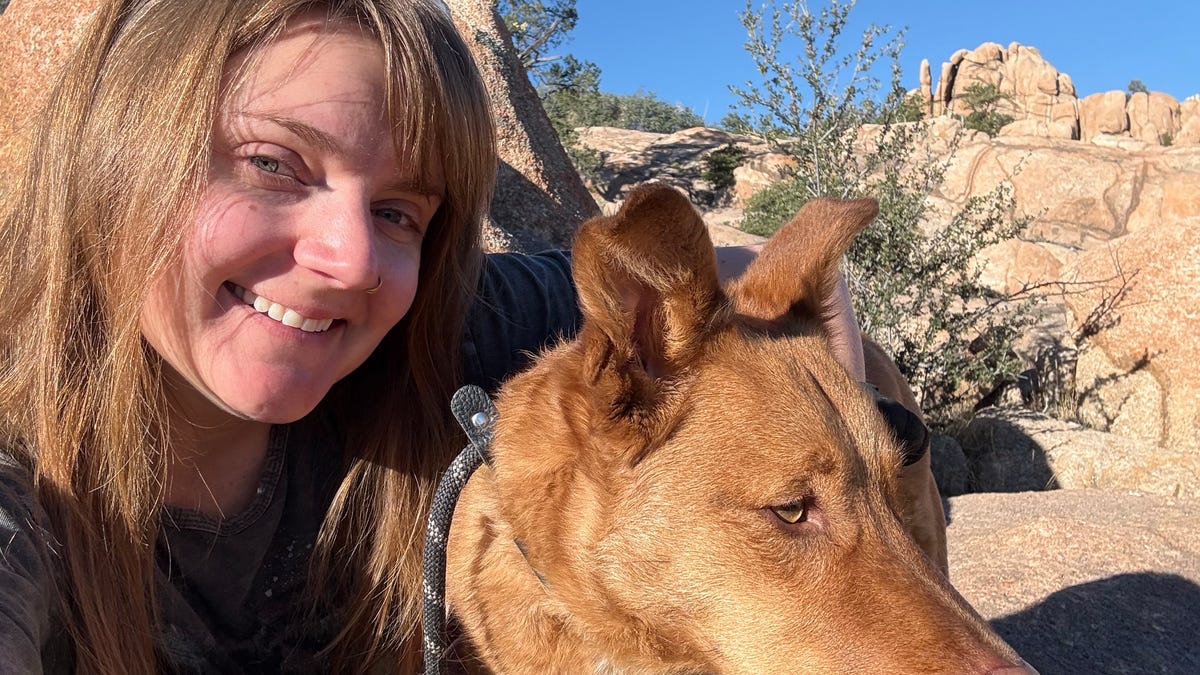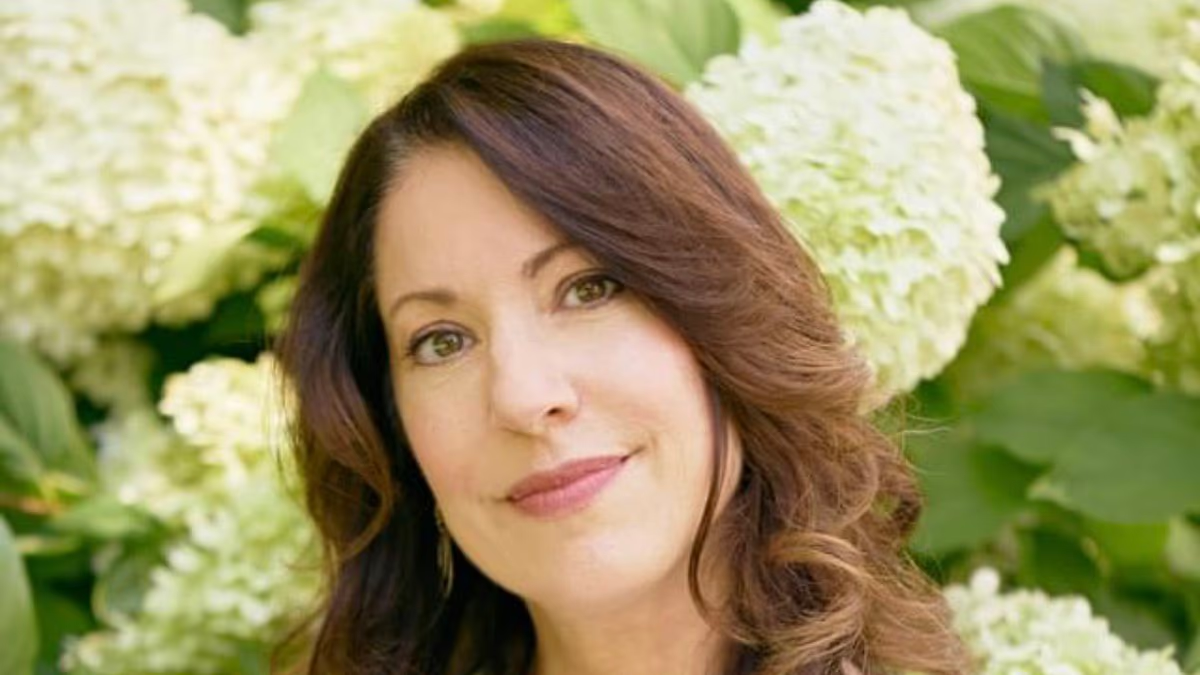
When Dr Ann Saffi Biasetti gave birth to twin boys after years of struggling with infertility, she expected exhaustion, sleepless nights and the chaos that comes with caring for two newborns at once. What she did not expect was that within months she would be desperately trying to convince doctors that something was seriously wrong while being repeatedly told she was simply 'anxious'.Today, the now-58-year-old psychotherapist and embodiment specialist from Saratoga Springs, New York, helps people rebuild trust in their bodies. But nearly three decades ago, she found herself losing faith in her own.As alarming symptoms mounted, doctors attributed her concerns to stress, while family members reminded her that she had twins and life was bound to be difficult.By the time someone finally listened, Ann's body was in crisis. Her heart raced constantly, her hands shook so badly she struggled to brush her hair, she was rapidly losing weight and even climbing a flight of stairs left her breathless. The diagnosis that followed explained everything – but by then the treatment would force her to spend more than a week away from the babies she had fought so hard to have.'Everyone thought it was motherhood'Ann's twin boys, now 28, were her first children. Although the pregnancy had its challenges, she considered herself fortunate when the boys arrived safely and came home after a brief stay in neonatal intensive care. Dr Ann Saffi Biasetti gave birth to twin boys, who are now aged 28, after years of fertility struggles At first, she assumed the exhaustion she felt afterwards was simply part of adjusting to life with newborns - but within months she began experiencing troubling symptomsLike many new mothers, she assumed the exhaustion she felt afterwards was simply part of adjusting to life with newborns.But within months she began experiencing troubling symptoms. Her heart raced unexpectedly, her hands trembled, she developed severe gastrointestinal problems and she continued losing weight, despite eating constantly.At four months postpartum, she returned to her obstetrician, convinced something was wrong. Instead, she says, she was told she was experiencing anxiety and stress associated with becoming a mother.The response left her frustrated, but she tried to trust the professionals around her. After all, she was a first-time mother caring for twin babies. Surely if something serious was happening, somebody would recognise it.The problem was that her symptoms kept getting worse.As the months passed, every conversation seemed to end in the same place. She had twins. She wasn't sleeping. Life was hard. Even her husband believed much of what she was experiencing could be explained by the demands of caring for two infants.'He would say, "You have twin babies. Life is difficult,"' Ann tells the Daily Mail.On paper, the explanation made sense. But deep down, she knew something wasn't adding up. As a clinician, she understood anxiety and had experienced panic attacks in her younger years. What frightened her was that this felt entirely different.Ann was diagnosed with Graves' disease, an autoimmune condition that causes the thyroid gland to become dangerously overactive - but that was far from the end of her nightmareStill, after months of hearing the same message from doctors and loved ones, she started questioning herself. 'There were moments where I genuinely wondered if maybe everyone else was right,' she says.'When enough people tell you that nothing is wrong, you start questioning your own reality.'The night everything changedBy the time her sons celebrated their first birthday, Ann felt like she was barely holding herself together.Exhausted and increasingly frightened, she still had no answers.The turning point came after the twins' birthday party. Lying in bed that night, she became acutely aware of her heart pounding so loudly she could hear it in her ears.For months she had listened to doctors, listened to family members and repeatedly second-guessed herself. But as she lay there in the dark, she felt a certainty she had not felt before.'I knew with complete clarity that this was not anxiety,' she says. 'This was not new-mother stress. This was something else.'The next morning, she insisted on further testing.The results finally revealed the truth. Ann was diagnosed with Graves' disease, an autoimmune condition that causes the thyroid gland to become dangerously overactive.After spending more than a year being told she was anxious and overwhelmed by motherhood, she finally had proof that something serious had been happening inside her body all along.'It was validating because I finally knew I wasn't imagining it,' she says.'But I couldn't stop thinking about how long I had spent trying to convince people something was wrong.'The treatment that took her away from her babiesBecause her disease was so advanced, doctors recommended radioactive iodine treatment to destroy the malfunctioning thyroid tissue.What Ann had not anticipated was what that treatment would mean.Following the procedure, she would be radioactive for a period of time and unable to have close contact with her children. Family members stepped in to help care for the twins while she isolated herself away from them.'There I was sitting in a room by myself crying my eyes out,' she recalls. 'I couldn't hold my babies. I couldn't be with them.'The separation lasted little more than a week, but for Ann it felt far longer. Looking back, it remains one of the most painful parts of the entire experience.'I felt like so much had been stolen from me,' she says.'When I think about those early years with my boys, I have a lot of grief. I was there physically, but so much of my energy was spent just trying to survive.''She's a crazy one'Receiving a diagnosis did not end her struggles.After her original endocrinologist stopped practising, Ann sought help from another specialist. During one appointment, she challenged his treatment plan and tried to explain why she believed her medication was not working.As he left the room with a medical resident, she overheard him say something she still remembers decades later.'She's a crazy one.'The words devastated her.'I just started crying,' she says. 'I couldn't believe that's what he thought of me.'When the resident returned, Ann told her she had heard the comment. The young doctor apologised immediately and assured her she believed what Ann was saying. She later became instrumental in helping stabilise her condition.The experience left a lasting scar. Being repeatedly dismissed by medical professionals had slowly chipped away at her confidence.'There were times when I genuinely wondered if I was losing my mind,' she says.Learning to trust herself againYears later, Ann faced another autoimmune diagnosis when she developed severe joint pain, fatigue, inflammation and Raynaud's disease, which caused her fingers and toes to become painfully sensitive to the cold.After once again being told there was nothing seriously wrong, further testing eventually revealed mixed connective tissue disease (MCTD), a rare autoimmune condition that can affect connective tissue throughout the body.The diagnosis was frightening. Unlike Graves' disease, there was no single gland to remove or treat. Connective tissue exists throughout the body, meaning the condition had the potential to affect multiple systems and organs over time. 'I stopped asking, "Why is my body doing this to me?" and started asking, "What is my body trying to tell me?"' Ann says. That became the foundation of her new book What is Graves' disease? Graves' disease is an autoimmune condition that causes the thyroid gland to become overactive, producing excessive amounts of thyroid hormone. The condition can affect almost every system in the body and is more common in women than men.Common symptoms include:• Rapid or irregular heartbeat• Anxiety, nervousness or irritability• Unexplained weight loss• Tremors or shaking hands• Difficulty sleeping• Fatigue and muscle weakness• Increased sweating and heat sensitivity• Enlarged thyroid gland (goitre)• Bulging eyes, known as Graves' ophthalmopathyAccording to health experts, symptoms can sometimes be mistaken for stress, anxiety or hormonal changes, particularly during major life transitions such as pregnancy and the postpartum period. Treatment options may include medication, radioactive iodine therapy or surgery, depending on the severity of the condition. The experience reinforced a lesson she had already learned. Her body had been trying to communicate with her all along.At first, she felt betrayed. She had spent years practising yoga, prioritising her health and doing everything she believed she was supposed to do. Receiving not one but two autoimmune diagnoses felt deeply unfair. But over time, she stopped viewing her body as something that had betrayed her.'I realised my body didn't want this either,' she says. 'My poor body wasn't trying to hurt me. It was suffering too.''I stopped asking, "Why is my body doing this to me?" and started asking, "What is my body trying to tell me?"' she says.That shift eventually became the foundation of what she now calls body forgiveness, the idea that healing begins when we stop treating our bodies as enemies and start recognising that they are doing their best to protect us, even when they are struggling themselves.That insight became the foundation of her forthcoming book, Your Body Never Meant You Any Harm, available now to pre-order.Ann now works with people recovering from eating disorders, trauma and body image struggles, and has spent decades teaching women how to reconnect with their bodies through somatic therapy. Much of that work, she says, was shaped by her own experience of illness, self-doubt and learning to trust herself when nobody else did.Today, nearly three decades after first becoming ill, Ann still carries the lessons of that difficult period with her.If she could offer one piece of advice to women who feel their symptoms are being dismissed, it would be to trust themselves and keep asking questions.'No one else was going to be my body's protector but me,' she says. 'If you know something isn't right, keep asking questions until someone listens.'The woman who once lay awake listening to her heart pound in her ears now understands that her body was never betraying her. It was trying, in the only way it could, to be heard.
'New mum anxiety' was actually a silent autoimmune condition
For months, doctors insisted it was 'new mum anxiety'. The truth was a life-threatening autoimmune disease that would tear her away from her babies.
1,648 words~7 min read