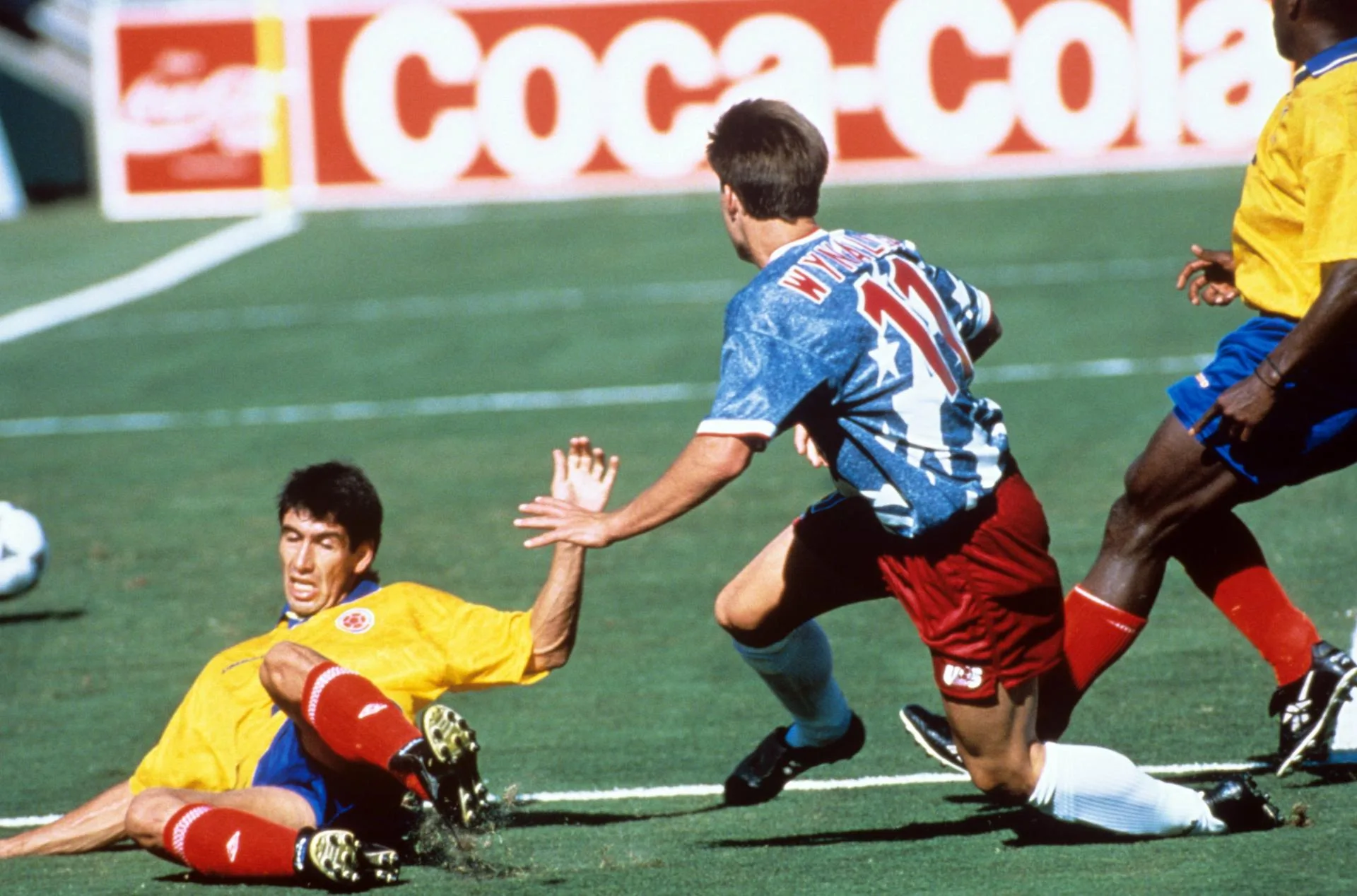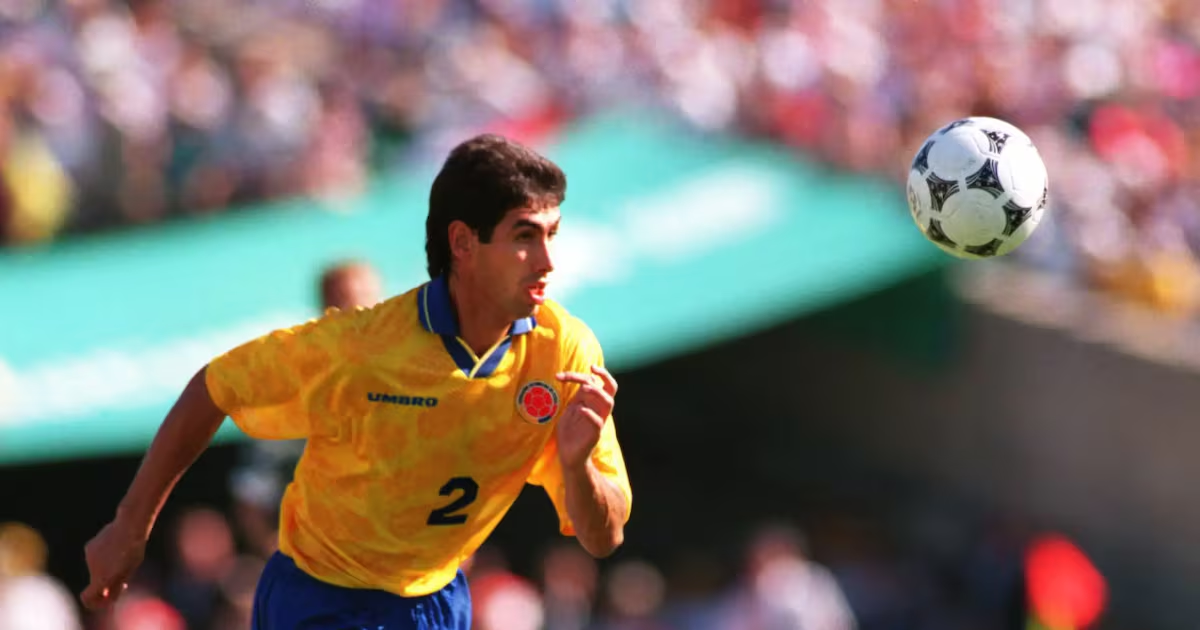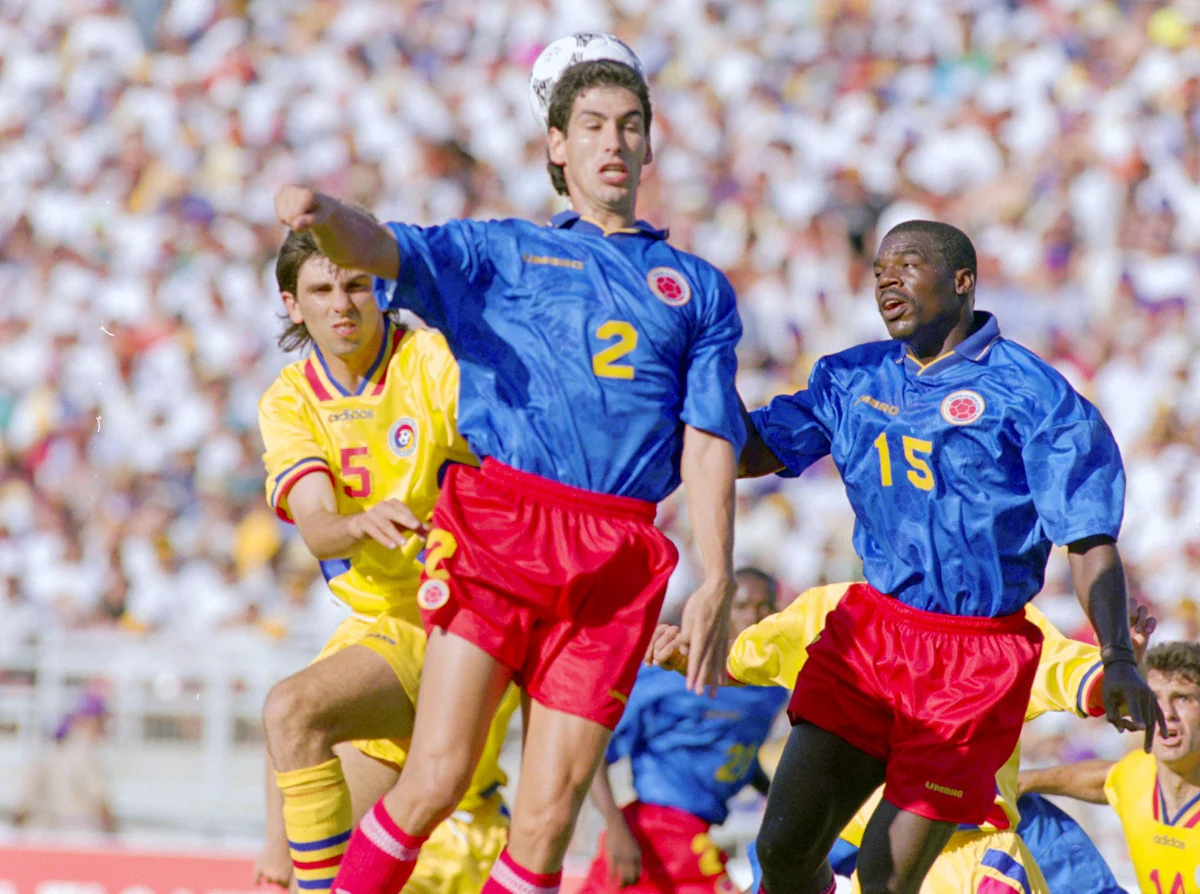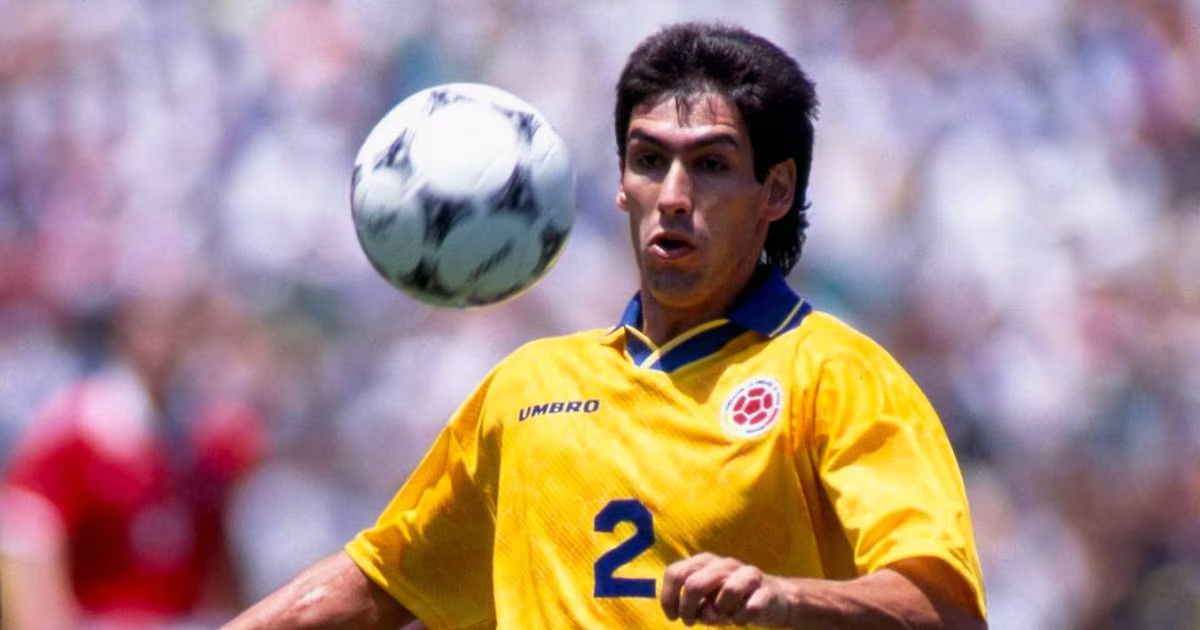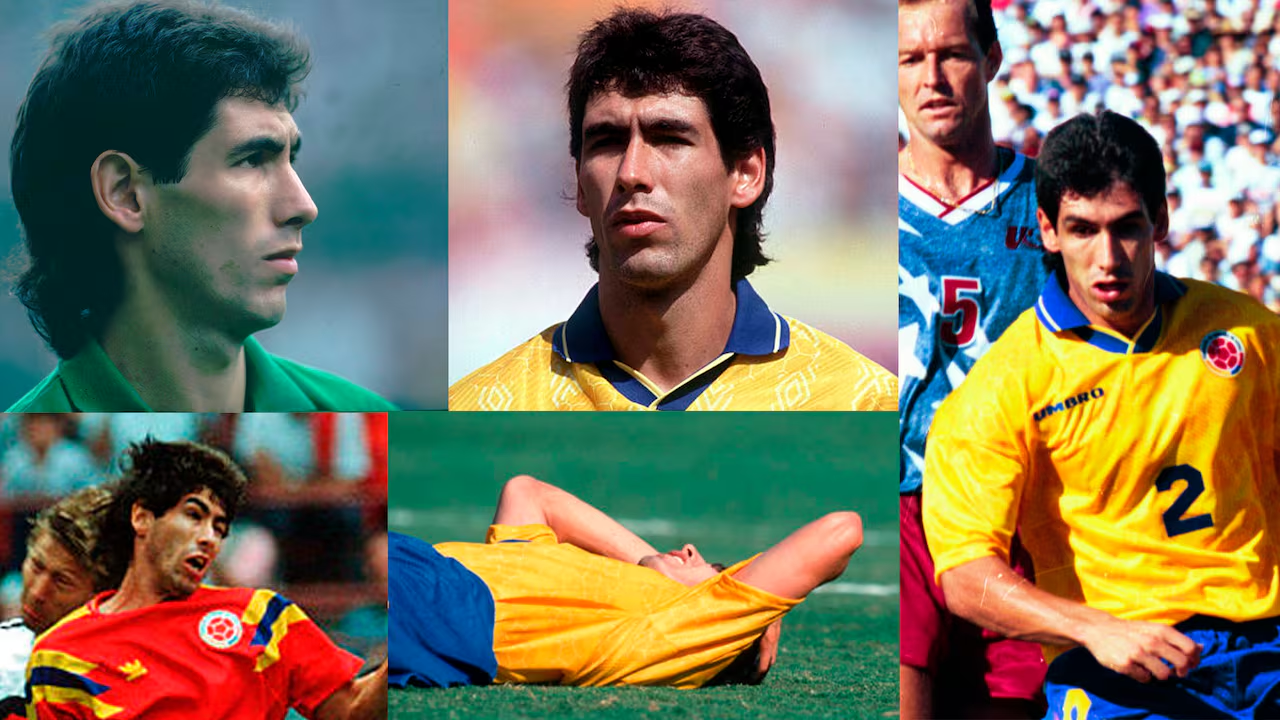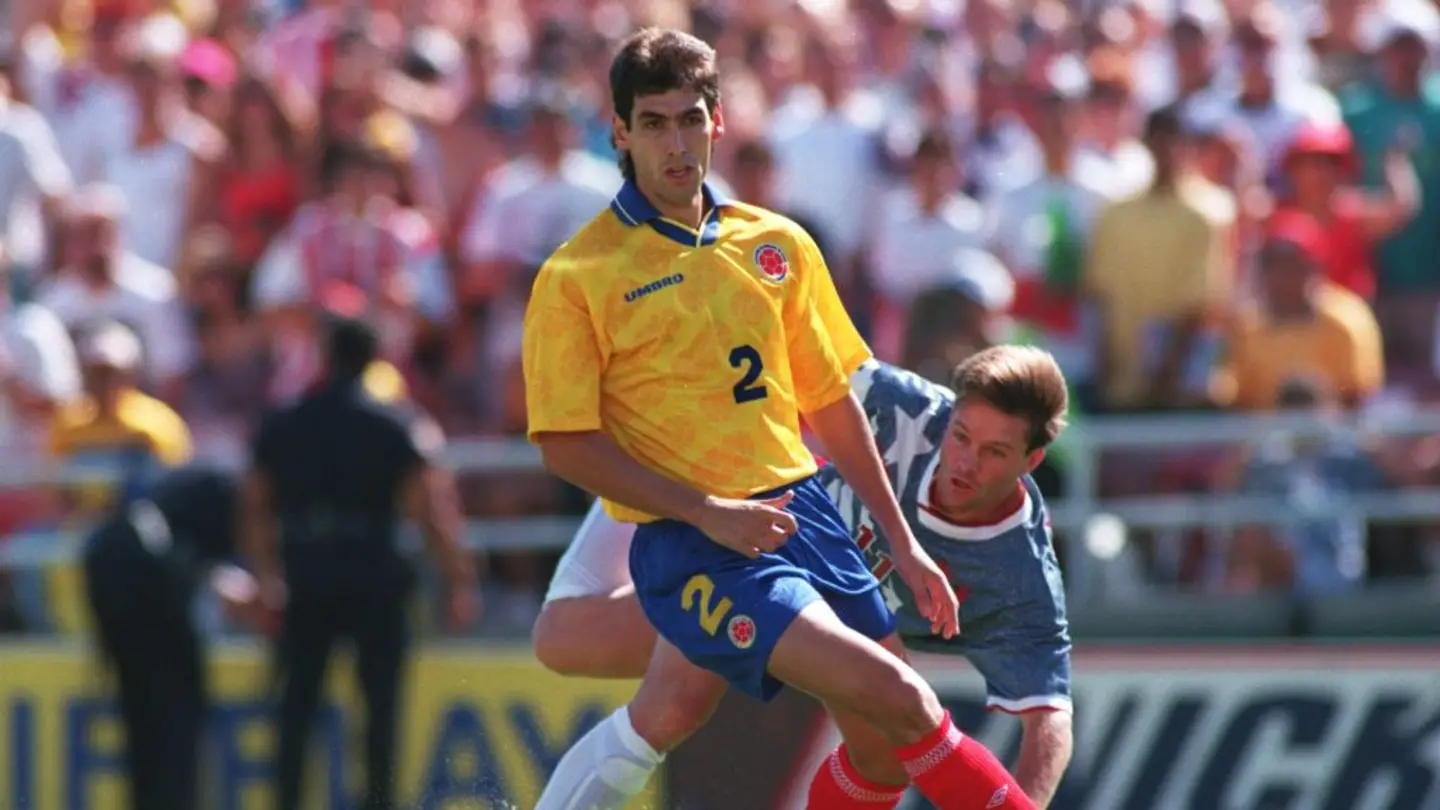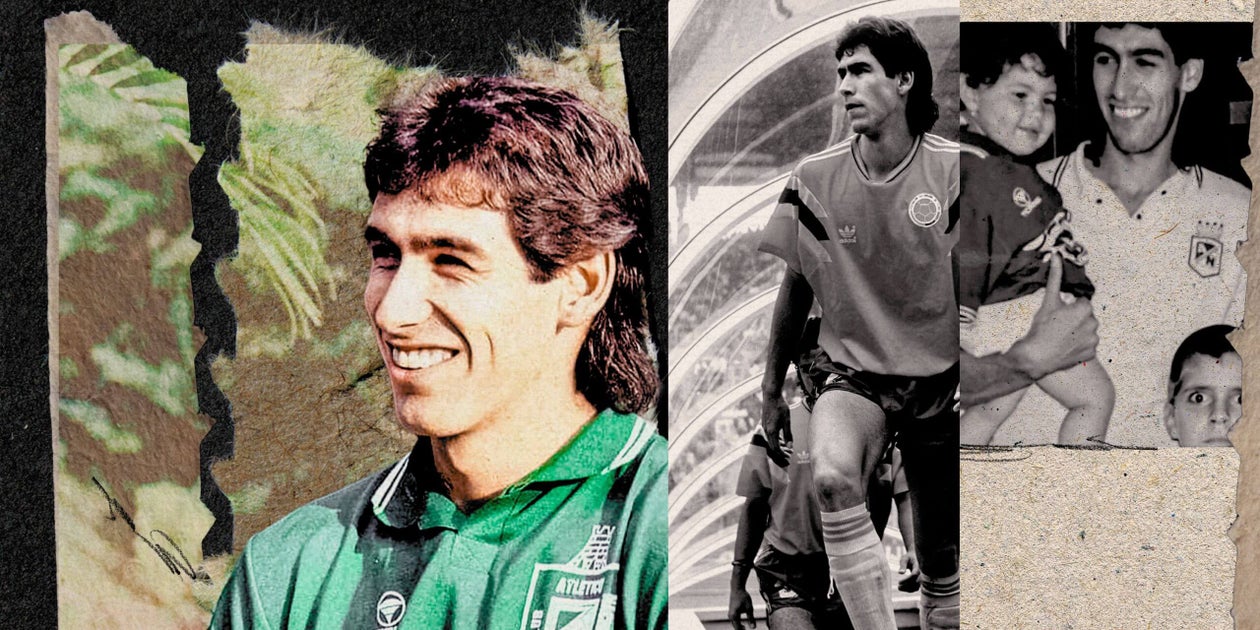
The sound of a ringing telephone startled Santiago Escobar. It was July 2, 1994 at 2 a.m. in Las Vegas, Nevada, where Santiago, the older brother of Colombia national team defender Andrés Escobar, was on vacation with a sizable contingent of immediate family.The Escobars had planned to tour the United States while they followed Andrés and World Cup favorites Colombia deep into the knockout round of the tournament. When Colombia were eliminated in the group stage, their summer family plans changed on a whim.Santiago, an accomplished midfielder who had recently retired after a 13-year professional career, was joined in Las Vegas by his father Dario, along with several siblings and extended family.Andrés was supposed to be there, too, but instead traveled back to his hometown of Medellín, despite Santiago’s insistence he stay with his family. Pamela Cascardo, Andrés’ then-fiancée, was finishing dental school in Medellín, which was a factor in his decision to return.After starting every game for Colombia at the 1990 World Cup, in which Colombia advanced from the group stage for the first time, a transfer to European football became a real possibility.Before the 1994 World Cup, European champions Milan targeted Andrés as a potential successor to their legendary center back Franco Baresi. The Italian is considered one of football’s greatest-ever defenders. But the World Cup that followed was a forgettable tournament for Colombia.Andrés scored an own goal against the U.S. on June 22 in Colombia’s second game that contributed to an embarrassing 2-1 loss. The result came after a 3-1 defeat to Romania.“It was really hard for us as a family,” Santiago tells The Athletic from his home in Medellín, “because we were there in the stadium, and it was just so painful to see Andrés on the ground like that, holding his head.”Andrés Escobar reacts after his own goal against the United States. Michael Kunkel / Bongarts / Getty ImagesThe own goal did more than dash Colombia’s hopes at the World Cup. Because of the magnitude of the occasion, Andrés felt his expected move to Italy’s top side would fall through. Immediately after the loss, Andrés spoke to Santiago at Colombia’s team hotel.“He wanted to have a great World Cup because he was going to be Franco Baresi’s replacement at Milan,” Santiago says. “When he scored that own goal, he said to me: ‘Never in my life had I scored an own goal and I had to go and do it in the middle of a World Cup’. That destroyed him. He was devastated.”“I told him: ‘Forget about that. Milan have been watching you for a year or two now. They don’t sign you based on one or two games’. And Andrés said to me: ‘They’re not going to sign me anymore’.”Santiago and the Escobar family were at the Rose Bowl that June day. It was a must-win game for Colombia. Yet no one outside the team’s camp knew about the added stress that the Colombian players were under.Midfielder Gabriel Gómez and head coach Francisco Maturana had received death threats hours before the match. Those threats then appeared on the television sets inside the hotel room of every member of the squad. And a day before, the older brother of starting right-back Luis Herrera was killed in a car accident in Colombia.The country had spent the last decade grappling with a war between the state and the myriad narco-terrorist cartels. The most powerful and violent group was led by Pablo Escobar, leader of the Medellín Cartel. The drug lord had wreaked havoc across Colombia via calculated political assassinations, international drug trafficking and kidnappings and extortion. And, despite Pablo Escobar’s death in December of 1993 — killed by a specialized unit of the Colombian police — the national team, a symbol of hope, could not escape the darkness he inflicted.“Before and after the game against the United States, Andrés didn’t say anything to me about those things,” Santiago says regarding the threats.A 2-0 win against Switzerland to close out their World Cup ended what was supposed to be a historic tournament. Call it intuition or a gut feeling, but Santiago felt it was best to avoid, albeit temporarily, the public and media scrutiny that was awaiting the Colombian players back home.No one could have foretold the tragedy that followed.“I told Andrés, ‘Don’t go back to Colombia’,” Santiago says. “Stay here with all of us and have Pamela meet you here. And he told me, ‘No, I have to go to Colombia to face things head-on and tell Pamela that we should travel together’. He never imagined they were going to do something like that to him.”The phone call at 2 a.m. was the beginning of what Santiago describes as the worst day of his life. Gómez was part of a small inner circle who knew the Escobars were in Las Vegas. He contacted their hotel.“He told us: ‘They killed Andrés’,” says Santiago. “As you can imagine, it was chaos.”Santiago and his family, in a state of shock, boarded a flight from Las Vegas to Houston at 6 a.m. From there, they took another flight to Miami and then another to Medellín, as misinformation regarding the motive behind the murder spread throughout Colombia and the world. It was an agonizing journey back to the scene of an unimaginable crime.“Those images in Las Vegas have never left me,” Santiago says. “It was the hardest moment of my life because of everything I lived through with Andrés and because of the way they killed him. He just didn’t deserve to die like that.”Santiago has not spoken publicly about his brother’s murder in such detail until now. It’s been 32 painful years since that moment, one that shocked the world and shone a spotlight on the darkest part of Colombian society.Fans at a 1994 World Cup game unfurl a banner in support of Andrés Escobar. Richard Sellers / Sportsphoto / Allstar via Getty ImagesThe World Cup has returned to the U.S. this summer, and once again, Colombia entered the tournament expected to impress.
The tragic death of Andrés Escobar, as told by his brother: ‘After 32 years, I still cry for him’
Andrés Escobar was shot dead on July 2, 1994, after scoring an own goal for Colombia. His brother wants him to be remembered for more
2,795 words~13 min read