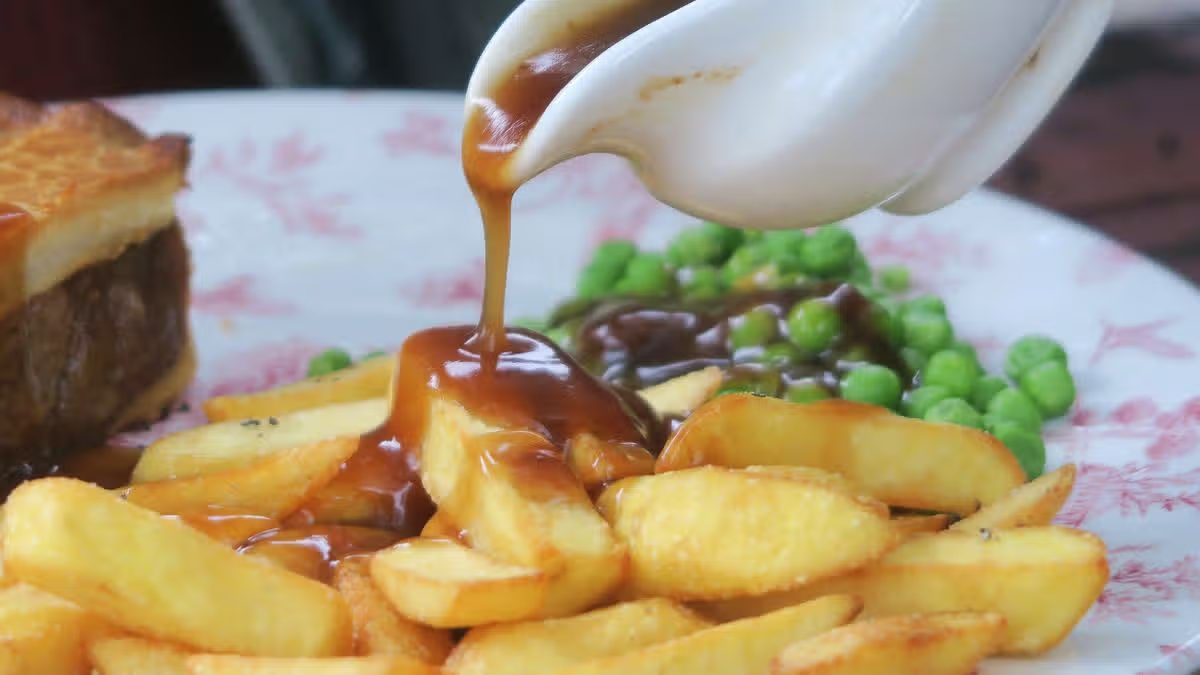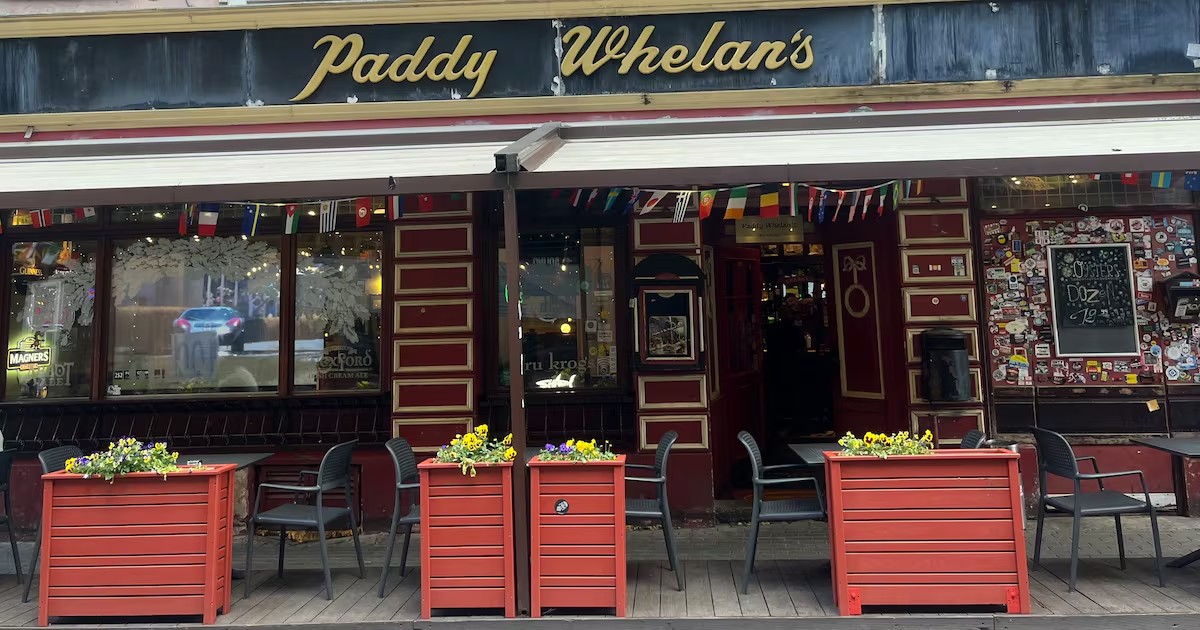
More than a decade ago, while on research fellowship at the British Library, I used to while away off-hours at the various pubs in King’s Cross, including a slightly dissolute bar on Cromer Street where in between mysterious meat pies and pints of watery Carling I’d feed the jukebox with pence and soothe a homesick soul with Bruce Springsteen. In retrospect, such maudlin Americanism was embarrassing, though sometimes I had my reasons.Article continues after advertisement
One evening, while chatting with the bartender, I mentioned Somerset County in Pennsylvania, to which she asked why American placenames—American culture in general—were, in her estimation, a pale imitation of that in the United Kingdom. This was a common bit of provincialism I’ve encountered in England, the misunderstanding of American culture as if it was a photocopy of an Anglo-Saxon original, a fallacy equally embraced by our domestic nativists.
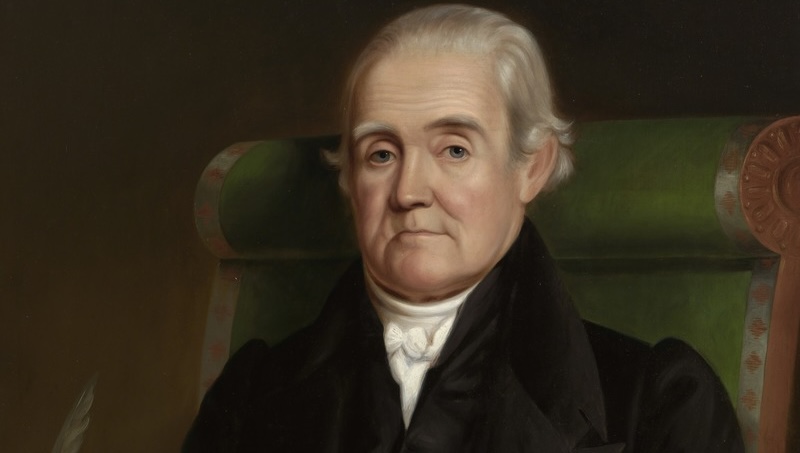
Righteously (and fairly) smarting, I asked if the Monongahela flowed through the Cotswolds or the Alleghenies punctured the Cornish horizon? “Allegheny” of course appears nowhere in Dr. Johnson’s dictionary of 1755, but it does appear in Noah Webster’s 1828 An American Dictionary of the English Language as the “chief ridge of the great chain of mountains… which casts all the waters on one side to the east, and the other to the west.” That Lenape placename is included by Webster along with other indigenous etymologies including “hickory,” “squash,” “moccasin,” “opossum,” and “moose” (among dozens of others), none of which Dr. Johnson knew of or would have seen fit to include in his magnum opus.