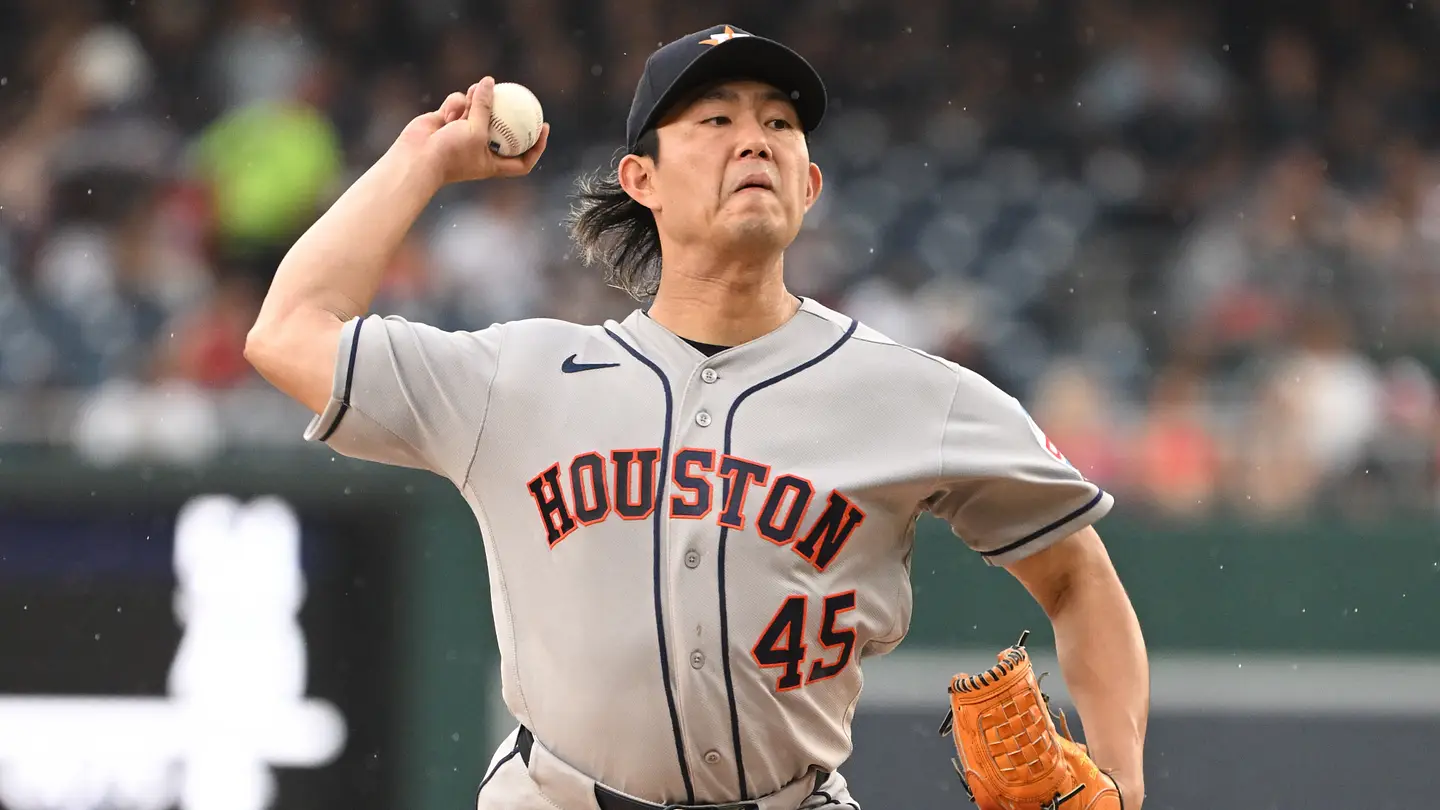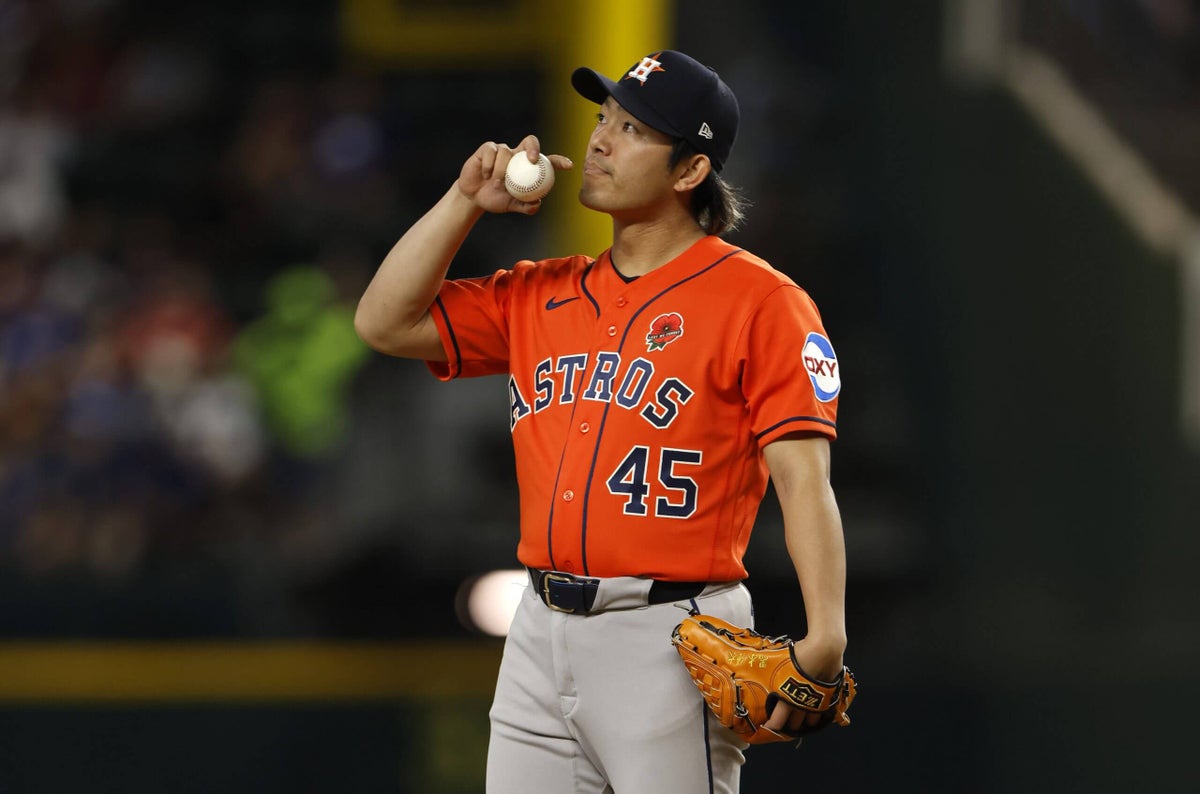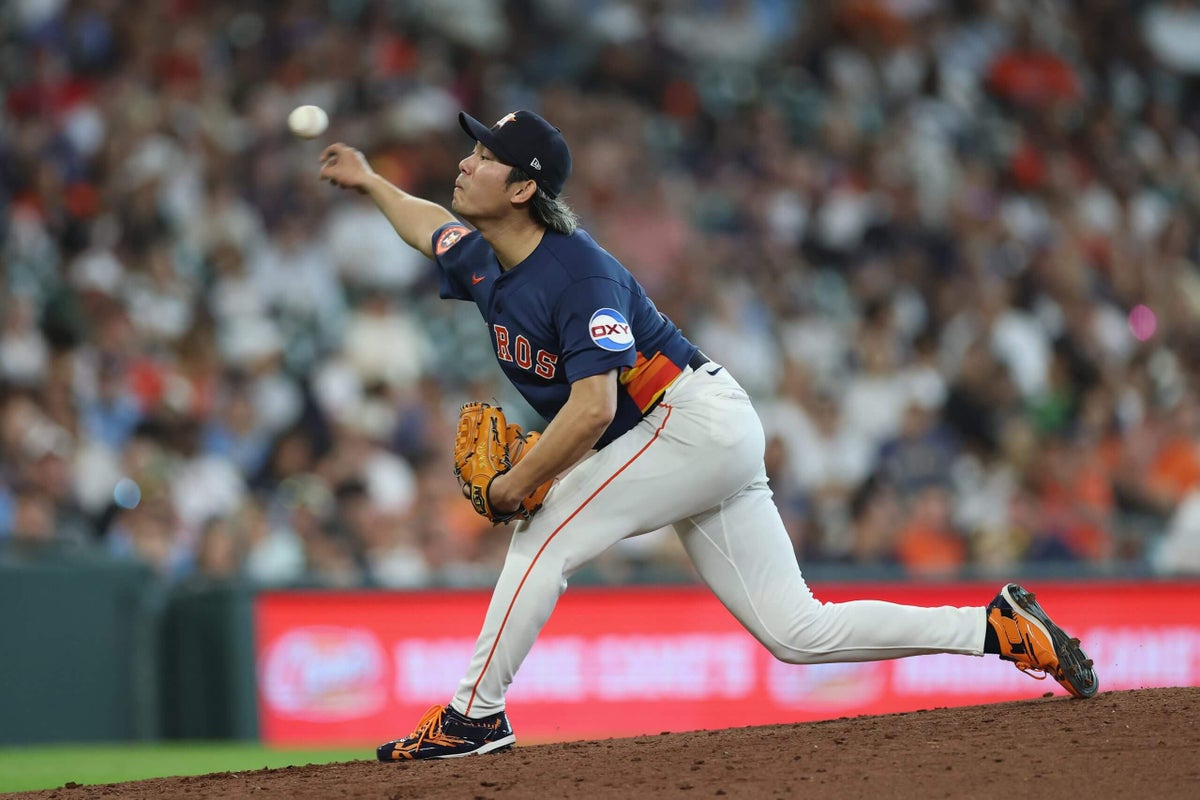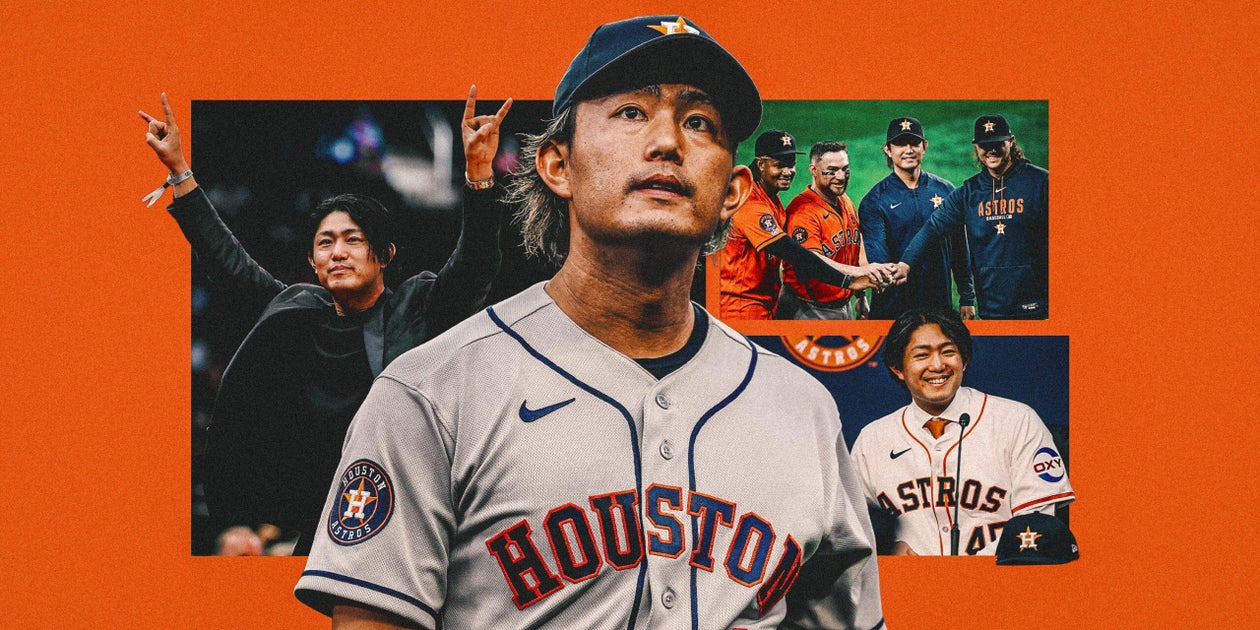
HOUSTON — In Japanese culture, young people are expected to greet their elders with a profound bow. No Houston Astros pitcher is older than Steven Okert, the 35-year-old left-handed reliever and source of levity for his entire clubhouse. After Okert became aware of this custom, he created a lighthearted routine with 28-year-old Tatsuya Imai.Every day, the first time these two pitchers cross paths, Imai removes his hat and bows with such exaggeration that the top of his highlight-splashed hair is visible. Okert reciprocates by turning to Imai’s trainer, Kentaro Sasaki, and offering the same emphatic greeting. The three men sport wide smiles and then start a conversation.“They’re making me feel really comfortable in the clubhouse,” Imai said through his interpreter, Shio Enomoto. “It’s just a joking around thing, but it’s an everyday thing and I really think it’s a good thing.”Imai’s renewed sense of comfort is impossible to ignore. Sasaki’s presence has helped cultivate it. With him in the fold, Imai is smiling more on the mound, stacking up strikeouts and carrying himself with confidence not seen during a trying first two months in the major leagues.The açai bowls at Houston’s ballpark have helped, too.Why the union should reject MLB's latest offerKeith Law“There’s açai in Japan as well, but I never tried it,” Imai said. “I’ve been eating the one at Daikin Park. It’s really good. My wife tells me to bring it back home like every night.”Houston has won five of Imai’s past six starts, a stretch in which he started a combined no-hitter and has a 3.64 ERA. Teammates see someone more settled in his new surroundings, even sprinkling in some English comebacks to their jokes.“Every time it’s something new and that’s what’s so cool about it,” starter Peter Lambert said.Repeating the same English phrases would be “boring,” Imai said, and nothing about this entire experience is boring. Sometimes he will enlist Enomoto’s help to come up with new retorts. In other instances, Imai comes up with them on his own or repeats what his teammates say.The clubhouse’s current (clean) favorite is three words. Rookie outfielder Brice Matthews broke the serenity of a sleepy Sunday morning in Detroit by saying them to Imai. The two rookies have a choreographed handshake and, upon entering the dugout each day, try to hide and scare one other.“Come on, man,” Imai will respond.“It’s clear as day he’s getting pretty comfortable with his lifestyle here and I think it’s shown on the field,” Lambert said. “Even when he’s out there pitching, he’s got a little bit of — for lack of a better term — swag to him.”Few could’ve foreseen such flair after Imai’s first five starts, a stretch fraught with problems acclimating to major-league life both on and off the field. Imai’s pitching suffered and, perhaps, so did his psyche. Neither problem can correct itself overnight, a fact Imai’s entire first season here has underscored.“He’s not a guy that went off the rails when things were going bad and he was walking guys,” pitching coach Josh Miller said. “We’re still seeing that calmness, but it’s also come with a measure of confidence when he’s on the mound. I think it’s noticeable.”A learning curve always loomed for the first player in Astros history to sign straight from Nippon Professional Baseball. Until Imai navigated it, no one could judge how steep it would be. For someone making an $18 million salary with expectations of stabilizing a starting rotation, that uncertainty can be frustrating.“Everybody needs time. I think it just comes down to the fact that, yeah, he’s just been here,” ace Hunter Brown said. “Little stuff that people don’t talk about — I think he’s a little bit more comfortable with bus times to the field, knows what the routine is when we get in, get off the plane.“We knew he was too talented for whatever the beginning (of the season) was.”Tatsuya Imai lasted just one-third of an inning in his third big-league start, when he walked four and hit a batter in Seattle. (Jack Compton / Getty Images)According to Imai, Brown, Okert and fellow starter Spencer Arrighetti deserve credit for helping him navigate the season’s first two months. They “taught me rules I didn’t know before,” Imai said last week. Brown, who is Imai’s locker mate, implored him to be himself during various clubhouse conversations.“All the stuff that I did was my first time experiencing (it). That experience was really helpful,” Imai said. “I tried it out, failed, tried it out, failed. It is just on and on and it’s a time and experience thing. I feel way more comfortable than the first part of the season.”No single reason exists for that evolution, but Imai’s recent success is an obvious stimulus. Contributing to victories — and a historic no-hitter in Arlington — cultivates confidence.So does the presence of Sasaki, Imai’s longtime trainer who did not join the team or its traveling party until late April due to visa issues. When Sasaki did arrive, Imai had already begun his month-long stint on the injured list with “right arm fatigue.”The two men have worked together “four or five years,” Imai said. Asked to describe Sasaki’s impact, Imai replied, “It’s just not one level (of comfort). It’s more than that.”“He knows how I train and use my body,” Imai said. “It’s really helpful (for) the maintenance of my body, too, because he knows what to do skill-wise, physical-wise, everything. Having him and (not) having him is a big difference for me.”Sasaki and Enomoto are Imai’s two constants, accompanying him to catch play, inside the clubhouse and bullpen sessions that now take place two days before Imai starts. At the beginning of the season, Imai threw them the day before he pitched — a peculiar preference he said was part of his routine in Japan.Balancing what worked in Japan with what is needed to navigate Major League Baseball life is perhaps Imai’s biggest challenge. For example, NPB clubs play in just 12 different ballparks. Imai has already pitched in seven different MLB stadiums and, sometimes, has mentioned the differences in mound quality among all of them. Those inconsistencies aren’t seen in Japan.NPB teams play 143 games — six per week — and receive every Monday off. No such uniformity exists in the 162-game MLB season. Asked this week whether he’s been able to explore Houston, Imai said he has not, due to “the little off days compared to Japan.”“Then, lately in June, there’s a lot of rain in Houston,” Imai said. “It’s kind of the same as Japan. It feels similar to Japan.”That is the goal, even if nothing will ever be totally identical. Any similarities help, though. According to Imai, because teams are stacking left-handed hitters against him, he can throw his fastball to the same quadrants he did in Japan. Most of the lefties he faces are reaching to hunt outside pitches. Imai can neutralize that by keeping the pitch on the inner-half.Establishing the fastball enhances Imai’s trademark slider. The pitch can move to either direction of the plate — a profile that still puzzles his teammates and pitch recognition tools.On more than one occasion this season, Imai has acknowledged throwing each of his seldom-used secondary pitches — either a splitter or changeup — even when Statcast, the league-sponsored pitch tracking service, classified them all as sliders. Corrections were made the day after Imai’s starts, when there was more time to analyze the pitches.“It makes no sense,” Okert said. “You look up on the board, and you’re like, ‘How is he doing that?’ It’s wild. In my mind, it’s like a screwball. I don’t know how he does it, but the hitters don’t either.”
Açai bowls, one-liners and deep bows: How Tatsuya Imai has gotten comfortable with the Astros
He was out of sorts at the beginning. Now the Japanese righty is scarfing açai bowls at Daikin Park and tossing out one-liners in English.
1,621 words~7 min read