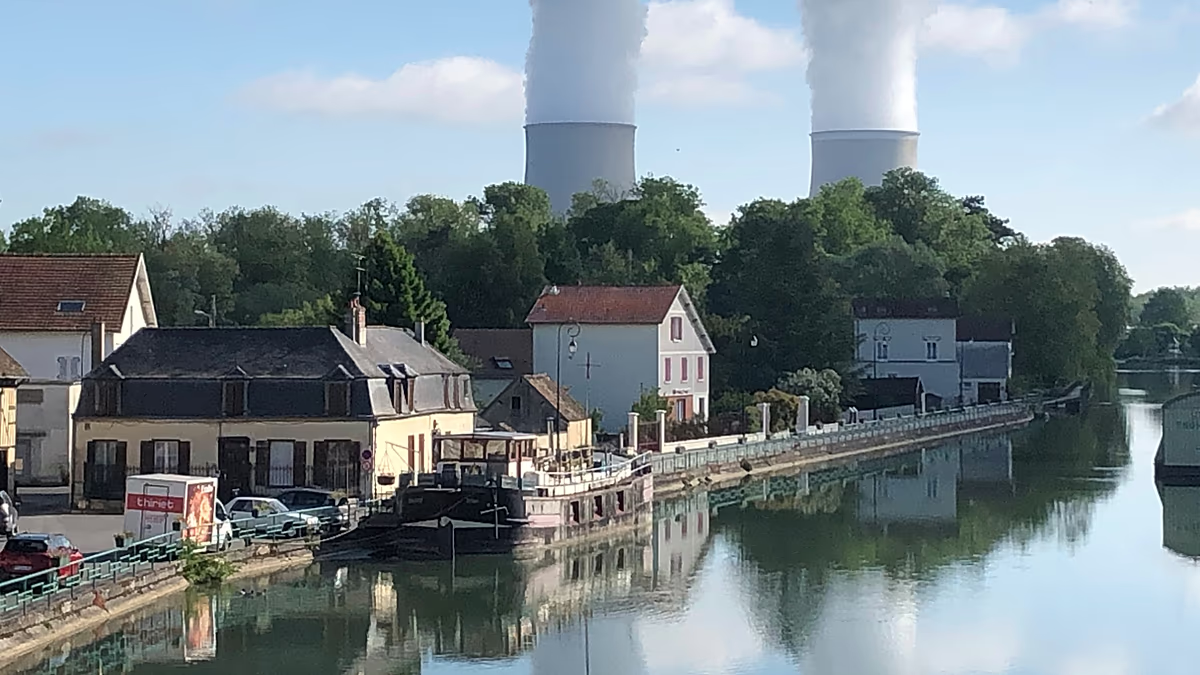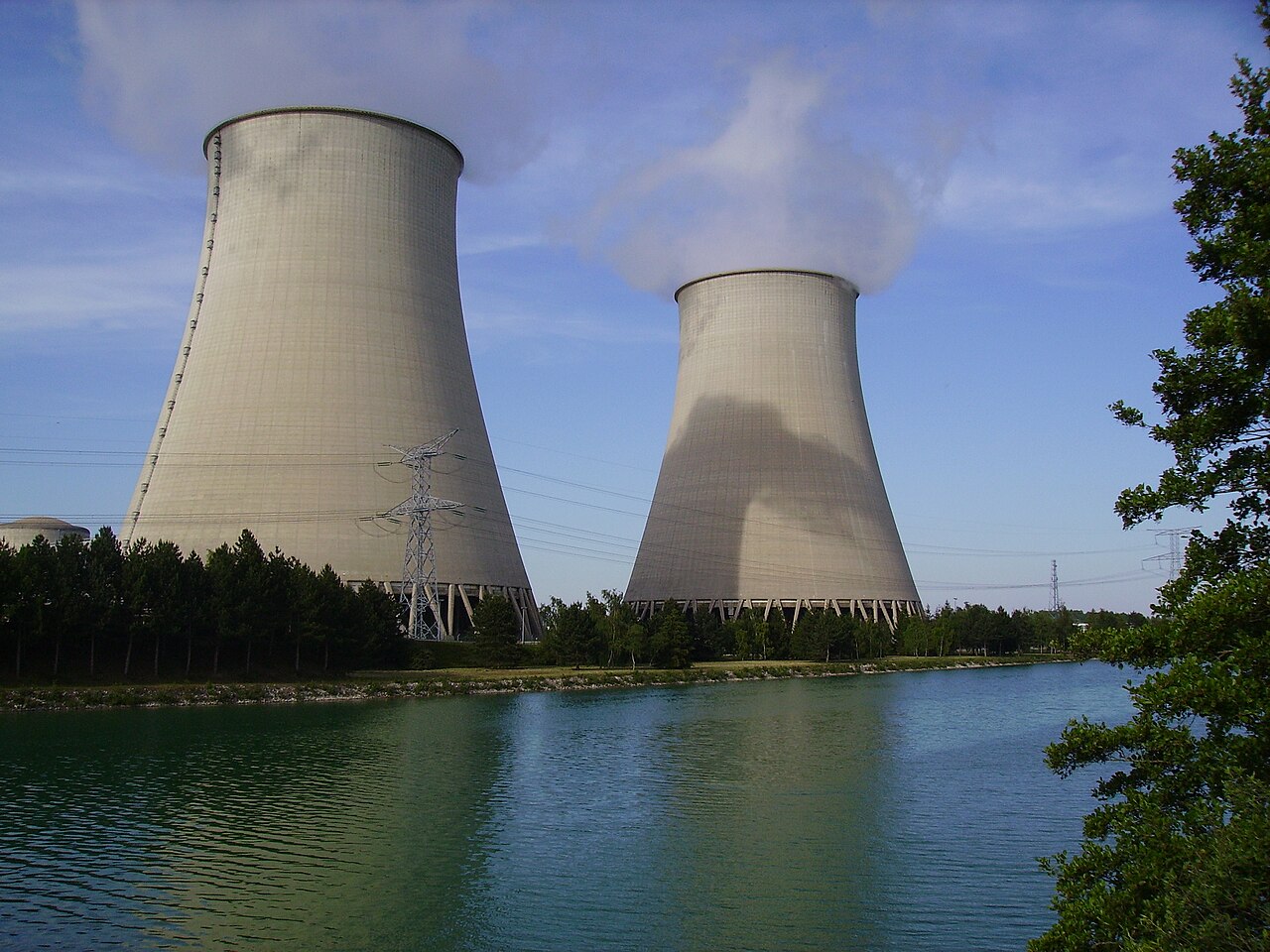
UK-based engineering and professional services consulting firm WSP explains how a late-June 2026 heatwave forced France to cut output at river-cooled nuclear reactors as the Rhône, the Garonne and the Seine approached their thermal limits. The afternoon surplus that France exports to its neighbours fell from 11–12 GW to under 3 GW within days, even though the month’s total exports remained normal. The episode shows how rising river temperatures can become a recurring constraint on French nuclear output.
In late June 2026 a static high-pressure system settled over Western Europe and pushed riverside air temperatures in France to 42.5 C, the highest recorded across the eight river-cooled nuclear sites examined here. French nuclear reactors rely on river water for cooling and discharge it at a higher temperature, and environmental regulation limits how warm the receiving river may become. As the Garonne, the Rhône and the Seine approached their regulatory ceilings of roughly 28 C, EDF was required to reduce output at, or shut down, several reactors on those rivers. Because a river warms gradually, the reductions arrived late in the month, after the heat had persisted for nearly a week.