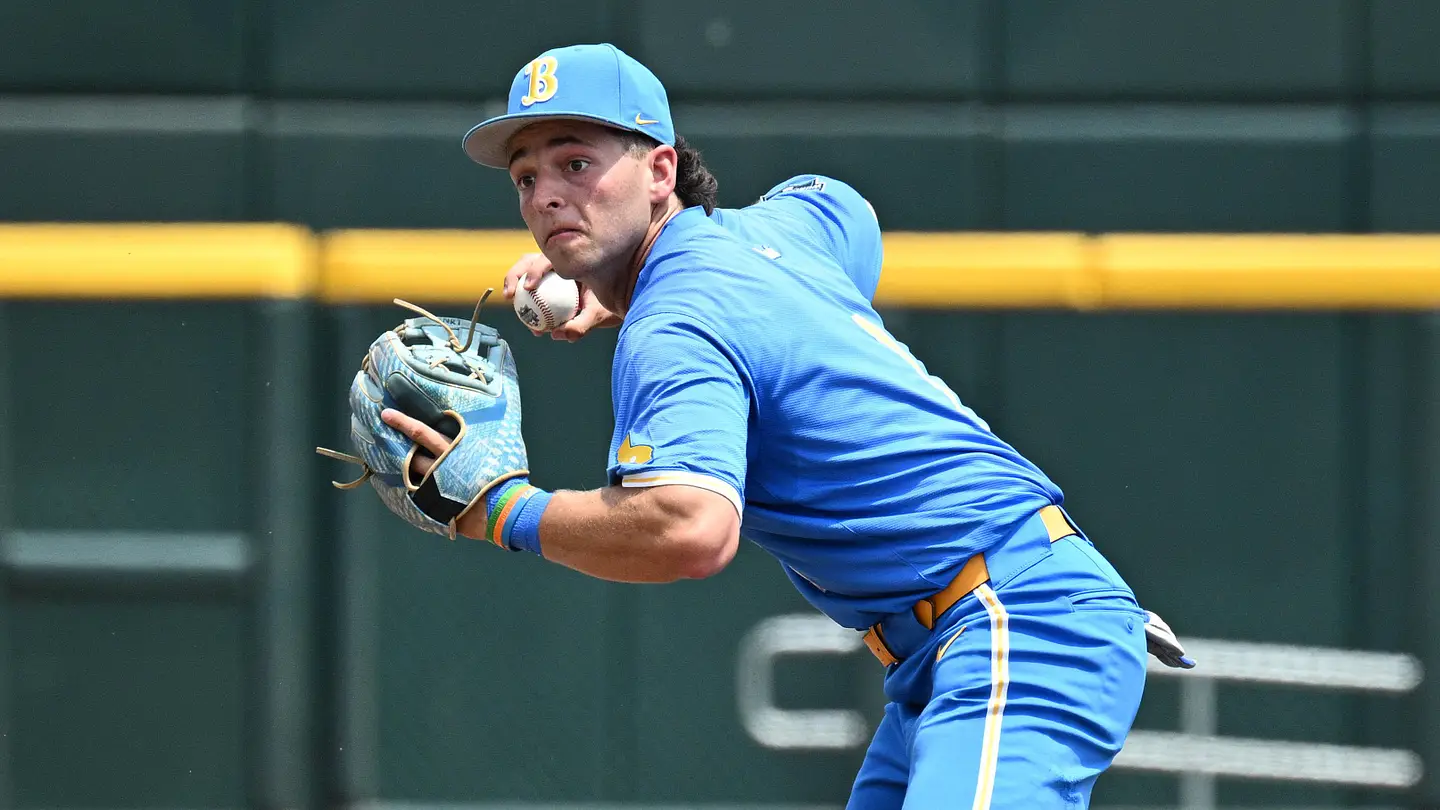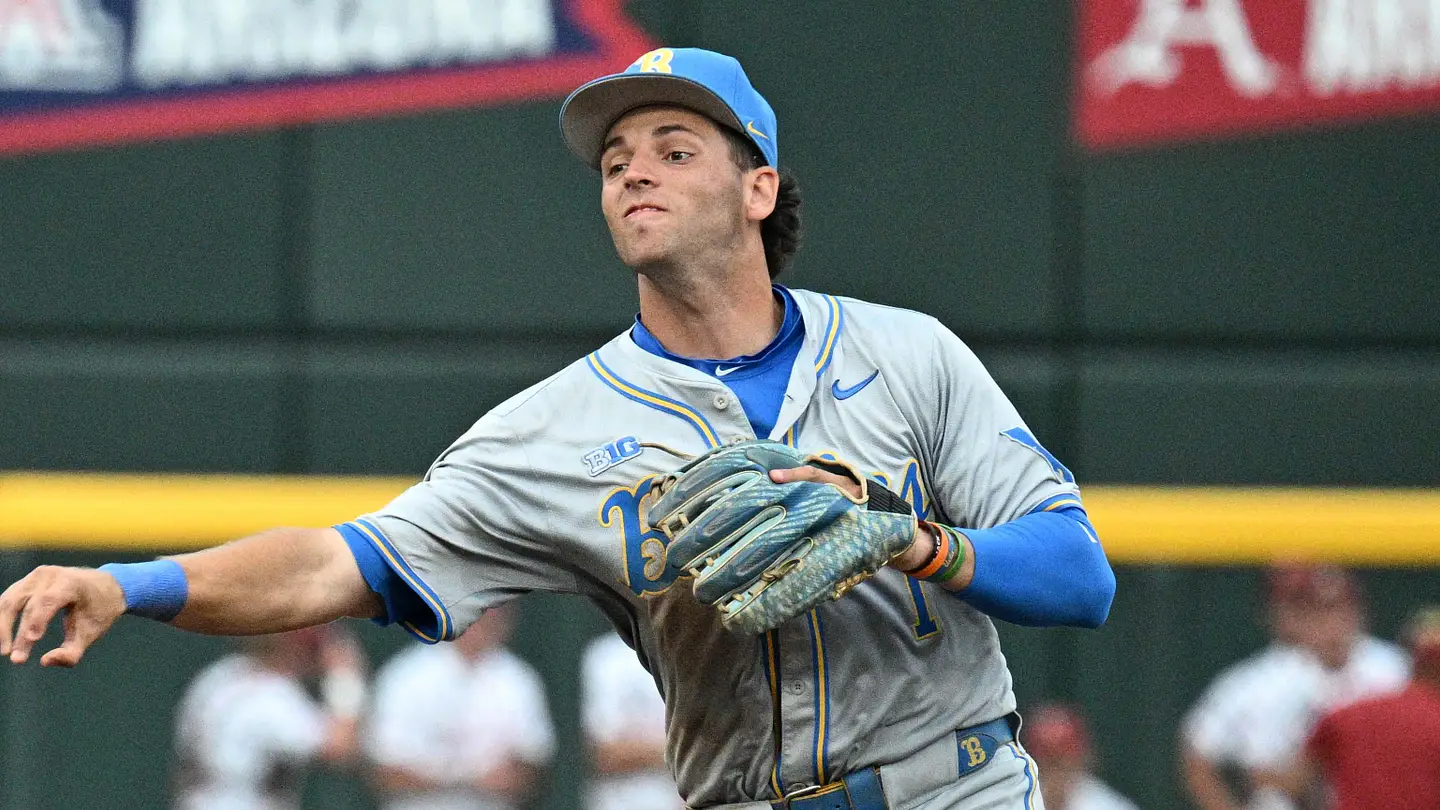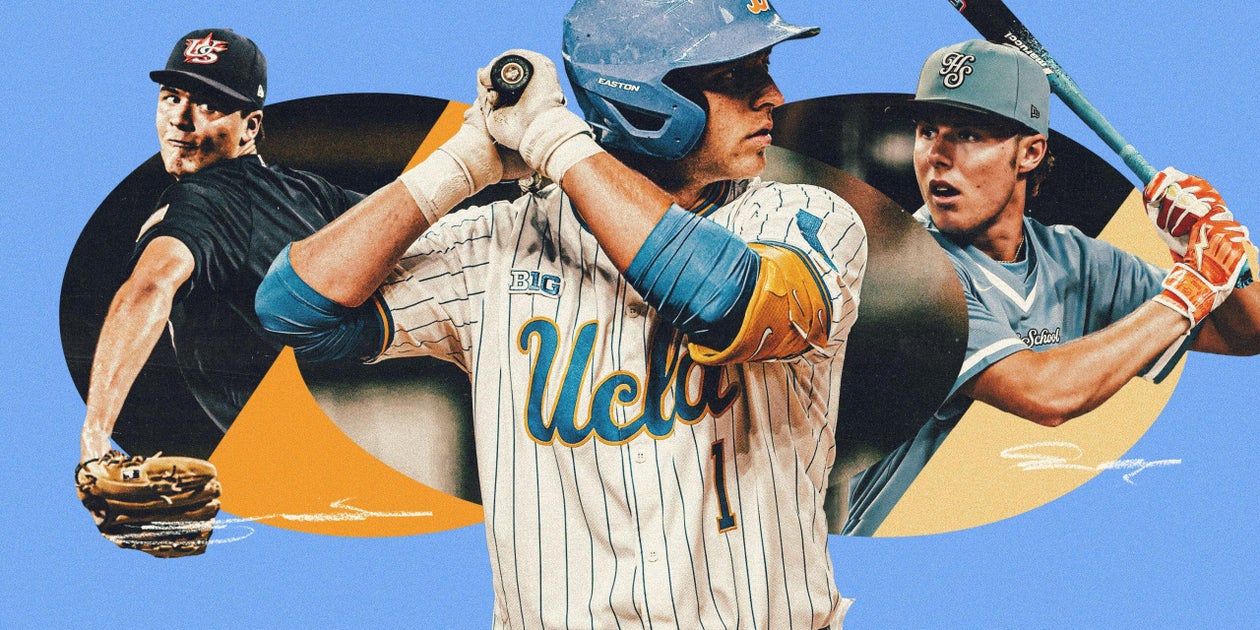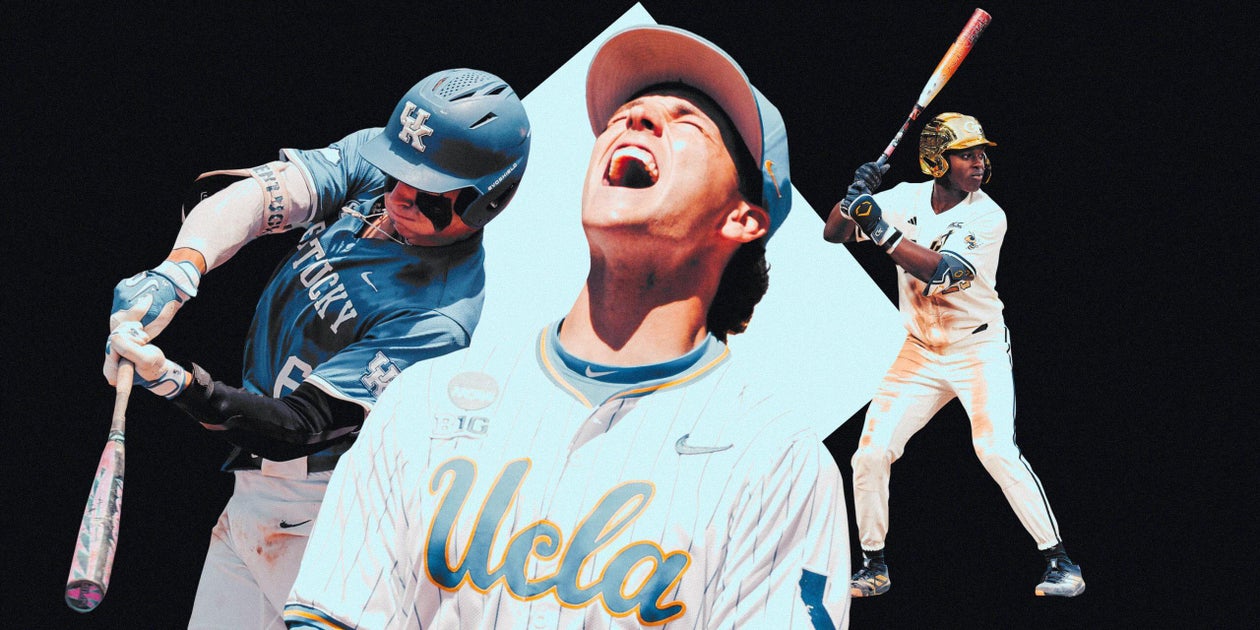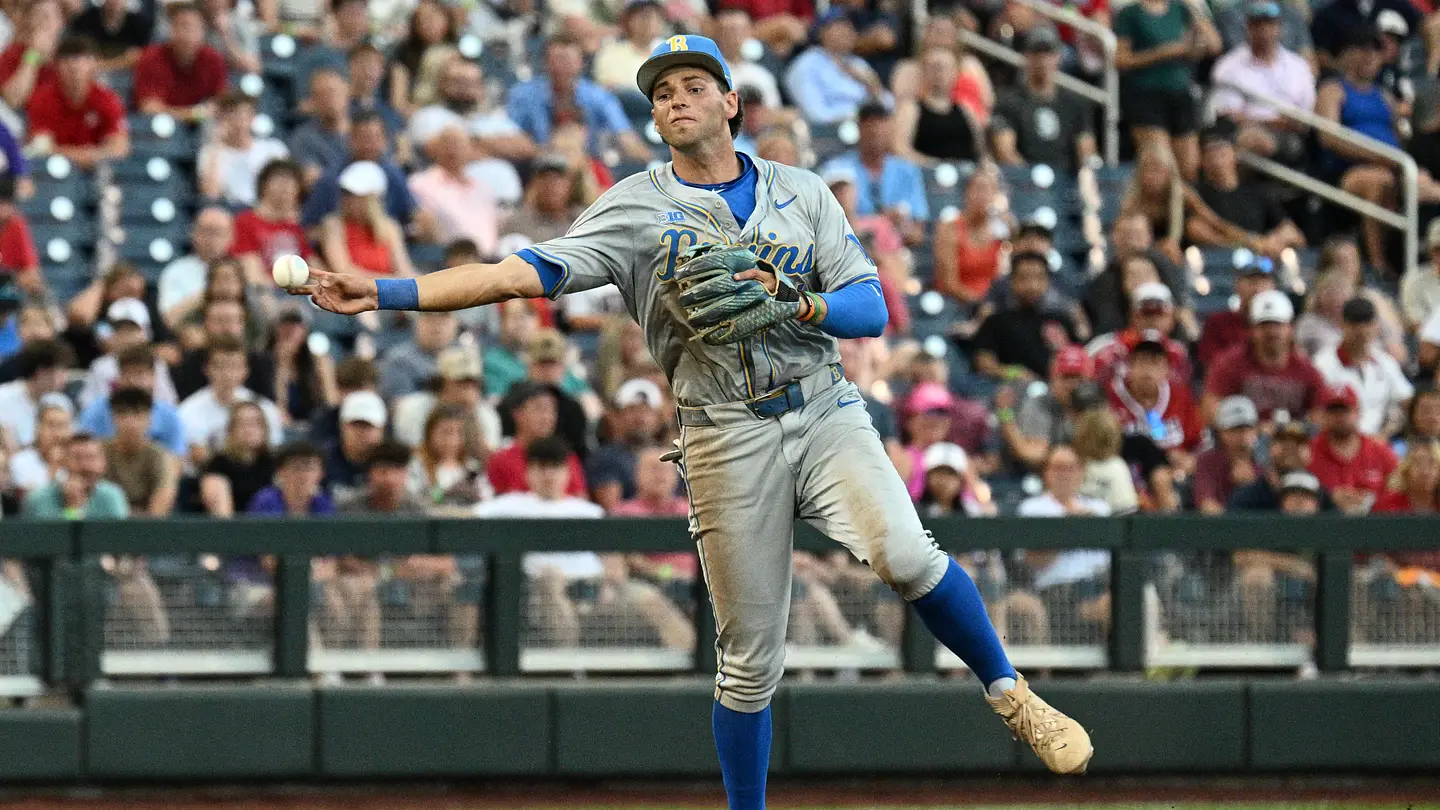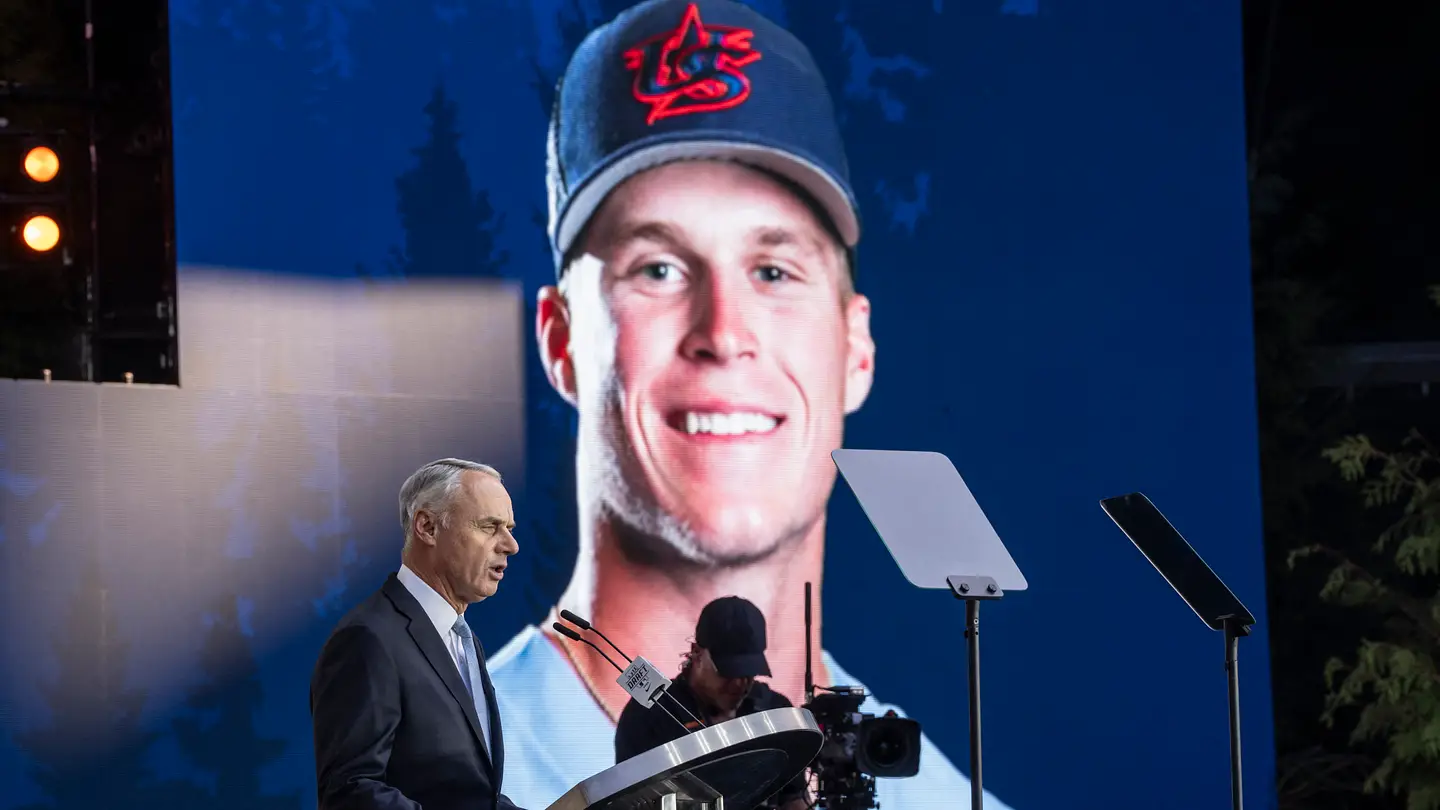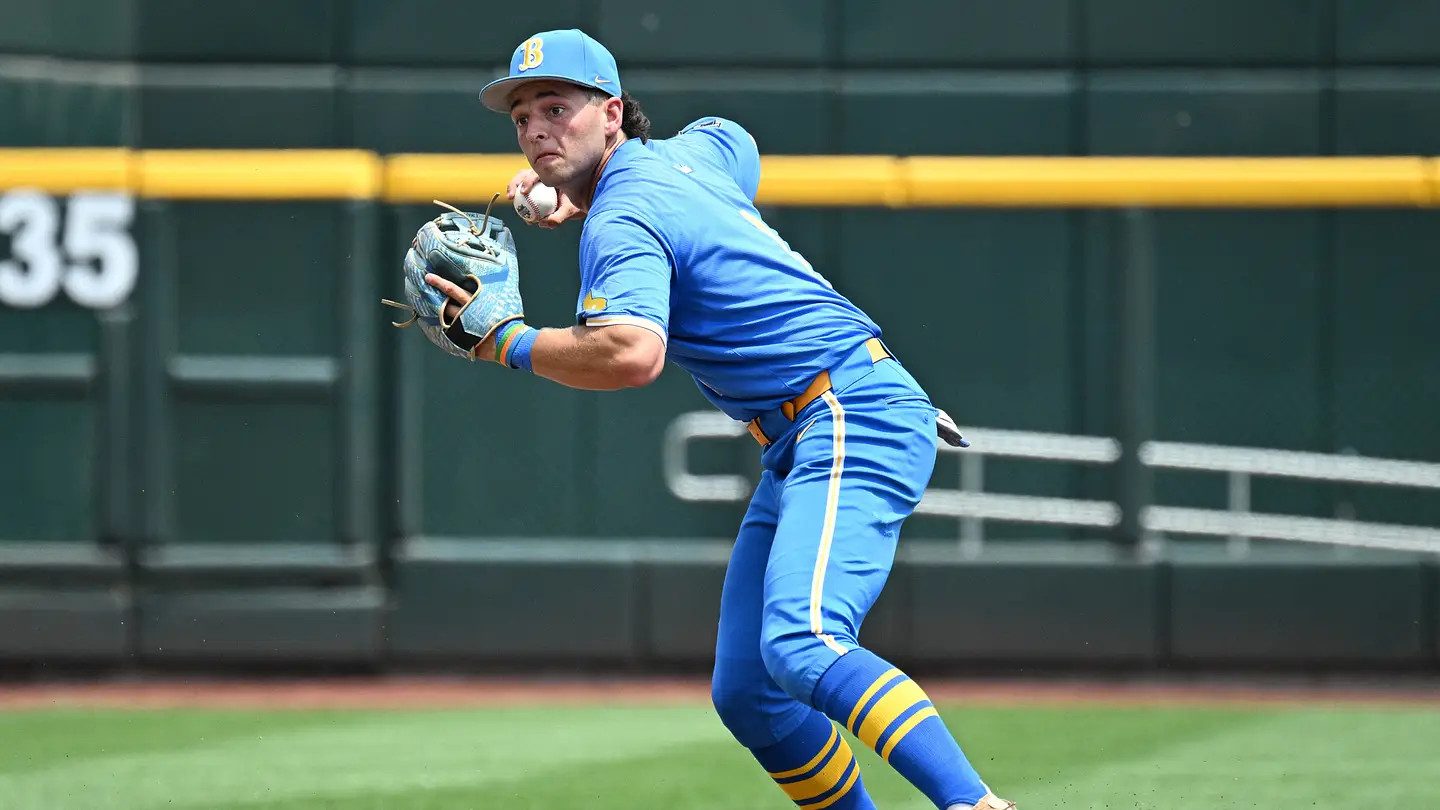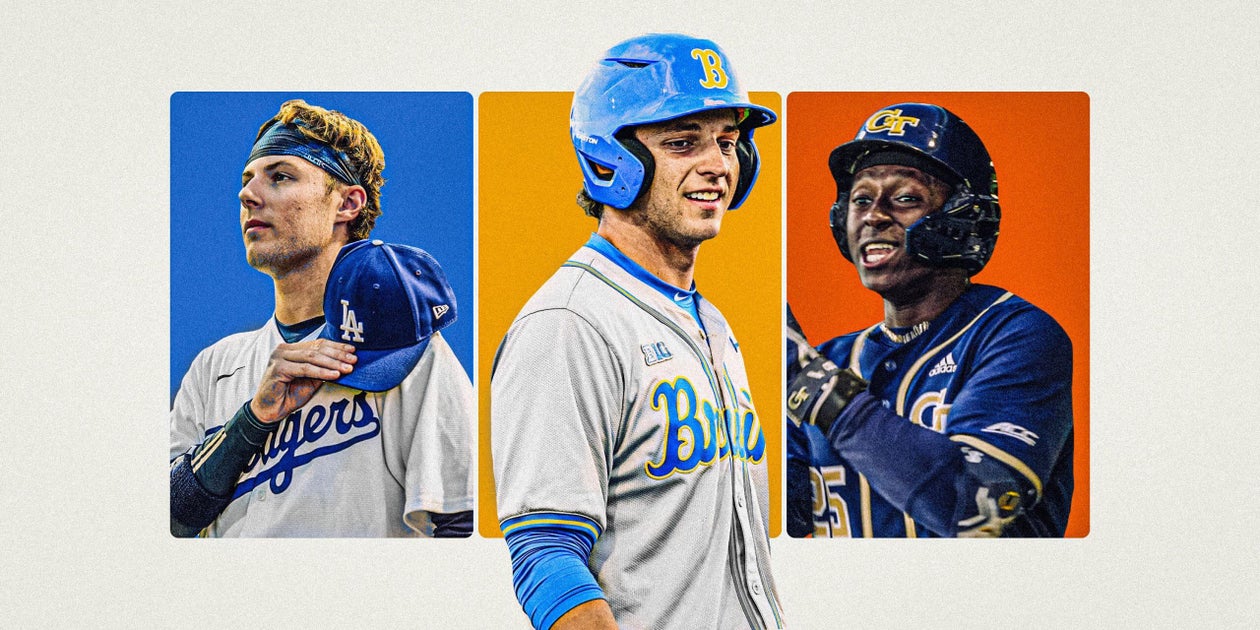
Here’s my mostly final Big Board for this year’s MLB Draft class, although I may make some small changes between now and July 11, when the draft kicks off.This is my ranking of the top 100 players in the class, ignoring signability (which I don’t really know for most players) and only relying on medical information that’s public. I base these rankings and the evaluations within on my own scouting of players, video work and conversations with scouts, executives and analysts across MLB. This ranking does not reflect in any way where I expect these players to be drafted. I’ll cover that in two more mock drafts between now and draft day.It’s not a great class, unfortunately, and after the top five or so players, it falls off quickly. There’s very little high-end pitching, and what exists all has questions, while a group of college position players that looked promising coming into the year didn’t quite pan out, although I think there will be a lot of value to be found in that group towards the end of the first round.
There is, however, a very large group of high school players who could go between picks 25 and 50, maybe for over-slot deals, who have significant upside, but carry too much risk to be picked higher than that. It’s a good year to have an extra pick down there and some extra money, or both, as the San Francisco Giants managed to do in acquiring a pick (and its bonus slot) as part of their trade that sent Patrick Bailey to the Cleveland Guardians.Why the union should reject MLB's latest offerKeith LawIf you’re somewhat new to my rankings, you may notice I have high school pitchers lower as an entire group than they’ll go in the draft or you might find in other expert rankings. This is because high school pitchers taken high in the draft fail at a higher rate than other categories. I suspect this is because they tend to be among the hardest-throwing pitchers, so as a class, they have higher future health risk than high school hitters or college players of any sort.If any players pull their names from the draft in time for me to update the list, I’ll do so. I’ll do the same if we get any significant new information on a player, like a suspension or a major injury, or in the very unlikely event that a player pops up or shows something new while playing somewhere like the Cape Cod League.(Note: Scouting grades are on the traditional 20-80 scouting scale; EV = exit velocity.)Scouting ReportBats: R, Throws: RCholowsky has been a prospect for some time, as his dad is the Reds’ area scout for the Four Corners, and Cholowsky was No. 23 on my draft board in 2023 when he was a senior in high school. So it’s hardly surprising that he’s become the consensus top prospect in this year’s class, even if the field has gotten closer to him as this spring has progressed. He’s a plus defender at shortstop with a plus arm, showing good instincts and a solid first step to make up for below-average foot speed. He had an outstanding sophomore year for the Bruins, hitting .353/.480/.710 with a hard-hit rate of 60 percent and strikeout rate below 10 percent, though his junior year has been just slightly below that across the board. He has plus power with an average to slightly above-average hit tool. He wrecked Big Ten pitching, but hasn’t seen a lot of premium velocity, and in a limited sample, hasn’t done much with it. Barring injury, I don’t see a world where he’s not at least an everyday MLB shortstop who hits 15-20 homers — his ceiling is 25-30 homers with a high OBP — and he'll play plus defense in any scenario. One bit of Roch trivia: He struck out looking only three times as a sophomore, but was already at six through May 5.Photo:Imagn ImagesPosition Player4-Year CollegeSSScouting ReportBats: R, Throws: RLackey’s surge at the plate in his draft year has lifted him from late first-round territory to the uppermost echelon, thanks to offseason work on his swing to help him get the ball off the ground and further in the air. He was hitting .371/.491/.682 through May 5, ranking in the top 5 percent of all Division I hitters in OBP and slugging, third among catchers playing in major conferences, and he finished the year at .397/.519/.772. He’s extremely athletic with 55 speed and outstanding agility, getting up out of the crouch quickly on blocks or weak groundballs, with an 80 arm that just needs to be more consistent. He’s an excellent hitter for contact, with a 15 percent whiff rate this year, but he doesn’t have the raw power that Roch Cholowsky offers. I think the two are very close as prospects, with Lackey’s appeal in his ability to stay behind the plate and add value at such a scarce position, while Cholowsky has more power upside.Photo:Imagn ImagesPosition Player4-Year CollegeCScouting ReportBats: B, Throws: RBell was the No. 66 pick in the 2024 draft by the Rays in the second round, and Tampa thought he was going to sign until he announced he was headed to Lexington instead. He’s now a draft-eligible sophomore, as he turned 21 at the end of June, and despite a severe shoulder injury suffered during the first weekend that nearly ended his season, he’s headed for a very high selection at the draft in July. Bell was one of the best hitters in the SEC this year with a .352/.517/.602 line heading into the conference tournament; he’d be leading the conference in OBP if he had enough PA to qualify. He’s a very disciplined hitter, with a chase rate of 13.5 percent during the regular season, and still shows above-average power with plenty of hard contact, including a 90th percentile EV of 105.5 mph that puts him in the top 20 percent of batters. He is a true switch-hitter with simple swings from both sides of the plate, taking a small stride and getting a lot of juice from his hip rotation, with slightly better bat speed from the left side. He projects to high OBPs with 15-20 homer upside at his peak. Given that he’s likely to stay at shortstop, he’s a potential All-Star. His early season injury, a dislocated non-throwing shoulder, may require surgery after the draft, which would push his pro debut to the spring of 2027, though he has played through it all spring rather than miss the entire college season.Photo:Imagn ImagesPosition Player4-Year CollegeSSScouting ReportBats: L, Throws: REmerson is the leading high school position player in the draft, by consensus, and maybe also by default, given the paucity of other candidates at the very top of the draft. His case is much more about his skills rather than plus tools or athleticism, and the descriptions I hear from scouts and execs make it sound like they’re hoping he’s the next Kevin McGonigle. And maybe he is: Emerson does hit, making contact at a reasonably high clip last summer at showcases (13.3 percent strikeout rate, 23.3 percent whiff rate), while showing fringe-average power now that projects to above-average at his peak. He shows good instincts and hands at short and should stick there despite being a below-average runner. He transferred from a large public school to a tiny religious school in part to play for Rusty Greer, the former Rangers outfielder who is now the head coach at Fort Worth Christian.Photo:Imagn ImagesPosition PlayerHigh SchoolSSScouting ReportBats: R, Throws: RFlora is easily the best pitching prospect in this class, high school or college, because he’s that good and the pitching crop this year is … not that good. Through the end of the Gauchos’ regular season, he’d struck out 115 in 87 1/3 innings (33.2 percent) against just 24 walks, with a 1.03 ERA. He’s been up to 100 and sits 94-98 with his four-seamer, but that’s his least effective pitch thanks to a 70 changeup and plus slider. The changeup is around 86-90 and looks very similar to the fastball out of his hand, with some fading action away from lefties; hitters whiffed on it close to half the time they swung this year, and it’s equally effective against hitters on both sides. His slider is sharp with late downward break, getting a lot of swings that go right over the top of it, and he should probably just use that and ditch his upper-70s curveball. There’s a little effort to the delivery and I don’t think his release point is as consistent as it could be, but he throws strikes, is on time and gets some extra help on the fastball from a low three-quarters slot. He looks like a very likely major-league starter, no worse than mid-rotation, and could end up a No. 1 for someone if he tightens up the fastball command or maybe mixes in a two-seamer.Photo:USA Today NetworkPitcher4-Year CollegeRHPScouting ReportBats: R, Throws: RThough Burress be but little, he is fierce, although to be completely honest, he was a lot more fierce as a sophomore. The 5-foot-9 outfielder whacked 19 homers in 60 games in 2025, but got off to a slow start in 2026 as he seemed to be trying too hard to lift and pull the ball. He returned to his 2025 approach as the season has progressed, hitting better in conference play than outside of it, with 16 homers through 61 games overall, nine of them in the ACC. Despite his small size, he has easy plus power, with a 90th percentile EV of 109.1 during the regular season that put him in the top 3 percent of all qualifying batters. He swings hard, with excellent bat speed, and is short to the ball but long through it with enough loft in his finish to drive the ball in the air without having to force it. He’s had more walks than strikeouts in all three of his years with the Wreck, with a chase rate just under 20 percent, and his contact rate on strikes is well above the Division I median. He’s a center fielder now, but has a less than even chance to stay there in pro ball. He projects to 20+ homers a year, which would make him a star in center and still a regular even in a corner.Photo:Imagn ImagesPosition Player4-Year CollegeOFScouting ReportBats: L, Throws: LCuriel has always been able to hit, even in high school at Orange Lutheran, but between his lack of power at the time and his commitment to LSU, he went undrafted in 2024. Now a draft-eligible sophomore, Curiel has raked for two years in Baton Rouge, not hitting for much power but making enough hard contact to project a plus hit tool, maybe even better. He hit .353/.431/.526 this spring as a draft-eligible sophomore for the Tigers, dipping to .314/.386/.463 in the SEC, but he does show elite exit velocities that might imply some more power down the road. He’s played center and left and should at least start his pro career up the middle, with left field just the more likely option because he may get bumped by a faster player. He’s an extremely safe college position player, with maybe a little power upside, too.Photo:Getty ImagesPosition Player4-Year CollegeOFScouting ReportBats: R, Throws: RPeterson is stuff over performance, not that the performance has been bad, but he has frontline stuff that you’d think would produce better results. He has one of the best arsenals of any starter in the class, sitting 93-98 with a plus slider, above-average curveball and a straight changeup that’s average now, but I think points to the potential for a better changeup option down the road. His issue remains command and control, although the latter improved as the season went on, with three walks in his last four starts (24 2/3 innings) and 11 in his last 39 1/3 innings, bringing his walk rate for the season under 10 percent. There’s just too much hard contact for this kind of arsenal, including four homers allowed in his final outing against Troy in the NCAA Regionals, all on pitches just above the hitters’ belts. If he can locate better, he already has the pitches to be a No. 2 starter.Photo:Imagn ImagesPitcher4-Year CollegeRHPScouting ReportBats: L, Throws: LBooth is an 80 runner and true center fielder with a leadoff hitter profile, making contact with a short, slashy swing without a lot of power. He’s a disciplined hitter for a high schooler, with modest whiff and chase rates last summer and fall, continuing to show patience this spring. He’s very upright at the plate and doesn’t bend his knees or rotate his hips that well, spinning off his front heel through contact so that his lead foot is pointing towards the pitcher (or further), so while he looks like he should have above-average power, it’s not showing up in games. He’s a supreme athlete who has bat-to-ball skills, which is both rare in the draft and also extremely coveted by teams who want long-term upside, but he needs an organization that can help him find a setup and swing that makes the most of his physical gifts.Photo:USA Today NetworkPosition PlayerHigh SchoolOFScouting ReportBats: R, Throws: RIn mid-April, Reddemann was a lock to go in the top half of the first round, likely to go in the top 10, and maybe even approaching Jackson Flora as the top pitcher in the class. Then he got hurt and all bets have been off. A transfer from the University of San Diego, Reddemann showed plus control of a three-pitch arsenal with a 93-96 mph fastball that has late life up in the zone, a power slider, and changeup that can at least flash plus, and his command was among the best anywhere in the draft class. He has plus control — maybe plus command, too — of a 93-96-mph fastball with late life up, a power slider and a changeup that shows plus. He barely threw his cutter during the first month of the season, but was using it more in his last five-to-six starts and it missed nearly 50 percent of bats when hitters swung. He could be a real four-pitch pitcher with command and control, which, as you might guess, would have made him one of the very best pitchers in the class. He struck out 18 against Rutgers on April 10, throwing only 104 pitches, then made one more start the following week before hitting the shelf with “arm fatigue” that ended his season. He did return to throw at the MLB Draft Combine, where he was 92-94, but it's going to come down to his medicals and teams' comfort level with whatever the injury was. He could still go in the mid-first round given how much he showed before the arm got fatigued.Photo:Getty ImagesPitcher4-Year CollegeRHPScouting ReportBats: L, Throws: LGrindlinger is the draft’s best two-way prospect. He’s a left-handed pitcher whose fastball is up to 96 and outfielder with outstanding bat-to-ball skills, and he only turned 17 in April. He reclassified into this draft just before the season started so he wasn’t seen as much last summer and fall as most of the high schoolers in the class. He’s still almost all projection at this point, and the bat speed isn’t great yet, but the ball carries well already and he’s likely to come into real power as he fills out. He has arm strength with a potentially plus slider but the delivery needs work, as he’s off the rubber very quickly and tends to spin off his front heel after he lands. He has all of the risk of a teenaged arm — more, really, as he’s younger than any other pitching prospect in the class. I think he’s a much better prospect in all respects as a hitter, while he also offers the backup option of putting him on the mound if hitting doesn’t work. (Or vice versa.)Photo:Associated PressPosition PlayerPitcherHigh SchoolLHPOFScouting ReportBats: R, Throws: LDietz threw just 1 2/3 innings in two years at Arkansas after an arm surgery, but he was lights out this year for the Hogs, making 16 starts and posting a 36.2 percent strikeout rate. He’s 92-96, topping out at 98 this year, with three real breaking pitches, all of which get hitters to whiff about half the time. The cutter is his primary weapon and his best pitch, up to 90 on the season, 85-88 when I saw him, coming out like the fastball and spinning down and away from left-handed hitters. The slider and curveball can run into each other, but they are distinct pitches, with the curveball getting two-plane break and a more defined shape down towards 80-82 mph. He almost entirely shelved the curveball in his NCAA Regional outing, going just fastball/cutter/slider. After the surgeries, he’s come back with a new delivery, striding a shorter distance towards the plate, with his arm late relative to his front foot landing, although that latter point has not given him any problems whatsoever in throwing quality breaking stuff. He was still 94-95 in the seventh inning of his last outing of the season, which is good, and ended up throwing 116 pitches in that game, which is not. If he can handle the workload, he’s an above-average starter, and not that far off from the majors.Photo:USA Today NetworkPitcher4-Year CollegeLHPScouting ReportBats: L, Throws: RBecker is hit .317/.427/.533, losing about 15 points of average while he tried to play through a hand injury before finally sitting out from April 16 through May 14. He has a very simple operation at the plate, with great hand speed and a short, direct path to the ball, generating plenty of hard contact and using the whole field well. The swing generates low line drives, so he doesn’t have more than average power and probably more like 12-15 homers at his peak, but being able to make hard contact bodes well for his ability to continue to hit for average. He does have to tighten up his approach with two strikes, as he expands the zone wildly in those counts; he has a 42 percent chase rate this year with two strikes on him. He’s not a shortstop — not only does he lack the range to be a pro shortstop, but he’s not even a good defender for a college shortstop — and should move immediately to second base, where he has the instincts and hands but may still have to work to be a solid-average defender. I see a 60 hit tool here, and maybe a little more power if a pro team gets him to lift the ball more.Photo:Imagn ImagesPosition Player4-Year CollegeSSScouting ReportBats: R, Throws: RFlukey missed three months with a fractured rib, but returned in time to make six starts for the Chanticleers, getting up to 69 pitches in his penultimate start, with the same stuff he’d shown prior to the injury but not quite the command. He comes from a high slot and gets up to 97 with a flat four-seamer, getting a ton of whiffs on a plus 12/6 curveball, with a short slider as his third pitch. He doesn’t use a changeup or splitter; he had a sizable platoon split in 2025, giving up five of his six homers to lefties, but basically none in a small sample this year. He projects as a mid-rotation starter, but perhaps needs a more effective fastball and/or a real change-of-pace pitch to be more than that.Photo:Getty ImagesPitcher4-Year CollegeRHPScouting ReportBats: L, Throws: LCarlon is a four-pitch lefty who’s 93-98 with a plus slider along with two average or better pitches he barely uses in the changeup and curveball. He works heavily off the slider, throwing it more than half the time, and still had a 56 percent whiff rate on the pitch this year, while deprecating the fastball despite its velocity because it doesn’t have a lot of movement. He’s been a little homer-prone this year, but it’s nearly always with no one on base; 11 of the 14 homers he allowed were solo shots, as he goes fastball-heavy with the bases empty. He’ll need to use his changeup more in pro ball, and maybe get a little more deception to it, although the pitch was effective in a small sample this spring. He looks like a potential mid-rotation starter with some modest tweaks.Photo:USA Today NetworkPitcher4-Year CollegeLHPScouting ReportBats: L, Throws: RLowrance has been the hottest high school name this spring, as teams are hunting for players in the high school ranks now that the college crop has turned out to be disappointing. He’s a big, strong left-handed hitter with a solid swing for hitting the ball in the air, a little long to the ball because of his height but making up for it with very quick hand acceleration, along with a strong follow-through that lifts the ball for power. He raked at showcase events last year, and offers a possible future plus hit tool/plus power combination. Scouts seem to agree he has no shot to stick at shortstop, probably going straight to third base in pro ball, with right field maybe his ultimate destination given his size.Photo:USA Today NetworkPosition PlayerHigh SchoolSSScouting ReportBats: R, Throws: RHelfrick is the best defensive catcher in the class, with a 70 arm, excellent blocking skills and apparently good framing (for whatever that’s worth). He came into the year as a very questionable pro prospect after he whiffed on over 30 percent of his swings as a sophomore, putting him in the bottom 5 percent of all qualifying hitters in that category. He cut that way down to 25 percent this year, swinging less often on all pitches while also making much more contact on sliders. The improvement was mostly just a matter of better swing decisions, while he’s also moved a little further away from the plate. He hit a career-high 18 homers this year, thanks, in part, to more playing time, and has enough juice to project to 15-20 in the majors. You don’t have to hit a ton to be an everyday catcher in the big leagues, and even if Helfrick gives back some of his gains at the plate, he could still end up a low-OBP regular. If they stick, the improvements this year give him a chance to be an All-Star.Photo:Imagn ImagesPosition Player4-Year CollegeCScouting ReportBats: L, Throws: LStrosnider has a beautiful left-handed swing and makes plenty of hard contact, but he scuffled this year to a .273/.415/.590 line before an ankle injury ended his season before the Big 12 tournament. Almost all of his dropoff at the plate was due a 90-point decline in his BABIP; he still hit the ball hard, consistently, with a 51 percent hard-hit rate on the year. His 90th percentile EV of 109 mph puts him in the top 3 percent of all qualifying Division 1 hitters, so it’s not about contact quality. There’s some bad luck baked in here, but it’s also indicative of the fact that he needs to lift the ball more to turn more of those screaming line drives into extra-base hits. It’s the kind of adjustment many MLB teams, notably the Dodgers, have shown they can make with hitters who have these underlying traits. It’s a corner outfield profile so he has to hit; I think he’s still good value in the back half of the first.Photo:Associated PressPosition Player4-Year CollegeOFScouting ReportBats: R, Throws: RLebron has the tools to be the top pick, and if this were 1993, he’d probably be the obvious 1-1 pick. I’m increasingly concerned that he’s not going to hit, as he didn’t hit well this spring, especially once the opposing pitching got better in SEC play. Lebron is a gifted athlete who’s a 55 runner out of the box, maybe 60 underway, and a plus defender at shortstop. He has plenty of bat speed and projects to 70 raw power once he’s filled out. He did have a hard-hit rate over 50 percent this spring, and his batted-ball quality was excellent, with a 90th percentile EV of 105.8 mph that puts him in the top 15 percent of all Division I hitters. He fattened up early against some weak competition, but in conference, he hit .229/.328/.413 with a 21.6 percent strikeout rate, striking out three times as often as he walked, and he only managed an OBP over .300 because he was hit by eight pitches. Over the whole season, he whiffed on pitches in the zone 21 percent of the time (50 percent above the D1 median) and particularly struggled with breaking stuff of any sort. He is the sort of athlete on whom you bet, as he at least has the physical ability to make adjustments, but teaching a hitter who doesn’t recognize or hit spin to do those things is a difficult task for player development. He has real superstar upside, a 25-homer, 40-steal shortstop with plus defense, but too much risk for where I’ve heard him discussed this spring.Photo:USA Today NetworkPosition Player4-Year CollegeSSScouting ReportBats: R, Throws: RThe younger brother of top Yankees prospect George Lombard Jr., Jacob Lombard has been on the showcase circuit since he was in junior high school. He has some of the best pure tools in the draft class, college or high school. He’s a 70 runner with plus power, working with a quick, direct swing that is geared to pull the ball in the air. His path to the ball is direct and he’s very rotational, getting his lower half involved to help drive the ball, although he can get a little uphill on pitches down. He also whiffed 39 percent of the time at tracked events in 2025, getting destroyed by sliders, but even struggling with better velocity when he saw it. He’s a long-term shortstop, really just lacking the pure arm strength of the typical player there in the majors. He has the swing, strength, speed and athleticism to be a superstar, but can he hit enough to even be a regular?Photo:Associated PressPosition PlayerHigh SchoolSSScouting ReportBats: L, Throws: LGracia transferred from Duke to UVA this year and emerged as the Hoos’ best power threat, although he hasn’t improved from his breakout 2025 season with the Blue Devils. He has plus power and a good idea of the strike zone, chasing pitches well out of the zone just 13 percent of the time, while making contact at high rates for someone with his power — through May 9 his in-zone whiff rate was just 9 percent. His swing gets kind of uphill, and he might end up hitting more balls to the track than he should given the pure strength here. He’s played center field for the Cavaliers but will end up in right in pro ball. The whole right now is less than the sum of the parts, which points to an opportunity for a team that’s good with finishing off hitters’ development, especially if they can get Gracia’s bat more consistently on plane.Photo:Associated PressPosition Player4-Year CollegeOFScouting ReportBats: R, Throws: RRose can flat-out hit, and if he hadn’t missed almost half of the spring with an ankle injury, I think he’d be a top 15 pick. The Louisville junior hit .417/.491/.646 in 36 games — nearly all of it in ACC play — after returning from the injury, moving between center field and left field. He looked better in center than expected, though the corner is still the more likely outcome. He has excellent hand-eye coordination and bat speed, whiffing just 10 percent on fastballs this year, and 23 percent on everything else combined, and rarely chases outside the zone until he gets to two strikes. He does land slightly open and doesn’t pull the ball to the outfield as much as he should, which also means there’s some power upside here (with a 90th percentile EV of 104.6 mph, putting him well above the median) with what appear to be minor adjustments. He was a top 100 prospect out of high school, as a catcher at IMG Academy, but went undrafted due to his strong commitment to Louisville.Photo:Imagn ImagesPosition Player4-Year CollegeOFScouting ReportBats: R, Throws: RRembert turns 21 just a few days before the draft, so he’s among the younger college players in the class. He brings a high-contact, low-power approach that led to a .344/.467/.555 line in 2025, making him as a potential first-rounder coming into 2026. His surface production was down this year, with only four homers and a lower walk rate, but he still hits the ball hard, and consistently so, with a 90th percentile EV of 107.6 that puts him in the top 5 percent of Division I hitters. He wraps his bat behind his head pretty badly and nearly bars out completely, but his wrists are very quick and he generates a lot of bat speed once he gets his hands going. Not to be too simplistic, but I would love to see what he could do if he gets rid of the bat wrap and tries a simpler, even boring setup and first move. Even with those mechanical issues, he still only whiffed on 20 percent of his swings and has shown he can catch up to good velocity. He’s mostly played second base but has dabbled in the corner outfield. He might be a sleeper for someone late in the first or in the comp round.Photo:USA Today NetworkPosition Player4-Year College2BScouting ReportBats: R, Throws: RBrunson is a toolsy center fielder with 20/20 upside, maybe even more than that in the power department. He recognizes offspeed stuff well, actually hitting better against non-fastballs this year. His bat speed is just fair, and he hasn’t done as well with better velocity this spring in a small sample — he saw 52 fastballs at 95+ and whiffed on 32 percent of his swings. He does show good hand-eye coordination, and might benefit from narrowing his initial setup so he can stay balanced better after striding. He could be an above-average regular because he stays up the middle and has that power potential, as long as he can adjust to the consistent heat he’ll see in pro ball.Photo:Associated PressPosition Player4-Year CollegeOFScouting ReportBats: R, Throws: LRojas is the top high school pitching prospect in this class, and will also most likely be the first one taken. His fastball is low 90s, up to 97-98, with life from a lower three-quarters slot, while his best pitch is a high-spin sweeper/slider that batters whiffed on two-thirds of the time they swung at it at tracked events in 2025-26. He does lower his arm slot for the slider, which can cause it to flatten out a little and could give better hitters a clue what’s coming (although they might just miss it by less). He has a promising changeup he hasn’t used much, as he hasn’t needed it. He turned 19 in late June, and is committed to Miami.Photo:Getty ImagesPitcherHigh SchoolLHPScouting ReportBats: R, Throws: RMartin played third base for UCLA because of Roch Cholowsky, but he’s a legit shortstop in his own right, at least Cholowsky’s equal on defense according to scouts who’ve seen him there. He’s still one of the most passive hitters in the draft, with a swing rate around 30 percent this year and 32 percent last year, but the flip side of that coin is that he doesn’t chase (19 percent) or whiff (22 percent) much at all, and does do some damage when the bat leaves his shoulder, with a .333/.446/.549 line this spring. He can really sock it to the ball, with a hard-hit rate of 51 percent that actually edged Cholowsky’s (50 percent), although Martin has less top-end power and his swing is going to produce more low line drives as is. He looks very much like a quiet regular at short for someone, and very good value if he really does slip out of the first round.Photo:Imagn ImagesPosition Player4-Year College3BSSScouting ReportBats: B, Throws: RKuhns rolled through the SEC this year, with a 3.52 ERA in-conference along with a 4.8 percent walk rate, and a 31.1 percent strikeout rate, doing it primarily with his mid-90s, high-vertical break fastball and his plus curveball. He stayed away from the heart of the plate more after getting hit harder there early in the season, and he relegated his slider to fourth in his arsenal, using it even less than his seldom-seen straight changeup. I think he’ll need to develop a better changeup or even try a split to become a mid-rotation starter. He should be a first-rounder, given the stuff and the success he had in the SEC this year, although it seems at least equally likely that he’ll be some team’s second pick.Photo:USA Today NetworkPitcher4-Year CollegeRHPScouting ReportBats: B, Throws: LBolemon was a little slow to ramp up this spring, so he’s no longer the top high school lefty on my board, but he’s still close and should get paid like a first-rounder. He’s up to 96 with a four-pitch mix, with the velocity a tick lower this spring, and he gets good depth on two breaking pitches from a three-quarters arm slot, with the curveball the better of the two. His arm is extremely late relative to his landing — he already had an internal brace procedure when he was about 15. He’s committed to Wake Forest.Photo:USA Today NetworkPitcherHigh SchoolLHPScouting ReportBats: R, Throws: RRabe redshirted as a freshman in Oxford as he recovered from Tommy John surgery, then threw just 16 innings in 2025, allowing 22 hits and striking out just eight. He emerged as a dominant starter down the stretch this season for Mississippi, however, with a 35 percent strikeout rate and 3.4 percent walk rate through the SEC tournament. He finished the regular season with 27 strikeouts in his final two outings across 12 innings. He sits 96-98 with some late hop to it, with a hard slider as his primary secondary pitch, a plus weapon with abrupt downward break, distinct from his sweeper slider that’s a few miles per hour slower and is more of a power slurve. He has a straight changeup but it’s not a factor for him right now and he’ll need to refine or alter it in pro ball. Rabe is tall and still has some projection left, while he’s obviously a plus control guy who’s very online to the plate and repeats his delivery well. He’s not a finished product but has at least mid-rotation upside.Photo:Imagn ImagesPitcher4-Year CollegeRHPScouting ReportBats: L, Throws: LIf Edwards threw about 3 mph harder, he’d be a top 10 pick. He didn’t just lead Division 1 in strikeouts; he lapped the field, with 169 in his 95 innings, 32 more than anyone else. He does it with his secondary stuff, with the curveball and changeup both easily 55s and showing plus, generating 60 percent or better whiff rates on both. He’s been up to 95 but sits more 90-92 and it’s not a great fastball, working now because hitters are so geared up for either of the other two pitches. He walked too many this year, 11.9 percent of batters faced, but the walk rate is low enough to hope he can bring it down slightly, and maybe attack more in the zone if someone can get a little more zing to his four-seamer. There’s risk that he gets too homer-prone in the high minors as is, but he strikes me as the perfect guy for a team with a decent pitching lab to play around with.Photo:Imagn ImagesPitcher4-Year CollegeLHPScouting ReportBats: R, Throws: RThe son of former Rays starter Doug Waechter, Kaden comes from a low three-quarters slot and produces huge induced vertical break on his 91-95 mph fastball, while showing good feel and above-average control of his four-pitch mix. He takes an enormous stride towards the plate, and his arm just barely keeps up, and gets low in his landing for that coveted lower release height, getting down to about 4-foot-8. His slider is his best secondary pitch, coming in the mid-80s with short but very sharp break, and he also throws a cutter up to 91 and a straight changeup he only uses for left-handed batters. It seems like he’s slid behind some other high school pitchers with higher ceilings, but he may have more probability of sticking as a starter since he has some command already and doesn’t rely on huge velocity.Photo:Getty ImagesPitcherHigh SchoolRHPScouting ReportBats: R, Throws: RBrick is a very strong defensive catcher with an excellent build for that demanding position. He makes good quality contact with solid but not exceptional bat speed, with some concerns about his ability to keep making contact against better quality stuff. He has a plus arm and is an agile receiver who blocks well. He reclassified into the 2026 class before the season began, so he’ll be 18 and a month on draft day (versus an old 19 plus one month had he stayed in the 2027 draft). He’s also part of one of the worst demographics in the draft — high school catchers — which will likely steer some teams away from him with early picks. He’s committed to Mississippi State.Photo:USA Today NetworkPosition PlayerHigh SchoolCScouting ReportBats: L, Throws: RYep, that’s Jim Thome’s kid, and yep, he’s a shortstop. He looks like his dad in the face, but he’s leaner and quicker, so if you’re envisioning Jim’s hulking frame trying to race back into the hole to stop a grounder from getting through, it’s OK, I promise, it’s not like that. Landon isn’t going to stick at short, probably moving to third base. As a hitter, he’s pretty upright and is clearly looking to lift the ball, potentially growing into 25-homer power. He hits best when he gets his arms extended, so he likes the ball middle-down and had some difficulty when pitchers attacked him in the upper third at showcases. It helped that he was on Jaden Fauske’s team last year, as Fauske was heavily scouted and ended up drafted in the comp round by the White Sox. Thome is committed to Florida State. Photo:Associated PressPosition PlayerHigh SchoolSSScouting ReportBats: R, Throws: RHacopian played one game over the span of a month near the start of the season due to a lower back injury, but didn’t miss a weekend after his return, hitting .319/.405/.578 in about two-thirds of a season’s worth of playing time as the Aggies’ DH. He still showed a very good line-drive swing and an excellent contact rate, with an in-zone whiff rate of just 8 percent, even though he wasn’t moving as well as he did prior to the back issue. He’s a transfer from Maryland, where he hit .375/.502/.656 as a sophomore while striking out less than 10 percent of the time. If his medicals don’t hold him back, he’s an easy first-round bat with the potential for power and high contact rates in pro ball.Photo:USA Today NetworkPosition Player4-Year CollegeSS3BScouting ReportBats: R, Throws: RRadel is a big strike-thrower originally from Sioux Falls, S.D., who has posted excellent walk rates in three years with the Irish, including 6.2 percent this spring in a career-high 87 2/3 innings. His strikeout rate jumped this year, as he’s added a cutter to his mix and picked up over 1.5 mph on his fastball and slider. He was 94-98 in his last few outings this year and the slider has become a real swing-and-miss pitch for him. He’s built like a workhorse starter and could be a mid-rotation guy if he can develop his changeup or try a better pitch for lefties. He had very little platoon split most of the spring, but left-handed batters lit him up in his last few starts, with Stanford, Pitt and Clemson’s lefties slugging .710 off him in May.Photo:Associated PressPitcher4-Year CollegeRHPScouting ReportBats: R, Throws: RMarchand makes a lot of contact with a funky — you might say ugly — swing that gets very inside-out, yet thanks to some added muscle this offseason he’s driving the ball more and giving some more reason to believe in a future plus hit tool. I don’t love how his swing works, as he leaks over his front side and it can be very inside-out, but he makes a ton of contact, with just a 13 percent whiff rate at tracked events in 2025-26. He’s mostly a shortstop now but he’s much more likely to move to third base, where his plus hands and arm should play up nicely. He’s an average runner and will have to cut down on his tendency to chase out of the zone, pitches he can often hit now but won’t be able to as he faces better competition. He’s committed to Mississippi and will still be 17 on draft day.Photo:Associated PressPosition PlayerHigh SchoolSSScouting ReportBats: R, Throws: RTownsend’s been up to 98 with big carry, along with a splitter and cutter that flash plus and a slider and curve with good spin rates. He throws strikes, with a 7.2 percent walk rate on the season heading into the Super Regionals, although it’s more control than command. Townsend is undersized, listed at 6-1, and not that physical. He wasn't as sharp or as effective in his last couple of starts as he was earlier in the season. He did struggle more with hard contact as the season progressed, giving up nine homers in 40 1/3 innings in SEC play while his strikeout rate dipped to 27.7 percent. I also don’t love him going 115 pitches, 24 over his season high, in just five innings in the NCAA Regional. It’s mid-rotation upside given the potential for three above-average pitches, but there’s reliever risk here even with the elite stuff.Photo:USA Today NetworkPitcher4-Year CollegeRHPScouting ReportBats: R, Throws: LAn athletic three-pitch lefty who has a plus changeup now and can spin the ball well, Duncan has shown some real competitiveness even pitching against pro hitters during spring training trips with Team Canada this year. He throws strikes, has a good delivery and enough feel to foresee a plus breaking ball. His fastball was an easy 93-95 in pitch-limited outings, with projection for more as he grows. Unfortunately, he injured his elbow late in the spring and will need to undergo Tommy John surgery. He’s committed to Vanderbilt but may still go high enough to sign and rehab with a pro team. He would have been the No. 2 high school lefty on my board had he stayed healthy.PitcherHigh SchoolLHPScouting ReportBats: R, Throws: RRenfrow had a rough start to his draft year, thanks to some questionable pitch-calling, but he finished his season on a roll in ACC play, as he went back to the curveball as his main offspeed pitch. He’s 94-96 and will show a cutter, changeup and curveball, with the cutter as the preferred weapon early in the year, but perhaps more effective if he’s using it less. His curveball is plus and hitters whiffed on it 63 percent of the time through May 10. He takes a huge stride towards the plate to generate power from his legs, so I like his odds to handle a starter’s workload. I put a 45 on his control earlier in the year, but he’s been solid-average down the stretch. He might be pushing himself into being a late first-round pick as a well-known college starter with now stuff and mid-rotation upside.Photo:Associated PressPitcher4-Year CollegeRHPScouting ReportBats: B, Throws: RRuiz is undersized but has gotten stronger, to the point where he could get some first-round consideration as a potential leadoff type who sticks at shortstop. He’s one of the best hitters for contact anywhere in the draft class, with below-average power but more impact this year than he showed last summer. He is definitely a shortstop, potentially a plus or better defender there. He starts out a lot like White Sox infielder Jacob Gonzalez did when he was still in college, crouched back with a wide setup and his hands high, moving down to start his hands. He’s best able to drive the ball when he finishes balanced between front and back, but occasionally can glide over his front side, which will result in softer contact. He’ll be 19.3 years old at the draft, which works against him, and he is committed to Vanderbilt, where he’d be sophomore-eligible for the draft in 2028.Photo:Associated PressPosition PlayerHigh SchoolSSScouting ReportBats: L, Throws: RCondon has excellent bat speed and a high probability to stick center field, putting him in top two-rounds territory for this draft. He has a high setup and likes the ball in the upper part of the zone, generating average power thanks to his quick wrists. In the summer and fall of 2025, he made a ton of contact, especially on fastballs, but didn’t drive the ball that well with wood bats, and has just fair projection for power growth. He’s a 55 runner out of the box who shows good instincts and much better closing speed in the outfield. He’s committed to Tennessee.Photo:Associated PressPosition PlayerHigh SchoolOFScouting ReportBats: L, Throws: LHughes has raked for the Red Raiders for two years now, walking more than he’s struck out in both seasons and hitting 37 homers in that span, with a .375/.510/.735 line this spring that ranked him fourth among major-conference hitters in OBP and 12th in slugging. He makes a ton of contact and has shown he can hit all pitch types, including catching up to good velocity, with batted-ball data to back up the plus power output. It’s a quiet swing that benefits from his tendency to meet the ball out front, so he’s getting to better bat speed by the time he makes contact. He’s not a runner and is limited to left field or maybe first base, so there’s pressure on the bat. It looks like he’ll hit enough to be a regular regardless of his position.Photo:Imagn ImagesPosition Player4-Year CollegeOFScouting ReportBats: R, Throws: RBorthwick struggled out of the gate, showing up with a thicker body and less velocity early in the spring, but he continued to improve as the season progressed, sitting more 94-95 later in the year and hitting 98 in the playoffs while filling up the zone with the fastball. He works primarily with that pitch, getting good ride on it thanks to a high spin rate, with a promising slider as his main secondary weapon, throwing everything from a low three-quarters slot and hiding the ball well. It’s a big frame, reminiscent of Jeff Juden physically. He’ll need to keep working on the slider, which is average when he finishes it out front, and develop a changeup to project as a starter. He’s committed to Auburn.Photo:USA Today NetworkPitcherHigh SchoolRHPScouting ReportBats: R, Throws: RGrahovac has really turned his approach around from his last healthy season. Back in 2024, he struck out 95 times for a 29 percent strikeout rate, the result of him whiffing on 32 percent of his swings that year, all of which, not that you need me to tell you, was atrocious. The strikeout total led all Division 1 hitters, and the strikeout and miss rates put him in the bottom 5 percent. He then missed most of 2025 with a torn labrum in his non-throwing shoulder, playing in just six games. Since his return this year, he looks like a completely different hitter. He’s whiffed only 25 percent of the time, and he cut his strikeout rate in half, to 16 percent. He has big-boy power, with high hard-contact rates and exit velocities. He’s played some third base, but he’s going to play first, which is why he’s not higher on this list. The fact that he’s on this list at all given his near-record* strikeout total two years ago is incredible. (*The record, according to the NCAA, is 99, by Fresno State’s Tommy Mendonca in 2008. And the Rangers took him in the second round!)Photo:USA Today NetworkPosition Player4-Year College1B3BScouting ReportBats: L, Throws: LBrown might still end up in the first round, although a broken hamate bone that ended his season cost scouts some looks at him down the stretch and in the SEC tournament. He hit .309/.404/.642 before the injury and doubled his 2025 homer total with 16. He has a plus arm and was a pitching prospect out of high school; he’s mostly played right field for LSU, but has the speed and instincts to move back to center field. The batted-ball data backs up the power production, and he puts the ball in play more than you’d think from the batting average, with a moderate 22 percent whiff rate on the season. He’s probably a solid regular, but given the improvements this year and the chance he could stick in center, he has some above-average upside.Photo:USA Today NetworkPosition Player4-Year CollegeOFScouting ReportBats: L, Throws: RHorn is more athlete than player right now, a two-way guy who didn’t show well as a hitter or pitcher at the showcase tournaments last summer but has seen his stock rise with better play this spring. He’s really a prospect as a position player, with some power from his strength and a swing that lofts the ball, while his present hit tool is below average. He has a good swing path that’s fairly short to the ball, and he can show quick hands, but the pitch recognition isn’t great and, even just from watching his video, I can see variation in the bat speed. He has a plus arm, in the low 90s off the mound, and as the spring progressed, scouts seemed more convinced he’ll move to third base because his fringy speed will move him off short. He’s committed to Stanford.Photo:Getty ImagesPosition PlayerPitcherHigh SchoolSSRHPScouting ReportBats: R, Throws: RBryant really looks the part of a future No. 2 starter, with a low 90s fastball, a plus slider that has very late, sharp break, and a changeup where he shows good arm speed and gets hard fade to the pitch. He’s extremely projectable and generally around the plate by high school standards. There’s some opportunity for delivery help here: He has a high leg kick and takes a moderate stride towards the plate with just average extension out front that might be an area for some development, along with an arm slot that varies from very low three-quarters up almost all the way to a traditional three-quarters slot, an inconsistency that may tip off hitters to what he’s throwing. He’s very athletic and was an all-state selection in basketball three times. He’s committed to Clemson.PitcherHigh SchoolRHPScouting ReportBats: L, Throws: RDudan blew out his elbow after the Wolfpack worked him very hard this spring, with 110 or more pitches in his last five starts, even though he threw just 30 innings last spring. When healthy, he comes from a low three-quarters slot and works almost exclusively fastball/slider, sitting 95-96, while the slider misses nearly half the bats that try to hit it. He barely throws a changeup, although it can show decent fade, and the fastball doesn’t miss as many bats as I’d expect given the slot and release height. Before his UCL went, he pitched extremely well for NC State, with just 12 walks in 50 innings and only three homers allowed, and I thought he was heading for a first-round selection.Photo:Imagn ImagesPitcher4-Year CollegeRHPScouting ReportBats: L, Throws: RReese hit 45 homers in two years after transferring to Mississippi State for the start of the 2025 season, posting elite top-end exit velocities, although he doesn’t project to show top-end power in pro ball because of his swing decisions. He’s very strong and is swinging to do damage, but he expands the zone too easily, with a 29 percent chase rate overall and 19 percent on pitches well out of the strike zone. He’s also pretty susceptible to breaking stuff from lefties and changeups from righties. He’s 50/50 to stick at third base and might just end up at first, although he did play some corner outfield on the Cape.Photo:USA Today NetworkPosition Player4-Year College3BScouting ReportBats: R, Throws: RBowen is a power-hitting corner outfielder with some speed and enough arm strength to play anywhere in the outfield. He had some swing-and-miss concerns going into last summer, but kept his contact rate up against better pitching at showcases and fared well this spring with a standout season for powerhouse JSerra, even though his swing can get a little long to the ball as he tries to lift and pull. He does hit the ball quite hard and projects to plus-plus power. The ceiling here is 25+ homers a year with some on-base skills, and defensive value somewhere on the grass. He’s committed to Oregon State.Photo:Getty ImagesPosition PlayerHigh SchoolOFScouting ReportBats: L, Throws: RClark is a toolsy infielder who has played against a lot of high-level competition between his home schedule and showcases. He has more upside right now than probability. He has a quick bat and swings hard, with a short swing path that produces some line drives but no present power. Last summer and fall, he showed exceptional bat-to-ball skills on all pitch types, even against the best velocity he faced. He’s also a plus runner and could end up hitting for a higher average even if he’s making a lot of medium contact because he’s quick out of the box. He has the physical ability to play shortstop but not the consistency or the instincts, and may be better off at second base or even trying center field. He’s more likely to come into above-average power as he fills out than he is to remain at shortstop, but could end up a 15-20 homer second baseman. He’s committed to Duke.Photo:Associated PressPosition PlayerHigh SchoolSSScouting ReportBats: R, Throws: RJackson led all draft-eligible Division I hitters with 32 homers this year, finishing only behind Louisville sophomore Tague Davis among all DI hitters. He has real power, with a 90th percentile EV in the top 5 percent of all hitters and a hard-hit rate of 53 percent that put him in the top decile. The hit tool is dicier here, as he swings very hard with the consequence of a fair bit of miss — he struck out 64 times this year, whiffing on 19.2 percent of pitches in the zone, 27.6 percent overall. His receiving and blocking are well below average; prior to this year he wasn’t a full-time catcher, so perhaps he could improve with more reps, but he has a long way to go. I wouldn’t be surprised to see a team draft Jackson and immediately move him out from behind the plate to try to get his bat to the majors much more quickly.Photo:Imagn ImagesPosition Player4-Year CollegeCScouting ReportBats: L, Throws: LSchmidt is up to 96 on his four-seamer with a sharp sweeper/slider in the mid-80s, while also showing a high-70s curveball, sinker, cutter and changeup. He threw a gem in the California state semifinals for Ganesha, then closed out the championship game (after some controversy over whether Ganesha’s coach and several star players were even going to be at that contest), sitting 94-96 in both outings in late May. He’ll need some delivery cleanup — his stride is so long that he’s almost entirely off the ground at one point — though he’s in good position when he lands, with a slot a little below three-quarters that’s still high enough for him to get real depth on his breaking stuff. He might actually be throwing too many different pitches, since he has a potential out-pitch now in that sweeper. He’s committed to LSU.Photo:Associated PressPitcherHigh SchoolLHPScouting ReportBats: L, Throws: LBumila has been up to 102 mph this spring from a low slot, with good extension from his 6-foot-9 frame, giving the pitch plus life up in the zone. He led his private school to the state championship in basketball and you can see some of the athleticism on the mound as well, although ultimately his profile is “big guy with arm strength.” His secondary stuff is way behind the heater; the slider flashes above-average but mostly it’s too soft without a lot of bite, and he doesn’t show much feel for his changeup. He’s already had one elbow surgery, getting an internal brace on his UCL in 2025, and his delivery still looks like it puts stress on the joint, with his elbow bent and up until pretty late in his arm action. You can dream on a high-end starter here, but I think it’s a long development path to get him there. He’s committed to Texas.Photo:USA Today NetworkPitcherHigh SchoolLHPScouting ReportBats: R, Throws: RHarris picked the right night for the best start of his life, striking out 13 straight in front of a lot of scouts who were in town for the Amegy Bank Series that included UCLA, Tennessee and Texas A&M. Harris sits 90-94 from the windup with late ride to the pitch, missing bats with it in and atop the zone, while he shows some feel to spin the ball with a potentially above-average or better slider and two-plane curveball. He has an old-school delivery, just cutting himself off a little and spinning off his front heel, neither of which should be hard to clean up, while his arm path in back is clean. Fastballs that play like this are in high demand and he has the ingredients to project as a third or fourth starter, fitting best for a club with strong pitching development beyond just boosting velocity. He’s committed to Texas.Photo:Getty ImagesPitcherHigh SchoolRHPScouting ReportBats: R, Throws: RVolchko gets very high marks for his “pitch shapes,” which will likely push him well up the board for model-heavy teams. He struck out 29 percent of batters on the season, missing more bats as the year progressed, with a 15-strikeout complete game against Texas in his final appearance. He walked 11.2 percent, up a little from 2025 when he was at Stanford but still well down from the 18 percent walk rate he posted as a freshman. He’s up to 98 from a low three-quarters slot, with two potentially plus breaking pitches. He showed no real platoon split even without a real changeup. His very sharp downward-breaking slider is his best pitch right now, missing right-handers’ bats 42 percent of the time they swung this year even though he threw it more than he did the fastball. It’s a funky delivery and he may never repeat it enough for average command, so his path to staying a starter involves missing more bats with that breaking stuff.Photo:Imagn ImagesPitcher4-Year CollegeRHPScouting ReportBats: L, Throws: LAdams is a strong left-handed hitter with plus raw power that showed up more this spring. It’s a very quiet approach with a direct path to the ball, and he shows an advanced approach for a high schooler, without much whiff or chase in his limited time at showcases. He’s fringy in right field despite a 55 arm, and might end up at first base, which limits his ceiling and probably his market. He also pitches, and he might see some improvements on defense especially once he’s focused solely on being a position player. He’s committed to LSU.Position PlayerHigh SchoolOF1BScouting ReportBats: L, Throws: RProsek is the best pure bat in the Mississippi prep class this year, hitting extremely well at showcases last summer and fall against good pitching. He takes a big stride and swings hard, producing plenty of hard contact with some swing and miss — 25 percent at tracked events, on the higher side but not alarming yet. He has a plus arm and will play on the left side of the infield, more likely third base than short. He’s spent some time behind the plate but it seems unlikely any team will try him there, with the potential of a plus hit tool at third base — and thus in the lineup more often — too tantalizing. He’s committed to Mississippi.Photo:USA Today NetworkPosition PlayerHigh School3BCScouting ReportBats: R, Throws: RHigh school pitching prospects from Colorado are rare, which I assume is because it’s about as conducive an environment to pitch in as the surface of the moon would be, but Wachsmann is one. He’s picked up a ton of velocity, touching 100 and sitting 94-97 now, while he can spin a true curveball, although I’d like to see him develop a better slider. There’s some recoil in the delivery, but that’s the only big question I can see in his mechanics. He’s online, repeats everything and finishes well out over his front side. He’s still projectable, having turned 18 a month before the draft, and doesn’t have as much pitching experience as many of the other high school arms in this class. He’s committed to Wake Forest and could become a top prospect for 2029 after a little time in their pitching lab.Photo:Getty ImagesPitcherHigh SchoolRHPScouting ReportBats: R, Throws: RBlair has the best control of any prospect in the draft, with just 15 walks in 16 starts (4.3 percent of batters faced), even though he has a quick, funky delivery where he comes from a low three-quarters slot and often ends up on the side of the ball at release. His fastball is a consistent 94-96, and he has a 55 slider that has some tilt to it and a short upper-80s cutter as his third pitch, with a decent changeup he flips in occasionally to lefties. He tends to live up in the zone, which has worked because of the delivery and the low slot, although I always worry guys like this will end up too homer-prone to start. It’s definitely not a starter look, but the production overall certainly points to a rotation role.Photo:Associated PressPitcher4-Year CollegeRHPScouting ReportBats: L, Throws: RComeau is a left-handed hitter with plenty of power projection. He has a very good swing that’s geared to drive the ball out to right-center and strong command of the zone already. He has a very slight bat wrap but so far it hasn’t affected his ability to get the bat to the ball on time. He whiffed on 21 percent of pitches he saw at showcases last year, hitting more for contact than power, but the latter is going to come in time — and I think his bat speed will improve as he gets stronger. He’s not going to stick at shortstop, but has the arm for third base and enough instincts to stay on the dirt. He’ll still be 17 at the draft and is committed to Texas A&M.Photo:Getty ImagesPosition PlayerHigh SchoolSS3BScouting ReportBats: L, Throws: RAdvincula hit .477/.546/.667 in ACC play, leading the conference in batting average, thanks to outstanding bat-to-ball skills — he whiffed on just 12 percent of his swings, down very slightly from 13 percent last year when he was still at Cal. It’s a flat swing and he’s hitting the ball on the ground too often, 53.6 percent on the season and 55.6 percent in conference, although he’d probably show average power if he got any loft in his finish. He’s a 70 runner and an above-average defender at second. He’s a regular, probably not much more than that unless someone gets him to put the ball in the air more often.Photo:USA Today NetworkPosition Player4-Year College2BScouting ReportBats: R, Throws: RTinney is huge for a catcher, but he’s been at least adequate there so far and has a plus arm, and if he can stick there he has the power to be a good backup or occasional regular there. It’s power over hit, but it might be 80 raw power; last year, while he was still at Notre Dame, his 90th percentile EV was 111.1 mph, and this year he bumped that up to 112.3 mph, both times ranking in the top 10 among all qualifying hitters. He’s definitely a prospect as long as he’s a catcher; in the May update, I questioned the hit tool based on his in-zone whiff rates, but he really cut that down in the last month or so of the season, even against good competition.Photo:Getty ImagesPosition Player4-Year CollegeCScouting ReportBats: B, Throws: RBrown is a physical right-hander who gets good ride on a 94-96 mph heater, with a plus slider and feel for a split-change already. He comes from a low three-quarters slot that gets that ride on the fastball, and he throws strikes thanks to a simple delivery where everything’s on time. He takes a moderate stride towards the plate and doesn’t get great extension out front, while he often spins off his front heel at release. He does offer plenty of physical projection to allow him to hold his stuff in a pro rotation, with at least mid-rotation upside. He’s committed to Mississippi State and could be a two-way player if he ends up in Starkville.PitcherHigh SchoolRHPScouting ReportBats: L, Throws: RSpangler is a polished hitter who doesn’t whiff much despite some length to his swing, with a ton of projection to his 6-foot-3 frame that could point to future power. He takes a modest stride in the box and keeps his front side closed long enough to stay in the middle of the field, although there might be a benefit to him striding further and trying to pull the ball more once he’s filled out physically. He’s a solid defender at shortstop with fringy speed, and he might outgrow the position and move to third. Spangler has been out all spring with a back injury but did go to the MLB Draft Combine and apparently still has some real first-round interest. If it doesn’t work out, he’s committed to Stanford.Photo:Getty ImagesPosition PlayerHigh SchoolSSScouting ReportBats: R, Throws: RGasparino transferred from Texas to UCLA for his junior year and he put up better numbers against weaker pitching in the Big Ten. He set a career high with 20 homers and cut his strikeout rate from 25.7 percent to 21 percent overall. He has some of the biggest raw power in the draft and came out very strong to start 2026, but some of the same contact and plate discipline issues he had in two years at Texas cropped up again as the season went on. He has 80 raw power, with peak exit velocities in the mid-110s. His swing is consistent with excellent loft to drive the ball out to left-center, and he’s strong enough to hit it out without completely squaring it up. He’s expanding the zone too often, and with two strikes on him this year, he chased pitches out of the zone 50 percent of the time (39 percent on pitches well out of the zone). He played a very capable center field for the Bruins and could very well stick there. Is he a right-handed Joey Gallo? I’d like to think there’s a little more hit tool here than Gallo ultimately showed, but there’s clearly downside risk given his whiff and chase issues in the Big Ten.Photo:Getty ImagesPosition Player4-Year CollegeOFScouting ReportBats: L, Throws: LThis year’s version of Jace LaViolette — or maybe Vance Honeycutt, without the elite defense — Sorrell has huge power that he got to plenty this year, finishing the season tied for 14th in Division I with 23 homers, and huge propensity to swing and miss, with a 32 percent whiff rate this spring. He missed more than half of the 2025 season with a hamstring injury and hasn’t played anywhere the last two summers where he could be scouted and measured while hitting with wood. He’s a solid defender in center and would probably end up plus in right field if he moves back there in pro ball, but he has to hit and his history of touching the ball is not good.Photo:Imagn ImagesPosition Player4-Year CollegeOFScouting ReportBats: B, Throws: RThe son of longtime big leaguer José Contreras, Joseph pitched briefly for Team Brazil in this year’s World Baseball Classic, two months before his 18th birthday. Like his dad, he throws every pitch in the book, with a four- and two-seamer, splitter, slider and cutter, getting up to 97 on the four-seamer. The splitter is plus and it’s going to miss bats right away in pro ball, but he’s going to have to throw more strikes, especially with the heaters, to get to the splitter. He’s still projectable, and I wouldn’t be shocked if he touched 100 at some point, but I’d rather see him get to a delivery he can repeat and maybe simplify the arsenal for now until he throws more strikes. You can squint and see No. 3 starter upside, with high risk. He’s committed to Vanderbilt.Photo:Getty ImagesPitcherHigh SchoolRHPScouting ReportBats: R, Throws: RPutnam is a lanky, projectable right-hander who comes from a high three-quarters slot and gets significant depth to his slider thanks to the high release. He’s been up to 97-98, including at the MLB Draft Combine, but sits more 92-94, getting on top of the ball well and generating a little natural cut to the pitch. His slider and curveball both have good shapes but are slow and he’ll need to develop his changeup, with the slider showing better velocity and bite at the combine as well. He’s a long-term project with projection and a sound delivery. He’s committed to Tennessee.Photo:Associated PressPitcherHigh SchoolRHPScouting ReportBats: R, Throws: LMendes is 92-94 with a four-pitch mix led by his changeup, which has good late fading action, throwing everything for strikes. He struck out 32.6 percent of batters he faced on the season, up from 26.3 percent in 2025, and reduced his walk rate from 11.4 percent to 6.5 percent. This year, he’s kept the ball in the park, unlike the prior two seasons, helping him cut his ERA by more than half from 2025. He does need a better breaking ball, as he throws two but doesn’t finish either one consistently. He looks like a high-probability back-end starter.Photo:Associated PressPitcher4-Year CollegeLHPScouting ReportBats: R, Throws: RBrady won’t turn 18 until the fall and shows plenty of projection on his 6-foot-5 frame. Currently, he succeeds by mixing four pitches, highlighted by a very sharp 11/5 curveball. He’s 90-94 right now, coming from a high three-quarters slot, with some carry to the pitch, while slider and changeup are clear works in progress. A traditional slider shape might not work for him given his arm slot, but a different type like a sweeper might be a better bet. He’s a classic projection high school arm, with one above-average pitch already in his arsenal and the proven ability to spin the ball. He’s committed to LSU.Photo:Getty ImagesPitcherHigh SchoolRHPScouting ReportBats: R, Throws: RWiggins was 99-101 out of the Hogs’ bullpen last year, then his elbow screamed and he had internal brace surgery. By all accounts, he was ready to go and throwing sides in May, but Arkansas coach Dave Van Horn said “they’re not going to let him pitch,” which, maybe “they” is Bernie Horowitz? So he never pitched in a game, although I suppose that means he could pitch in pro ball after the draft. Anyway, he has a hellacious slider to go with the fastball, and I would love to see someone stretch him out gradually to see if he can start. At worst, it’s a high-leverage relief arm with two out-pitches already.Photo:Associated PressPitcher4-Year CollegeRHPScouting ReportBats: L, Throws: LHead finished the year with a very weird stat line, hitting .291/.460/.556 with 57 walks and 23 strikeouts, hitting just .266 on balls in play. He struck out only 8.9 percent of the time this spring, even bringing that rate down in the last month of the season, with a swing that’s much more geared towards contact than driving the ball — and that’s when the bat leaves his shoulder at all, as he only swung at 35 percent of the pitches he saw on the season. You might expect him to have a short, slappy swing, but he’s actually pretty long to the ball, loading his hands high so his bat is sort of wrapped behind his head (it’s mild as bat-wraps go), but he barely rotates his hips sometimes and doesn’t engage his lower half enough. The result was a lot of medium-quality contact and a hard-hit rate of just 30 percent, well below the median for Division I hitters. He’s a definite center fielder with exceptional plate discipline in almost every aspect. He probably needs to swing the bat more to be a regular, but also to change his whole setup and swing for more impact when the bat meets the ball.Photo:USA Today NetworkPosition Player4-Year CollegeOFScouting ReportBats: R, Throws: RJones is a plus defender in center field and a 70 runner who has strong bat-to-ball skills with about 45 in-game power. He only whiffed on 9.5 percent of pitches he swung at in the zone this spring, putting him in the top 20 percent of Division I hitters for in-zone contact. He handled sliders reasonably well this year — I happened to see him struggle off them in two games — but all other offspeed pitches gave him trouble. There’s some stuff under the hood that might point to better power down the road — he does get the ball in the air at a good launch angle pretty frequently, and his top-end exit velocities are more in the 55 power range — but probably not enough to bet on him getting to more than 12-15 homers at his peak. He could be a regular if he keeps his contact rate up against better pitching.Photo:USA Today NetworkPosition Player4-Year CollegeOFScouting ReportBats: R, Throws: RSims is very tall and lanky, with a loose, athletic way of moving on the mound, but he’s still quite raw as a pitcher and is more arm strength than polish. He hit 100 mph last year and consistently worked in the mid-90s this spring as a starter, with a quick arm that makes the velocity look easy, although he doesn’t command it well yet and has had outings where even high school hitters could get to the fastball. He doesn’t have an average breaking ball, with a slider that has velocity without great spin, and was mixing in a cutter when I saw him to try to get hitters off the heater. He’s a prospect, but definitely a long-range guy, and probably best suited for organizations that do well with pitch design and helping smooth out deliveries. He’s committed to Oklahoma.Photo:Getty ImagesPitcherHigh SchoolRHPScouting ReportBats: R, Throws: RDeCaro is very young for a college prospect, only turning 20 in April, but he is also more of a work in progress than many of the other college starters in the class. He’ll sit 92-94, hitting 97, with four pitches, nothing plus but enough spin on the breaking stuff to see the potential for an above-average slider, especially if he can bump up its velocity. He had a large platoon split this year despite a solid-average changeup, as lefties hammered his four-seamer. His delivery is easy and repeatable, and there’s definitely some room left on his 6-5 frame to add some bulk. He ended up having a very strong season for the Tar Heels — I say that with some surprise, as I saw his worst start of the regular season, where he allowed 10 baserunners in three innings and threw a couple to the backstop — and was in the top 10 among Division I starters in ERA until Oklahoma hit him around in the College World Series finals. DeCaro seems like a great target for teams with a good pitching development program, as there is starter foundation here, needing work on command and control, along with a better plan for lefties.Photo:Imagn ImagesPitcher4-Year CollegeRHPScouting ReportBats: B, Throws: RManiscalco is the youngest player on this list, having reclassified into this draft class, only turning 17 in May. He’s a true shortstop, a plus defender with a cannon arm that might be an 80. He’s a switch-hitter who shows good bat speed but he really struggled at the plate this spring against local high school competition, with a level of swing-and-miss that you seldom see from an elite hitting prospect. His hands get pretty deep on both sides, worse left-handed, so he has a longer path to the ball, and given how high he loads you can probably guess what pitches have given him trouble — fastballs up, soft stuff down. His poor showing as a hitter this spring has likely pushed him from first-round consideration to later in Day 1, and possibly to where he’ll end up at Mississippi State, where he could be a draft-eligible 20-year-old in 2029.Photo:Getty ImagesPosition PlayerHigh SchoolSSScouting ReportBats: L, Throws: LHolloway sits mid-90s, touching 98, from a three-quarters slot and has a 55 to 60 changeup with hard, late fading action. He doesn’t have a great third pitch yet, and doesn’t spin the ball that easily. He is online to the plate and should end up able to throw strikes, although at showcases last year he was more erratic and didn’t always get the fastball down. He’s committed to Vanderbilt and transferred away from a powerhouse public school to a tiny religious school for his senior year, which implies to me that he may be more interested in college — and that could be the better route for him given the lack of an average breaking ball right now.Photo:USA Today NetworkPitcherHigh SchoolLHPScouting ReportBats: L, Throws: RSchaffner transferred from North Dakota State to North Carolina this spring and hit .356/.467/.552 for the Tar Heels, showing plus speed and extreme contact skills. He finished the year with a 9.4 percent strikeout rate, 14.3 percent in the ACC. He makes hard enough contact to project to keep hitting for average with some doubles power in pro ball, although his slugging percentage for UNC was elevated by his speed on doubles and triples. He’s not a shortstop but his speed could make him an above-average or better defender in center. There’s a little Jacob Wilson in the bat, but from the left side, maybe with a touch more extra-base power.Photo:Associated PressPosition Player4-Year CollegeSSScouting ReportBats: L, Throws: RLevu was overlooked in the powerhouse Bruins lineup, but he finished with the second-lowest strikeout rate among all UCLA regulars, a shade behind Dean West and ahead of Roch Cholowsky and Roman Martin. He has excellent bat speed and recognizes spin well, so other than the fact that he didn’t see a lot of elite pitching playing in the Big Ten, he’s shown most of what you’d want to see to demonstrate an above-average to plus hit tool. It’s first base-only, and he doesn’t walk a lot, and it’s more 55/60 power than truly plus, so the profile is a tough one, but I also think there’s a reasonably high floor for him as someone who hits enough all the way up the ladder to reach the majors, even in a reserve role.Photo:Imagn ImagesPosition Player4-Year College1BScouting ReportBats: R, Throws: RKerce established himself as the Yellow Jackets’ starting shortstop after moving around the infield for his first two years. He’s a high-contact hitter with 45 power, making a ton of hard contact (61 percent hard-hit rate) without the kind of top-end juice that puts the ball over the fence. He was only fifth on his own team in homers, but finished second in all of Division I with 29 doubles, a testament to how hard he hit the ball on a consistent basis. It’s possible someone could get him to lift the ball more, as the swing right now is geared towards low line drives, although there’s risk in changing any player away from a swing where he’s already had success. He rarely whiffs at stuff in the zone or chases, coming in well above the median in both categories. Kerce is a 60 runner and could probably run around the outfield if he ends up in a utility role, but I think he could be a starter somewhere on the dirt.Photo:USA Today NetworkPosition Player4-Year CollegeSSScouting ReportBats: R, Throws: RKoeninger has a super-short arm action and can spin a very impressive 12/6 curveball, with a solid frame and enough present velocity to maybe project as a starter. He comes from a high three-quarters slot, taking a huge stride towards the plate and staying low throughout the delivery. It’s all pretty north-south, so he’ll have to find a third pitch and develop something to work more east-west to stick as a starter. He’s a capable shortstop who obviously has the arm strength for the left side of the infield, but the bat is light and he should go out as a pitcher. He’s committed to Tennessee.Photo:Associated PressPosition PlayerPitcherHigh SchoolSSRHPScouting ReportBats: L, Throws: LYehl was a reliever for the Mountaineers in 2024 and not a very effective one, but after missing the 2025 season while recovering from Tommy John surgery, he came back as West Virginia’s best starter this spring. Yehl sits 91-93, topping out at 96 this year, with a 55 slider that’s up to 89 and has good tilt to it. Despite using those two pitches as his whole repertoire, and a delivery that should give righties a good look at the ball, he’s had a significant reverse platoon split this year. His arm is very late and he cuts himself off when he lands, neither of which is usually conducive to retiring hitters on the opposite side of the plate. He has at least average control, with just a 6.7 percent walk rate through the end of the regular season, although the command lags behind, and he doesn’t go down-and-in to lefties at all for some reason. He’s more likely to end up a two-pitch reliever, but I imagine some team will try to add a third pitch and boost his fastball velocity to see if he can start.Photo:Imagn ImagesPitcher4-Year CollegeLHPScouting ReportBats: R, Throws: RKennedy exploded at the plate this year to hit 20 homers after he hit just 15 total in his first two years, although it’s probably more 55 or even 50 power with the wood bat. He does make a lot of above-average contact, with a 53 percent hard-hit rate on the year, but lacks the top-end EVs you’d expect for a big power hitter and doesn’t have much physical projection to see more. He gets the most from what he has, and that should be good enough to get him to the big leagues. He’s not a true shortstop, so he’ll probably move to second base and could become a regular there — especially if he turns out to be a better defender there than expected — or could be a utility infielder.Photo:Getty ImagesPosition Player4-Year CollegeSSScouting ReportBats: R, Throws: RAndersen throws a ton of strikes, primarily with two pitches, a four-seamer at 92-96 and a slider at 81-85 with some curveball shape to it. He has a changeup but barely uses it, and he’ll have to develop some feel for it to handle lefties in pro ball. It’s a good, durable frame and he repeats his delivery well. Last summer, he struggled to get whiffs within the strike zone because he was too reliant on the heater, and his command was less than fringy. The slider is still a work in progress, but it has the potential to be a plus pitch, as it’s a hammer when he finishes it out front and throws it in the 84-85 mph range. With a real third pitch, he could be a mid-rotation starter. He’s committed to Mississippi State.Photo:Associated PressPitcherHigh SchoolRHPScouting ReportBats: R, Throws: RRobbins transferred from Seton Hall to Texas this year and went from six homers in 2025 to 24 this year after showing some similar power last summer on the Cape. He did exactly what hitters of this profile should do — he started lifting the ball more, boosting his launch angle by several degrees, and that combined with increased exit velocities led to a quadrupling of his home run total even with the jump to facing way better pitching. It’s power over hit, with a 32 percent whiff rate on the season that rose over 40 percent against all offspeed stuff, as it’s an involved approach with a high setup and late leg kick. He definitely has bat speed and can run a little; he’s played center field but is going to end up in right field. He has an outside shot to be a regular but the contact issues make him more likely a bench piece.Photo:USA Today NetworkPosition Player4-Year CollegeOFScouting ReportBats: R, Throws: RCuvet is yet another power-over-hit guy, with very strong exit velocities and too much swing-and-miss, although to his credit he did swing less overall this year while he was still playing. He suffered a stress fracture in his lower back in late April and didn’t return, finishing the spring with a .305/.437/.649 line in 41 games. He’s big and swings very hard, with at least 70 power, and to get to that he’ll have to cut down on his tendency to chase and learn to pick up sliders. He’s most likely a first baseman in the long run.Photo:USA Today NetworkPosition Player4-Year College3B1BScouting ReportBats: R, Throws: LJohnson missed the first month of the season due to a mysterious arm issue, but returned to throw 38 innings in 11 appearances for UVA this spring, along with getting 145 PA as a DH and occasional right fielder. He’s a very athletic pitcher with arm strength, but hasn’t had any sustained success as a starter, neither this year at Virginia, nor in his prior two years at Duke. This spring, he sat 94-95 with a changeup and slider that are both at least 55s, as well as an occasional two-plane curveball and upper-80s cutter. Virginia stretched him out gradually, building him up to six innings/75 pitches on Mother’s Day, but even though he held his stuff (up to 98) his results got worse later in the season. He allowed 16 runs in his last three starts, over 14 innings, with nine walks and 15 Ks in those outings. I thought he had a chance to move up into the first round if the medicals were good, but after that finish, he’s probably down into the second-, third-round range.Photo:USA Today NetworkPitcher4-Year CollegeLHPScouting ReportBats: R, Throws: RPeterson is 93-95 with good ride up top, and he can spin the ball too, but he doesn’t have a changeup and gave up more power to lefties this spring as a result. He walked only 6.3 percent of batters he faced this spring, and there’s some deception here with his late release point, as he’s dropped his slot since his freshman year from three-quarters to low three-quarters and is definitely coming from a lower height as well. The delivery works pretty well. Give him a viable pitch for lefties and he’s a mid-rotation starter. Without that, I think it’s bullpen.Pitcher4-Year CollegeRHPScouting ReportBats: R, Throws: RMontesa pitched for two years at Division II Adelphi on Long Island, then transferred to West Virginia this year, where he still showed premium stuff but struggled with command, failing to get out of the fifth inning in four straight starts before two longer outings at the end of the season (including a season-high 7 1/3 inning outing). He sits 93-96 and has been up to 98, working with four pitches, nothing plus, although he can definitely spin the ball and I bet there’s a better slider in there somewhere. His four-seamer has some ride and it’s missed bats when he locates it, but he’s just not in the zone enough yet, despite a very athletic, repeatable delivery. He walked 12.8 percent of batters, even though he goes to the fastball three-quarters of the time in three-ball counts, and his control deteriorated as the season went on, with 20 walks in 24 innings over his last five starts (around a couple of relief appearances in the postseason). He’s not a surefire starter, but there are some good elements here to help him develop into one. He won’t turn 21 until September.Photo:USA Today NetworkPitcher4-Year CollegeRHPScouting ReportBats: R, Throws: RKnaak has a shorter arm action and sits low 90s with a plus changeup and a curveball that can miss bats, although he doesn’t use it very much, with the coaches obviously just calling the changeup over and over, part of why his performance regressed after two very strong years as an underclassman where he posted a 3.78 ERA with and a homer allowed about every 10 innings. This year, he gave up 11 homers in 57 1/3 innings, walked a few more and posted a 5.81 ERA that doesn’t include nine unearned runs he allowed. A right-handed pitcher who has a decent breaking ball should not give up eight homers to right-handed batters in this kind of workload, but Knaak did because 83 percent of the pitches he threw were fastballs or changeups, and he didn’t throw any breaking pitch often enough to get consistency with it. He seems like a buy-low candidate who has a solid delivery, above-average control and at least one out-pitch already. Maybe getting him out of Clemson and having him choose one breaking ball while also working on increasing his velocity makes him a back-end starter or more.Photo:USA Today NetworkPitcher4-Year CollegeRHPScouting ReportBats: L, Throws: RBogenpohl hits the ball about as hard as anyone in this draft class, ranking in the top 1 percent in max exit velocity and 90th percentile EV, but give the man anything but a fastball and he’s gone. He’s strong and reasonably athletic, playing a capable center field for Missouri State, and he can turn on even a good fastball. He got crushed by offspeed stuff, and only hit six homers in 55 games this spring, with a .274/.427/.413 line that doesn’t match up at all with the tools or even the body. One cause for some optimism: even with all of his swing and miss, with two strikes, he cut his whiff rate from 27 percent overall to 20 percent, so he has shown the capacity to make some kind of adjustment. It’s 20/20 upside if he can transfer that to a better approach in all counts.Photo:USA Today NetworkPosition Player4-Year CollegeOFScouting ReportBats: R, Throws: RJasa is a monster at 6-foot-7, but after a 2025 season where he walked 19 in 18 2/3 innings with an 8.68 ERA, he wasn’t exactly on the radar for a Day 1 selection. He’s a redshirt sophomore who missed 2024 due to Tommy John surgery, returning with big stuff this year but still questionable command. He comes from a three-quarters slot and his fastball sits 95-96, touching 98, but the Huskers had him throw over 60 percent breaking balls this spring. His slider is more of a slider-cutter hybrid, an upper-80s pitch with some downward break, while his traditional 12/6 curveball got a higher whiff rate (51 percent) but probably would be less effective if hitters saw it more. He has 40 command, and maybe 45 control, especially against left-handed batters; he gave up a .379 OBP to them this year, a problem exacerbated by his changeup that acts more like a BP-fastball. There’s definitely some upside here from his size, ability to spin the ball and the potential for more command/control as he gets more innings under his belt, with clear relief risk.Photo:USA Today NetworkPitcher4-Year CollegeRHPScouting ReportBats: R, Throws: RLeBlanc played two years at LSU-Eunice, a junior college, but went undrafted both years. That won’t be the case this year after he had a breakout season for the Jayhawks, hitting 25 homers to finish tied for eighth in Division I (fourth among draft-eligible players). He’s not built like a power hitter, but he gets the ball in the air consistently and hits it hard enough — his 90th percentile EV was 104.4 mph, above-average like pretty much all of his batted-ball data — to get to consistent power across all pitch types, just struggling with some breaking stuff down that he’ll chase. He’s maybe an average runner and probably moves off shortstop to second base, but the bat may profile there given the power and his strong contact skills, with a whiff rate of just 15 percent on the season. At worst, I think he’s a good utility player, but I’m leaning 60/40 that he’s a regular at the keystone.Photo:USA Today NetworkPosition Player4-Year CollegeSSScouting ReportBats: R, Throws: RLynch is 93-97 with a slider and changeup, using the slider pretty heavily to both lefties and righties and the changeup only occasionally to lefties. He had some platoon splits this year, mostly on the power side, and will have to use the changeup more to stay as a starter; the pitch has some deception right out of his hand and good separation from the fastball. The slider is just fair, better when he can sweep it down and away to righties than when he tries to backdoor it to lefties for a called strike. He’s a little across his body but otherwise gets online to the plate, throwing strikes but also hitting 18 batters this year in 98 1/3 innings. He has fourth starter upside with some real development help on the pitch mix and the shape of the breaking ball.Photo:USA Today NetworkPitcher4-Year CollegeRHPScouting ReportBats: R, Throws: RHirschkorn is a big projection right-hander who’s largely a work in progress as a pitcher, with some arm strength right now but no single pitch to point to as a future plus offering. He was up to 95 last summer in shorter bursts and was a tick down from that as a starter this spring, with good fading action on his changeup. His slider is fringy and at the very least needs to be harder. Hirschkorn is also a basketball star who averaged nearly 19 points a game this winter, which may explain some of the overall rawness on the mound. He’s committed to LSU.PitcherHigh SchoolRHPScouting ReportBats: L, Throws: LSdao returned this year from Tommy John surgery with just slightly reduced velocity, but still has a solid assortment of breaking stuff and projects as a back-end starter — better than his results this year for the Aggies indicate, as he ended up with a 7.03 ERA thanks to 16 homers allowed and a wild BABIP of .372. (Texas A&M was not a good defensive team.) He’s still throwing a ton of strikes and someone who thinks the velocity will return will see a fourth starter. He’s a redshirt junior, as he was eligible last year but declined to sign with anyone, and turns 23 in September.Photo:Imagn ImagesPitcher4-Year CollegeLHPScouting ReportBats: L, Throws: RRitchie has 70 power with too much swing and miss in his game right now, whiffing 28 percent of the time on the season, with the issue spanning all pitch types. He finished tied for third in Division I with 31 homers, ranking seventh with an impressive .804 slugging percentage. He's a center fielder now but definitely moves to a corner in pro ball. He has the upside of a 25+ homer bat, maybe more, even with the low contact rates across the board, but I think he’ll have to cut that down significantly to get to that power enough in the majors to be a regular.Photo:USA Today NetworkPosition Player4-Year CollegeOFScouting ReportBats: L, Throws: LBeard comes right over the top with a low-90s fastball and lives off his secondaries, with an above-average changeup and sharp downward-breaking slider that’s been up to 87. He missed a couple of starts early in the year after a bad case of food poisoning, but ended up striking out 33 percent of batters he faced across 68 innings, running into trouble because his fastball doesn’t play well. Lefties whiffed on it 16 percent of the time and righties whiffed only 7 percent of the time, which is kind of unplayable and seems like a clear argument to move him off the four-seamer entirely against them, maybe having him go cutter-changeup with the platoon disadvantage. It’s a tough look for hitters, especially lefties, and if he picks up a little velocity or gets more life on the heater — you’d expect more from that arm slot — he could be a back-end starter.Photo:Associated PressPitcher4-Year CollegeLHPScouting ReportBats: L, Throws: RLavey has a lot of average on the scouting report, but does enough of everything to profile as a backup catcher with an outside chance to develop into a regular. He hit well enough with wood on the Cape last summer to answer some questions about his hit tool, since he plays in a weaker conference and has shown a little too much propensity to whiff even in the zone. He hits the ball hard enough for fringy power, and to hit for average, but probably won’t peak at more than 10-12 homers a year. He’s adequate behind the plate as well, with an average arm that can play down a little because his transfer is slow, although he’s nailed about 40 percent of runners this year. He’s young for his class and won’t turn 21 until September. No word if he’s related to Anton.Photo:Associated PressPosition Player4-Year CollegeCJul 1, 2026Connections: Sports EditionSpot the pattern. Connect the termsFind the hidden link between sports terms